The uncertain future of European cohesion policy
Negotiations on the next Multiannual Financial Framework (MFF) for the 2028-2034 period are going through a phase of intense political tension, with cohesion policy at the centre of the deadlock between Member States and the European Commission
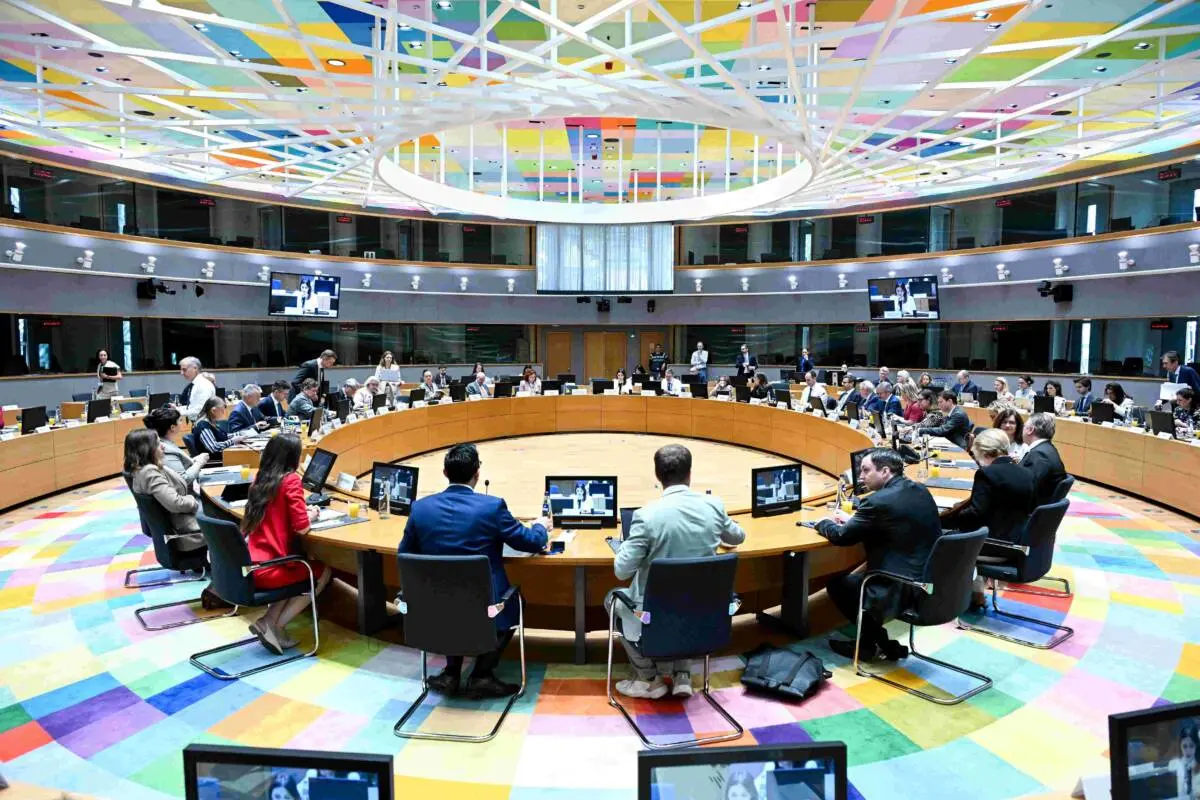
General Affairs Council meeting of 26 May 2026
General Affairs Council meeting of 26 May 2026 – Photo © Council of the EU
The Commission’s proposal envisages an overall budget of nearly 2 trillion euros; of this, 865 billion euros is allocated to the heading “people, Member States and regions”, a category that groups together both Common Agricultural Policy (CAP) funds and cohesion funds, exposing them to cross-cutting reductions that would be more limited if they were allocated separately.
The same centralising logic is reflected in the proposal, still not formalised, to abolish DG Regio, the directorate that manages structural funds in direct partnership with regions, in favour of a single large Directorate General for investments, putting at risk the multilevel governance that defines this policy.
In response to these developments, on 25 May 2026, sixteen Member States (Bulgaria, Croatia, Estonia, Greece, Italy, Latvia, Lithuania, Malta, Poland, Portugal, the Czech Republic, Romania, Slovakia, Slovenia, Spain, and Hungary), led by Romania, signed a joint declaration which constitutes a direct challenge to the Commission. The document denounces the fact that cohesion policy, CAP, and the common fisheries policy, despite being the most visible EU policies to citizens, are the only budget lines to face cuts in real terms, while resources are being redirected towards defence, competitiveness, and strategic autonomy.
The group’s demands operate on several levels: an increase in allocations to Member States for treaty-based policies, the preservation of Member States’ exclusive responsibility for fund programming both at the initial stage and at the mid-term review, and a reduction of the crisis reserve proposed at 10%, to prevent cohesion from becoming a systematic emergency management tool. The document nonetheless opens the door to a strategic concession: the sixteen countries declare themselves willing to discuss new resources for the EU budget, while simultaneously calling for the permanent abolition of rebates on national contributions currently enjoyed by the so-called “frugal” countries.
The sharpest battle is expected to be with the “frugals”. Gathered in Sweden, Finland, Denmark, France, Germany, Austria, the Netherlands, and Belgium, with Ireland as an observer, have declared themselves in favour of “a better budget, not a bigger one”: a formula that closes the door both to any significant expansion of appropriations and to any form of common debt.
On 26 May,the Council gathered in General Affairs (GAC) format, a configuration bringing together ministers for European affairs ahead of the next European Council of 18–19 June. The MFF debate focused on the budget’s contribution to single market integration, just weeks before the first indicative figures begin to circulate and formally shift negotiations from principles to numbers.
Tensions between the two camps emerged immediately: Sweden argued that the EU budget should remain at around 1% of gross national income, while Italian minister Foti stated that competitiveness and cohesion are not necessarily at odds, rather, they are “two sides of the same coin.” The June European Council will be the first to work on concrete figures, with the aim of reaching an unanimous agreement by the end of 2026.
The proposal to merge structural funds, the possibility of abolishing DG Regio, and the pressure to use cohesion as an emergency instrument all point in the same direction: the systemic weakening of cohesion policy.
Found an error in this article? Please contact our editorial team at redazione@balcanicaucaso.org.
This article was produced as part of the EuSEE project, co-funded by the European Union. However, the views and opinions expressed are solely those of the author(s) and do not necessarily reflect those of the granting authority, and the European Union cannot be held responsible for them.
Tag: Coesione UE | EuSEE