Montenegro from socialist Yugoslavia to independence
On May 21, 2026, Montenegro celebrated the twentieth anniversary of its independence: a historic milestone at a crucial time for the country, as it moves toward EU membership. With the series “Winds of Independence,” OBCT traces Podgorica’s trajectory, attempting to decipher a present full of contradictions. In this first episode, we retrace the country’s recent history
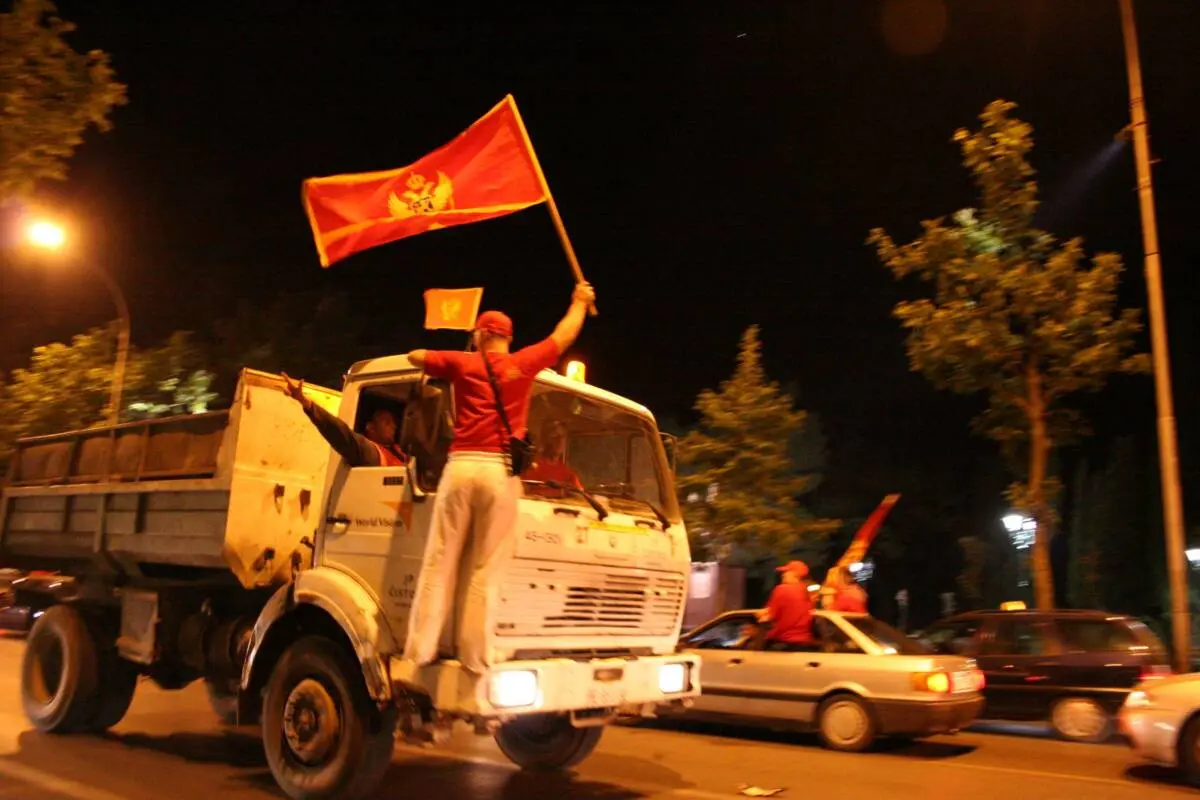
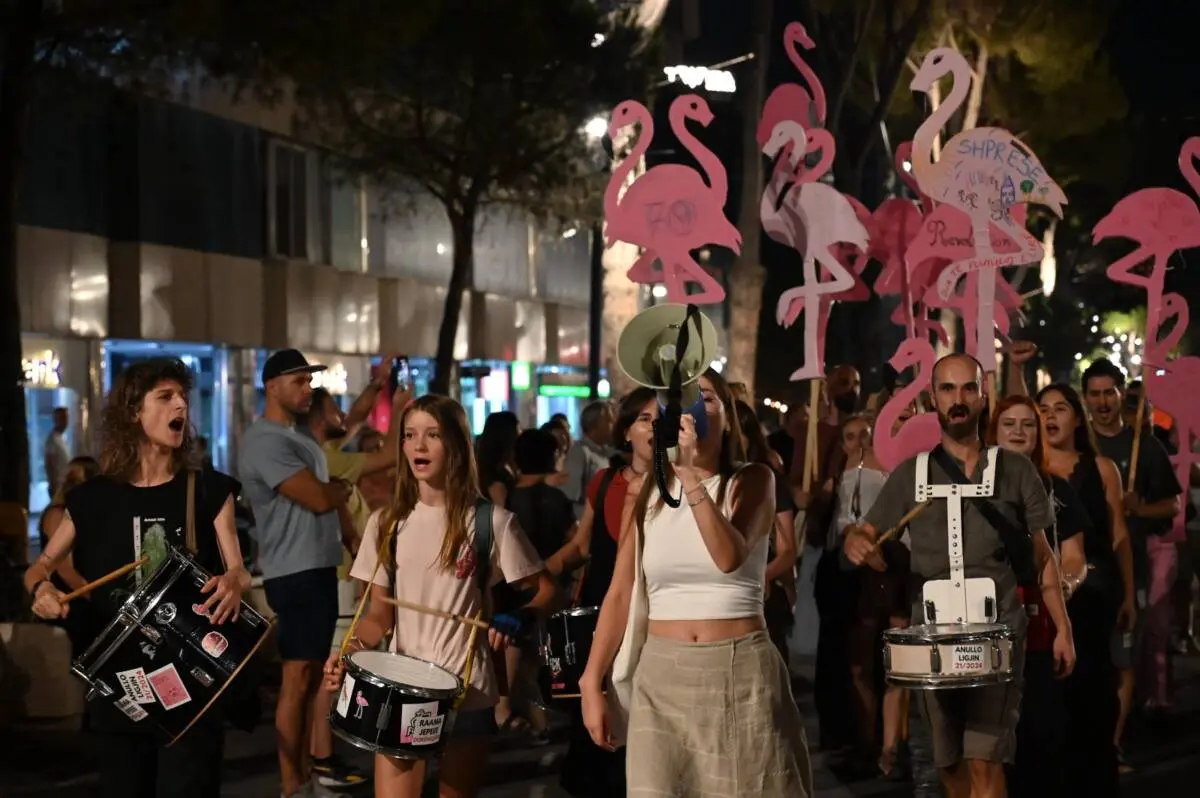
Podgorica, Montenegro, May 2006, during the celebrations after the referendum – Photo by L. Zanoni
Podgorica, Montenegro, May 2006, during the celebrations after the referendum - Photo by L. Zanoni
In a corner of southeastern Europe, a small state celebrated its 20th birthday on May 21st. Nestled on the Adriatic coast opposite the Gargano Peninsula, Montenegro definitively severed its umbilical cord with Serbia in 2006 and reestablished its independence with a referendum. Montenegrin historian Miloš Vukanović, a professor at the University of Donja Gorica, retraces with OBCT the key steps that led to that fateful moment.
How close were Montenegro and Serbia on the eve of Yugoslavia’s collapse?
The bond between the two countries is the closest within Socialist Yugoslavia (SFRY), because the intertwining of their histories, cultures, religions, and economies dates back at least to the Middle Ages. But even within Tito’s Federation, the alignment between Serbia and Montenegro conceals a latent animosity between their respective leaderships, between which a certain rivalry remains constant. With his “anti-bureaucratic revolution” of 1988-1989, Serbian leader Slobodan Milošević inextricably linked the political destinies of Belgrade and Titograd [as Podgorica was renamed between 1946 and 1992, ed.]. Supported by Belgrade’s strongman, the triumvirate of Momir Bulatović, Milo Đukanović, and Svetozar Marović rose to power in Montenegro, seizing control of the Communist Party (SKCG) and, by 1990, occupying all the central hubs of the state.
Then came the catastrophe. What course did Montenegro take?
From then on, the Titograd establishment bombarded the country with intense warmongering propaganda, which ended up engulfed in the ultranationalist program of “Greater Serbia.” In June 1991, the SKCG merged with the Democratic Party of Socialists (DPS), which would remain in power for the next three decades. Following the secessions of Ljubljana and Zagreb, the bloody disintegration of Yugoslavia began that summer. The international community attempted mediation, but negotiations were ineffective. In early October, the DPS supported the aggression of the Federal Army (JNA) — de facto under Serbian control — against Dubrovnik, to prevent a phantom Croatian invasion. Despite attempts to downplay its responsibility, Montenegro actively participated in the operations: not only on the battlefield but also by detaining hundreds of Croats in the Morinj camp, near the border. The attempt by Bulatović (President) and Đukanović (Prime Minister) to rehabilitate the country’s international image — by pushing through Parliament (Skupština) to approve the “Carrington Plan” for the peaceful dissolution of the SFRY — failed, dashing against strong pressure from both the domestic front and Belgrade.
Is this the birth of a “third Yugoslavia”?
In the end, the DPS supported Milošević’s proposal to allow republics that wished to remain within Yugoslavia, rather than dissolving it. In the March 1992 referendum, Montenegro voted to remain alongside Serbia [reintroducing the former name of Podgorica, ed.]. At the end of April — Sarajevo had already been under siege for weeks — a new state entity was born, the Federal Republic of Yugoslavia (SRJ), comprising only Serbia and Montenegro. In reality, the election was riddled with irregularities: coercive methods used against voters; systematic repression of dissent; violent incidents and deportations, especially against the Bosniak minority. During this phase, the party controlled the entire state apparatus, transforming it into a mouthpiece for Serbian militarist ultranationalism. This situation persisted until the end of the war in 1995, despite the economic collapse caused by international sanctions.
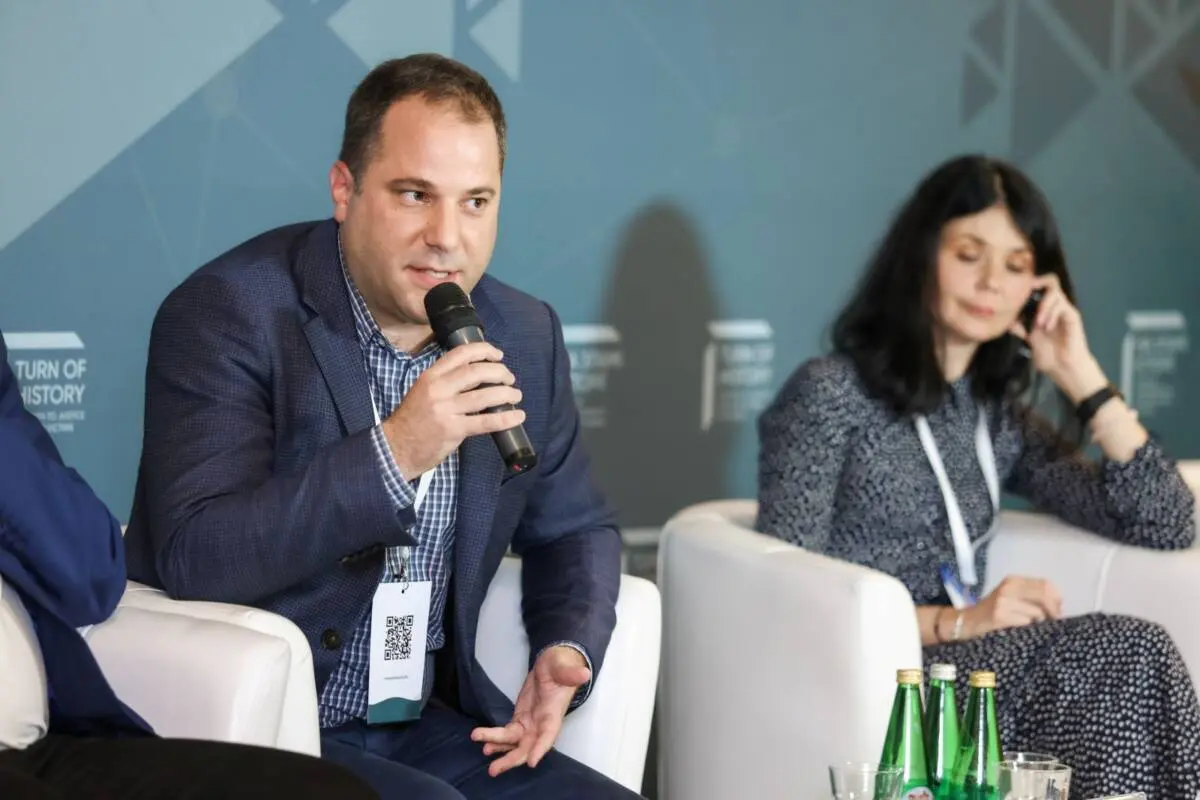
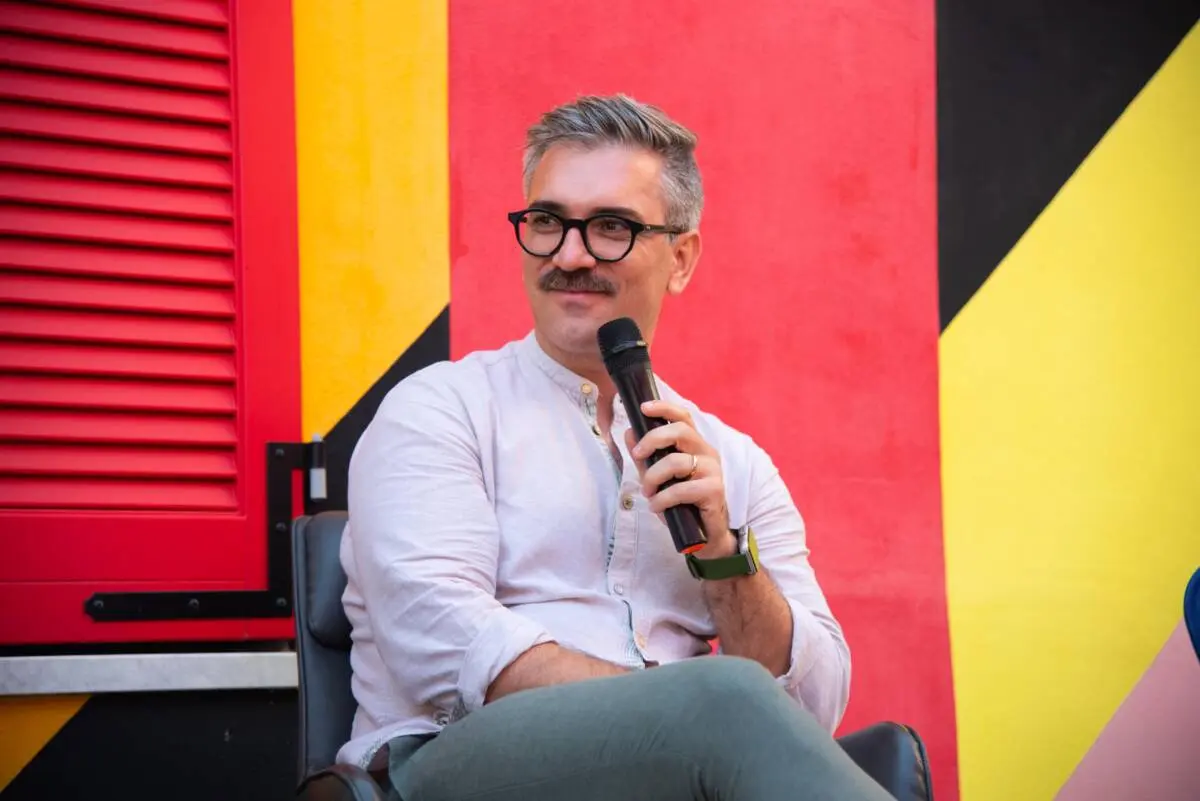
Miloš Vukanović during a conference organized by Ukrainian Helsinki Human Rights Union (Photo UHHRU – Miloš Vukanović)
And then?
After Dayton, the DPS was gripped by growing internal tensions and gradually changed its narrative, adopting a more markedly nationalist rhetoric. Between 1996 and 1997, Serbian streets erupted in protests against Milošević. In July, the DPS split definitively between the Belgrade-loyal faction and the “reformist” faction, led respectively by Bulatović and Đukanović. In the October presidential elections, Đukanović narrowly defeated his former ally. In January 1998, violent anti-Đukanović riots broke out in Montenegro, fomented by Milošević and repressed by the police. In February, Bulatović founded a new party (SNP), but the “new DPS” won the May elections. Đukanović still did not openly speak of independence, which remained the rallying cry of the liberals (LSCG). Rather, he called for greater autonomy for Podgorica from Belgrade, without questioning the federal structure.
When did the turning point come?
The escalation of the Kosovo crisis in 1998-1999 definitively strained the relationship between Đukanović and Milošević. This time, Podgorica deserted the mobilization ordered by Belgrade and avoided direct involvement in the operations, pursuing a parallel dialogue with the US and the EU. In March 1999, while NATO bombed Serbia, Milošević sent his army to the Kosovo-Montenegro border, crossed by hundreds of thousands of refugees. Tensions erupted between the Serbian military and the Montenegrin police in various parts of the country. It was clear, at this point, that no one in Montenegro was willing to follow the Serbian autocrat anymore. The September 2000 federal presidential elections, boycotted by the vast majority of Montenegrin voters, marked the end of the Milošević regime, definitively overthrown in early October with the “Bulldozer Revolution.” This was the moment when Đukanović came out into the open and embraced the cause of independence.
What happened to Yugoslavia after Milošević?
The early 2000s were particularly chaotic. In Montenegro, after the early elections of April 2001, the DPS formed a minority government with the external support of the LSCG, aiming to renegotiate the terms of coexistence with Serbia. With European mediation, the so-called “Belgrade Agreement” was signed in March 2002: the SRJ morphed into the State Union of Serbia and Montenegro, a dysfunctional hybrid between a federation and a confederation. To at least temporarily freeze the fragmentation of an already largely destabilized region, Brussels imposed a three-year moratorium on secession on Podgorica, inserting a specific clause into the treaty. The LSCG pulled the plug on the government, but in the October elections the DPS triumphed, promising a referendum on independence, to be held three years after the establishment of the new state community.
And finally, the referendum. How did the vote take place?
Thus, in February 2003, the State Union was stillborn. Shortly thereafter, Montenegro adopted a new anthem and a new flag featuring the double-headed eagle and lion (the ancient national symbols) in place of the Yugoslav tricolor. Preparations for the referendum began, but the electorate was divided, with half the population still in favor of unity with Belgrade. The EU and the Council of Europe, which were responsible for monitoring the referendum, wanted a clear and indisputable result. Thus, they artificially established a “super threshold” of 55% for the vote to be considered valid, whereas Montenegrin law required 50% plus one of the votes cast. In hindsight, this decision, with its dubious democratic legitimacy to say the least, proved effective: in the end, with a turnout of 86.49%, on May 21, 2006, the “yes” vote won by an unequivocal 55.5%. Despite the protests, observers certified the vote’s validity. Geographically, the trends of previous elections were confirmed: independence prevailed overwhelmingly in the central and southern regions (and among the Albanian and Bosniak minorities), while in the north, the unionists prevailed. This is the now consolidated contrast between “old Montenegro” and the areas traditionally closer to Serbia.
Is this the birth of a “new” Montenegrin nation?
Yes, but in a certain sense, it remained unfinished. The “yes” campaign insisted on a return to the country’s former independence, reviving monarchical symbolism and adding the slogan “Malo je lijepo” (“small is beautiful”). The “no” camp argued that Montenegro was not self-sufficient and declared it wanted to “save Yugoslavia.” It was my first time at the polls, and I sensed an almost revolutionary sense in what we were doing, as if we were creating a new collective, democratic, and European future for ourselves. After 2006, however, the DPS made some mistakes in managing this “new” national community. For example, in (re)constructing Montenegrin identity, it arbitrarily downplayed several elements that harked back to the Serbian cultural heritage. The new Montenegro was born with the promise of being a state for all its citizens: not only the ethnic majority, but also the minorities. Yet, in some areas of the country, the social body is not yet fully “reconciled.”
Found an error in this article? Please contact our editorial team at redazione@balcanicaucaso.org.
Tag: