Dino Hodić: Return to Srebrenica, to listen
“No one will hurt you” is the phrase uttered repeatedly during the days of the Srebrenica genocide, to civilians who were later murdered. Dino Hodić, who as a child managed to escape with his family shortly before the outbreak of the war, chose it as the title of his documentary. Our interview
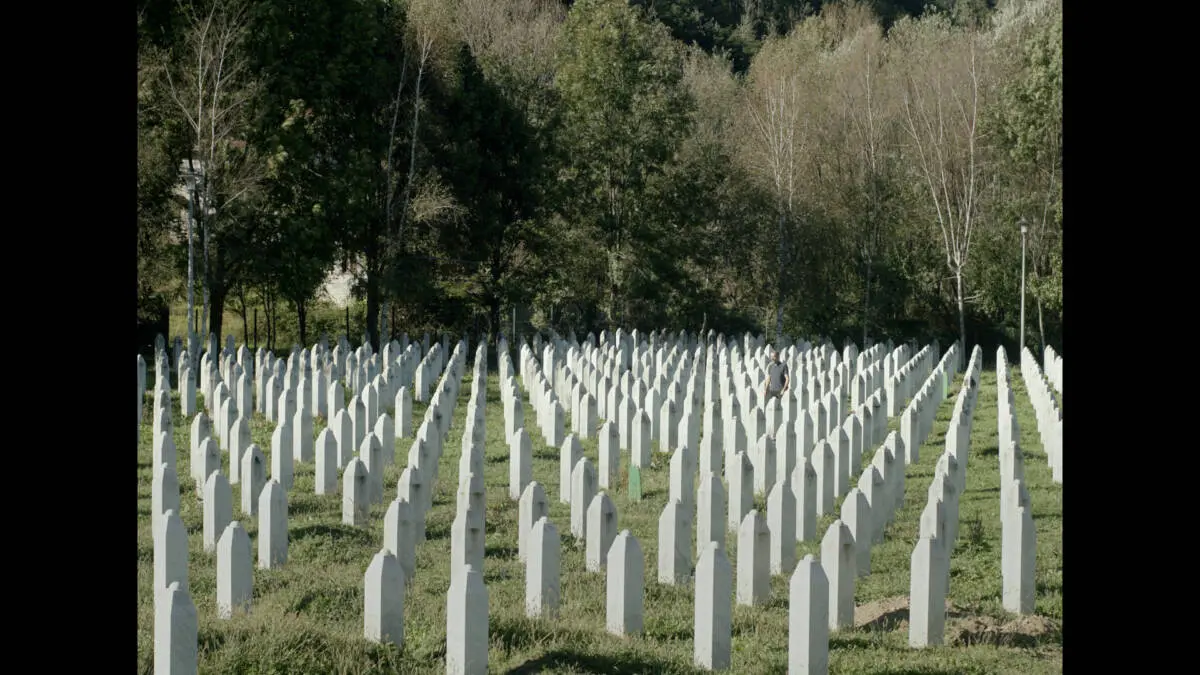
Immagine dal documentario Nessuno ti farà del male
Immagine dal documentario © Nessuno vi farà del male
In your documentary “Nessuno vi farà del male” (No One Will Hurt You), you intertwine two stories, first and foremost that of your family, who survived the war in Bosnia and Herzegovina in 1992-1996……
We left shortly before the war in Bosnia began. I was a child, but I remember the war had already begun in Croatia. In fact, in the documentary, I recount my family’s journey, as we crossed the area already controlled by Serbian forces, to reach Switzerland, where we later lived.
I remember crossing the bridge over the Sava River, on the border between Bosnia and Croatia, only family members were allowed to cross, and in fact my father and mother were only able to cross because I was there. One of the starting points of the documentary stems precisely from the question: “If we had not made this choice back then, what would have happened to us?”
What exactly have you experienced? Has any of your family members left with you?
We lived in Zvornik, 50 kilometers northwest of Srebrenica, on the border with Serbia. My father was already working as a seasonal worker in Switzerland, where his brother lived, at the time when the economic crisis began in Yugoslavia and many people chose to work abroad, hoping to return and have some financial support. Specifically, we had the dream of building our own house in Zvornik, but we never managed to realize it because the war broke out.
Initially, it was just the three of us; my grandparents remained in Zvornik at the time, while my uncles and aunts had moved to Tuzla. In the months that followed, however, my father, along with his friends and siblings, had traveled back and forth, even risking their lives, trying to save as many family members as possible.
The escape routes had been complicated, far from easy, and different for each person. For example, my grandparents had first crossed the border into Serbia, penniless and fearful of being taken off the bus and disappeared. Then they managed to enter Hungary and from there cross into Croatia, where my father had gone to pick them up.
You were born in 1987, so you were very young. What do you remember about that time and that trip, of which you included videos shot by your father in the documentary?
I have snapshots of the trip, small flashes, the streetlights, the smell of the Lada Samara we were traveling in. In Bellinzona, where we began to live, I vividly remember the phone conversations from a payphone, which was the only way to try to find out if our relatives still there were alive.
But it was complicated because the lines were interrupted or cut and you had to dial a series of numbers to get news [since the beginning of the war, telephone lines were also interrupted with the specific aim of preventing people from exchanging information; the work of radio amateurs who acted as bridges was very important, ed.].
I have been deeply impressed by these phone calls my mother made, and by me accompanying her… it’s one of my most vivid memories of that period. But also by the TV always on at home to watch the war news, as I recount in the documentary.
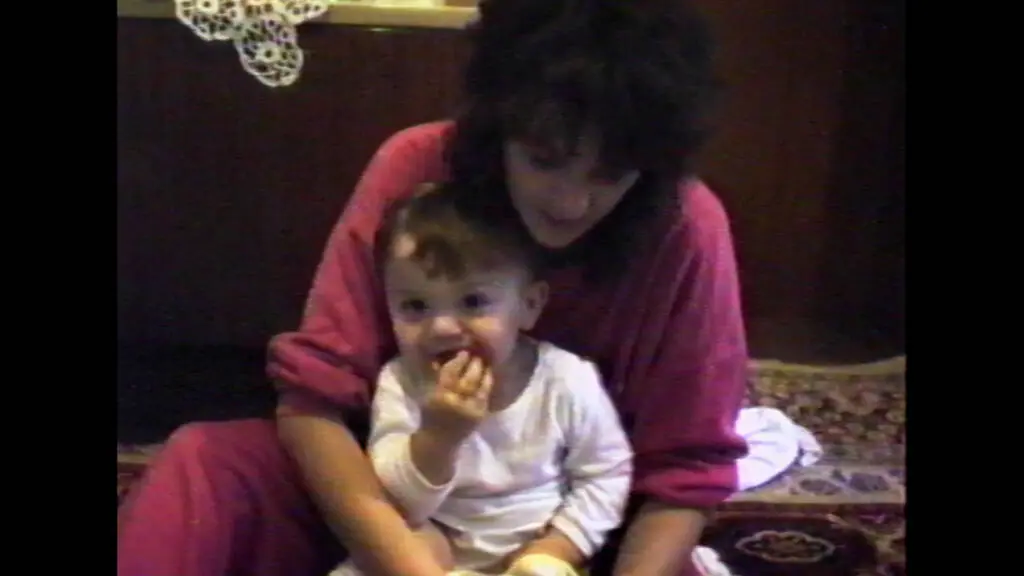
Dino Hodić with his mother, in the footage shot by his father in Zvornik – From “No One Will Hurt You”
When did you first return to Bosnia? What were your feelings then?
In 1997, a year after the official end of the war. At the entrance to Bosnia, there were international checkpoints, where we had to slalom between sandbags surrounding large machine guns. For me, it meant returning home, but also a “discovery.” At that point, I was ten years old and I discovered a country I had left very small, one I had built up an image of, passed down to me by relatives or the stories of those who had lived through the war. Then came the rubble, the buildings riddled with bullet holes, grenade fragments all around, which I went around collecting.
I think that is when my drive to understand what had happened in Bosnia and Herzegovina and the Balkans in general began, to discover and understand my origins. So, in the years that followed, I delved deeper and reflected on these issues, until, many years later, I ended up making the documentary, which represents an important milestone in my journey.
Were you able to return to Zvornik in 1997? It was under Bosnian Serb control, so much so that the town remained under the administration of Republika Srpska…
We returned to Zvornik for the first time much later. It was impossible to return to a town that had been ethnically emptied and only a skeleton remained [the ethnic cleansing of Bosnian Muslims by Bosnian Serb forces in Zvornik was complete, with thousands killed or deported, ed.]. This skeleton of a town was then filled with new people, probably including those who had been responsible for the ethnic cleansing.
Our three-story house, where we all lived before the war, had been squatted. It was still a transitional period, when it was legally impossible to regain ownership. After a long battle, my grandparents succeeded, but the house was devastated before it could be handed over to us.
Little by little, they began to renovate it. My grandfather was a carpenter, so he did a lot of the work himself. The floor that was once his workshop became the apartment where they now live, while he moved his tools to what was once the garage, as he himself recounts in the film.
Today, on one floor of the house there is an apartment we have rented to a Bosnian Serb family. Despite everything that’s happened, we continue to live together as we did before the war. I think that is right.
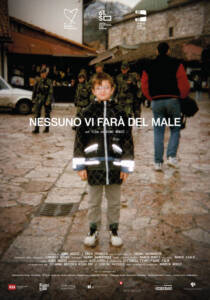
Posters from Dino Hodić’s documentary – From “No One Will Hurt You”
When and why did you decide to make a documentary, and how long did it take to make?
I have always had the idea of doing something in Bosnia… I initially thought of making it as a final project for film school, but I soon realised that I did not yet have the right tools to make it the way I wanted.
Writing is what I invested time in, about three years. Then I met Hasan, with whom I participated in the “Marš Mira” (Peace March), marching in reverse along the route through the woods he had taken with the thousands who attempted to escape Srebrenica in those days of July ’95. Clearly, conditions were completely different from those he endured in 1995, under Bosnian Serb attacks, landmines, thirst, and hunger, and carrying the body of his seriously wounded brother Hasib on his shoulders for the last 20 km…
Filming lasted about two months, plus a few sporadic episodes, and editing took three months. In total, it took me about four years, not full-time because I was working at the same time.
At the same time, we worked to recover family footage from those years – taken by my father, who had bought a video camera before the war and was always filming us – and to digitise VHS tapes of news broadcasts from around the world, which my parents had recorded at home in Switzerland during the war. These are precious materials, as very few of them can be found in television archives today.
Furthermore, finding the rest of the archival material we needed was a complicated, complex, and time-consuming task. My wife, Sanda Copelj, worked on it, collaborating on the documentary as an archive producer. Some of it was obtained from the Hague War Crimes Tribunal, some from Swiss Radio and Television, and some from Ibro Zahirović, one of the few cameramen who filmed in Srebrenica and has a significant archive [many of his footage were used by the Hague Tribunal in its war crimes trials, ed.]. And it is precisely from various archive images that the phrase “No One Will Hurt You” emerges, which I chose as the title.
Did you have to make any significant changes to the idea you had during pregnancy?
The most important change was deciding at a certain point to intertwine my story with Hasan’s. Initially, I thought it would be just about him, but for dramatic reasons and because I was the one with questions to which I wanted answers, I decided to change. I realized that the part of the story tied to me and my family was necessary and right.
Of course, I had many doubts. I mean, I wondered how I could reconcile my fortunate story, that of someone who didn’t experience the war because he managed to escape the country, with Hasan’s terrible story, in which he lost almost everyone. He says in the film: “I have more loved ones buried at the Potočari Memorial than are still alive. In six days and six nights, 71 men and one woman were killed, then my family”.
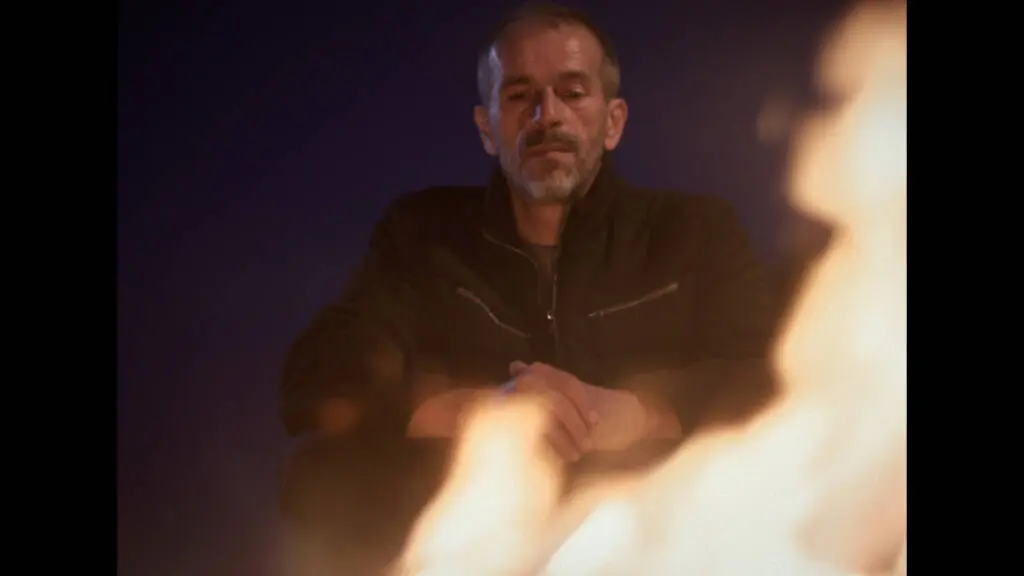
Hasan Hasanović, while telling his story © From “No One Will Hurt You”
I began to fear it would not be respectful to juxtapose two opposing narratives. But in the end, even with the editing, we managed to make them communicate. Through my family’s story, I gradually lead the viewer toward Hasan’s story and the rawest moments of the documentary, up until the final embrace and farewell between him and me… like two realities that ultimately touch, intertwine. And, without revealing too much… it is precisely in that moment that the crux of the documentary emerges: the importance of listening to those who survived.
“No One Will Hurt You” (2025, 75′ bhs/ita/eng, eng subtitles) is produced by Fiumi Film and co-produced by RSI – Radiotelevisione Svizzera. Presented at the 2025 Sarajevo Film Festival and the 2026 Trieste Film Festival, it won the Visioni Award at the Solothurn Film Festival.
“What if it had happened to us?” This question inspires “No One Will Hurt You”, the documentary by Dino Hodić, who returns to Bosnia to confront the memories of the war and its living legacy. Between family archives and the present, the film intertwines private memory and collective history, culminating in an encounter with Hasan, a survivor of the Srebrenica genocide, whose testimony opens a space for profound and necessary listening.
Watch the trailer for “Nobody Will Make You”
Did you find answers to your questions?
We, the second generation, didn’t experience the conflict, but in some ways we were marked by it, and we carry many questions within us. No, I would say I have not found any answers. Perhaps for me it was more important to ask and explore these questions, rather than finding answers. It certainly worked as a tool for personal development. A bit like when they advise you to write your thoughts, or what happens to you, in a diary to process a problem, a hardship, or a trauma.
That said, all wars have commonalities, so I think this documentary, despite being about a war thirty years ago, can provide a platform for reflection that is unfortunately very timely when we look at ongoing armed conflicts: the dehumanization of others, nationalist propaganda, and the UN’s inaction.
But also in public discourse, the “sarcasm” used towards people, communities and peoples – as emerges from the archive footage I have included – who are later stripped of rights or annihilated.
Like a bar that gets higher and higher, until at a certain point it becomes too late, there is no turning back.
Featured articles
 Global Sumud Flotilla
 Civil society
 the big looting