Radio police, government’s attempt to control the narrative in Kosovo
The Independent Media Commission of Kosovo has allocated a radio frequency to the state police. Media freedom organisations see this decision as yet another attempt by the government to control the narrative on security and the rule of law
shutterstock_4215949217
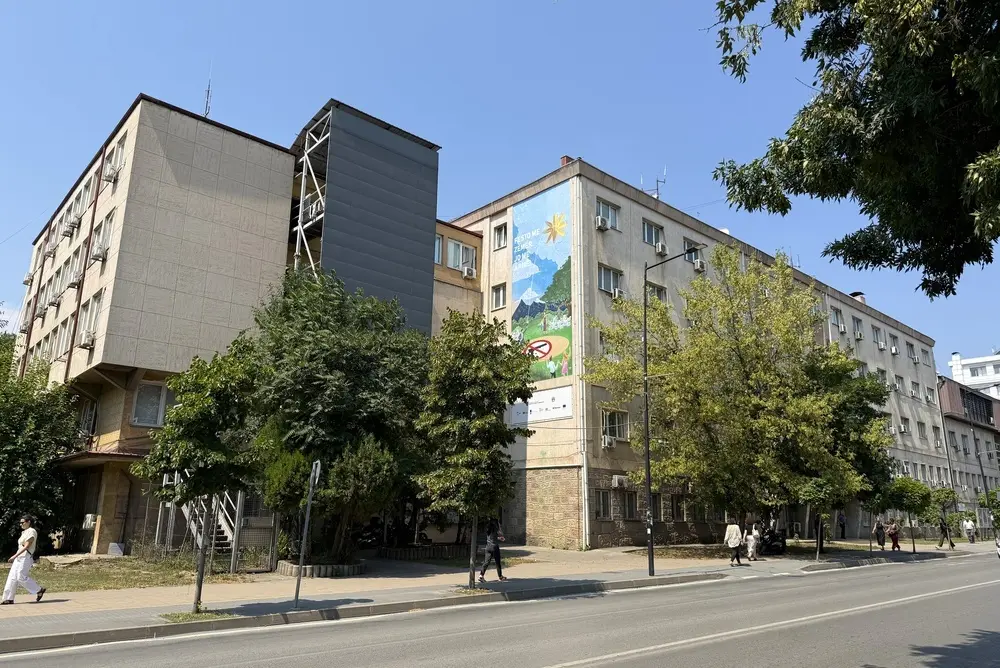
Pristina, municipal police station building © Koapan/Shutterstock
The Independent Media Commission (IMC), a body that, under the Constitution and the law, is supposed to function as an independent institution, wants to experiment with radio frequencies in Kosovo. An initiative that had been kept secret for some time came to life in early October.
The IMC, whose members were appointed through a compromised procedure denounced by media freedom organisations in Kosovo, has allocated a frequency to the state police. The plan is to establish Radio Police.
In other words, the police, which is controlled by Kosovo’s Ministry of Internal Affairs, would have its own media outlet on a national frequency through which to communicate with citizens. What the IMC is planning is an unprecedented initiative in a democratic environment such as Kosovo. Through this move, the Government of Kosovo is attempting to continue its attack on the country’s free and independent media. It is trying to gain complete control over the narrative on issues related to security and the rule of law in Kosovo.
The aim is to ensure that information of public importance is delivered in a one-sided manner, without being subjected to fundamental questions from journalists and the media, or to meaningful public debate.
In other words, very soon we may be hearing an official state voice on our car radios, delivering information that will almost certainly go beyond practical traffic updates. It remains unclear how this state radio station would operate: whether it would have an editor-in-chief, editors and journalists, or whether the Police Media Office would assume a new role.
The Kosovo Police used to be one of the most trusted institutions in Kosovo, and has traditionally maintained good cooperation with journalists and the media. However, the latter have been able to hold the police accountable on numerous occasions when it has overstepped its authority in handling cases or when members of the force have been caught violating professional codes of conduct.
Let us take just one series of violations recorded in connection with another femicide case in the western city of Peja. Arlinda Zekaj was murdered just 10 minutes after returning from the police station, where she had gone to report domestic violence. A series of public statements issued by the police in an attempt to justify the conduct of its officers were subjected to public scrutiny by journalists and the media.
The official narrative of Radio Police would almost certainly have been that the police bore no responsibility whatsoever for the failure to act that led to the loss of a woman’s life.
Radio Police would be controlled by the Ministry of Internal Affairs, which has demonstrated over the past few years that it exercises not only political influence but also partisan influence by the Vetëvendosje Movement over the work of the police.
The IMC’s decision will also be legally challenged in court. However, the very fact that this institution is advancing the policies of the party in power demonstrates the state of media freedom in Kosovo.
The constitutional institution that should be working to guarantee media freedom and media pluralism is instead contributing to the capture of the media by the state.
Such an action is undoubtedly inconsistent with European media freedom standards, which Kosovo aspires to meet as part of its ambition to join the European Union. On the contrary, it could further undermine Kosovo’s position in media freedom rankings.
This disputed decision by the IMC opens the door to further dangerous decisions in the future, potentially allowing the governing party to establish its own television station as well and extend its propaganda through a nationwide broadcasting frequency.
Found an error in this article? Please contact our editorial team at redazione@balcanicaucaso.org.
This publication is the result of work carried out as part of ATLIB – Transnational Advocacy for Freedom of Information in the Western Balkans, a project co-funded by the Italian Ministry of Foreign Affairs and International Cooperation. All views expressed are those of the author(s) and do not necessarily reflect the views of the co-funding institution.
Tag: ATLIB