Romania and Bulgaria: the Black Sea, risks and opportunities
Romania and Bulgaria grow increasingly concerned as the Russia-Ukraine conflict spills into the Black Sea. The two countries are stepping up regional cooperation and hope to turn mounting security risks into opportunities for development
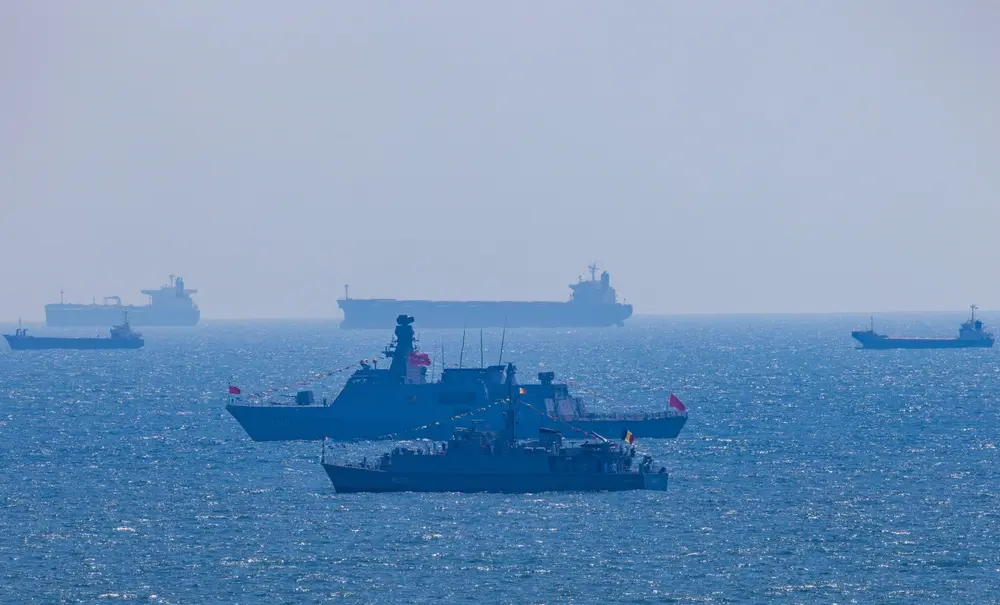
Ships of the Romanian fleet in Constanta © Sebastian_Photography/Shutterstock
Ships of the Romanian fleet in Constanta © Sebastian_Photography/Shutterstock
The European Union will fund the establishment of a Black Sea Maritime Security Centre, with offices in Constanța, Romania, and Varna, Bulgaria.
The initiative aims to address growing threats to shipping along the two countries’ coastlines, where merchant vessels have come under repeated drone attacks in recent months. European Commission President Ursula von der Leyen announced the plan during visits to both countries on November 9 and 10.
The new centre is expected to be set up swiftly and could become operational as early as the first half of 2027.
Its main objectives will be to protect critical infrastructure across the region, facilitate information-sharing between Romanian and Bulgarian authorities, and safeguard commercial shipping in the Black Sea.
The EU will provide the two countries with €50 million in additional funding to implement the project.
The war in the Black Sea
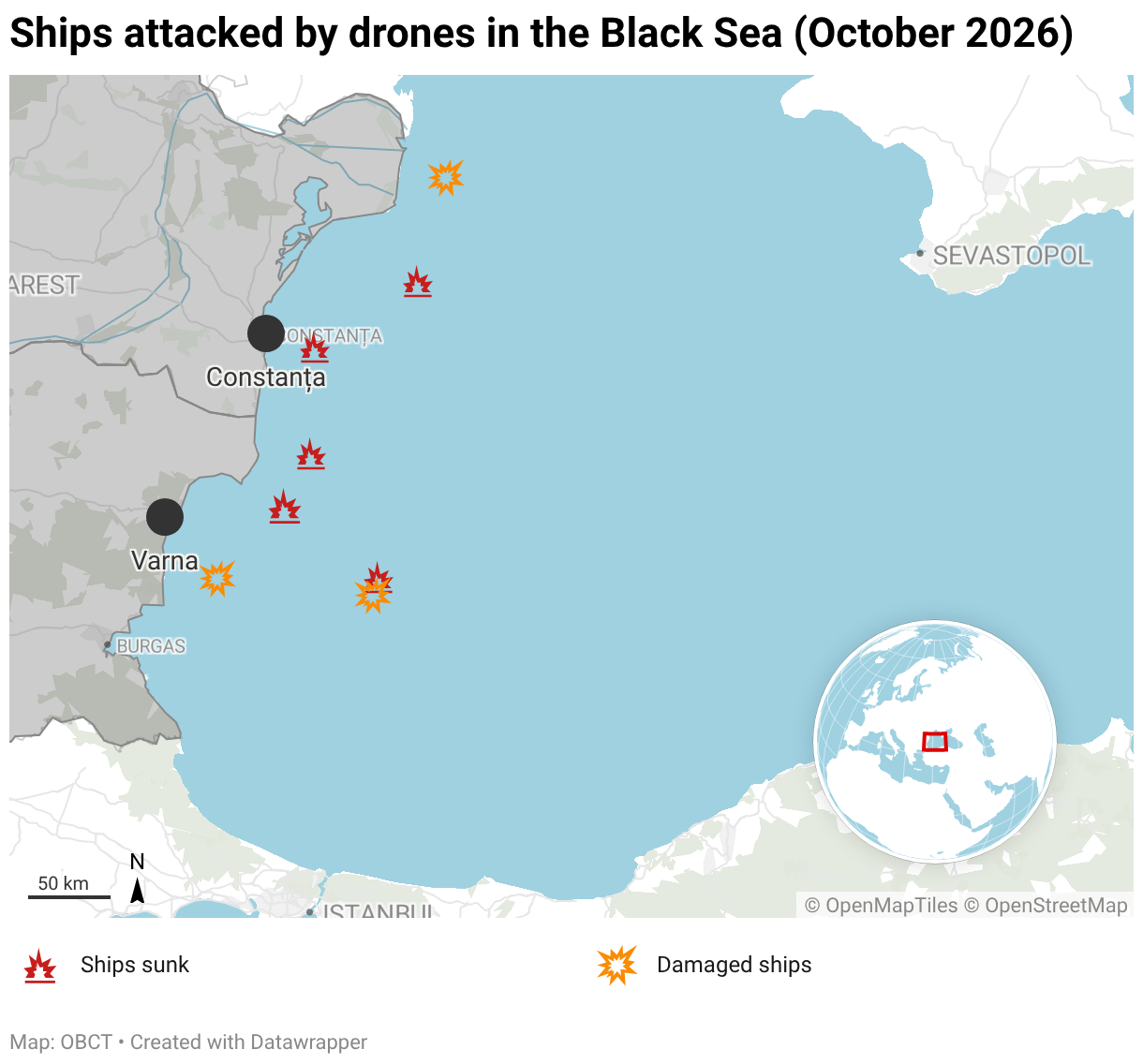
The initiative comes amid a series of attacks on merchant vessels in recent months. Ships operating off the Bulgarian and Romanian coasts have been targeted and hit by drones, with some eventually sunk. At least 40 sailors have been killed or gone missing in the Black Sea as a result of these attacks.
Bucharest and Sofia have responded differently to the attacks. Romanian authorities have been quick to point the finger at Russia, holding the Kremlin responsible.
Following his meeting with von der Leyen, Romanian President Nicușor Dan said that the numerous incidents recently reported in the Black Sea amounted to “a wide range of hybrid warfare activities” through which “Russia is seeking to escalate the conflict that began in Ukraine five years ago”.
Dan also said the Kremlin was using these attacks in an attempt “to draw EU countries into the ongoing war”.
Bulgaria’s government, led by Rumen Radev, has taken a far more cautious approach. Radev has long advocated reopening dialogue with Moscow as a means of securing peace.
Although Bulgarian institutions have voiced concern over the incidents, they have stopped short of formally accusing Russia of responsibility, citing the lack of conclusive evidence. Many of the attacks have taken place within Bulgaria’s exclusive economic zone.
The differing approaches adopted by the two countries have led to tensions between Sofia and Bucharest, following remarks made by Radev on October 28 in response to yet another series of attacks.
“Romania said: ‘We have no evidence, but we know Russia is responsible and we condemn it’,” the Bulgarian prime minister said. “And what happened? Two more ships were hit and sunk in Romanian territorial waters.”
For von der Leyen, “the intention behind these attacks is clear: to spread fear and insecurity across Europe”. Speaking at a joint press conference with Radev, the Commission president added: “We know this modus operandi, and we are building resilience against it. You can count on a strong and united European response.”
In addition to the funding for the Maritime Security Centre, Romania and Bulgaria will each receive a further €10 million to finance rescue operations in the event of future attacks.
Black Sea security through a NATO lens
Romania and Bulgaria are increasingly concerned about the conflict spreading into the waters off their coastlines, an area of vital strategic importance to both countries.
On October 28, the two countries’ defence ministers met in Sofia for trilateral talks under NATO auspices, also attended by neighbouring Turkey.
At the meeting, the three NATO members bordering the Black Sea agreed to improve their rapid-response capabilities and streamline the exchange of relevant data and intelligence.
A few weeks earlier, then Romanian Defence Minister Radu Miruță had proposed setting up a joint command for the three countries under NATO’s umbrella, with a rotating leadership. Ankara, however, gave the proposal a lukewarm reception, and it currently appears to have little prospect of moving forward.
Turkey maintains that Black Sea security should remain primarily the responsibility of the littoral states, within the framework of the balance established by the 1936 Montreux Convention.
Could the conflict become an opportunity?
Sofia and Bucharest are also seeking to turn necessity into opportunity by accelerating the development of key infrastructure projects, which could also strengthen their ability to counter Russia’s influence in the region.
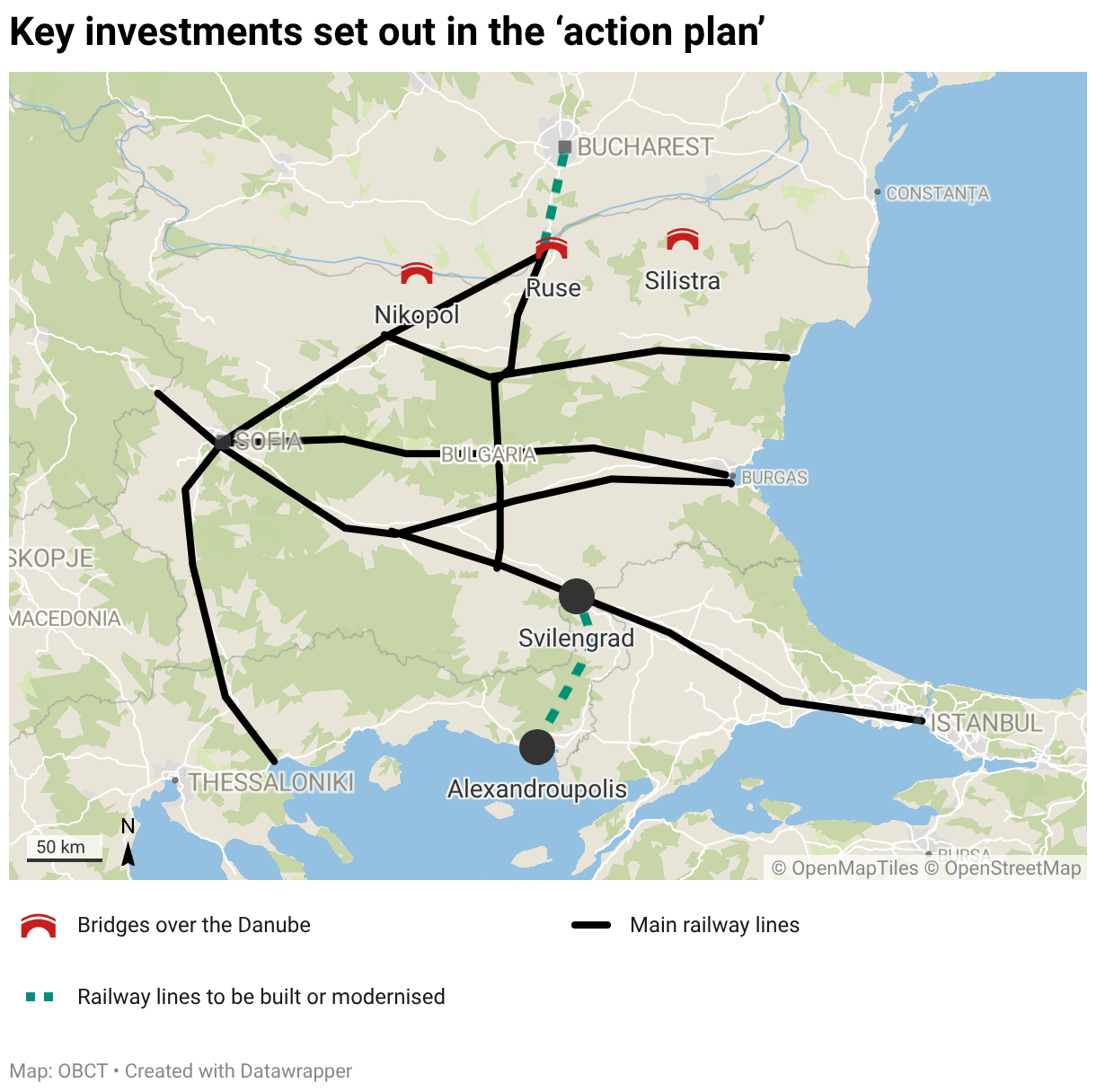
In late September, Bulgaria and Romania signed an action plan in Brussels alongside Greece, aimed at reviving a series of major infrastructure projects, particularly in the transport sector.
The stated goal is to strengthen connectivity along the Black Sea-Aegean Sea corridor, both in terms of economic development and its potential contribution to defence and security. The focus is on dual-use infrastructure capable of serving both civilian and military needs.
“When planning new infrastructure, the transport and defence sectors must work together from the outset,” Bulgarian Transport Minister Georgi Peev said at the signing ceremony. “Investments must meet both economic needs and the requirements of resilience, crisis preparedness and military mobility.”
The plan includes 25 projects worth a total of €22.8 billion. Rail connectivity is among the top priorities, including a new railway link between the Greek port of Alexandroupoli and the Bulgarian transport hub of Svilengrad, as well as the modernisation of the railway line connecting the Bulgarian city of Ruse with Bucharest.
Another key priority is improving connections across the Danube. Plans include the construction of a new bridge between Ruse and Giurgiu, designed to carry both road and rail traffic, as well as two further crossings near the Bulgarian cities of Silistra and Nikopol.
Found an error in this article? Please contact our editorial team at redazione@balcanicaucaso.org.
Tag:
Featured articles
 the students' voices
 Investigation