EU enlargement: Kosovo slows down reforms
The European Commission has identified delays in Kosovo’s implementation of key reforms in the EU integration process. The 2026 Country Report highlights that no progress has been made in improving the performance of the judiciary and that the expected results in the fight against corruption have not been achieved
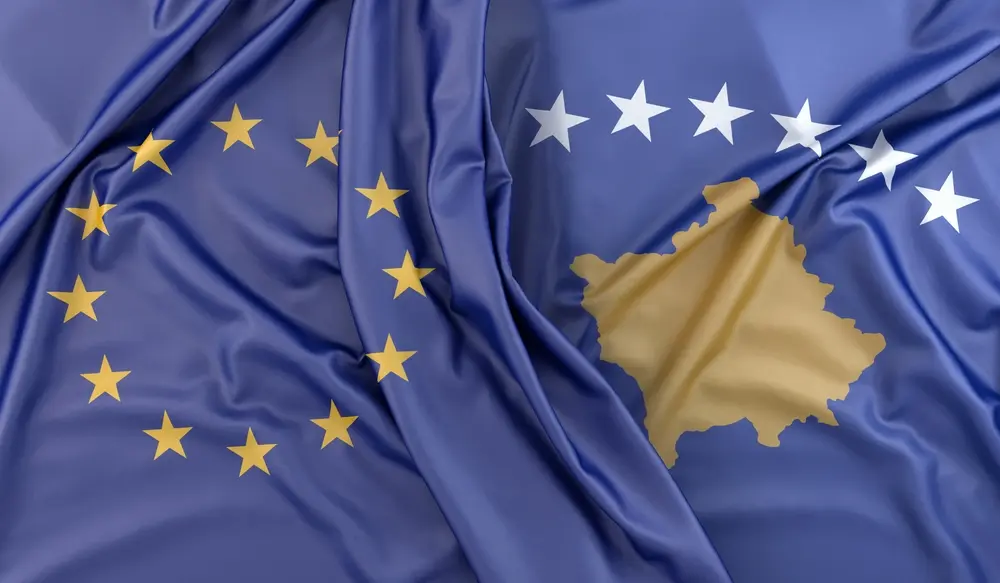
© kirill_makarov/Shutterstock
© kirill_makarov/Shutterstock
Kosovo continues to struggle on its path towards the European Union. The country has stalled in implementing key reforms required for membership in the 27-member bloc.
These assessments are part of the 2026 Kosovo Report, adopted and published by the European Commission as part of the European Union’s Enlargement Package. The report covers the period from 1 September 2025 to 1 September 2026, but also includes several subsequent developments.
According to the report, the judiciary has made no progress and the fight against corruption has yielded limited results, while political crises have weakened the functioning of institutions.
This year’s document marks the 10th anniversary of the entry into force of the Stabilisation and Association Agreement between the EU and Kosovo, and comes almost four years after Kosovo applied for EU membership.
Political deadlock hindered reforms
Most of the reporting period was characterised by two rounds of early parliamentary elections, a non-functional Parliament and a government with limited powers, all of which affected the performance of institutions.
The report assesses the elections as generally competitive, peaceful and well-administered, but identifies attempts to politicise the Central Election Commission.
The document also includes voter turnout statistics, showing an average turnout of 45% in the December 2025 elections, which fell to 37% in the 2026 electoral process.
According to the report, this points to growing voter fatigue and a degree of public dissatisfaction with frequent electoral cycles.
Functioning of the judiciary remains a weak point
Kosovo is between an early stage of preparation and a certain level of preparation and, overall, has made no progress in the functioning of the judiciary, the report states.
Furthermore, the document notes that undue influence from internal and external factors, such as political and economic interests, not only continues to pose a significant obstacle to judicial independence and impartiality, but has also intensified in some respects.
The report also addresses the adoption of amendments to the Law on the Specialist Chambers of Kosovo which raise serious concerns regarding Kosovo’s international commitments and their compatibility with the fundamental principles of the rule of law, particularly judicial independence and accountability for war crimes.
Fight against corruption
Regarding the fight against corruption, Kosovo has made limited progress, according to the European Commission. While the number of final court decisions and convictions in corruption cases not involving high-level officials has increased significantly, the number has declined in high-level corruption cases.
The number of whistleblower reports received by the Agency for the Prevention of Corruption has increased significantly, almost doubling compared to the previous year. According to the report, this indicates a growing willingness to report corrupt practices.
Media freedom
The European Commission has also assessed progress in freedom of expression and media freedom as limited, noting that, although the media landscape remains pluralistic, it continues to face challenges related to media ownership transparency and financial sustainability.
During the reporting period, 35 cases of physical and verbal attacks or threats against journalists were registered, a significant decrease compared to the previous year. The attacks included obstruction of their work by security officials as well as accusations and harsh language directed at journalists and media by senior government officials. The report specifically mentions Prime Minister Albin Kurti in this context.
The environment in Serb-majority areas, particularly in northern Kosovo, remains restrictive, encouraging self-censorship among the public, media and civil society, the report states.
Dialogue with Serbia
The European Commission assesses that Kosovo and Serbia have made insufficient progress in implementing the 2023 Ohrid Agreement, while unilateral actions and rhetoric by both sides continue to hinder the normalisation of relations.
According to the report, dialogue has continued through regular meetings at chief negotiator and technical team levels, but implementation of the outstanding obligations stemming from dialogue agreements remains limited.
The Commission calls on Kosovo to initiate the process of establishing self-management arrangements for the Serb community, while Serbia should, in parallel, begin recognising Kosovo’s documents, symbols and institutions.
The report also highlights that Serbia has not taken meaningful steps to ensure accountability for the armed attack against the Kosovo Police in Banjska in September 2023.
Areas in which Kosovo has made progress
Nevertheless, the report does not focus solely on setbacks. The European Commission identifies some progress in public administration reform, particularly in centralised recruitment and the expansion of digital services. However, delays persist in the reorganisation of institutions and the classification of job positions.
The smooth transfer of local government in the north following the 2025 elections is also considered a positive development, as it enabled the lifting of the EU’s financial measures against Kosovo.
As regards the dialogue with Serbia, the report highlights the March 2026 agreement on the implementation of the Law on Foreigners, which concerns the regulation of the status of employees and students in institutions supported by Serbia.
Position of the government of Kosovo
Prime Minister Albin Kurti said that the period covered by the Progress Report had been challenging for Kosovo due to the institutional deadlock the country faced.
After receiving the report from the EU Ambassador to Kosovo, Dirk Schuebel, Kurti said that the European Commission had not identified any backsliding in any area, but rather a slowdown in progress.
Nevertheless, Kurti stressed that Kosovo’s position in the EU accession process does not reflect the progress it has made, calling on Brussels to address Kosovo’s membership application and grant it candidate country status.
Experts’ assessments
Political scientist Melazim Koci describes the shortcomings identified by the European Commission as serious, while expressing hope that the government will address the criticism seriously.
However, Koci says that Brussels should also show generosity and grant Kosovo candidate country status, considering that Kosovo’s population is the most pro-European in the Western Balkans.
“If this were to happen, I believe it would provide a major impetus and encouragement for the population to put pressure on Kosovo’s leadership to implement and fulfil as many as possible of the requirements set out by the European Commission in the Progress Report,” Koci says.
Meanwhile, former diplomat Albert Prenkaj stresses that the report highlights the shortcomings that have recently characterised the country.
“In every respect, Kosovo has failed, and the Progress Report provides a clear picture of the governing, political, legal and human rights situation, not to mention interference with and the government’s improper conduct towards the media,” Prenkaj says.
Prenkaj, who also served as Kosovo’s Ambassador to Italy, says that one of the few positive points in the report is the finding that Kosovo’s foreign policy is aligned with that of the EU.
Found an error in this article? Please contact our editorial team at redazione@balcanicaucaso.org.
Tag:
Featured articles
 the students' voices
 Investigation