LGBT+ crackdown and brutal repression in Turkey
A new crackdown on the LGBT+ community is underway in Turkey: in September, the “My Family Is Safe” operation marked a shift from merely blocking public demonstrations to the actual dismantling of the organizational infrastructure that supports the community’s advocacy, legal assistance, and health information services
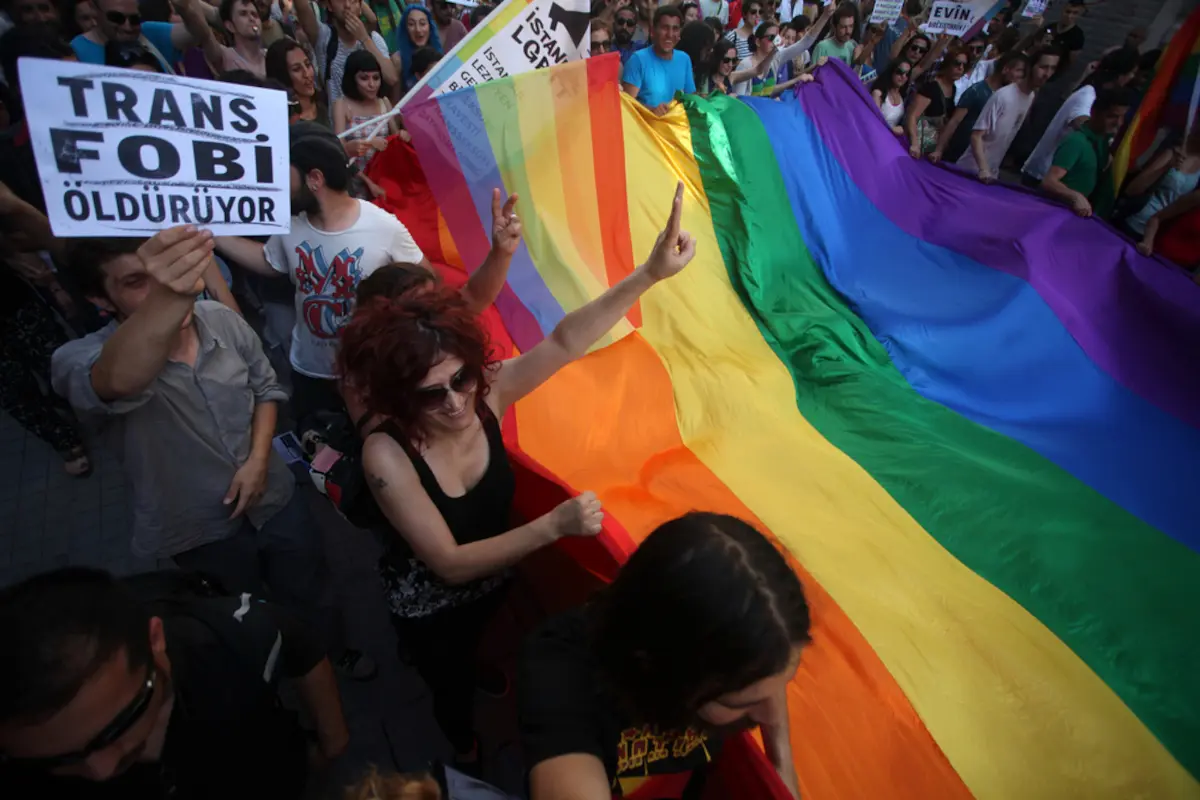
© huseyin ozdemir1/Shutterstock
© huseyin ozdemir1/Shutterstock
In the early hours of September 13, Turkish police launched simultaneous raids across major cities in an operation named “My Family Is Safe.” Justice Minister Akın Gürlek announced that prosecutors were investigating 162 suspects, nine associations and 13 businesses across 15 provinces, and tied the operation to President Erdoğan’s “Decade of Family and Population” for 2026–2035.
Among those targeted were the country’s most established rights organisations, including Kaos GL. SPoD and Lambda Istanbul. Some of them, as nearly 1,250 academics later pointed out in an open letter, are legally registered and have operated in the country for more than 30 years. The raids targeted boards of directors and auditors, the bodies an association legally requires in order to exist.
A disproportionate use of force against the LGBT+ community in September is not new in Turkey. For more than a decade the country’s track record on LGBT+ rights has been in decline. Authorities have banned Istanbul Pride since 2015, detaining en masse those who would show up each year regardless of the ban. Members of the ruling party, and President Recep Tayyip Erdoğan himself, have for years scolded, dismissed the existence of, and dehumanized members of the community. In April this year, 11 leaders of the youth association Genç LGBTİ+ went on trial in Izmir over social media images of same-sex couples kissing.
What was different this time was the scale and the speed. As sociologist Erkan Saka has noted, the September operation moved from blocking public demonstrations to dismantling the organisational infrastructure behind advocacy, legal aid and health information, all in a single night.
Grounds for arrest
More than a hundred people have been detained in recent crackdown according to various international rights bodies. By September 17, at least 81 people had been jailed pending trial. Those who protested the arrests were detained as well, among them, journalists covering the protests.
Although it is not yet clear whether this was part of the broader operation, on the evening of September 26, police raided the homes of trans women on Bayram Sokak, a street in Istanbul’s Beyoğlu district where trans women have lived together for decades and which the authorities have tried to clear repeatedly, sealing flats and evicting residents. Twelve people were detained overnight and released the next morning.
Homosexuality is not illegal in Turkey, and the operation did not rely on any new law. Instead, prosecutors in Istanbul arrested activists on suspicion of “founding, leading or being a member of a criminal organization,” “obscenity,” sex work and drug-related offences, and violations of the Law on Associations.
In Izmir, Kuşadası and Mersin, courts detained dozens of others on obscenity, sex work and drug charges who are not known to be activists at all. According to Human Rights Watch, the detentions demonstrate the government’s determination to criminalise LGBTQ people without passing new laws.
Delfi, citing Der Standard and the state news agency Anadolu, reported that the prosecutor’s office said it had found evidence that the organisations’ activities were influencing minors on questions of sexual orientation and gender identity, and that the operation aimed to prevent such activities being “considered normal in society.”
The referrals for arrest in the Istanbul investigation went further, alleging that the associations “encouraged, promoted and spread” LGBT+ identities and that their activities weakened “the nature of the Turkish family structure” all the while insisting the investigation was not about anyone’s sexual orientation or rights advocacy. Justice Minister Gürlek added that the associations’ financial statements showed large sums received from foreign public institutions, the origin of which was now under investigation.
The Council of Global Unions raised a narrower but pointed objection: by including organisations that support people living with HIV, the operation risks conflating HIV status with LGBT+ identity and could deter people from seeking treatment.
Censorship, online and off
The raids were accompanied by a wave of online censorship. According to the Free Web monitoring update, 319 websites, social media accounts and individual pieces of content were blocked only between September 12-16 alone. A day before raids, on September 12, a joint order from courts in Istanbul and Mersin blocked 173 websites and accounts, most of them belonging to LGBT+ organisations, including Kaos GL, SPoD, Lambdaistanbul, Pembe Hayat, Mersin 7 Renk, HEVİ, ÜniKuir, the sexual health association CETAD, the sex worker rights group Kırmızı Şemsiye, LGBTİ News Turkey and the online magazine Velvele.
Over the following days and weeks the blocks spread to those reporting on the raids as well as social media accounts. Amnesty counted more than 180 accounts blocked or restricted, among them its own Turkey chapter.
The blocks continued into the operation’s third week. On September 30, T24, one of Turkey’s largest independent news sites, reported that its website and social media accounts had been blocked by the Istanbul 1st Criminal Court of Peace as part of the ongoing investigation. According to a note circulated by the Ministry of Justice, the grounds were that T24 had published 118 pieces of content “characterised as LGBT propaganda” over the past year; the note came with files of the outlet’s LGBT+ coverage attached.
As Delfi reported, a swift international response has changed little. The EU Commission spokesman Christian Wigand reminded Ankara that as a candidate country Turkey must ensure respect for the rights of all people regardless of gender identity or sexual orientation; the Commission’s 2025 enlargement report had already found legal protection for LGBT+ people insufficient. The European Parliament’s Turkey rapporteur, Nacho Sánchez Amor, called the raids a “shocking escalation of repression.”
On September 17, human rights envoys from Germany, France, the Netherlands, Sweden, Finland and Iceland issued a joint statement calling the measures “deeply troubling” and pointing to Turkey’s obligations under the European Convention on Human Rights. UN High Commissioner Volker Türk and Council of Europe Commissioner Michael O’Flaherty called for the release of those arbitrarily detained.
Civil society followed. On September 22, more than 450 organisations from 65 countries among them ILGA, CIVICUS, IPPF, AWID and PEN Norway signed a call titled “Stop Criminalising the LGBT+ Movement in Turkey,” rejecting the use of “family,” “morality” and “obscenity” and of organised-crime provisions to suppress LGBT+ organising.
The academics’ letter, whose signatories include Judith Butler, Slavoj Žižek and Étienne Balibar, demanded the release of all detainees, an end to the investigations, the return of seized equipment and the lifting of the access blocks. Meanwhile, protests were held outside Turkish missions in Washington, New York, London, Madrid, Berlin and Buenos Aires.
In New York, where President Erdoğan was attending the UN General Assembly, a billboard in Times Square showing Zeki Müren the beloved, flamboyant singer of the Turkish classical canon, framed in rainbow colours above the words, “We Will Always Be Here.”
At home, the government’s own slogan has turned into a debate. The research centre SAMER analysed 1,300 posts on X between September 13 and 21, and found that “my family is safe” carried no shared meaning. Supporters used it to mean the protection of family structure and moral order; some demanded the closure of the associations outright and the criminalisation of LGBT+ organising.
Critics turned it into irony “thank goodness they rounded up all the gays, now my family is safe” in reference to femicide, domestic violence and child abuse and asked who the state considers worth protecting. Parents of LGBT+ children, speaking to bianet, asked a simpler question: “Aren’t we a family?”
For a decade, the grey zone held. As of September 2026, it appears to be over. The detainees remain in custody, the associations’ websites remain blocked, the list of blocked outlets is still growing, and there is little sign the authorities would budge despite all eyes turning on the country.
Found an error in this article? Please contact our editorial team at redazione@balcanicaucaso.org.
This article was produced as part of PULSE, a European initiative coordinated by OBCT that supports transnational journalistic collaborations