Everyone wants to invest in Montenegro
In recent years, Montenegro has seen an influx of foreign direct investment. Serbia, Turkey, and Russia are interested in Montenegrin real estate, while China takes on infrastructure development
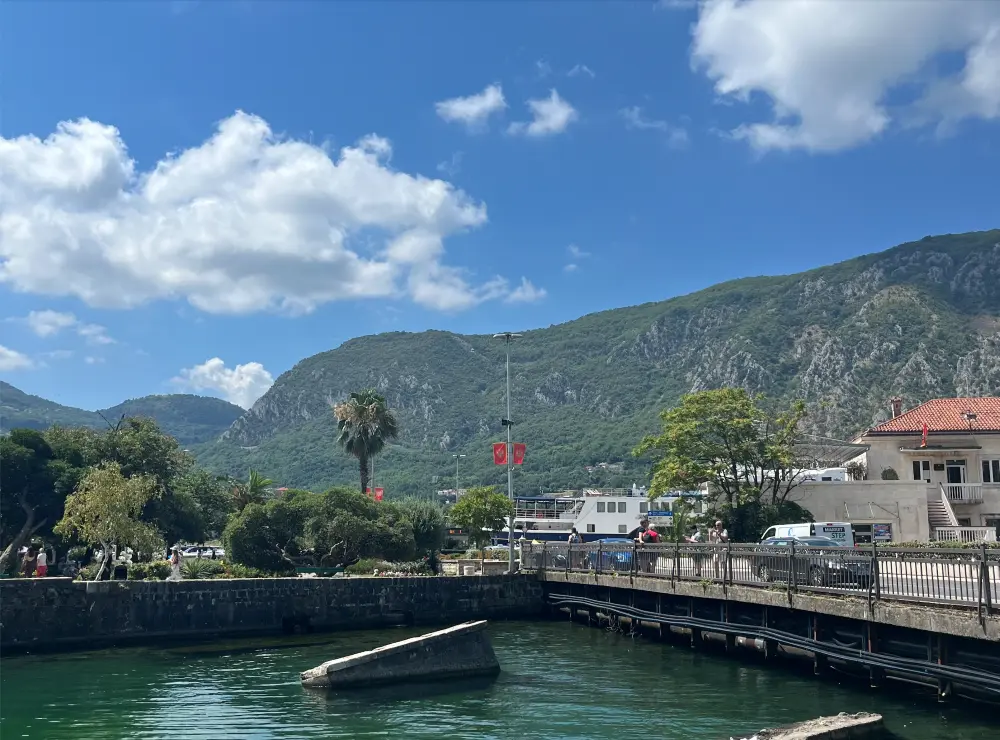
Kotor, Montenegro – Foto di I. M. Velasco
Kotor, Montenegro - Photo by I. M. Velasco
Money is pouring into Montenegro, and construction is booming; that much is clear. I took a FlixBus travelling along the entire length of Montenegro. I also drove around Northern Montenegro for 13 hours, passing through Nikšić and Durmitor National Park. I expected to see stunning natural beauty and buildings spanning from historical fortresses to Yugoslavian-built apartment complexes. What I didn’t expect to see were half-built office buildings, residences, condominiums and countless cranes dotting the horizon. This spiked my curiosity, so I investigated their biggest investors. According to the 2025 Montenegrin Foreign Investors Council Report, Montenegro’s largest collective investor is the European bloc at €250 million, and its largest individual investors are Serbia, Turkey, and Russia at roughly €100 million each or €318 million combined.
The next logical step was to understand how the investments were related to the seemingly ubiquitous construction sites. In 2025 alone, 2,205 new dwellings were completed, with a total value of €704 million, according to the Montenegro Statistical Office. The money comes mainly from two sources. The first is real estate demand from buyers and investors. Foreigners put around €455 million into property in 2024, compared with a much lower €113 million invested in Montenegrin companies and banks, according to the CIN research centre. This is where the foreign investors from Russia, Serbia and Turkey come in. They buy the property.
To break it down further, more than half of Serbian funds went into a diversified real estate portfolio. Notably, as locals revealed, one of Serbia’s wealthiest men owns Montenegro’s most expensive coastal property, worth €50 million. The same billionaire also built the capital city’s biggest mall, Podgorica Delta City. Turkey’s largest investments were in acquiring a large stake in the Port of Adria and establishing a financial foothold in Montenegro’s steel industry. Both of these investments have been somewhat overshadowed by dispersed real estate, construction and tourism. The daily newspaper Vijesti reports that “Turkish companies are engaged in the construction of residential and non-residential buildings and participate in the construction of large projects”. In a similar fashion, Russia’s capital is largely concentrated in coastal property. BIRN, reported that Russian individuals hold over 19,000 properties and “more than four million square meters of land”.
The second source of funding is money from big development projects. During my stay, I met a local tour guide, Boban, who had been working in Kotor boating for twenty years. As he was showing me around, he stopped at a pier and pointed across the bay at an island in the distance. This was Mamula island, infamous for having once been an Italian prison camp during WWII. The fortress-turned-prison has now found a new life as a luxury boutique hotel developed by Egyptian billionaire Samih Sawiris and his Swiss-Egyptian company, Orascom Development Holding. Boban said that it was a good thing the fortress was restored but expressed complicated local sentiments towards foreign capital redefining the island and with it a dark chapter in Montenegro’s history. The Mamula island hotel is not alone. A Dubai investment firm was responsible for the Porto Montenegro residences and marina, Orascom Development constructed the Luštica Bay lavish settlement from scratch, and Azmont Investments erected the Portonovi beachfront luxury apartment complex.
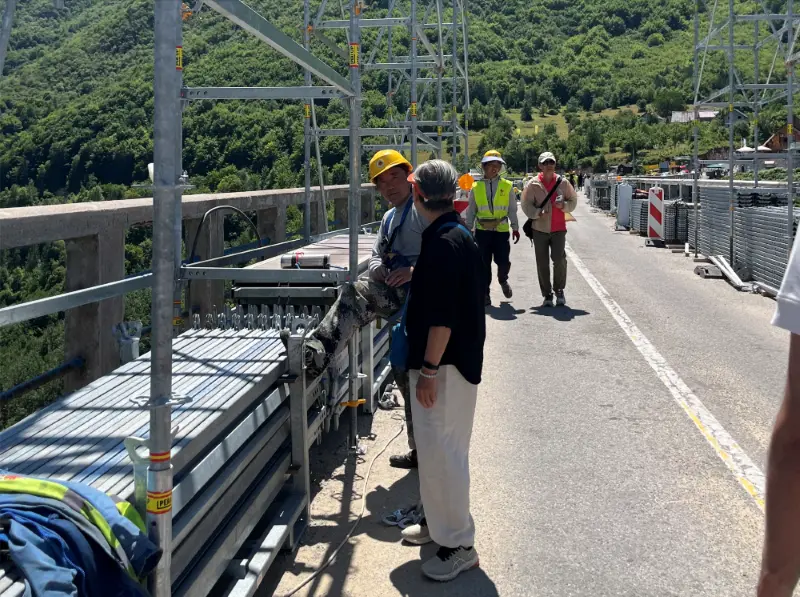
Workers on the Tara bridge, Montenegro – Photo I.M. Velasco
Why is the property boom happening?
Montenegro’s biggest commercial partners still invest in Montenegrin companies and industry; it’s not that telecom or steel lost their appeal, but that owning property has become more attractive. None of this is surprising. Montenegro is a beautiful country with pristine natural beauty, an idyllic coastline, and spectacular mountains perfectly matched to privatised lifestyle enterprises, holidays, rentals, and retirement plans. Prices are cheaper than in many other countries and service quality is high. Montenegro is in a strategic location, close to many important European hubs and other growing economies. Now that Montenegro finds itself in a much more stable trajectory than a couple of decades ago, growth and demand will continue to skyrocket.
Investors want to buy into an EU market before accession happens, and Montenegro is moving towards officially entering the European Union in 2028. The official currency has been the euro since 2002, making it easy and favourable to invest, with low tax rates, lower property prices compared to the rest of Europe, simple acquisition processes, and foreign investors receiving equal treatment to domestic ones. The government has launched multiple ‘incentives for investors’. Buying at low prices and then watching developments accrue value post-accession seems like a good deal, and reminiscent of Croatia’s own trajectory after integration in 2013.
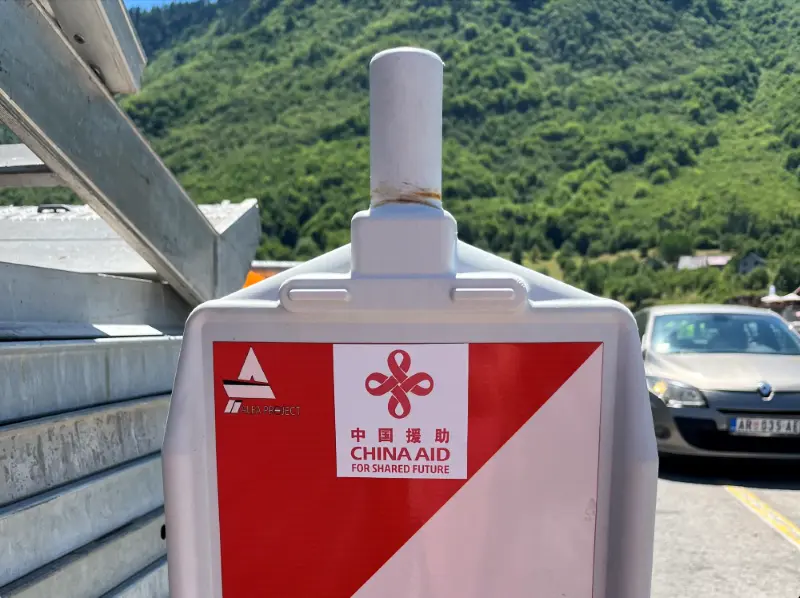
Bridge on the Tara river, Montenegro – Photo I. M. Velasco
Where does China come in?
China is absent from this list. It was never at the level of investment Serbia, Turkey, or Russia were. Yet it is becoming one of Montenegro’s most important partners and not through buying property. Its focus is on state-backed infrastructure. Coming back from Durmitor National Park, I stopped at the famous Đurđevića Tara Bridge. I was surprised to see that the majority of people on the bridge or crossing the bridge were not Montenegrins at all. They were either tourists, just like me, or construction workers from ChinaAid. Since 2017, China has given € 7.6 million in grants for the bridge. Other projects included the Bar-Boljare highway, the Adriatic-Ionian Highway, Kolašin-Kos railway rehabilitation, Pljevlja thermal power plant renovations, shipbuilding, and the development of a Confucius institute, amounting to €2.4 billion. Montenegro has been a fundamental part of the Western Balkan projection of China’s Belt and Road Initiative. Once these transport projects are completed, they will connect the Adriatic through Serbia and into Central Europe, increasing Chinese influence throughout.
In 2021, OBCT published an article describing Montenegro’s €1 billion debt to Chinese creditors, making it around 40% of the country’s external debt. Montenegro had to refinance its payments and steadily rebalance its deficit, but the hiccup did not deter China. A Chinese company has won the contract for the new section of the highway. However, this time the money is not lent by China but will be provided through a €200 million loan from the European Bank for Reconstruction and Development (EBRD) and a €150 million European Union grant. Europe is now seizing the chance it missed the first time around, realising it does not want diminished strategic impact in favour of China and, as part of its own project, Global Gateway, offsetting the BRI.
However, China just announced a €13 million grant to Montenegro for special projects. This comes after Prime Minister Milojko Spajić’s visit to China, in which both countries noted a ‘fresh momentum in their bilateral relations’. Increased tourism, trade, innovation, and sustainability are amongst the aims. Premier Li Qiang noted that the historical Đurđevića Tara River Bridge reconstruction would become “a testament to the friendship between countries and peoples”. Even as Europe steps up, China continues to prevail in an increasingly competitive contracting environment.
Found an error in this article? Please contact our editorial team at redazione@balcanicaucaso.org.
Tag: Economy
Featured articles
 Political deadlock