Moldova: Shadow Report on the State of Media Freedom in the Country
Media freedom, European integration, and reform processes in Moldova are the main themes of the recent shadow report published by the Independent Journalism Center (IJC) in collaboration with OBCT and ActiveWatch
© Petru B / Shutterstock
© Petru B / Shutterstock
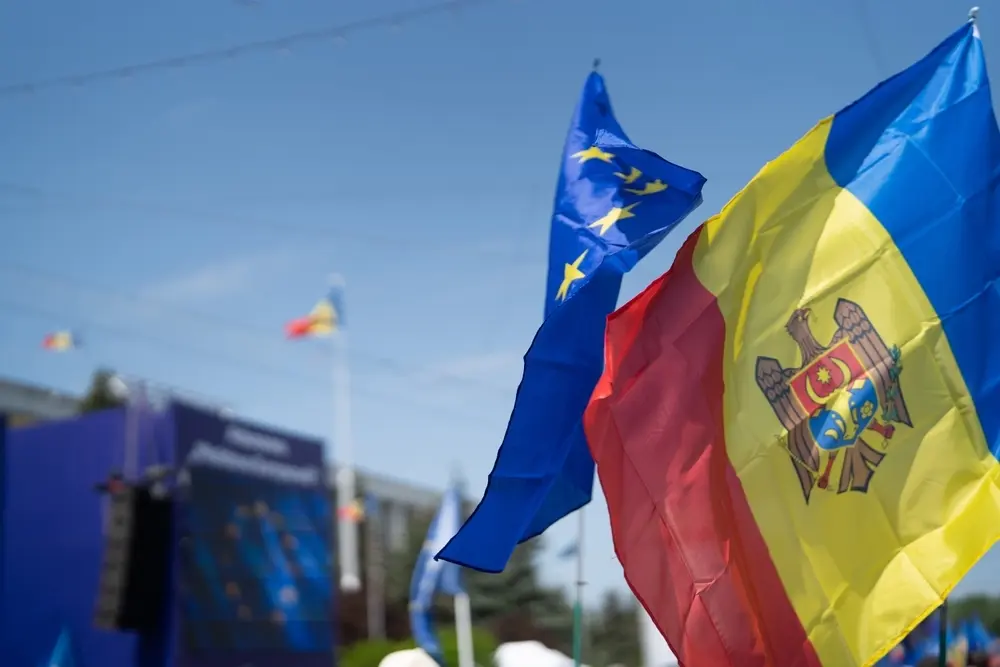
Within the project MAAM, and with the contribution of ActiveWatch and Osservatorio Balcani Caucaso Transeuropa, the Independent Journalism Center (IJC) has published a shadow report examining the state of the art of media freedom in the Republic of Moldova against the backdrop of the EU enlargement processes.
In June 2024, the European Union initiated accession talks with Moldova. As such, the European Commission’s 2025 report found the country’s readiness on freedom of expression to be at a “moderate” level, highlighting progress such as new access-to-information legislation, the Media Subsidy Fund, revised audiovisual and advertising rules, and enhanced journalist protection statutes. However, the assessment also highlighted enduring structural challenges, including concentrated media ownership, ongoing political influence over editorial independence, rising intimidation of journalists by private actors, and the need to ensure that measures directed at countering foreign information manipulation and interference remain aligned with EU standards on freedom of expression.
Against this background, and based on the recommendations identified by the European Commission, this Shadow Report contextualizes and analyzes the systematic challenges and institutional responses that Moldova faced throughout 2025 and the first half of 2026. It identifies five main issues, namely: developments within the legal and institutional framework; the safety of journalists and the institutional response to attacks, including online and offline safety, risks during elections and protests, and specific risks faced by journalists covering Gagauzia and the Transnistrian region; SLAPPs and other forms of legal pressure; access to information of public interest; foreign information manipulation and interference, national security, and restrictions on media activity.
To be sure, 2025 has marked a crucial year for Moldova’s press freedom, as it both faced significant obstacles during the 2025 electoral campaign, such as foreign information manipulation and sustained political polarization, as well as an accelerated set of legal and institutional reforms in line with EU standards, which resulted in a more pluralistic media ecosystem. Ultimately, this process constituted a contested transition in which stronger regulation and public support for journalism coexisted with weak safeguards, uneven enforcement, and new forms of pressure.
In September, the consortium will present the main findings of the report within a webinar, while its outcome will be used as a starting point for the discussion that will be held in Bucharest in November and which will involve both national, regional, and European stakeholders.
Found an error in this article? Please contact our editorial team at redazione@balcanicaucaso.org.
This publication is the result of activities carried out within Media Advocacy Action for Moldova: Empowering Moldova’s Public Watchdogs to Safeguard Media Freedom, a project co-funded by the CEI Fund of the European Bank for Reconstruction and Development (EBRD), with the contribution of the Italian Ministry of Foreign Affairs and International Cooperation. All opinions expressed represent the views of their author and not those of the co-funding institutions.
Tag: MAAM