Of words, almonds, and what it means to be from Iran in Cyprus today
In a climate of formally warm relationships between Nicosa and Tehran, now strained by the tragic events of the last months, Iranians living in Cyprus must navigate their daily lives with increasing care
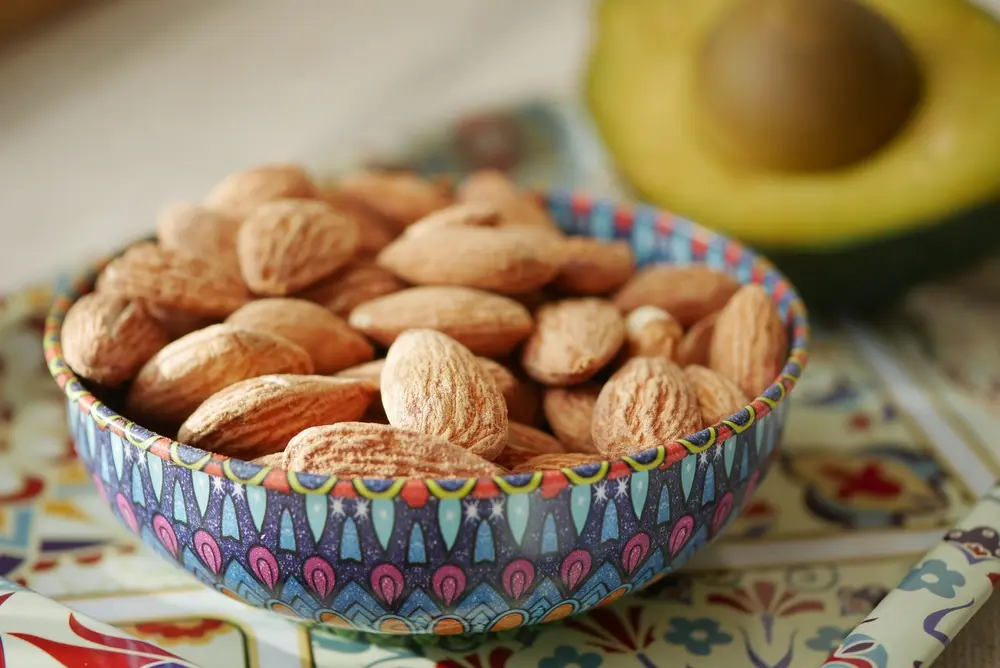
Bowl of almonds © Shutterstock/Towfiqu ahamed barbhuiya
Bowl of almonds © Shutterstock/Towfiqu ahamed barbhuiya
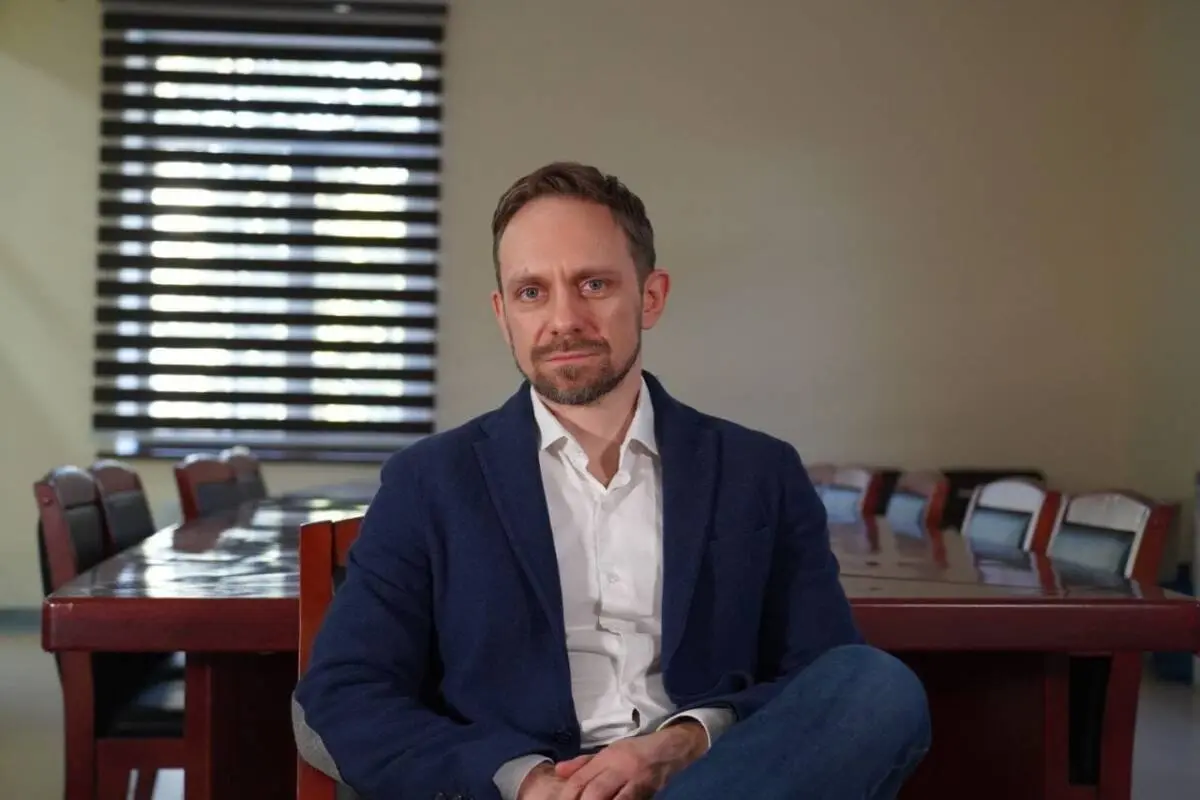
Reza Khakpour describes the situation in Iran with the precision of someone who has learned to hold pain at a careful distance. “Dust and fire,” he says. “Like a body opened for surgery.” He is an internationally recognised, award-winning architect and designer, originally from Tehran. Among the many places where he has lived and studied, including Dubai and Kuwait City, Cyprus feels the closest to home: “The narrative here — of war, of blood, of trauma — is not unfamiliar. It is part of our lives in Iran, too. That is difficult for others to grasp, unless they have lived through something similar.”
He speaks of shared values with the ease of someone who has thought about this carefully: family as a structuring principle of daily life; the almost tactile continuity of gathering around a table, reaching into the same dish, dipping bread into a shared salad. “It is a simple thing,” he says, “but it tells you how people understand closeness.”
On the question of naming, he is deliberate. “Cypriots prefer to call us Persians, and I am comfortable with that,” he says. The word carries resonance — an echo of grandeur, of an imperial past associated with Cyrus the Great, a designation that signals culture before politics.
His own name, Reza, carries its own historical freight: Reza Shah, the early twentieth-century ruler who sought to recast Iran as a modern nation-state, privileging a unified national identity over its many internal diversities. This modern Reza neither rejects these associations nor fully inhabits them. Like many in the diaspora, he moves between them — aware of their weight, their usefulness, and their limits.
A bowl of almonds
The second encounter takes place at a modest bridal shower in Limassol. Katia, a young Greek Cypriot woman, moves through a close circle of friends, pouring thick Cypriot coffee and offering noghl (نقل): the sugar-coated almonds that sit, almost ceremonially, at the heart of Persian wedding tables. “These are from my fiancé’s culture,” she says, her voice lowered just enough to signal both pride and caution. “He is Persian.”
Her fiancé, Mehdi, arrived in Cyprus more than a decade ago without documents. By passport and by birth, he is Iranian. Yet even this designation frays upon closer inspection: he comes from the Azerbaijani-speaking northwest of Iran, where language, ethnicity, and national identity rarely align in neat, exportable terms.
Whether Katia knows this — or whether she senses it intuitively and chooses otherwise — is unclear. What is clear is her choice of word: not Iranian, but Persian. The softer term. The more legible one.
Then, briefly, Mehdi appears. He steps into the room and greets everyone easily, offering a soft hallo in fluent Cypriot Greek; his vowels rounded, the rhythm unforced. When someone asks, he answers simply: “I am from Iran.” No emphasis, no hesitation, no insistence on the difference. A few polite exchanges follow, and then he withdraws, slipping onto the small balcony to smoke, leaving behind only the faint trace of his presence.
The noghl makes its way around the room. No one asks further questions.
Iran, Cyprus and a loaded moment
Cyprus and Iran are not enemies. Their diplomatic relations have historically been stable and pragmatic, and as recently as March 2026 the Iranian embassy in Nicosia reiterated that the two countries share “very positive relations.” Yet geopolitics rarely asks permission before it reshapes the social texture of a place.
On 1 March 2026, a drone of Iranian manufacture struck the British RAF base at Akrotiri on the southern coast of the island — the first time in decades that Cyprus has found itself inside the operational geography of a Middle Eastern conflict.
The economic consequences were immediate: hotel occupancy fell sharply, tourist cancellations spread across the island, and a public debate erupted about the presence of British military bases on Cypriot soil. Cyprus had not chosen this proximity. But proximity, in the Eastern Mediterranean, is rarely a choice.
Today, Cyprus sits at the intersection of two unfolding pressures: the regional fallout from renewed conflict involving Iran, and a migration situation that has made this small island — per capita, among the EU’s most exposed member states to irregular arrivals; a frontier of European anxiety.
Within this space, Iranians in Cyprus continue to move, interact and situate themselves, aware that how they are read — named, placed, understood — has taken on a sharper edge.
The politics of a label
Across Europe and the Eastern Mediterranean, Iranian and Persian circulate with an ease that belies their weight. In theory, they name the same people. In practice, they perform very different functions.
In 1994, cultural theorist Stuart Hall argued that cultural identity is not a fixed essence but a matter of “becoming as well as being”, subject to the continuous play of history, culture, and power.
Sociologist Aihwa Ong showed in Flexible Citizenship (1999) how the ability to navigate cultural registers is itself a form of class privilege: available to the mobile and educated, foreclosed to those fixed in place by the machinery of immigration law. In other words, some get to choose their label, while others have one chosen for them, even if it is gently, by a future wife who reaches for the word that makes one safe at a table full of strangers.
In The Limits of Whiteness (2017), Neda Maghbouleh traces how Iranians in Western societies occupy a racially liminal position — neither comfortably “Middle Eastern” nor legibly “Western” — and how the Persian/Iranian distinction is one of the strategies through which this liminality is managed, with sharply different outcomes across class lines.
Cyprus, with its particular position in Europe’s migration debate, makes this dynamic unusually visible.
Found an error in this article? Please contact our editorial team at redazione@balcanicaucaso.org.
Tag: Iran
Featured articles
 Investigation
 students' protest
 Montenegro Pride 2026