Elections in Bulgaria: Radev, a moderate Orbán?
Polls predict former President Rumen Radev will win the Sunday, April 19, elections in Bulgaria. A moderate nationalist, open to dialogue with Moscow, Radev has toughened his tone during the campaign, so much so that his opponents are raising the specter of a new Orbán
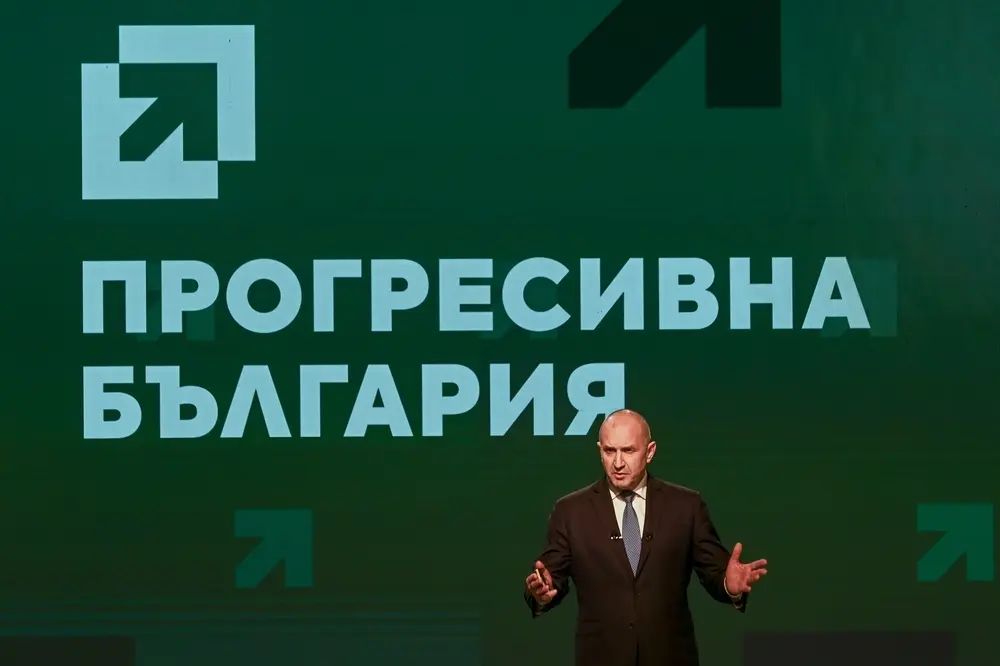
shutterstock_2758005061
Rumen Radev © Anton Chalakov/Shutterstock
Top gun, commander-in-chief of the Air Force, two-time president, and now, in all likelihood, the next winner of Bulgaria’s snap general elections on April 19. Rumen Radev, who, with less than a week to go before the election, is predicted by most polls to be the clear winner of the country’s eighth snap elections in just five years, is a man who enjoys leading, regardless of the challenges he decides to take on.
After a long wait, in early 2026 the former head of state decided to end his second presidential term early, create his own political project called “Progressive Bulgaria,” and present himself to the electorate promising to put an end to the long period of political instability that has gripped Bulgaria since the global pandemic, a period that has inexorably consumed leaders and movements, quickly fading after a brief period of glory.
Radev hopes to succeed where others have failed and become the new center of gravity of Bulgarian politics, promising a relentless fight against corruption, an economic policy capable of protecting the weakest classes from inflation, but also a less Euro-enthusiastic conservative approach, all while winking at a possible détente with the Russian Federation. Enough to make some fear the specter of a new Orbán in the heart of the EU, just when the original one was soundly defeated in the Hungarian parliamentary elections.
“Radev is the first politician to successfully transition from the presidency to his own political project in parliament, a move many before him had attempted in vain. He does so with the profile of a determined and moderately nationalist politician, even if his latest campaign statements reveal a more extreme and less reassuring Radev,” Anna Krasteva, professor of Political Science at Sofia’s Nov Balgarski University, commented for OBCT.
During his two presidential terms, Radev, who ran for office the first time with the support of the Socialist Party, has carved out an increasingly independent space for himself. He has acquired room for power and maneuver thanks to the country’s long years of political crisis, in which he has been able to play an active role, for example by appointing numerous technical executives, his prerogative as head of state.
“What has most characterized Radev’s presidential term in domestic politics has been his consistent line of opposition and balancing the figure of Boyko Borisov, who in recent years has represented, even symbolically, political power in Bulgaria,” emphasizes political scientist Dimitar Ganev, founder of the sociological agency “Trend.”
This line has led the two leaders to repeated moments of conflict, even violent ones. Such was the case in 2019, when Radev’s staunch opposition to the appointment of the new Chief Prosecutor Ivan Geshev, sponsored by Borisov, led to anti-government protests in the streets and the arrest of several members of the presidential administration.
In foreign policy, the most controversial aspects have been Radev’s positions on the Russian invasion of Ukraine: while officially condemning the Kremlin’s aggression, Radev has unhesitatingly opposed military aid to Kyiv and has supported the need for a way out of the conflict through the reopening of dialogue with Moscow. A stance that — in the summer of 2023 — led him to a direct and highly emotional confrontation with his Ukrainian counterpart Volodymyr Zelenskyi during the latter’s official visit to Sofia.
Over the years, Radev has repeatedly considered throwing down the gauntlet to Borisov and his GERB movement. Ultimately, he was convinced by the disastrous fall of the Zhelyazkov government, Borisov’s last political creation, buried last winter by the largest street protests in decades. These protests shook Bulgaria, from the capital Sofia to smaller towns, bringing hundreds of thousands of people, including countless young ones, to a standstill against corruption and nepotism.
The demonstrations were primarily promoted by the liberal and reformist “Continue the Change” movement, but it is Radev who could reap the benefits of the protests. After resigning as president, the former head of state has worked tirelessly to fill the ranks of his “Progressive Bulgaria.” Three main types of candidates have entered the electoral lists of ‘Progressive Bulgaria’. On the one hand, members of the presidential administration; on the other, officials who participated in the numerous technical governments appointed by Rade in recent years,” Ganev outlines. “Lastly, there were many representatives who gravitated towards the Socialist Party.”
In its initial phase, Radev’s election campaign was marked by caution and moderation. No direct debate or confrontation, but generalized attacks against “the oligarchic model,” almost never mentioning Borisov or tycoon Delyan Peevski, who represent this model for a significant segment of the Bulgarian electorate.
Surprising many analysts, the first direct attacks came against “Let’s Continue the Change,” the most openly pro-European group in the Bulgarian political spectrum. The movement’s leadership emerged from one of the technical governments formed by Radev, but over time, personal and political relations have soured. In a long and recent interview, one of the few given during the election campaign, Radev openly ruled out any possibility of post-election collaboration with this political force.
A move that, according to Krasteva, could open a window on the direction and the possible alliances Radev has in mind after counting the votes. “It’s too early to make predictions, but after the latest statements, the most natural outcome seems to be a government with a more markedly nationalist and pro-Russian tone, with the Socialists [should they pass the quorum] and the ‘Resurgence’ movement. Another possibility, given the silent truce with Borisov, could be a “status quo government” between the two adversaries, in which the GERB leader would be happy to participate in order to remain in power, providing Radev with his deep-rooted network of clients in exchange.
This latter prospect, however, would have to take into account the desire for change expressed by Bulgarian citizens during the end-of-year protests, which confirmed the presence of a vibrant civil society. “I doubt that those who took to the streets will allow Radev, if he wins, to privatize the energy generated by the protests for personal gain, without reacting if solutions are botched,” Krasteva concludes.
In the same interview, the former president reiterated his position of reopening dialogue with Russia and putting “the economy first, before ideology,” referring to the opportunities offered by hydrocarbons from Moscow and the possibility of developing nuclear energy, including with Russian collaboration. Last but not least, Radev expressed doubts. on “liberal ideology” and the “Green Deal” and — when asked about potential policies aimed at the LGBT community — spoke of a “sober return to the reality of two sexes.”
Is the specter of Radev as the new Orbán, therefore, real, haunting the renewed prospects for strengthened European unity after the Hungarian elections? For Ganev, the comparison is untenable, and many of Radev’s positions are based more on considerations of electoral expediency than on a solid ideological foundation.
“Much of these statements are electoral in nature, and appeal to that more traditionalist and pro-Russian segment of public opinion that orbits in the political arena largely left unprotected by the Socialist Party. When it comes to practical decisions, I doubt that Radev will take positions that truly challenge Bulgaria’s current geostrategic position. Moreover,” the analyst concludes, “despite the rhetoric, even on Ukraine, the governments appointed by Radev have not changed course in supporting Kyiv. If Orbán was the opposition, Radev could be the ally who doesn’t give up an alternative, and sometimes uncomfortable, point of view.”
Krasteva’s comment was more nuanced. “Judging by his political career, I would say that Radev is not Orbán, and in recent years he has shown neither the extremism nor the willingness to engage in tough confrontation with Brussels that the former Hungarian prime minister has repeatedly embraced. Given the recent tone of the campaign, however, I cannot rule out that a Radev government could potentially fall into the temptation of occupying the anti-liberal and pro-Russian political niche that has characterized Orban’s Hungary in recent years”.
With just days to go before the election, to win the new challenge, Radev needs to convince the many Bulgarians who have been apathetic due to ongoing political instability and worried about the uncertain economic outlook, despite Bulgaria’s recent adoption of the single currency, on which Radev himself, as president, had proposed a popular referendum, which never materialized. From the analyses conducted so far, it emerges that “Progressive Bulgaria” will garner support that until now has gone to parties across the political spectrum, but particularly within the socialist camp and smaller nationalist movements.
Even in the event of a broad electoral success, other obstacles could arise between Radev and the prime ministerial post. On the one hand, suspicions of possible Russian interference in the electoral process, denounced by the current technocratic government, have prompted the former president to speak of a possible “Romanian scenario”, modeled on the recent controversial presidential elections in the northern neighbor. This scenario, Radev argued, could be an attempt to snatch the election victory from “progressive Bulgaria.”
On the other hand, uncertainty about which forces will be able to overcome the electoral threshold and enter the next parliament could make the creation of a stable majority very difficult or even impossible. This would open the door to new early elections – an all-too-realistic prospect in Bulgaria and an outcome far from encouraging for those, like Radev, who promise to finally turn a new page in the country’s history.
Found an error in this article? Please contact our editorial team at redazione@balcanicaucaso.org.
Tag:
Featured articles
 Investigation
 students' protest
 Montenegro Pride 2026