Albania, a law on gender equality
The adoption of the gender equality law has sparked intense public debate in Albania, intertwinning ideological narratives and disinformation. The battle is now in front of the Constitutional Court.
parità di genere
© KELENY/Shutterstock
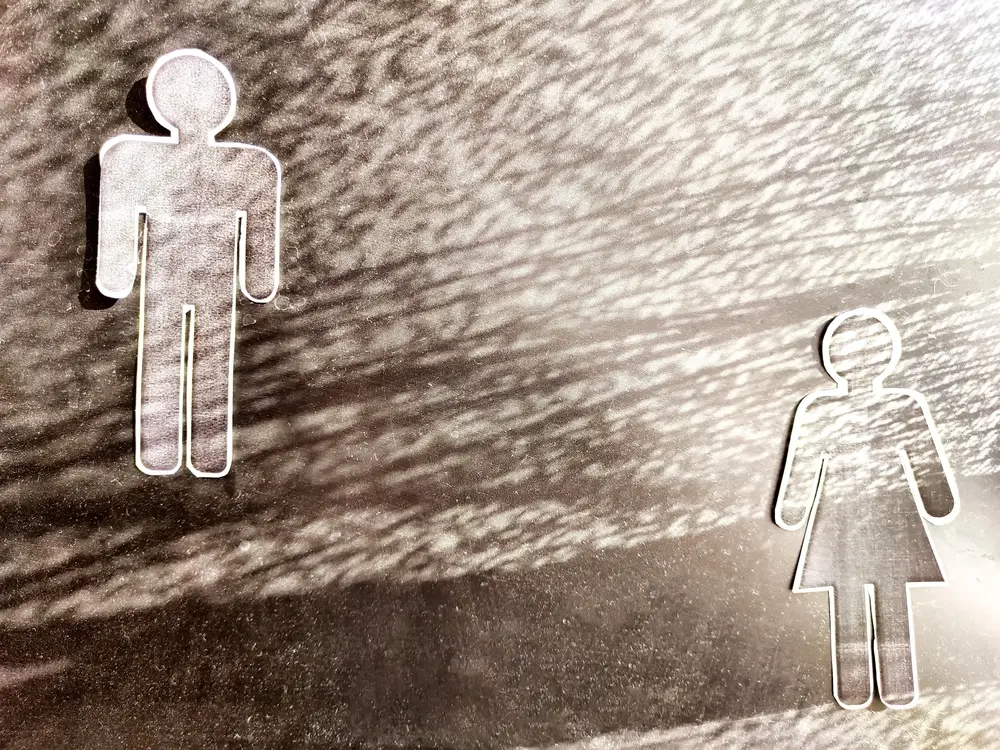
A year ago, Albanian authorities opened a public consultation on the draft law on gender equality, aimed at addressing structural inequalities that continue to affect women and girls in Albania. The law also seeks to tackle the impact of gender-based stereotypes across social, economic, political, and institutional spheres, as well as inequalities rooted in gender hierarchies in Albanian society.
Among other things, the law extends gender equality obligations beyond public institutions to the private sector. Previously, gender equality requirements applied mainly to public administration, but the new framework introduces obligations for private companies as well. Leadership positions can no longer be occupied exclusively by men, and gender representation quotas are introduced while formally respecting meritocracy. Employers are also required to adopt measures to prevent sexual harassment, violence, and discrimination in the workplace. In addition, the law aims to increase women’s representation from the current 30% quota to full gender equality within the next decade in political parties and local governance bodies.
The draft law was developed in line with European Union directives and the Istanbul Convention, which Albania ratified in 2013. Last 7 November, Parliament approved the law with 77 votes from the Socialist Party. The opposition did not support it, framing it as a threat to the traditional family.
According to Mirela Arqimandriti, head of the Gender Alliance for Development Center (GADC), the law addresses long-standing structural gaps in Albanian society. “Inequalities in the labor market, low representation of women in decision-making, lack of effective mechanisms to prevent and address gender discrimination, as well as the integration of a gender perspective in public policies and budgeting,” Arqimandriti argued.
For Dea Nini, a human rights lawyer, the law shifts the understanding of equality from a formal to a substantive approach, operationalizing constitutional guarantees. “An important innovation is the recognition, for the first time, of unpaid work, which has historically fallen disproportionately on women and remained invisible in public policies. The law also strengthens gender-responsive budgeting, linking it directly to the state’s obligations under Article 59 of the Constitution,” Nini said.
Ines Leskaj of the Albanian Women Empowerment Network (AWEN) emphasized that the law primarily addresses gender discrimination. “Particularly multiple discrimination, as well as broader inclusion and representation of girls and women in terms of equal access and the removal of social barriers,” Leskaj said.
Opposition and disinformation
The law was accompanied by a wave of disinformation on social media, including false claims that it would “recognize 70 new genders in Albania” or legalize same-sex marriage. It was strongly opposed by an alliance of opposition parties and conservative “pro-family” groups, including the Conservative Center “Pro Family and Life Coalition,” represented by a pastor, who ran a coordinated campaign portraying supporters of the law as a threat to the traditional Albanian family.
“There has been orchestrated disinformation and manipulation of public opinion through media campaigns, social media, and influencers who promoted narratives about tradition, family, and the ‘threatened future of children,’” said Leskaj.
Dea Nini noted that several claims circulated about provisions not included in the law, particularly regarding the definition of gender. “This definition is identical, word for word, to the definition in Article 3 of the Istanbul Convention, which has been in force in Albania since 2014. It is not a new definition in the legal framework, despite how it has been presented to the public,” she explained.
Mirela Arqimandriti also pointed to deliberate distortions of the law’s content. “What we have seen in practice is the use of family and children as a ‘shield’ in this debate, a narrative aimed at creating fear and diverting attention from the essence of the law, which is equality and non-discrimination,” she said.
Human rights activists argue that disinformation has been used to slow progress toward equality. “The opposition is less about the technical content of the law and more about broader resistance to advancing gender rights and women’s empowerment. At its core, it reflects a clash between modernization aligned with European standards and a conservative discourse framing it as a threat,” Arqimandriti added.
Nini also said that opposition also stems from incorrect legal interpretation. “It has been fueled by the political and ideological climate present in Albania, reflecting global and European trends where actors mobilize against gender equality and fundamental rights policies,” she noted.
Leskaj highlighted the influence of broader geopolitical trends. “Opposition comes from the rise of anti-gender movements supported by global, regional, and local politics, as well as groups funded for this purpose,” she said.
Constitutional Court and referendum initiative
On 30 December 2025, the Conservative Center “Pro Family and Life Coalition,” the Muslim Forum of Albania, and Diaspora for a Free Albania filed a complaint with the Constitutional Court requesting suspension of the law, its declaration as unconstitutional, and its full or partial repeal.
Leskaj argued there are no legal grounds for the challenge. “We maintain that arguments opposing human rights cannot be considered valid legal arguments,” she said.
Nini rejected the constitutional basis of the claims. “The law does not alter the legal order on gender as a civil status element or create new recognition mechanisms. It aligns with Article 18 of the Constitution and international obligations, aiming to strengthen equality and protection against discrimination,” she explained.
Arqimandriti said the objections are largely political rather than legal. “GADC and AWEN have submitted an ‘amicus curiae’ to the Constitutional Court, providing an independent analysis based on international standards and supporting constitutional principles of equality and non-discrimination,” she noted.
The Constitutional Court rejected the request to suspend the law and is expected to review the case on its merits. Meanwhile, on January 12, the State Election Commissioner approved a request to collect signatures for a referendum to repeal the law. Although Albania’s Constitution recognizes the right to a referendum, none has been held in the past 28 years due to the absence of implementing legislation, now under public consultation.
Nini noted that constitutional provisions allow referendums but set clear limits. “Article 151/2 prohibits referendums that attempt to restrict fundamental human rights. Since the law relates to protection from discrimination and equality before the law, a referendum could reduce the level of human rights protection in Albania,” she said.
Arqimandriti added that such initiatives raise concerns about democratic principles. “Gender equality is a fundamental right and cannot be subject to a popular vote. Democracy is not only majority rule, but also the protection of minority rights,” she said.
“Repeal would be a regression”
Civil society actors warn that repealing the law would undermine Albania’s EU integration process.
“Gender equality is part of the acquis communautaire and a key integration criterion. Any regression would slow progress and question Albania’s commitment to European values,” Arqimandriti concluded.
Dea Nini added that repeal would undermine EU integration and constitutional equality standards. “It would signal that equality and non-discrimination standards guaranteed by the Constitution and the European Convention on Human Rights can be challenged by politically or ideologically driven initiatives,” she said.
Leskaj added that repeal would place Albania among countries moving away from democratic and rule-of-law standards, rather than toward them.
Found an error in this article? Please contact our editorial team at redazione@balcanicaucaso.org.
Tag: Diritti e uguaglianza | Women
Featured articles
 Investigation
 students' protest
 Montenegro Pride 2026