Bulgaria |
Bulgaria: voters and the EU await Radev’s first moves
After winning the elections, former Bulgarian President Rumen Radev must now form a stable government and meet the expectations of the citizens who voted for him, particularly regarding the fight against corruption and the economy. Meanwhile, in Europe, all eyes are on his first moves regarding the sensitive issue of relations with Moscow
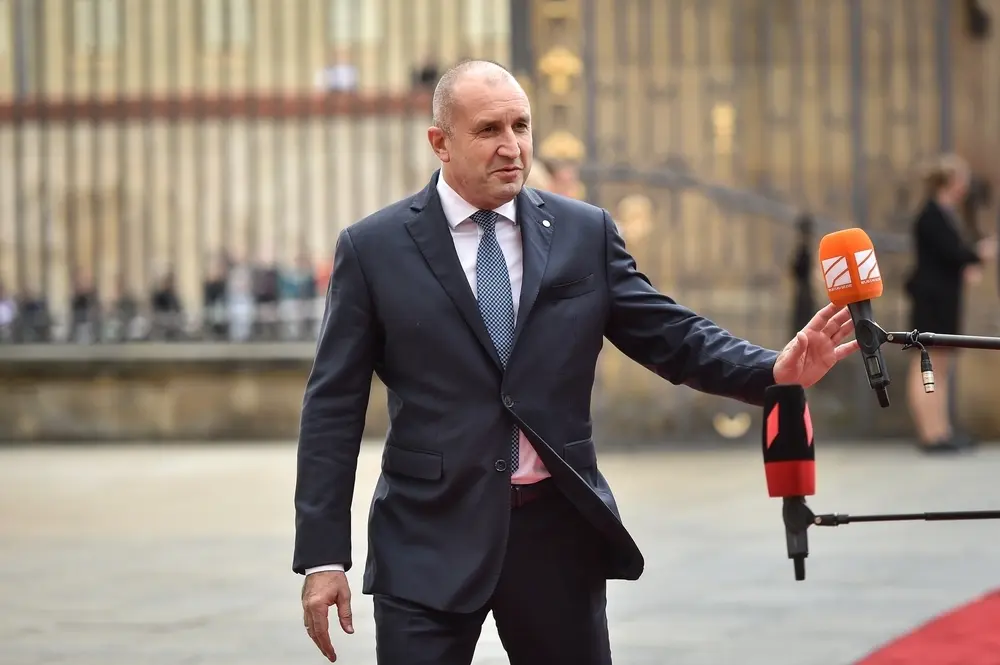
Rumen Radev © roibu/Shutterstock
Rumen Radev © roibu/Shutterstock
A completely transformed parliament: this is the assembly convening for the first time next Thursday in Sofia, following the snap elections held on 19 April – the eighth in the last five years and the first since Bulgaria adopted the euro, becoming the 21st member state of the Eurozone in January 2026.
“Progressive Bulgaria”, a party formed just a few months before the elections by former President Rumen Radev, will in fact occupy 131 of the 240 seats in the Bulgarian National Assembly: an absolute majority which, on paper, will allow for the formation of a single-party government and – in the hopes of the voters – enable the country to turn a new page after a long and troubled period of political instability.
Radev’s victory – having resigned a few months before the end of his second presidential term to seize the moment and make a powerful entry onto the Bulgarian political scene – had been foreshadowed by a long series of polls, which consistently showed “Progressive Bulgaria” in the lead throughout the campaign.
Few, however, had predicted the triumph ultimately confirmed by the ballot box, with the new party securing nearly 45% of the vote, soundly defeating the centre-right GERB movement (13.3%), the liberal reformists of ‘We Continue the Change’ (12.6%) and the Movement for Freedoms and Rights led by the controversial tycoon Delyan Peevski (7.1%), the protagonists of a fragile governing coalition swept away last December by the largest anti-corruption demonstrations in decades.
Radev’s entry into the political fray had long been openly discussed in the public sphere, but it was only with the latest government crisis that the former president finally took the plunge. After creating his party “Progressive Bulgaria”, Radev launched a rather cautious election campaign.
With very few interviews and no debates, he has relied primarily on the charisma and credibility he built up first as head of the Bulgarian Air Force and then as president, rather than on a detailed political programme. A strategy that has rewarded him with the biggest election victory in Bulgaria in the last 30 years.
The reasons for the victory
Several factors have contributed to the triumph of “Progressive Bulgaria”. The first is the hope for a new stability, promised by Radev. For years, Bulgaria has been locked in a fierce struggle between the power structure represented by former Prime Minister and GERB leader Boyko Borisov and tycoon Delyan Peevski, and a long series of parties and movements – many of which populist and short-lived – that have promised to replace it without ever fully succeeding.
The true star of the political scene for at least 15 years, Borisov has been accused by a large section of the public of having taken over the institutions and of having cultivated corrupt schemes alongside Peevski, with the latter sanctioned by both the United States and the United Kingdom on corruption charges.
As president, Radev has clashed repeatedly with the Borisov-Peevski duo, establishing himself as a viable political alternative, and now – with the promise of rooting out endemic corruption – he has managed to eventually defeat his long-standing opponents.
On the domestic front, Radev has also given a voice to many Bulgarians, particularly those from the most vulnerable sections of society, who are worried about inflation and confused by the currency change, despite the fact that the country’s macroeconomic indicators in recent years appear rather favourable.
Before stepping down as president, Radev called in vain for a referendum on adopting the euro, which never materialised: albeit with a certain degree of ambiguity, the former president has repeatedly stated that he’s never been against the single currency, but wishes to ensure citizens have the opportunity to express their views on such an important issue.
Finally, in foreign policy, the leader of ‘Progressive Bulgaria’ has advocated for a possible reopening of dialogue with Russia. Following the Kremlin-led invasion of Ukraine, Radev firmly opposed any military aid to Kyiv, pushing for an unspecified diplomatic solution. A stance that in 2023 led to an open clash with Volodymyr Zelenskyy during the Ukrainian president’s visit to Sofia, but which is in line with a significant section of public opinion in Bulgaria, a country with strong historical, economic, cultural and religious ties to Russia.
A situation that is raising considerable concerns in Brussels, where many fear that Radev could soon turn into a new Viktor Orbán, a veritable Russian ‘Trojan horse’ at the heart of the EU.
What now?
Whether well-founded or not, fears of a pro-Russian Radev at European level should be clarified quickly: with the overwhelming majority it enjoys in parliament, the new government will have complete freedom of action, while the leader of ‘Progressive Bulgaria’ will have to take full responsibility for the decisions he intends to make.
To date, the former president has never taken an openly anti-European stance, and Bulgaria’s traditional pro-European line – which favours compromise solutions, not least given the vital contribution of EU funds to the local economy – makes an escalation in relations between Sofia and Brussels seem rather unlikely.
Radev has argued for the need to reopen ties with Moscow on pragmatic grounds, particularly the vital issue of energy security, on which his voice could quickly become less isolated if the international situation – with the crisis in the Persian Gulf growing more and more unpredictable – makes supplies to Europe increasingly risky and insecure.
Barring any surprises, however, it seems unlikely that the new leading figure in Bulgarian politics will seek to distance himself from the European consensus and pursue an autonomous policy towards Moscow that is in open conflict with Brussels. This is also because the vast majority of Bulgarian public opinion remains pro-EU and pro-NATO, whilst following the electoral victory of “Progressive Bulgaria” there have been clear signals that the adoption of the single currency is not being called into question.
In the meantime, Radev will have to act swiftly to meet voters’ expectations. The first priority is judicial reform, a crucial step in the promised fight against corruption: immediately after the elections, the controversial Chief Prosecutor Borislav Sarafov – a figure linked to the current establishment and of fundamental importance in the Bulgarian judicial system – was removed. The next step, however, is the delicate election of a new Supreme Judicial Council, for which Radev will have to seek agreements in parliament to secure a qualified majority.
On the economic front, the new government will have to address concerns over inflation and energy prices, alongside calls for wealth redistribution. Since joining the EU in 2007 as its poorest member state, Bulgaria has experienced years of economic growth; however, this has not alleviated the severe internal imbalances, to the extent that Bulgaria has the highest Gini coefficient in the whole of Europe.
Here too, the conditions for a revolution do not appear to be in place. In its rather vague election manifesto, “Progressive Bulgaria” seems intent on achieving this through measures aimed more at improving productivity and the technological level of the production system, rather than through classic ‘left-wing’ measures, with the state playing a leading role in wealth redistribution.
There is no mention, for example, of possible adjustments to the tax system, which is currently based on a 10% flat tax for individuals and businesses that clearly favours the wealthier classes.
Found an error in this article? Please contact our editorial team at redazione@balcanicaucaso.org.
Tag:
Featured articles
 Investigation
 students' protest
 Montenegro Pride 2026