2016 Turkish coup attempt: Şakiro, the intellectual from the East
Ten years after the 2016 coup attempt in Turkey, we have gathered four firsthand accounts from the country. A 48-year-old man from Turkey’s Kurdish-majority east, he works at his cultural center: “Is there enough freedom to tell this story? No”
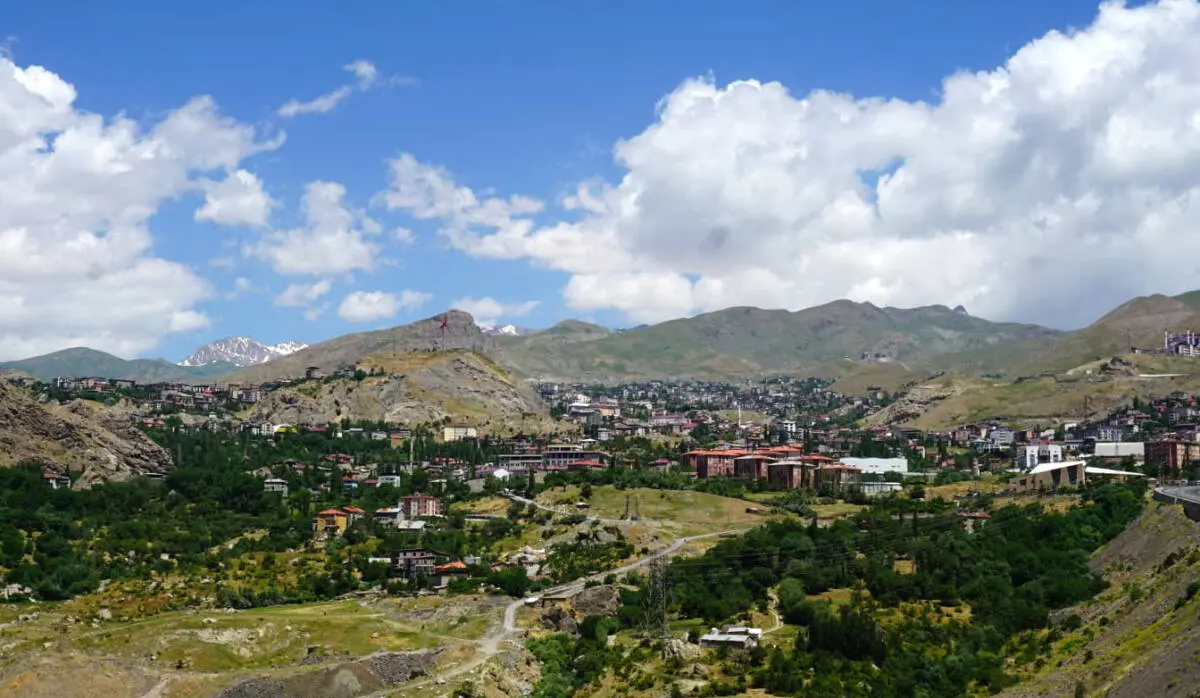
The city of Hakkâri, known as Colemêrg in Kurdish, in southeastern Turkey – D. Bettoni
The city of Hakkâri, known as Colemêrg in Kurdish, in southeastern Turkey - D. Bettoni
“I was coming home from work, when I first heard the news. It was around 10-11 in the evening, soldiers were coming from the opposite direction where I was going to. Tanks, armored vehicles, and so on. I couldn’t make sense of it. There is a small market right next to my house. I stopped there to buy cigarettes, and then I saw the news on the market’s TV. I went home and watched the news for a few hours. I don’t remember the previous coups, but a lot of movies were shot, a lot of information shared, a lot of trials were made. We all know how a coup is, everyone in this country knows. I realized that it was not a real coup, and I went to bed and slept comfortably”.
Şakiro (name of fantasy to protect his identity) is a 48 year old man who lives in a city in Eastern Turkey. After he closed his publishing house, he now works in a private cultural centre he opened himself, where he teaches music, theatre, and literature.
Click here to read the other testimonials we collected to mark the tenth anniversary of the attempted coup in Turkey
“A few days later, everything became clear, speeches were made, and decisions were taken. Would we get involved? Would they complain about us? Everyone was in a state of fear and panic. People started being fired from their jobs, teachers first, because Fethullah Gülen established his own network through the education system. He created all the students, he educated the poor who had no money, and after he educated them, he put them at his own service. They became doctors, judges, prosecutors, lawyers, soldiers. After being fired, these people were taken to courts. Everyone who complied with the government went back to work. The government and the Gülenists fought with each other. One side won, the other side lost, and everyone knew what was going to happen”.
According to both mainstream and government narratives, Gülen is believed to be the mastermind behind the attempted coup, his organisation, called Hizmet (service) or, more negatively, Cemaat (congregation). A narrative still highly contested in Turkey. Following the attempted coup, widespread purges were enforced by the government to eradicate the people of Gülen from the state, as well as many other oppositions. Gülen passed away in exile in Pennsylvania, US, in 2024, at the age of 83.
“I think the purges were planned before. It was not possible for so many prosecution lists of people to be arranged in such a short time. These kinds of things need to be prepared ahead.
The interesting thing here is that more than the members of the Gülen’s organization, the people who were hit the most by the coup are the Kurds: those who did not hide their identity and political stance. In this city, you couldn’t walk in the streets, all the activities of civil society organizations were terminated, demonstrations and marches were banned. Ten years have passed, but we still have many friends who could not go back to work, others are still in prison, and the city is run under emergency laws. The state can do whatever it wants, that’s all I can say”.
The OHAL (State of Emergency) rules were implemented after the July 2016 coup attempt. Initially enforced for three months, they were repeatedly extended every three months for two full years, and finally expired in July 2018. But not in the East.
“Now the official story is that, after the thwarted attempted coup, our nation is finally united, the people saved our state. Those who died in the coup are remembered as martyrs, those who were injured and survived are called Gazi, they were somehow placed in the ranks of the state, supported, given a job. Now, they are the state”.
Unity became the key word of the official narrative of the state, summarised in the official name of the national holiday: 15 July democracy and national unity day.
“In my field, no opposition artist is supported by the institutions. The constitution says: “The state protects art and the artist”, but none of that was realized. Those who benefited were those who sided with the system and the government, waving flags at political rallies. They benefited greatly. They got rich very quickly.
No artist outside of that, who spoke their mind, who saw the flaws and made efforts to correct them, none of them found any support. In this way, they controlled the narrative of the coup, because this narrative isn’t just in the press: it’s in theatres, in cinemas. Is there enough freedom to tell this story? No. How is this possible to talk about unity?
In the meantime, the government has become the state. The presidential system is a one-man regime, the entire state fell into the hands of one person, one that cannot be questioned nor held accountable by anyone. Whatever he thinks became the standard for what the remaining 85 million citizens should say.
As Kurds, we know well how this works. Look at the establishment of this country: Turks did not do it alone, Kurds made great achievements too, then all of them disappeared, written in history as Turks. There is a story about Karayılan, the Black Snake, who during the days of the war of independence fought against the British. Karayılan is Kurdish, but in the official history the Black Snake became Turkish. There are countless stories like this. This country ignored them, sent them to exile, executed them. That’s why 29 Kurdish revolts happened in this country’s history, and the struggle continues: in culture, in arts, and in the language”.
Found an error in this article? Please contact our editorial team at redazione@balcanicaucaso.org.