2016 Turkish coup attempt: Melis, the lawyer from white Turkey
Ten years after the 2016 coup attempt in Turkey, we have gathered four firsthand accounts from the country. A 26-year-old woman in today’s Turkey: “There is a strong tradition of disobedience, we must regain our independence”
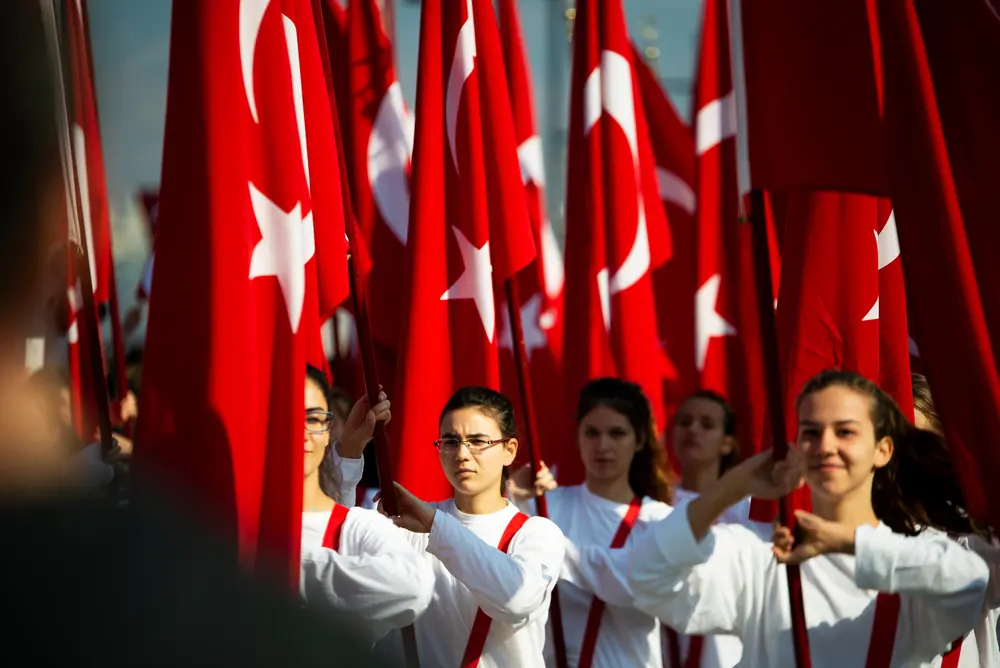
High school students in Turkey © arda savasciogullari/Shutterstock
High school students in Turkey © arda savasciogullari/Shutterstock
“That summer we were as usual on vacation at our holiday home in Bodrum, on the Aegean coast. When the first images of the attempted coup began appearing on television, my mom immediately told me something didn’t add up”.
Melis (a fantasy name to protect her identity) was not yet of age in 2016 and, unlike her mother, had never experienced anything like that before. The first coup in Turkish republican history occurred in 1960 and ended with the hanging of Adnan Menderes. In 1971, the armed forces delivered a memorandum to Süleyman Demirel, who resigned to allow the formation of a new government. In 1980, Kenan Evren, the army chief of staff, seized power after a decade of economic instability and political violence. Finally, the so-called “post-modern coup” of 1997, which marked the end of the Islamist-oriented government led by Necmettin Erbakan.
“When I returned to school in September, the state of emergency was still in effect. No other topic was discussed in class. I realized that in that regime of extraordinary powers, the government had practically free rein to intervene in citizens’ private lives. That awakening marked the beginning of my political awareness. Today, I might say that my decision to study law emerged from that period.”
After finishing high school, Melis earned a bachelor’s degree and a specialist degree in Law in two different European Union countries. She then returned to Istanbul, where she works at a law firm.
Click here to read the other testimonials we collected to mark the tenth anniversary of the attempted coup in Turkey
“An episode that happened during a public law class comes to mind. We were analyzing the concept of constitution, when the professor asked several students to give their spontaneous definition of it. By association of ideas I mentioned the coup. Many of my classmates were surprised, but I, as a Turkish citizen, struggled to understand their astonishment: two of our constitutions were drafted after the military takeover and subsequently put to referendum”.
The first constitution of the Turkish Republic was adopted on April 20, 1924, based on the 1921 constitutional manifesto. The second came into force in 1961, one year after the military coup, and was drafted by a constituent assembly mainly composed of jurists. The last one, approved on 7 November 1982 again after another coup, is still in effect today. The Turkish basic law has undergone numerous amendments over the years, the most important of which was the transition from the parliamentary system to the presidential system in 2017, in a context deeply influenced by the attempted coup of the previous year. Meanwhile, purges have involved an ever-widening number of citizens.
“Erdoğan skillfully seized the opportunity to purge the Gülenists from within the state, the military, and the judiciary, consolidating and expanding his power more and more. These people were replaced by nationalists from the MHP (Nationalist Movement Party) or members of religious brotherhoods close to the AKP (Justice and Development Party), such as İsmailağa and Menzil. Many simply switched sides, renouncing past loyalty to Gülen, while others ended up in prison.
It has not been easy years for Turkish citizens in opposition, like me or my family. After July 15, anyone could be accused of belonging to the Gülen movement, with all the consequences that entailed. Whoever dared criticize the government’s actions was labeled a traitor or a terrorist. On newspapers, TV, or social media, a kind of hysteria had developed that continues in part to this day”.
Being a young woman in today’s Turkey is not simple. Melis could afford to emigrate, but chose to stay. Her feelings oscillate between realism in the face of a difficult economic situation, dissatisfaction with the country’s political direction, and a faint hope that things might change. In the short term, however, the future appears bleak to her.
“Finding work these days is almost impossible. Salaries are at starvation-level, both for manual workers and graduates. Every year the situation worsens. Birth rates are at historic lows. Hard to expect anything else from a country that has coexisted for years with very high inflation. Most young people literally dream of the day when the AKP leaves power.
Personally, I don’t like the pro-European turn or the country’s closeness to the United States. Every time Europe speaks about Turkey in a friendly manner, I know there’s some interest behind it that doesn’t benefit my country. The same applies to the United States: it is an imperialist power to be wary of.
As a socialist, however, I still have faith. There is a strong tradition of disobedience and opposition in Turkey, both against internal power and foreign interference. It’s as if we must regain our independence, as happened in 1923 with the birth of the Republic. The revolutionary potential of the Turkish people is still alive, even if for now it is dormant. If that energy could be channeled, we could truly build a fairer country”.
Found an error in this article? Please contact our editorial team at redazione@balcanicaucaso.org.