No president, Kosovo back to the polls again
At the end of April – and after a long tug-of-war – the Kosovo parliament failed to elect a new president, triggering a new crisis, not only political but also institutional. New snap elections are scheduled for June 7th
© cetin34/Shutterstock
© cetin34/Shutterstock
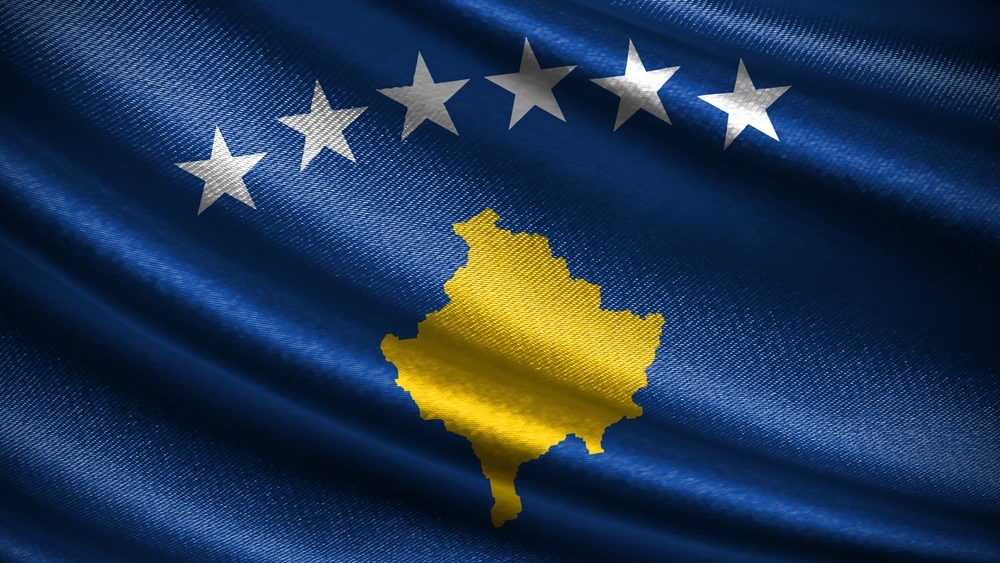
Members of the Assembly of Kosovo failed to elect a new President within the constitutional deadline. As a result, the tenth legislature has been dissolved, and the country will go to early elections on June 7th, marking the third elections in less than a year and a half.
The last two candidates proposed by the Vetëvendosje Movement (LVV) were non-partisan: well-known civil society activist Feride Rushiti and professor Hatixhe Hoxha. However, they were not voted on due to a lack of quorum, as the opposition refused to participate in the session.
Shortly before the deadline expired, Prime Minister Albin Kurti blamed the opposition, stating that he had made sufficient proposals, but the opposition had not accepted any solution.
To elect the President of Kosovo, a two-thirds majority of MPs is required in the first two rounds, meaning at least 80 votes, something no single party held on its own.
Opposition parties had called for an agreement on the President, opposing the idea that LVV should control all three main state positions: the government, the Assembly, and the presidency.
Following the dissolution of the Assembly, the leader of the opposition, the Democratic Party of Kosovo (PDK), reacted by saying that the constitutional order had been protected and one of the most serious violations of the Constitution had been avoided.
The Democratic League of Kosovo (LDK), on the other hand, claimed that the country is heading to new elections because the Vetëvendosje Movement tried to capture the institutions. Meanwhile, the Alliance for the Future of Kosovo (AAK) stated that, by halting the presidential election process, democracy in Kosovo had been saved.
A contested process
The session to elect the President began on the evening of April 27th, when the Vetëvendosje Movement initiated the first round of voting despite the absence of the required quorum of 80 MPs, which is a constitutional requirement for a valid process.
This was assessed by civil society and opposition parties as a violation of the constitutional order.
The session was interrupted due to the lack of quorum and resumed and interrupted several times the following day, April 28th, which was the final day of the constitutional deadline.
On the same day, PDK and AAK warned of organized political and civic action, including street protests, if LVV proceeded with the election of the President in what they considered an unconstitutional manner.
Causes of the deadlock
According to Naim Rashiti, Director of the Balkan Policy Group in Pristina, the new crisis is a consequence of the actions of political parties.
“I expect these elections to be just another cycle of crises or poor and unstable functioning of political and institutional life in Kosovo. This is not only a political crisis, but also an institutional and constitutional crisis, because in essence the political actions of the parties, especially the winning party, are unconstitutional,” Rashiti assesses.
Meanwhile, political analyst Melazim Koci says that the cause of the new elections is the inability of the political scene to achieve consensus and a political agreement regarding the President.
“Quorum is not the cause of the problem, because it serves a different function. It balances powers and prevents a single party – in this case the leading party that received over 51% – from taking full control of power,” Koci says.
Consequences of the situation
The greatest damage caused to the country, according to Naim Rashiti, is the undermining of Kosovo’s constitutional order.
“Without a constitutional order that everyone respects and protects, there will be no consolidation of Kosovo, and institutional, political, and constitutional degradation will be the greatest recurring damage – one that is happening now and risks continuing even after the elections,” Rashiti further emphasizes.
According to analyst Koci, the current situation primarily damages Kosovo’s international credibility, a view also shared by Rashiti. However, Koci believes that the elections to be held on the first Sunday of June could bring a solution because, according to him, all three top leadership positions are now at stake.
“If the problem arises again, I would interpret it as hesitation by political forces to face international obligations, specifically those stemming from the Franco-German agreement,” says Koci.
The new early elections are expected to cost Kosovo over 10 million euros. The previous elections, held on December 28th, 2025, had cost approximately the same amount.
Found an error in this article? Please contact our editorial team at redazione@balcanicaucaso.org.
Featured articles
 New political movements
 History and memory