Sarajevo, Ex-Yu Rock Centar closed
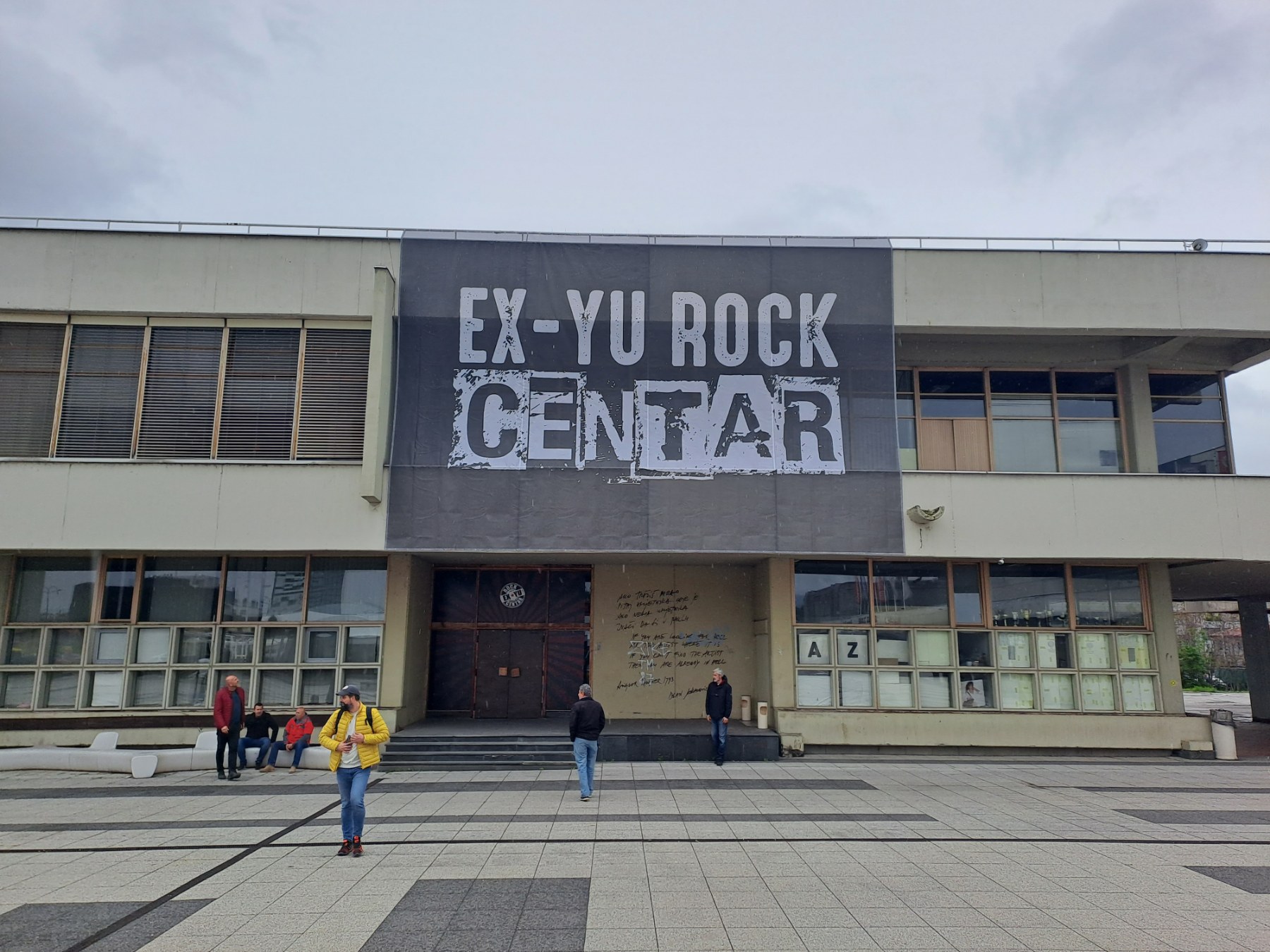
The Ex-Yu Rock Centar in Sarajevo was closed in November 2025 due to the difficult financial situation, coupled with the lack of institutional support. The capital of Bosnia and Herzegovina was thus deprived of one of the rare initiatives aimed at promoting Yugoslav cultural heritage
© Ex-Yu Rock Centar (EYRC)
© Ex-Yu Rock Centar (EYRC)
In its three years of operation, the Ex-Yu Rock Centar (EYRC) museum, founded in November 2022, has established itself as a unique tourist attraction in Sarajevo, offering a large collection of memorabilia and rare objects that evoke the creativity of hundreds of famous musicians and bands from the former Yugoslavia.
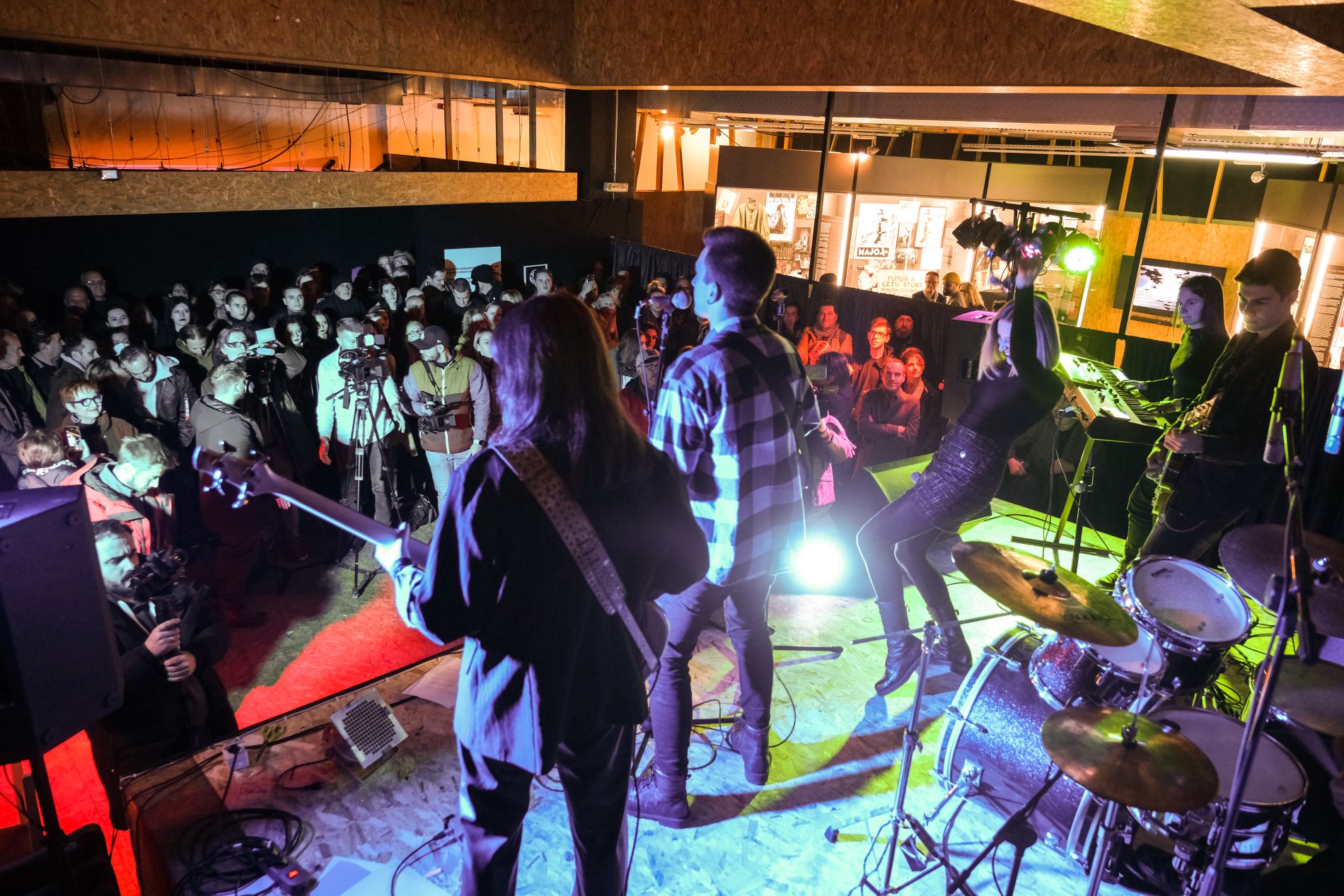
The museum has also hosted numerous concerts and other rock-themed events, including vinyl record fairs, album promotions and youth nights.
Tim Požarnik, 22, a bassist, photographer and member of the Sarajevo-based pop punk band “Bijeda” [Misery], says he enjoyed visiting the EYRC.
“After so many wonderful moments and memories of my concerts and those of other musicians, and of a photography exhibition I had set up there, I was surprised by the museum’s closure”.
For Požarnik, the museum meant a lot and was important for the younger generations in general, especially considering that Sarajevo does not have many spaces for concerts and exhibitions of young and emerging artists.
“The EYRC paid special attention to the promotion and empowerment of young people, which is why it has become a unique place in Sarajevo”, emphasises Požarnik, adding that he is convinced that many people, especially youth, are eagerly awaiting the reopening of the EYRC precisely because of the opportunities it offered.
Musician Sara Vojičić, 28, was also saddened, though not surprised, by the closure of EYRC because, as she explains, for years now, venues promoting rock culture in Sarajevo have been closing one after another.
“Of course, I was happy that such a place existed; I promoted one of my singles there in October 2023. It was a fantastic evening, and I thank the EYRC for that. I also remember a beautiful evening dedicated to female rock singers from the former Yugoslavia, with an exhibition entirely dedicated to women”, recalls Vojičić.
“As a city, we are not where we should be, considering that Sarajevo was once the heart of the regional rock scene”, says Sara. Her father, Mladen Vojičić Tifa, was one of the greatest rock singers in the former Yugoslavia, a member of the bands Bijelo Dugme and Divlje Jagode, to name just two of the most famous.
“There are many young musicians who need the support of the media and sponsors. I hope that the situation will change and that the EYRC will move o a new location, especially given the support it has provided to young rock music lovers. It is important that an initiative like this survives”.
During the inception phase, the EYRC received significant support, particularly for equipment, from the EU and other international donors. However, support from the Bosnia and Herzegovina’s institutions at various levels (local, cantonal, and state) did not materialise as promised.
© Ex-Yu Rock Centar (EYRC)
Financial pressures and restrictions
Regarding the reasons for the closure of the EYRC, museum representatives cite the limitations imposed by the Skenderija Centre [which housed the EYRC headquarters] and unfulfilled promises by local and cantonal authorities.
Will Richard, co-founder of the EYRC, explains that the Skenderija Centre made it impossible for the museum to be financially independent.
“The Skenderija Centre made it very difficult for us to hold events, and when we were given permission by them to have events, they insisted that they organise their own bar”, points out Richard. “For concerts, we would obviously pay the bands, the sound technicians and cover all of the costs, yet Skenderija would come in, set up their own bar, and take the revenue. Even with a large turnout, we were never able to break even. As a non-profit organisation, we are certainly not here to make money, but having some mechanism for revenue generation is important in order to cover basic costs such as rent. For three years, Skenderija greatly inhibited our ability to survive”.
The EYRC also faced other obstacles. The internal conditions of the premises at the Skenderija Centre were appalling, as demonstrated by videos posted on social media. Promises to renovate the premises have been broken.
“The breaking point for me with Skenderija was when I found out last summer that Skenderija had been misrepresenting the square meters of the space that we were renting”, says Richard. “For over two and a half years we were paying rent for a space that they calculated to be 750 square meters. However, the actual size of the space was under 500 square meters. Essentially, we were paying 50 percent more than we should have been based on the initial agreement from 2022. When I confronted the management of Skenderija with this reality, they agreed with our measurements, but they refused to address the large amount of funds that we had overpaid”.
“The Skenderija Center is the last institution to turn to, because we were not the ones who proposed the idea of self-sustainability for the project”, says Šenaj Avdić, director of the public company that manages the Center. Responding to OBCT’s questions, Avdić explains that he is aware of the lack of support from cantonal and federal institutions, which has put the EYRC’s survival at risk.
For Avdić, the EYRC is an essential initiative because it celebrates musical tradition and culture. He expresses regret over the museum’s closure and points out that he did everything possible to extend the contract with the EYRC, that he spoke directly with institutional representatives to support the museum and that he contributed to promoting the project on social media.
The director of the Skenderija Center says that, from the very beginning, the contract signed with the EYRC stipulated a much lower rent than for the other Skenderija Center premises. However, Avdić did not respond to a question about the inaccurate assessment of the rented space, which resulted in the EYRC paying more for rent and utilities for more than thirty months.
According to Avdić, the EYRC has not been recognised as a “popular” place by citizens and tourists, failing to establish itself as an indispensable reality for society, also due to the lack of institutional support.
The director of the Skenderija Centre emphasises that all the mayors and ministers he spoke to in an attempt to promote the EYRC “were reluctant to address the topic and absolutely none of them recognised the added value of the EYRC”.
Unfulfilled promises
Some documents accessed by OBCT partially refute Avdić’s claims that local and cantonal authorities did not like the EYRC. Among these documents, a 2021 letter stands out in which Edin Forto, former Prime Minister of the Sarajevo Canton, expresses his support and willingness to collaborate with the EYRC. The letter emphasises that the initiatives and projects promoted by the EYRC “have the potential to become a tourist attraction, capable of attracting visitors from the region and from around the world”.
In 2023, the Sarajevo Canton government officially announced its support for the EYRC, in a document presented by then-Prime Minister Nihad Uk. Also in 2023, Kenan Magoda, the canton’s Minister of Culture and Sports signed a letter of support, stating, among other things, that the Ministry recognised the EYRC as an important project for the Sarajevo Canton.
Furthermore, in early 2024, the Sarajevo City Council adopted a decision on the recognition of the Ex-Yu Rock association as a project of particular importance that “contributes to the image of the city of Sarajevo by embracing and promoting the urban identity and cultural scene of the metropolis”.
From the very beginning, the EYRC was in contact with several high-ranking political officials in the Sarajevo Canton. The cantonal authorities, as Richard explains, committed to covering the rental fee for the first three years and significantly subsidising the rental costs for the following two years. The goal was to contribute to the project’s launch and sustainable development.
However, the support did not materialise as promised. The Sarajevo Canton provided funds in 2022 and 2023, equivalent to approximately 30% of the rental costs for the premises at the Skenderija Center.
In 2024, the Sarajevo Canton Ministry of Culture and Sports announced its intention to cover the EYRC’s rental costs for 2024 and 2025. However, the museum did not receive any financial support from the Ministry during those two years. Funding for the EYRC was approved in 2024 following a public tender launched by the Ministry, but the funds were never allocated.
There is no publicly available data on the distribution of the Ministry’s funds to non-governmental cultural organizations for 2024 and 2025. The ministry did not respond to our requests and calls.
In 2022, the Centar Sarajevo municipality provided modest support (around 500 euros) to the EYRC ahead of the museum’s opening, and was subsequently included among the project’s donors. The president of the municipality promised to support the project more significantly in the coming years, especially considering the museum’s location in that municipality, where many legendary Sarajevo bands were born. Despite these promises, the municipality never provided any concrete support, ignoring the EYRC’s requests.
In response to our request for clarification, the Information Office of the Centar Sarajevo Municipality stated that matters relating to the EYRC fall outside the municipality’s jurisdiction. However, it clarified that the municipality, in accordance with its capabilities and prerogatives, supports the work of the EYRC and other cultural institutions.
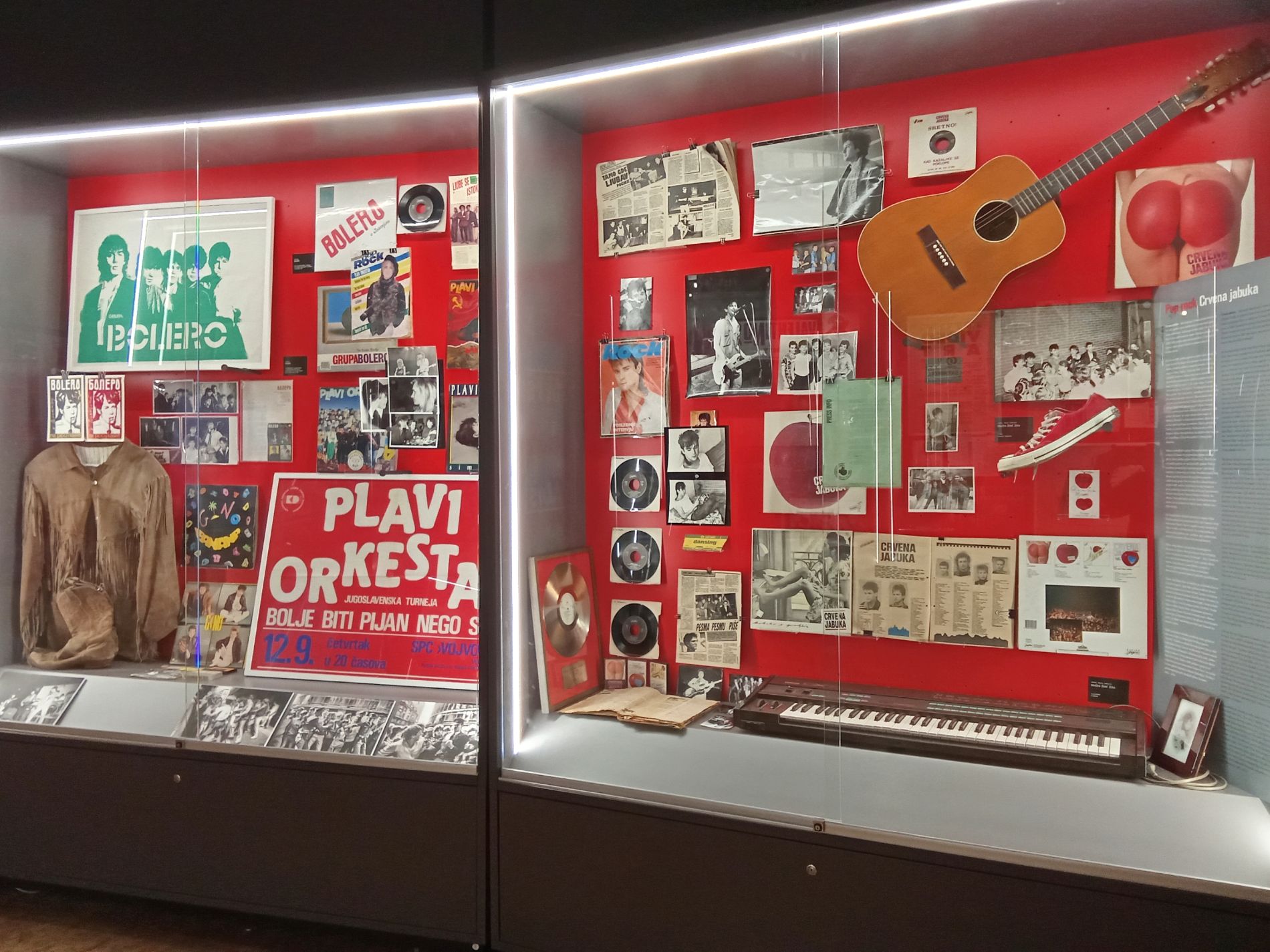
© Ex-Yu Rock Centar (EYRC)
The importance of the Ex-Yu Rock Centar
Despite numerous obstacles, the Ex-Yu Rock Centar has become a major tourist attraction in Sarajevo, as evidenced by the highly positive reviews from visitors from around the world. During its three years of operation, the museum has organised eight exhibitions dedicated to Yugoslav rock ‘n’ roll and has displayed over a thousand original items: guitars and other instruments, stage costumes, concert posters, tickets, rare albums and other memorabilia.
This unique museum has given space to groups and artists from all the former Yugoslav republics, becoming an important meeting point for artists, music lovers and tourists of all generations.
“We are not giving up on the project”, says Richard. “I am proud of what we established and I believe the Ex-Yu Rock Centar is very important for Sarajevo and the entire [post-Yugoslav] region for several reasons. There are certainly lessons learned from the past three years and I hope that we will find an appropriate alternative location in Sarajevo soon and continue to promote this extraordinary music”.
Found an error in this article? Please contact our editorial team at redazione@balcanicaucaso.org.
Tag: Yugoslavia | Music
Featured articles
 the students' voices
 Investigation
 students' protest