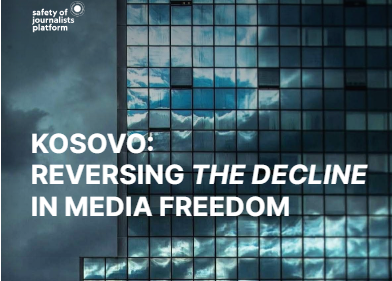
Kosovo: Reversing the decline in media freedom
Rapporto Kosovo
The partners of the CoE Platform on Safety of Journalists launched their fact-finding mission report following a two-day mission to Prishtina last March
Source: European Centre for Press and Media Freedom
The mission aimed to assess the climate for media freedom, pluralism, and the safety of journalists, among other themes. The visit followed monitoring and advocacy work by several participating organisations, which had flagged concerning developments requiring attention.
The mission took place during a period of political uncertainty in Kosovo, following repeated parliamentary elections and political deadlock over the election of the country’s President. After the visit in late March, another snap election was triggered on 29 April and held in June 2026.
The report concluded that while Kosovo has a pluralistic media landscape, low levels of physical violence against journalists, and broad legislative alignment with European and international standards, media freedom has experienced a clear decline. The passing by parliament of a media law — later rejected as unconstitutional — which would have increased political control over the Independent Media Commission (IMC), the insufficient funding and pressures on Radio Television of Kosovo (RTK), as well as a sustained increase in verbal targeting and denigration of journalists by ruling party politicians, are the principal factors behind this assessment.
The mission took place on 24–26 March 2026 in Prishtina and was conducted by the following organisations: the Association of European Journalists (AEJ), European Centre for Press and Media Freedom (ECPMF), European Federation of Journalists (EFJ), Index on Censorship, International Press Institute (IPI), Osservatorio Balcani Caucaso Transeuropa (OBCT), European Broadcasting Union (EBU), and Reporters Without Borders (RSF). The mission was supported by the Association of Journalists of Kosovo (AJK).
Tag: media