Georgia | | Civil society, Politics, Rights
October 25, Tbilisi returns to the streets
30/10/2026, Luna De Bartolo
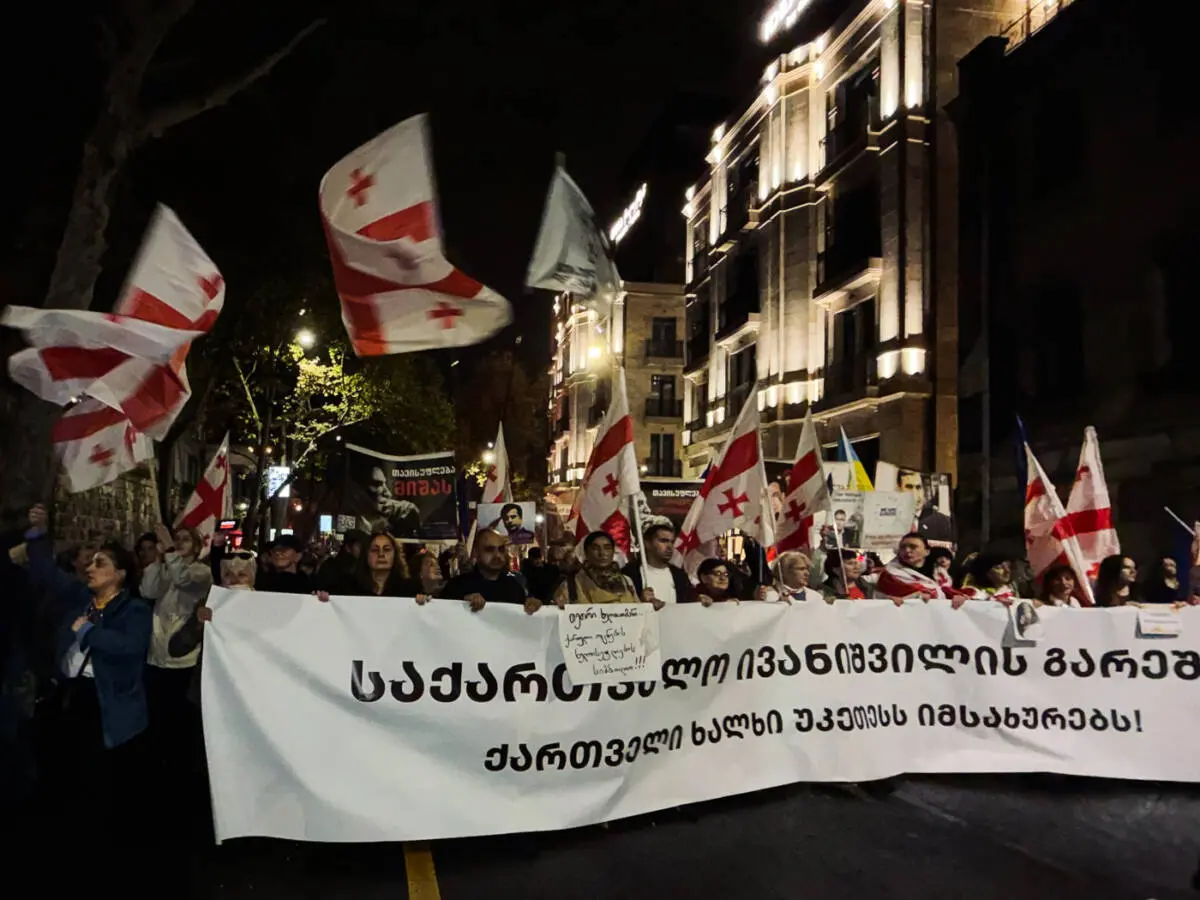
On October 25, approximately two thousand people gathered in Tbilisi for a demonstration organized by several opposition parties under the slogan “Georgia without Ivanishvili.” The protest was reignited by the potential outlawing of five opposition parties. A photo essay
This mobilization aims to usher in a new wave of protests leading up to November 28 — the second anniversary of the announcement by the ruling Georgian Dream party, in the wake of controversial elections, to suspend the country’s European integration process. On that day in 2024, tens of thousands of citizens spontaneously gathered in front of the parliament on Rustaveli Avenue, sparking months of mass demonstrations that were met with a harsh police crackdown.
Since then, numerous restrictive laws concerning public order have been enacted, while pressure has intensified on the media and civil society organizations, whose access to funding has been drastically curtailed. In the span of two years, Georgia has undergone a profound transformation, yet the protests have persisted, continuing through small daily vigils and weekly marches.
The latest dramatic phase began on October 21, when the Constitutional Court started reviewing a petition filed by Georgian Dream, which seeks to outlaw five opposition parties: the four that cleared the electoral threshold in 2024, collectively representing over a third of the total vote, and one group that was formed subsequently.
The government employs the term “collective UNM” to lump disparate political forces into a single category, associating them with the party of former president Mikheil Saakashvili, whose own years in power were also marked by a gradual slide toward authoritarianism.
The anti-government front remains divided: two of the parties targeted by the petition — Lelo and “For Georgia” (the latter having entered parliament in late 2025, thereby breaking the post-election boycott) — were not present at the demonstration.
The accusation leveled against the opposition groups is based on a constitutional prohibition against political parties using force to subvert the state order, undermine territorial integrity, or incite ethnic and social conflict. The final, unappealable ruling must be delivered by June 2027 — just over a year before the next parliamentary elections.
Visit the page dedicated to Georgia
1Tbilisi
Under a leaden sky, on asphalt slick with rain, protesters set off from Tbilisi State University and end their march just before reaching Rustaveli Avenue, closed to traffic since July for redevelopment work - a construction site that critics view as a tool to hinder protests.
2Tbilisi
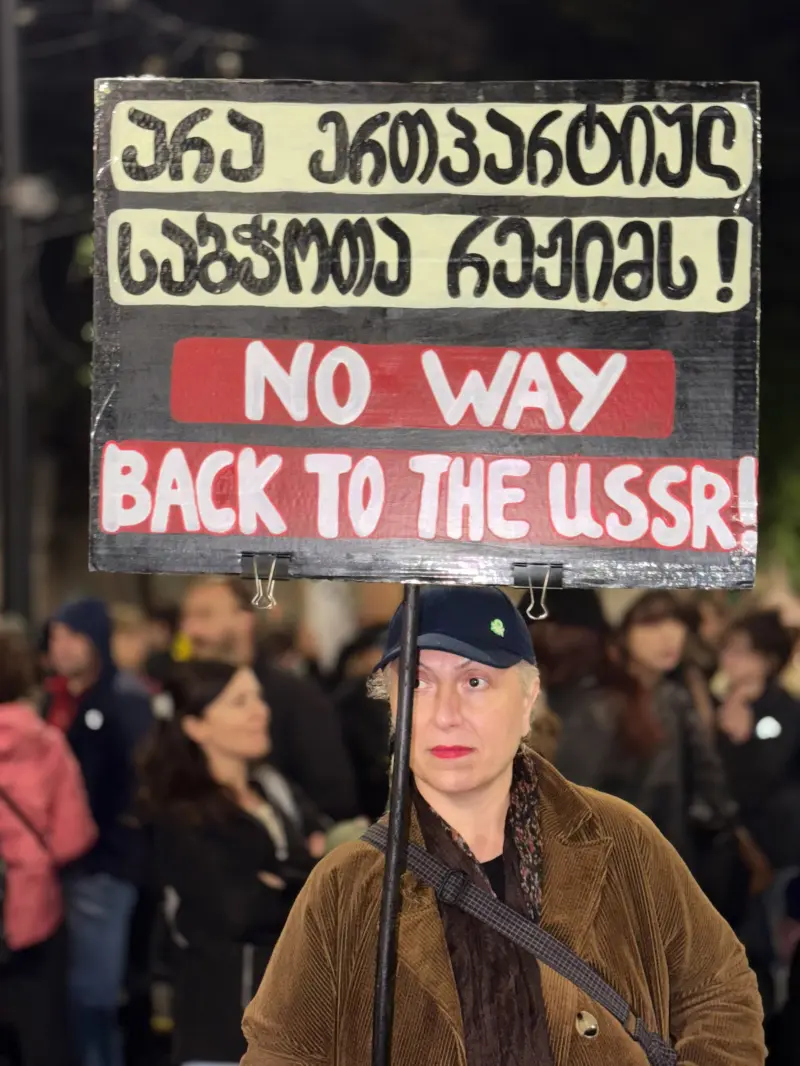
“No to the Soviet single-party regime!” reads the sign in Georgian, followed by the slogan in English: “Never again a return to the USSR!”
3Tbilisi
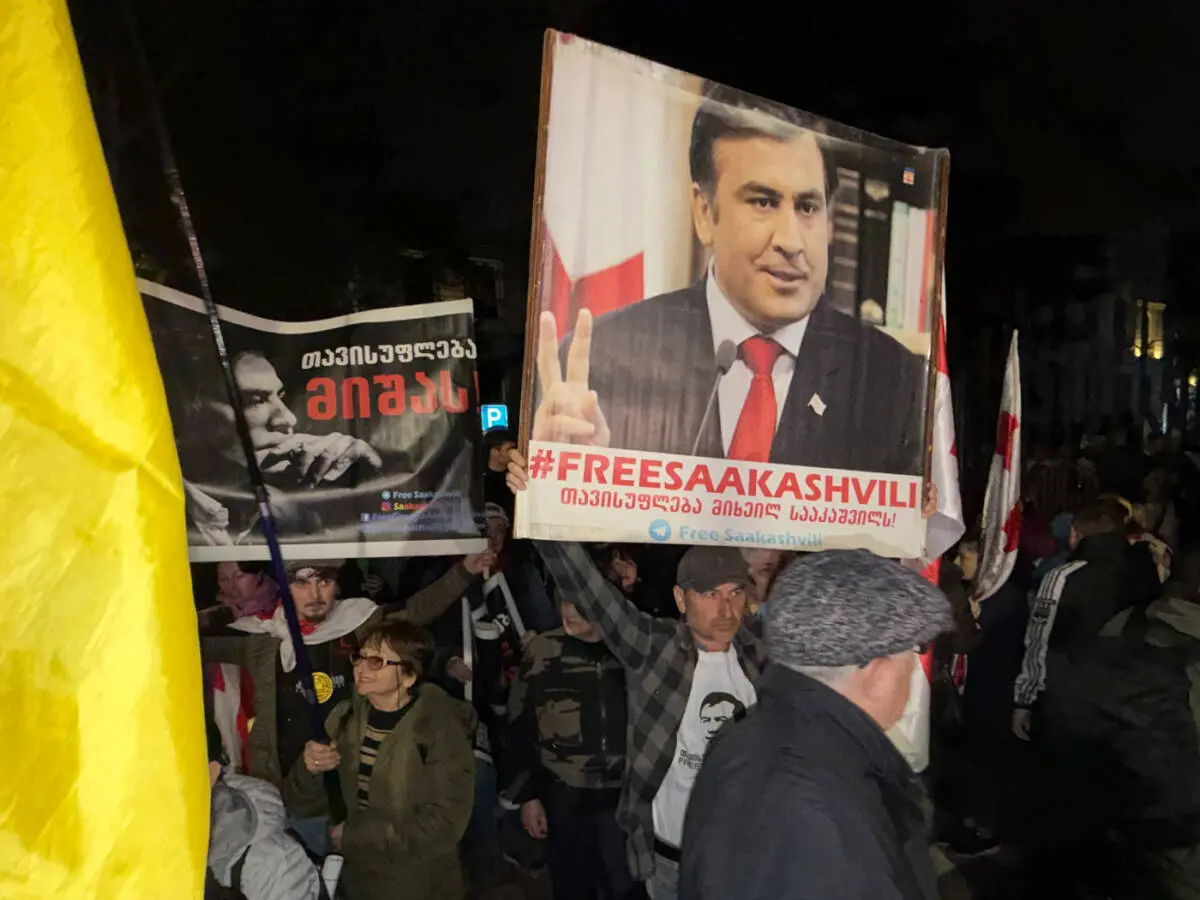
Signs calling for the release of Mikheil “Misha” Saakashvili, longtime leader of the UNM and third president of Georgia, who has been in prison since 2021 following various legal proceedings
4Tbilisi
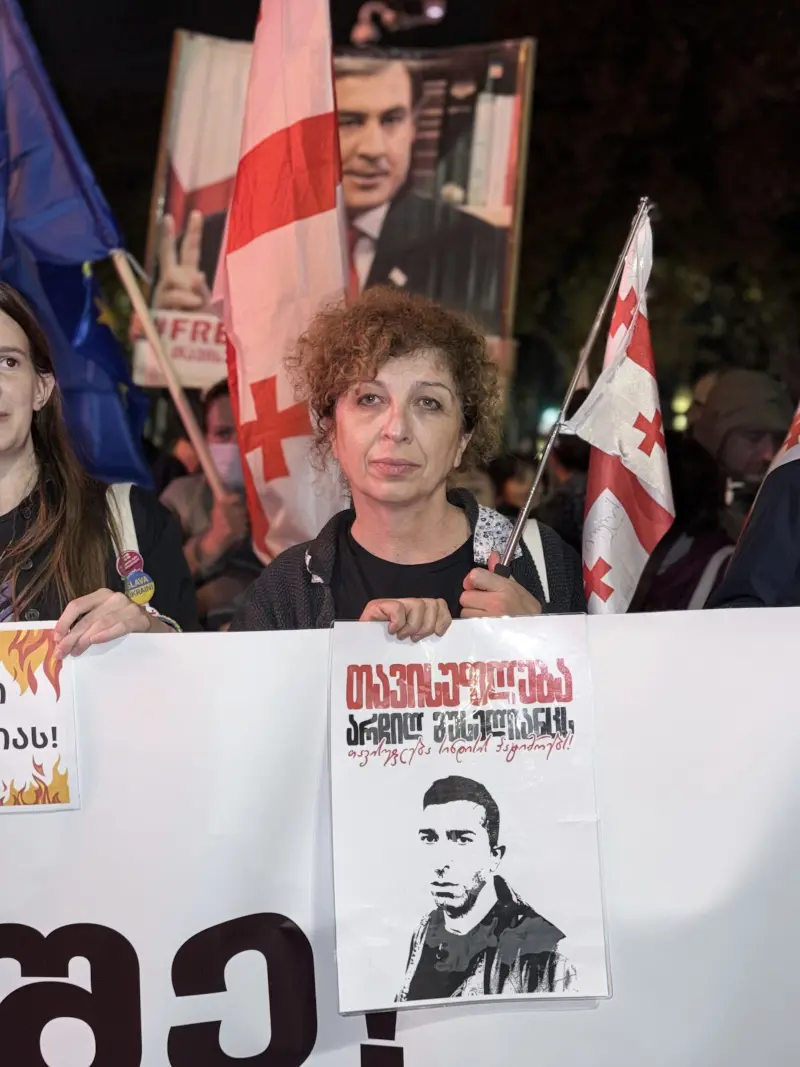
Tsaro Oshakmashvili displays the portrait of Archil Museliantsi, sentenced to 4 years for damaging a video surveillance camera in 2024. The two met on Rustaveli Avenue and when the young man, orphan of both parents, was arrested, Tsaro decided to "adopt" him and parade for him together with the mothers of the other detained young people
5Tbilisi
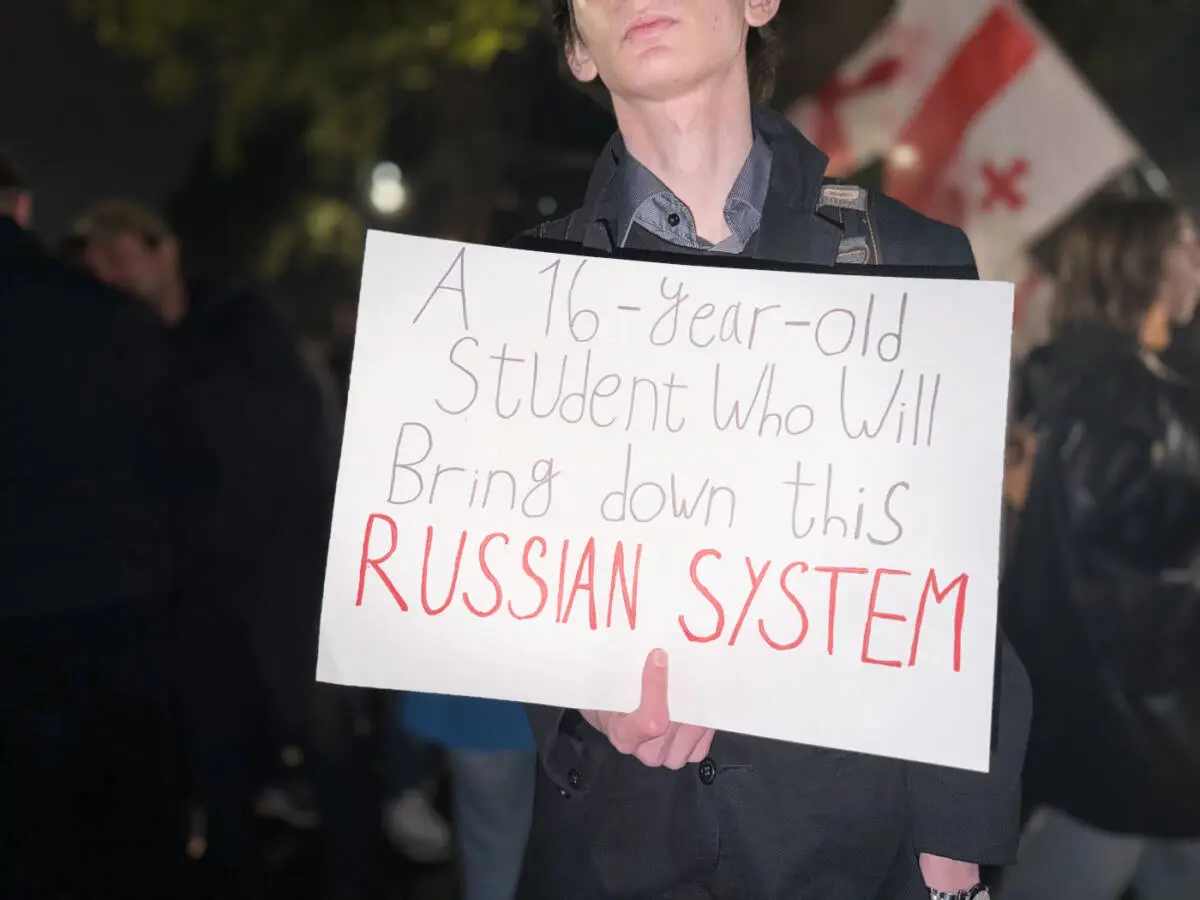
A young man holds a sign: “A sixteen-year-old student who will bring down this Russian system!”
6Tbilisi
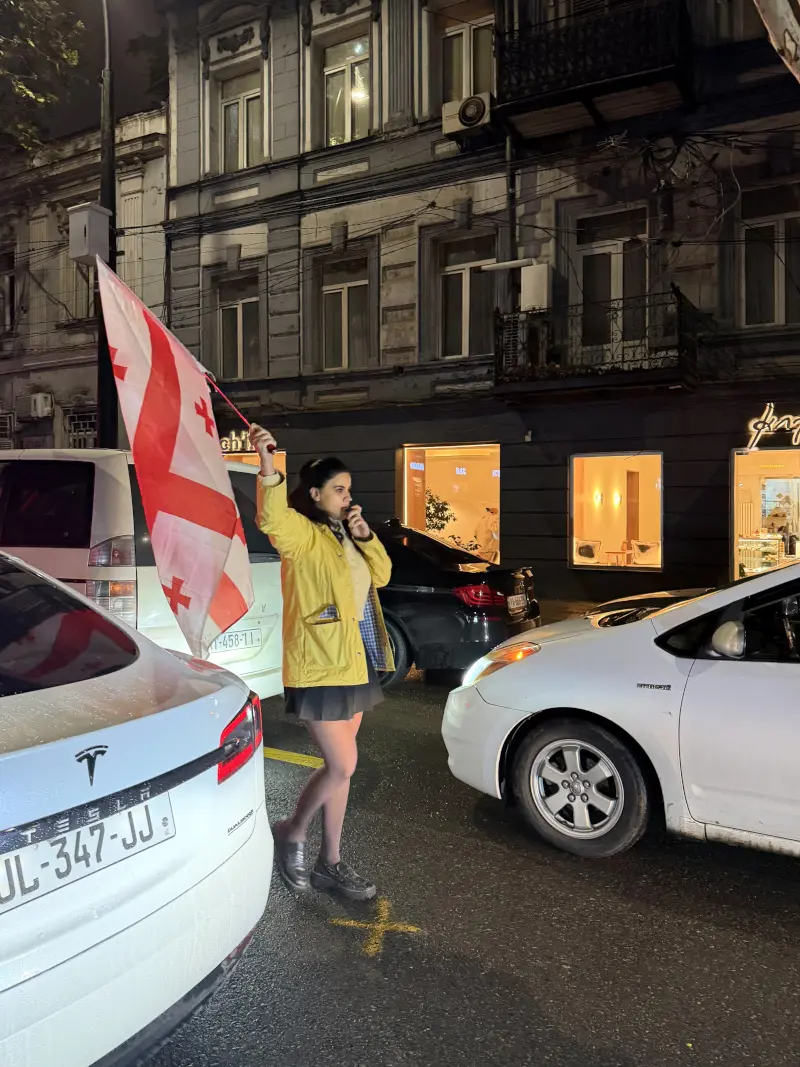
A protester walks along Kostava Street carrying a Georgian flag in the lane that remains open to traffic, while the march proceeds alongside. Regulations introduced in 2025 impose heavy fines or 15 days of administrative detention for the unlawful blocking of a road; in the event of a repeat offense, this can lead to prison sentences of up to two years
7Tbilisi
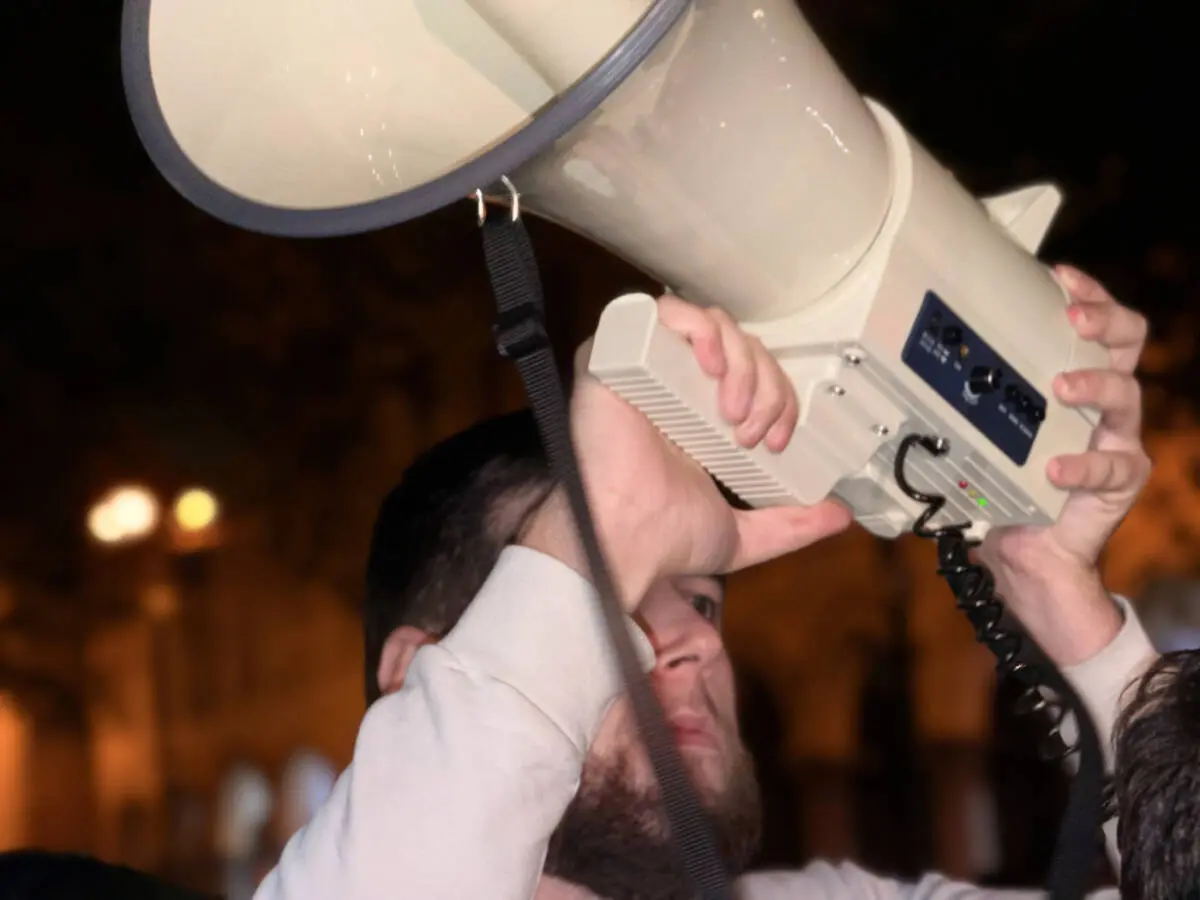
“Freedom for political prisoners!” and “Georgia against Ivanishvili’s one-party regime” are some of the slogans chanted by the protesters
8Tbilisi
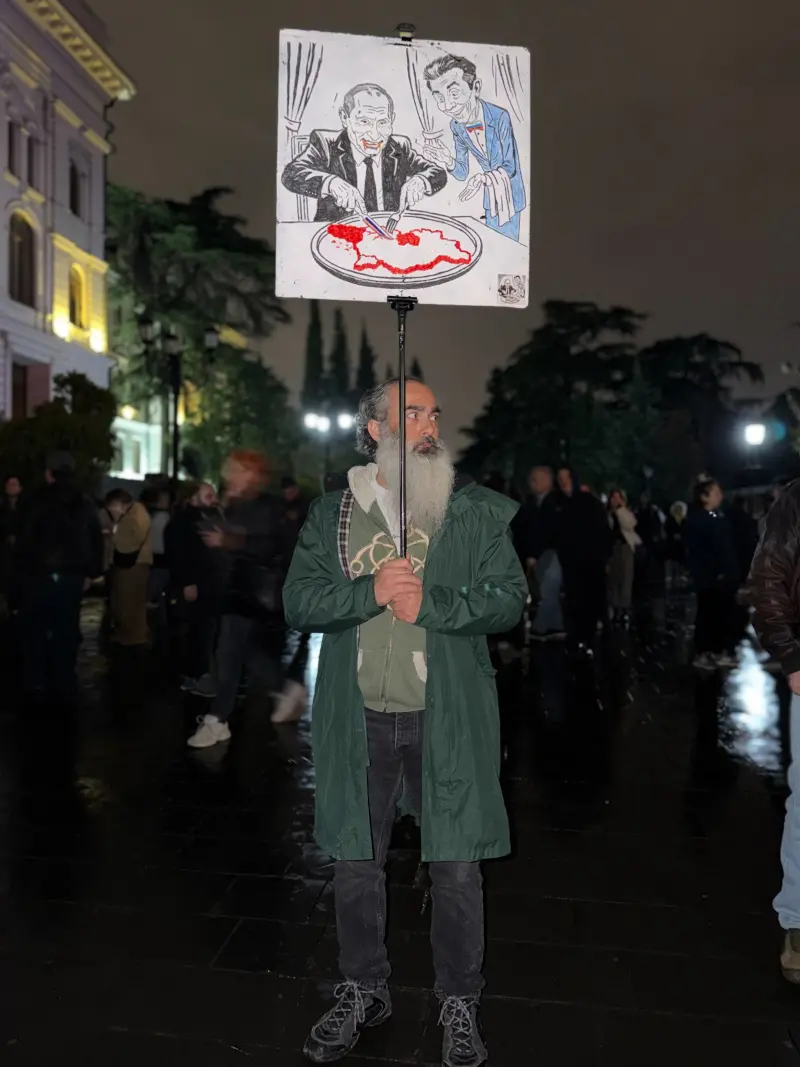
A protester displays a satirical cartoon targeting billionaire Bidzina Ivanishvili, founder of Georgian Dream, depicting him as a waiter serving Vladimir Putin
9Tbilisi
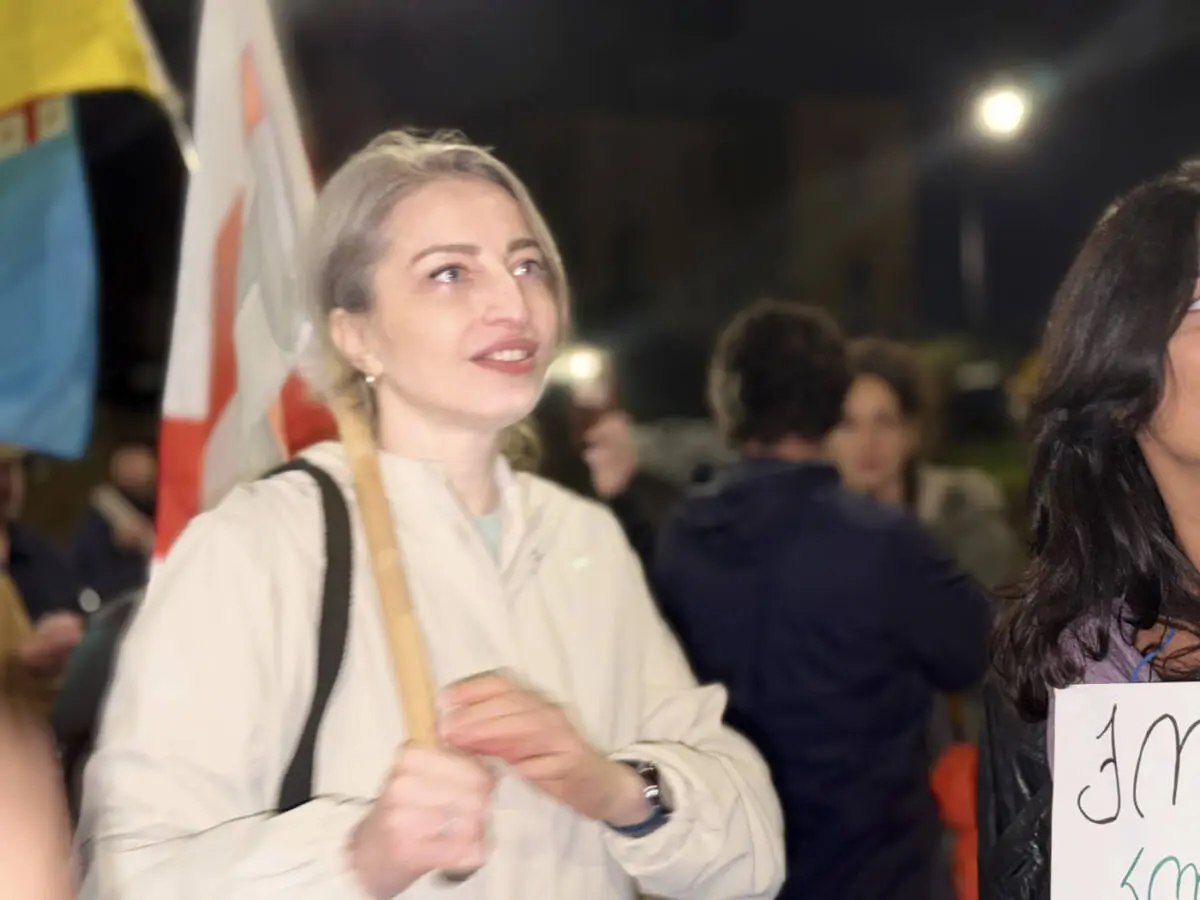
Nana Malashkhia, the “woman with the European flag,” was captured in a photograph, which has since become iconic, during the 2023 protests against the “Russian law.” At the time, she was a municipal employee; in 2024, she was elected as part of the Coalition for Change, which includes the party Ahali, one of the parties targeted by the constitutional challenge
10Tbilisi
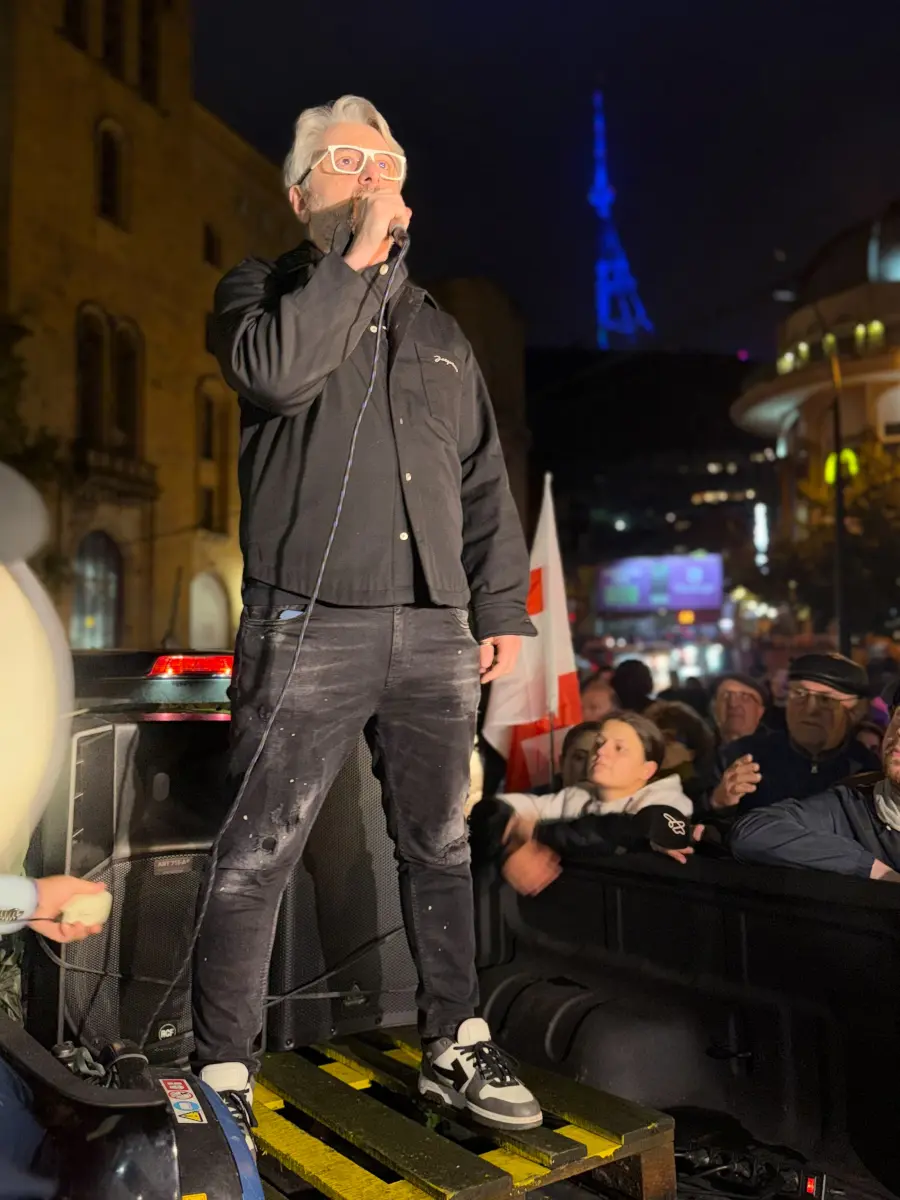
Nika Gvaramia, leader of Ahali, addresses the crowd from a makeshift stage on the back of a pickup truck: “We begin today, and we must reach a climax on November 28th. It is essential that we gather in large numbers, so that the wind cannot extinguish the fire.”
11Tbilisi
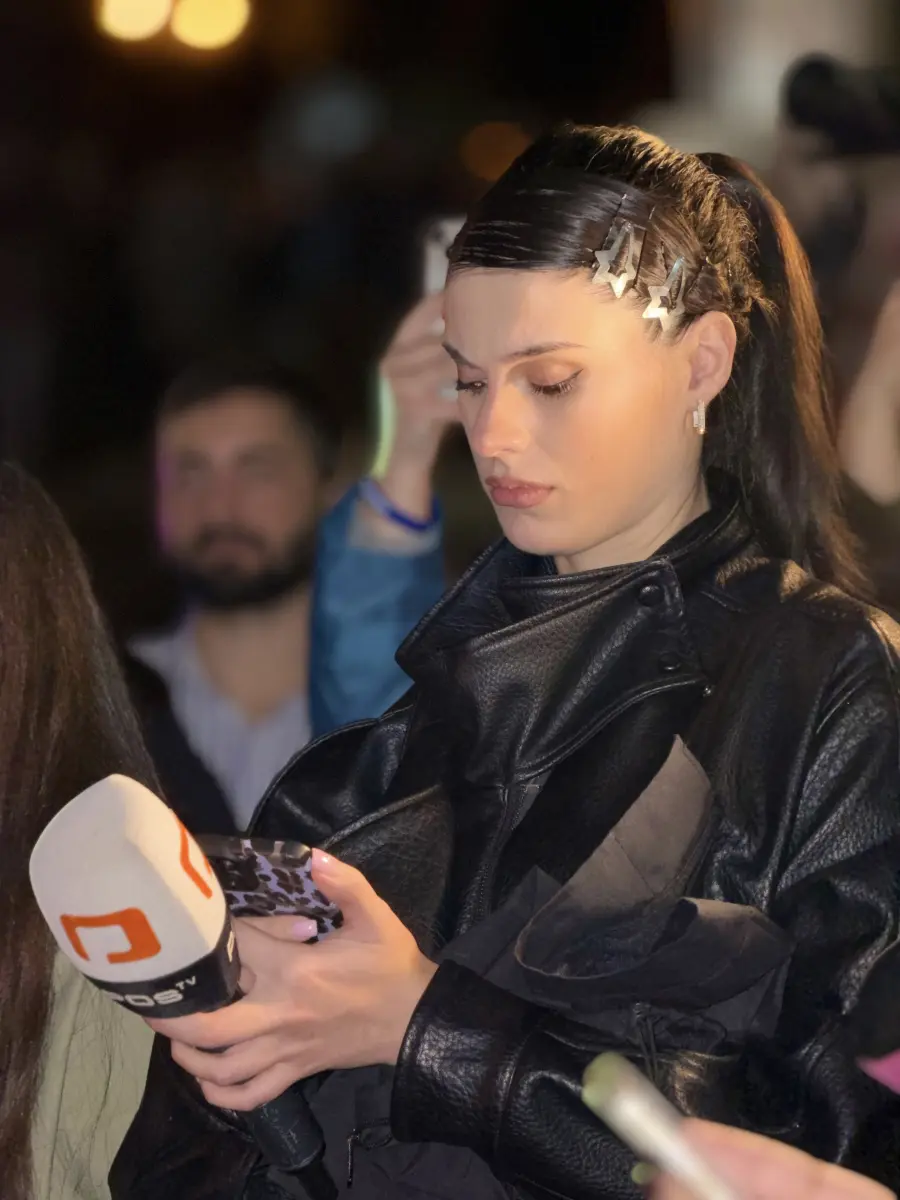
A journalist from Pos TV — a channel closely aligned with the government and included in the United Kingdom’s sanctions regime against Russia — checks her mobile phone while following Gvaramia’s speech
12Tbilisi
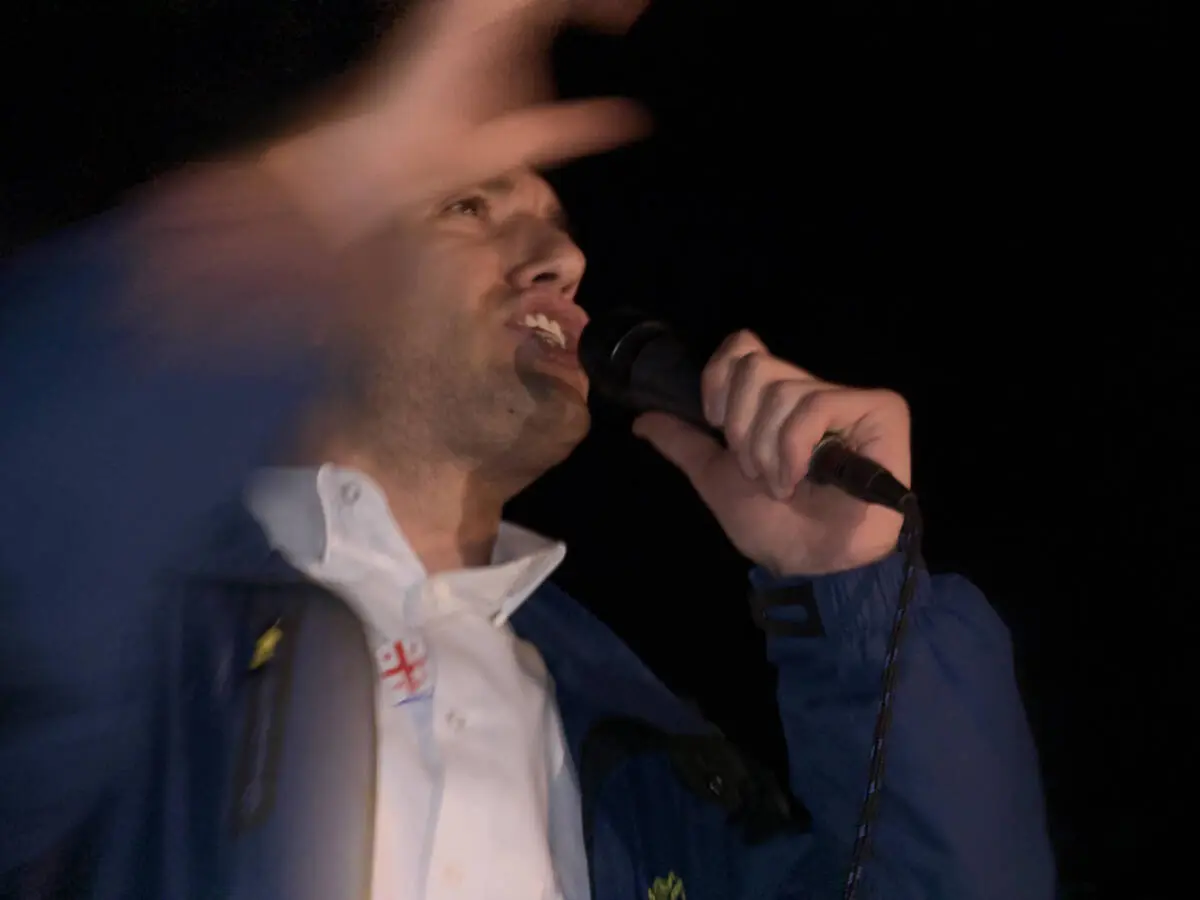
Luka Mishveladze, a representative of Girchi-More Freedom, speaks to the protesters. His party, along with other smaller political forces, was not included in the petition to the Constitutional Court, as the Georgian Dream party deemed it to lack “significant influence” on the political process
13Tbilisi
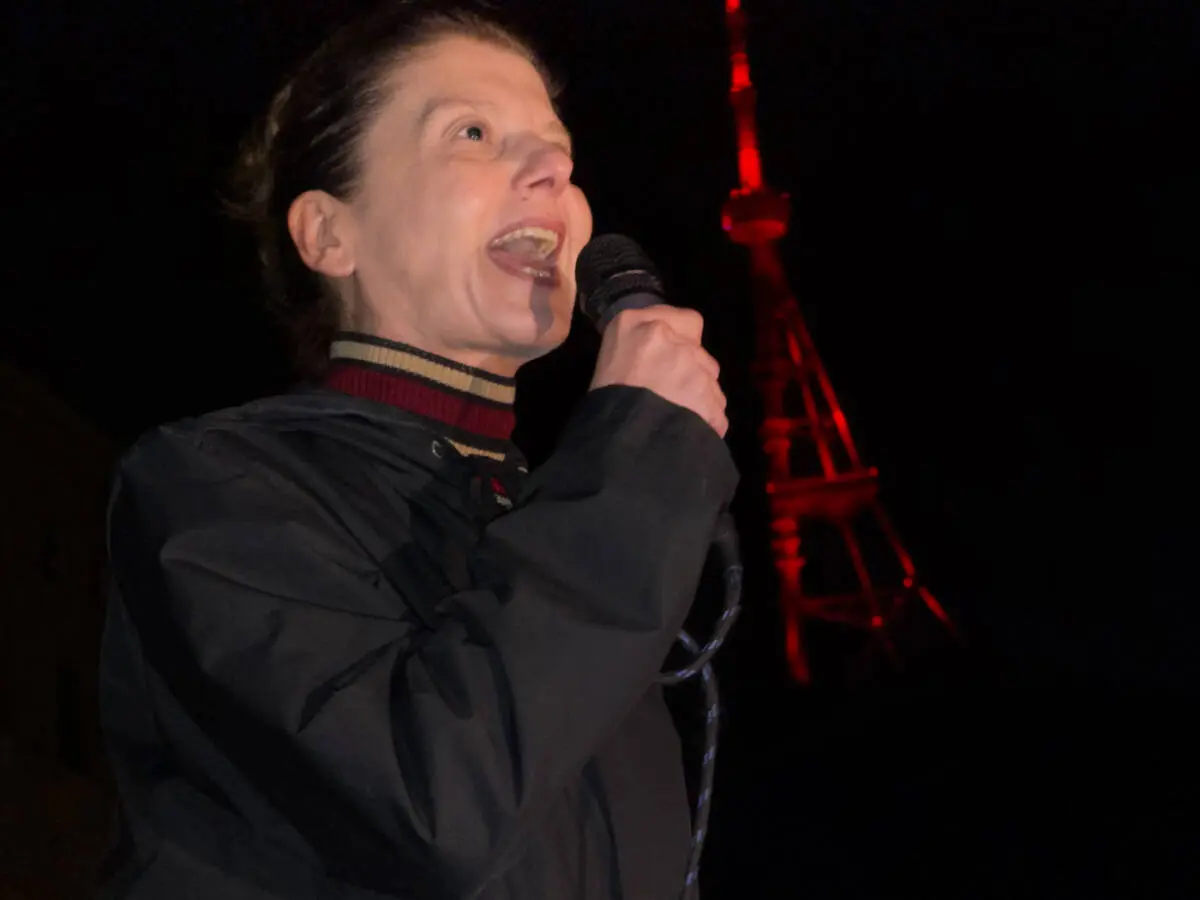
Tamar Chergoleishvili, leader of the Federalists, did not participate in the 2024 parliamentary elections, yet her party now faces the threat of a ban: “By outlawing any alternative, Ivanishvili admits to a crisis of his own legitimacy!”
14Tbilisi
Nika Gvaramia, a former minister in the Saakashvili administrations, was sentenced to eight months in 2025 for refusing to cooperate with an investigative commission chaired by Georgian Dream MP Tea Tsulukiani — a commission whose investigative framework forms the basis for a legal bid to ban the opposition
15Tbilisi
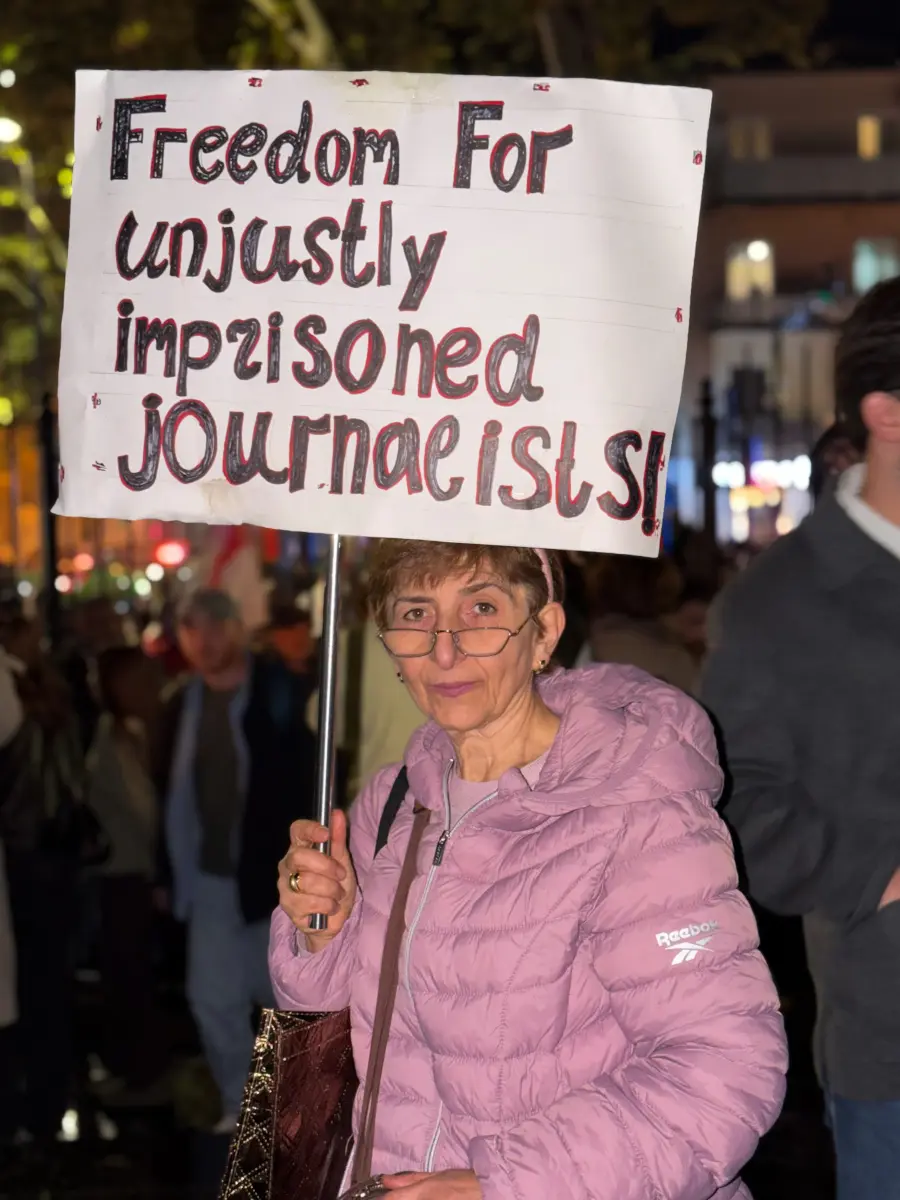
“Freedom for journalists who have been unjustly imprisoned!” Over the past two years, several media workers have received prison sentences. The most well-known case is that of Mzia Amaghlobeli, founder of independent media outlets, who was sentenced to two years for slapping the Batumi police chief during a heated confrontation amid a protest