
Italy: MFRR concerned over trial against Domani journalists
© Massimo Todaro / Shutterstock
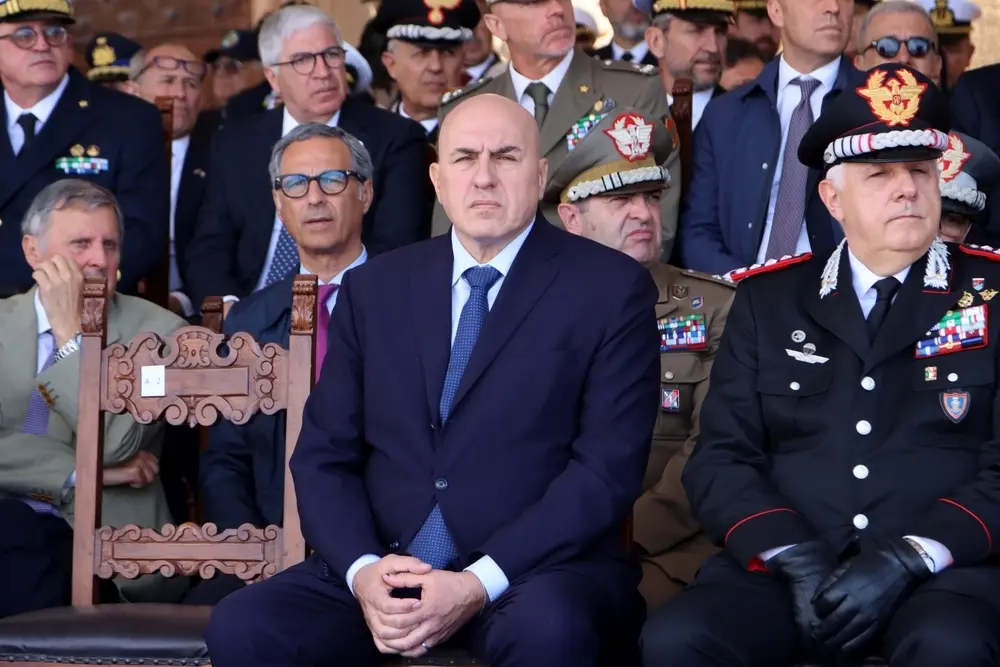
Guido Crosetto, Italy’s Minister of Defense © Massimo Todaro / Shutterstock
Italy: MFRR partners warn of implications for media freedom as charges against Domani journalists proceed
MFRR partners express concern over the trial faced in front of the Rome Criminal Court by Giovanni Tizian and Stefano Vergine, Domani’s journalists. The two journalists are accused of complicity with a public official in the unauthorized access to documents and in the disclosure of confidential information. The charges are reportedly aggravated by the allegation that the journalists sought financial compensation through the publication of the information.
The proceeding raises serious concerns about the protection of journalistic sources and risks setting a dangerous precedent for investigative reporting in the public interest.
In October 2022, shortly after his appointment as Italy’s Minister of Defense, Guido Crosetto announced that he had instructed a law firm to take legal action against Domani over an article examining potential conflicts of interest arising from his links to the arms industry. The article examined Crosetto’s work as a lobbyist and adviser to the Italian arms industry since 2014, arguing that his extensive professional ties and personal relationships with key industry figures raised questions about potential conflicts of interest. Although no civil lawsuit was ultimately filed, Crosetto filed a criminal complaint that led the Public Prosecutor’s Office to launch a preliminary investigation involving Domani’s newsroom.
According to the charges, the journalists allegedly received documents from a lieutenant of the Guardia di Finanza, Italy’s Financial Police, who is also facing proceedings in the case. The documents reportedly concerned the financial assets of politicians, businesspeople and members of criminal organizations, as well as political parties. Among them were documents relating to Crosetto’s tax declarations, which could have enabled Domani to report on the then Defense Minister’s income in October 2022.
Under the charges brought against them, Tizian and Vergine could face prison sentences of up to eight years for alleged complicity with a public official in the unauthorized access to database records, and up to three years for the alleged disclosing of confidential information.
On October 13, the Rome Criminal Court held the first of several preliminary hearings, with the next scheduled for January 2027.
The MFRR has consistently raised concerns about the deterioration of media freedom in Italy in recent years, as documented during its dedicated advocacy missions in 2024 and 2026. Domani’s newsroom, known for its focus on investigative journalism, has faced a range of attacks, including verbal attacks by politicians, threats of physical violence from criminal organizations, and repeated legal harassment, often initiated by politicians and other high-ranking public figures. The proceedings against Domani confirm the growing pressure on independent investigative journalism in Italy.
The protection of journalistic sources is a cornerstone of press freedom and is essential to the media’s ability to act as a public watchdog. Under Article 10 of the European Convention on Human Rights, authorities must respect journalists’ right to protect the identity of their sources. The case law of the European Court of Human Rights has consistently emphasized the importance of safeguarding journalists’ role as public watchdogs. In Dupuis and Others v. France, the Court stressed that particular care must be taken when assessing whether to punish journalists for publishing information obtained in breach of investigative secrecy or professional confidentiality, especially when their reporting contributes to a debate of significant public interest. In fact, the safeguards of Article 10 include “journalists’ right to divulge information on issues of general interest provided that they are acting in good faith and on an accurate factual basis”.
The undersigned organizations draw the attention of Italian authorities to the commitments undertaken under Council of Europe Recommendation No. R (2000) 7, determining that the protection of journalists’ sources is a fundamental condition for journalistic work and media freedom. It is essential to ensuring free, independent and pluralistic media and, in turn, to the functioning of a healthy democratic society. And further to the obligations under Article 4 of the European Media Freedom Act, determining that member states shall not detain, sanction, intercept or inspect media workers or any persons who, because of their relationship with a media service provider or its editorial staff, might have information related to or capable of identifying journalistic sources or confidential communications.
Signed
Osservatorio Balcani Caucaso Transeuropa (OBCT)
European Federation of Journalists (EFJ)
Free Press Unlimited (FPU)
International Press Institute (IPI)
European Centre for Press and Media Freedom (ECPMF)
This statement was produced as part of the Media Freedom Rapid Response (MFRR), a Europe-wide mechanism which tracks, monitors, and responds to violations of press and media freedom in EU Member States and candidate countries.