Chernobyl 40 years later: Between memory and the reality of war
April 26th marks the fortieth anniversary of the Chernobyl nuclear disaster, an anniversary inevitably marked by the ongoing war and the memory of the Russian occupation of the plant four years ago. We gathered the voices of some technicians taken hostage during the occupation
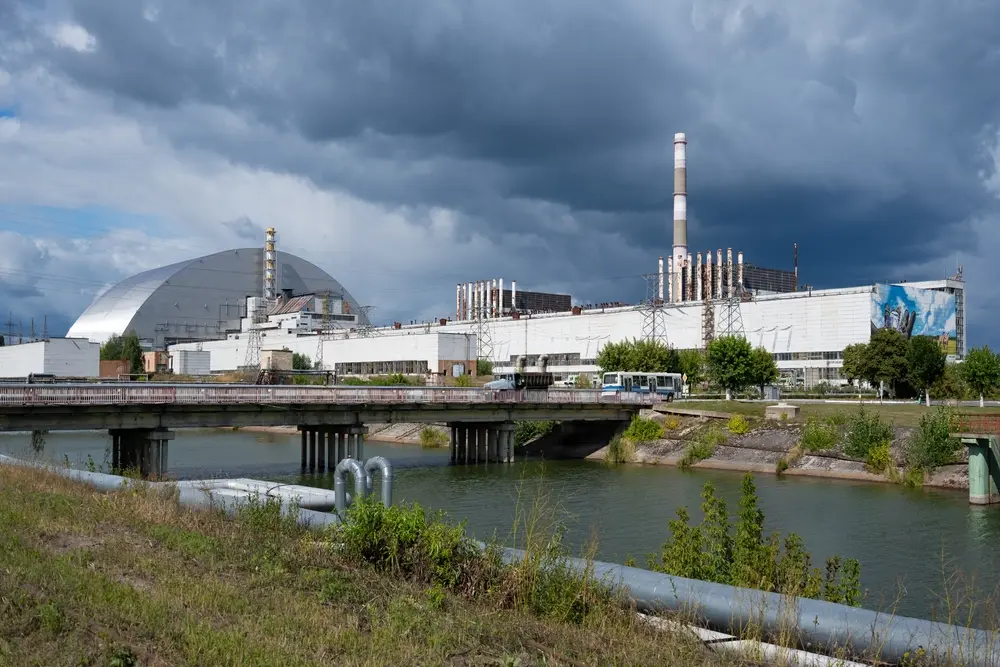
La centrale di Chernobyl – © Shutterstock/Budzynski
La centrale di Chernobyl - © Shutterstock/Budzynski
When Russian forces crossed into Ukraine from Belarus on 24 February 2022, one of their first strategic targets was the Chernobyl Nuclear Power Plant, the site of the worst nuclear catastrophe that shook the world in 1986. Within hours, Russian troops seized the surrounding exclusion zone, a restricted territory protected under international humanitarian law due to its environmental and nuclear significance.
By the end of the first day of the full-scale invasion, the site was under Russian control.
“After a violent fight, we lost control of the Chernobyl area”, said Ukrainian presidential adviser Mykhailo Podolyak, warning that the condition of the facility remained unknown.
What followed was a month-long occupation by troops who appeared to have little understanding of the environment in which they were operating. More than 200 plant employees and 169 Ukrainian troops – who were forced to surrender – were on site when Russian forces arrived.
Under normal circumstances, staff work in tightly controlled shifts, rotating regularly to maintain both safety and performance. The system collapsed immediately. Exhausted Ukrainian personnel were forced to remain at their posts under armed supervision, responsible for maintaining critical systems without relief.
Although the Chernobyl nuclear plant has not generated electricity since 2000, it remains a highly sensitive site. Around two and a half thousand specialists continue to work there, monitoring radiation levels and ensuring the safe containment of nuclear waste. As one international nuclear expert noted, “even inactive nuclear facilities require constant vigilance because safety is never ‘switched off’, especially in a highly contaminated area like this one”.
The hostages of the Russian army
“This was my first shift after vacation”, recalls Oleksiy Shelestiy, head of an electrical workshop shift and one of the workers effectively taken hostage on the first day of the invasion.
“The work started normally, or so it seemed”, says Shelestiy. “I expected to work for 12 hours, which is a standard shift. We did not expect to stay at the station for four weeks”.
Oleksiy and his colleagues, who were on duty on 24 February, were not replaced that evening. By then, Russian forces had fully taken control of the plant. Rotation – a cornerstone of nuclear safety – did not resume for nearly a month.
“On the morning of 24 February, we were told that Russian military equipment, including tanks and armored personnel carriers, had arrived”, says Dmytro, another employee who lived through the occupation.
“They issued an ultimatum: the facility had to be surrendered”, continues Dmytro. “My colleague and I stayed at our workplaces because the plant had to remain under the control of specialists. Everyone else went to shelter”.
Dmytro worked in the radiation safety department at the spent nuclear fuel storage facility. Together with shift supervisor Valentyn Heyko, he remained on duty, sending others to safety. Meanwhile, Oleksiy Shelestiy was in the administrative building.
“As the shift supervisor of the electrical shop, I had no right to leave my workplace”, explains Oleksiy. “I cannot leave it even during an air raid. That is why I stayed. Before that, people were already saying there were explosions near Pripyat. I called the colleague who was supposed to replace me, and he said he was on his way. Then I was told there would be no replacement because the war had started”.
“At lunchtime, I saw tanks marked with the letter ‘V’ from the window”, recalls Oleksiy. “We did not know how long it would last”.
The team continued performing routine operations, but under entirely abnormal conditions. Armed soldiers were present throughout the facility. Communication with the outside world was severely limited. Workers were not allowed to leave.
“You are constantly under pressure”, says Dmytro. “There are armed people around you, and you realise the level of responsibility”.
That responsibility of maintaining the stability of a nuclear site did not decrease during the occupation, on the contrary, it increased. Oversight systems were disrupted, external support was cut off and decisions had to be made under constant psychological strain.
Russians in the Red Forest
Beyond the plant itself, Russian military activity introduced new and unpredictable risks.
Troops entered the Red Forest which is one of the most radioactive areas in the exclusion zone and began digging trenches and fortifications, often without any protective equipment. The movement of heavy military vehicles disturbed radioactive soil that had remained largely undisturbed for decades, causing localised spikes in radiation levels.
At first, as the workers say, the soldiers seemed unaware of the danger.
“There was panic among them”, recalls Valentyn Heyko. “They were starting to realise where they were”.
According to Ukrainian officials, some soldiers later showed symptoms consistent with radiation exposure. Former Head of the Security Service of Ukraine Valentyn Nalyvaychenko stated that more than 150 Russian soldiers developed acute radiation sickness in the Chernobyl area, and at least two died. While such reports are difficult to verify, the broader pattern raised alarm among nuclear experts.
Conditions at the plant itself became increasingly precarious as the occupation went on.
Workers were restricted not only in their ability to leave the station, but also in their movement within it. Entire sections of the facility were taken over by Russian troops.
“They occupied several buildings and banned access to certain rooms”, says Dmytro. “They controlled entire floors and administrative areas. Over the loudspeaker, they announced which routes we were allowed to use. We could move only under their supervision”.
Some workers had their phones confiscated for inspection, cutting them off from their families. Communication with the occupiers was centralised through one person, Valentyn Heyko, who announced updates and negotiation outcomes between the staff and the Russian forces over the plant’s loudspeaker system.
“We received all the information from Valentyn”, says Lyudmila Mykhailenko, a plant paramedic. “He tried to support us, to keep morale up as much as possible in those conditions. For example, he often wished people ‘Happy Birthday’ over the loudspeaker”.
Despite the strain, workers continued to perform their duties. Monitoring systems had to be maintained. Cooling systems had to function. Radiation levels had to be tracked continuously.
On 9 March, the situation worsened as the plant lost its external power supply. Backup diesel generators were activated, but the incident sharply increased the level of concern. Without stable electricity, critical safety systems, particularly those related to cooling spent nuclear fuel, were at risk.
In the days that followed, the situation remained fragile. Power was intermittently restored and lost again, while fuel for the generators became a constant concern. Staff continued working without rotation, exhausted and stressed, while negotiations for relief dragged on. Only towards the end of March was a partial staff rotation finally allowed – the first in nearly four weeks – bringing some relief to those who had been taken hostage since the beginning of the invasion.
The occupation ended as abruptly as it had begun. In late March 2022, Russian forces began withdrawing from northern Ukraine after their failed advance toward Kyiv. Chernobyl was no longer a strategic asset and, by 31 March, Russian troops had left the plant as part of a broader retreat from the Kyiv region.
Before leaving, the occupying forces looted equipment, vehicles and even radiation monitoring devices. According to witnesses, they also dismantled infrastructure and took anything of practical value.
“They took everything they could carry”, recalls Dmytro.
The same day, the Ukrainian flag was raised again over the plant, and for the first time in five weeks, the facility was back under Ukrainian control.
Russian forces took with them the Ukrainian National Guard soldiers who had been stationed at the plant since before the invasion. These men were responsible for protecting the facility – 169 guardsmen, lightly armed and quickly surrounded on the first day. They had surrendered under ultimatum, with no realistic chance of resisting armored units.
The Ukrainians were transported to Russia, where they became prisoners of war. Four years later, after numerous prisoner exchanges, 66 Ukrainian soldiers still remain in Russian captivity.
Found an error in this article? Please contact our editorial team at redazione@balcanicaucaso.org.
Featured articles
 the students' voices
 Investigation
 students' protest