Bulgarian elections: Rumen Radev triumphs
Former President Rumen Radev has secured a landslide victory in yesterday’s snap general election in Bulgaria, and his “Progressive Bulgaria” party will hold an absolute majority in the Sofia parliament. However, there are concerns within the EU over Radev’s pro-Russian stance, as he has called for a resumption of dialogue with Moscow
shutterstock_2284067321
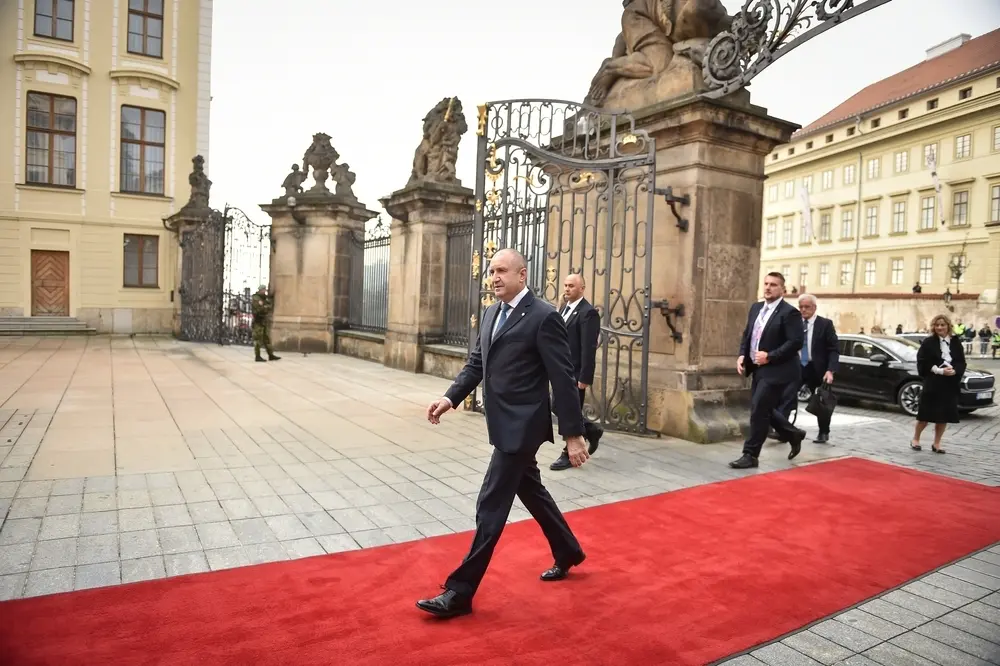
Rumen Radev © roibu/Shutterstock
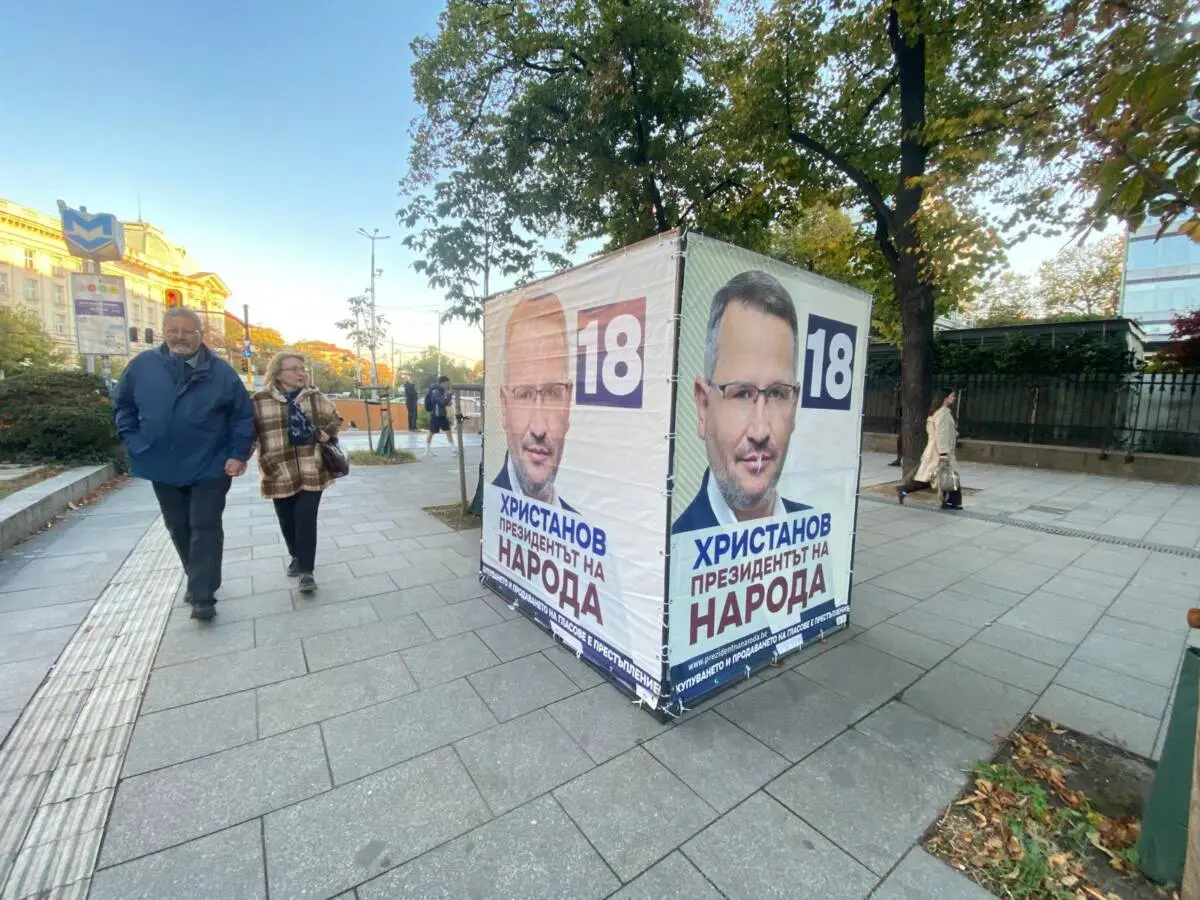
Bulgarian citizens were looking for a fresh start, a clear result and political stability in the parliamentary elections on 19 April. To achieve this, they returned to the polls despite the obvious fatigue accumulated over the last five years – marked by no fewer than eight snap elections, including yesterday’s – with a significant rise in turnout that this time exceeded 50%.
With the figures in hand, they woke up this morning to a revolutionised political landscape: ‘Progressive Bulgaria’, the political alliance launched just a few months ago by former President Rumen Radev, has triumphed, garnering support well beyond the already high expectations on the eve of the vote. With around 60% of the votes counted, “Progressive Bulgaria” has received over 44% of the vote and an absolute majority of seats in the next parliament in Sofia.
At present, only four parties are certain to have cleared the 4% threshold. Alongside “Progressive Bulgaria”, these include the liberal reformists of “We Continue the Change” (14%), the centre-right GERB movement led by former Prime Minister Boyko Borisov (13.1%) and the Movement for Freedom and Rights (DPS) led by tycoon Delyan Peevski (5.4%). The nationalists of Vazrazhdane (Renaissance) are currently polling at 4.5%, but it cannot be ruled out that once the count is complete, with votes from abroad included, they may be left out of the next parliament.
What is certain is that Radev and ‘Progressive Bulgaria’ have won their gamble, and will be able to count on an absolute majority, without needing to seek allies to form a stable coalition. ‘This is the victory of hope over scepticism. Thank you for your trust,’ Radev declared in the immediate aftermath, whilst his clear victory had already been acknowledged by other political figures yesterday evening.
Radev, formerly a top pilot and commander of the Bulgarian Air Force before serving two terms as head of state, won over voters by promising a relentless fight against corruption, reforms in key sectors – particularly the judiciary – and greater attention to the most vulnerable sections of the population, who are concerned about inflation following Bulgaria’s entry into the Eurozone in early 2026, despite the country’s strong macroeconomic indicators in recent years.
Rather than his political manifesto, however, Radev relied on his charisma and the credibility he had earned during his long years as president. His promise was to succeed where a long list of parties and movements had failed in recent years: to put a definitive end to the long political dominance of the Boyko Borisov–Delyan Peevski duo, which had lasted more than ten years.
A power alliance accused of imposing a corrupt and nepotistic system on Bulgaria, and against which tens of thousands of people took to the streets last December – in the largest anti-government demonstrations of recent decades – bringing down the faltering Zhelyazkov government and leading Bulgaria to yesterday’s elections.
It was primarily ‘We Continue the Change’ that fuelled the protests, but it was Radev who reaped the rewards of the energy from the streets; with his resounding victory, he succeeded where neither the liberals nor other flash-in-the-pan parties had managed in recent years. Borisov, the dominant figure on the Bulgarian political scene for fifteen years, will now have to step aside, whilst Peevski – sanctioned for corruption by the US and, for many Bulgarians, a living symbol of all the system’s ills – will have no say in the formation of the next government.
Foreign policy, what now?
Radev’s campaign managed to win over many voters who had stayed at home in previous elections. “However, ‘Progressive Bulgaria’ took votes away from ‘Renaissance’, GERB and the Liberals,” sociologist Dobromir Zhivkov commented on bTV. “This is a new phenomenon in our electoral landscape, capable of attracting support across the entire political spectrum.”
Whilst domestically the key issues were a fresh start for the government, restored stability and a fairer distribution of economic resources, internationally it is Radev’s geopolitical stance that is sparking debate and raising doubts and fears.
As president, the leader of “Progressive Bulgaria” has never hidden his favourable regard for Russia. Since the start of Moscow’s aggression against Ukraine, he has consistently opposed any military aid to Kyiv, advocating instead for a reopening of dialogue with the Kremlin.
This stance reflects that of a significant – albeit perhaps now minority – section of public opinion in Bulgaria, a country with deep historical, cultural and religious ties to Russia. During the election campaign, Radev described the resumption of relations with Russia as “inevitable”, subsequently offering to act as an intermediary between Brussels and the Kremlin.
Radev has underpinned this reasoning with his strategic vision of Bulgarian interests, particularly in the vital sector of energy supplies. In an increasingly insecure and unpredictable world, according to Bulgaria’s next prime minister, it would be a potentially fatal mistake for Sofia to turn its back on Russian hydrocarbons – available via pipeline across both sides of the Black Sea – in favour of alternative sources from turbulent regions such as the Persian Gulf and from unpredictable allies such as Donald Trump’s USA.
Russia could also come to play an important role in the revival of Bulgaria’s nuclear sector, another priority declared by Radev during the election campaign.
“Europe must return to being pragmatic if it wants to regain its competitiveness and halt its deindustrialisation,” Radev stated last night. “And if it wants to do so, it must secure the necessary resources.”
Given the circumstances, it is therefore no surprise that many in Europe are wondering whether Radev is destined to become the new Viktor Orbán. So far, the former Bulgarian president has never taken explicitly anti-European stances. In 2025, he repeatedly called for a referendum on Bulgaria’s accession to the Eurozone, stating, however, that he was not against the single currency, but in favour of consulting Bulgarian citizens on such a fundamental decision.
It should also be noted that since Bulgaria’s accession to the European Union in 2007, the Bulgarian ruling classes have adopted a far more accommodating stance towards Brussels than the one taken by the former Hungarian prime minister, partly because Sofia is one of the countries that has benefited most from EU funds and because the vast majority of public opinion in the country remains convinced of its pro-European choice.
Certainly, with an overwhelming majority in parliament and complete freedom of action, Radev’s true intentions will soon become apparent. We shall then see whether – having revolutionised the domestic political landscape – the former president will also seek to upend relations between Bulgaria and its European partners in order to bring the country closer to Russia.
Found an error in this article? Please contact our editorial team at redazione@balcanicaucaso.org.
Tag:
Featured articles
 the students' voices
 Investigation
 students' protest