Empty Homes and Rising Tourism: Zagreb’s Fight for the Right to Housing
The city of Zagreb, a member of the Mayors for Housing alliance, has introduced several measures to limit the negative effects of rising prices and the spread of short-term rentals. We spoke with Deputy Mayor Luka Korlaet
shutterstock_2533527639
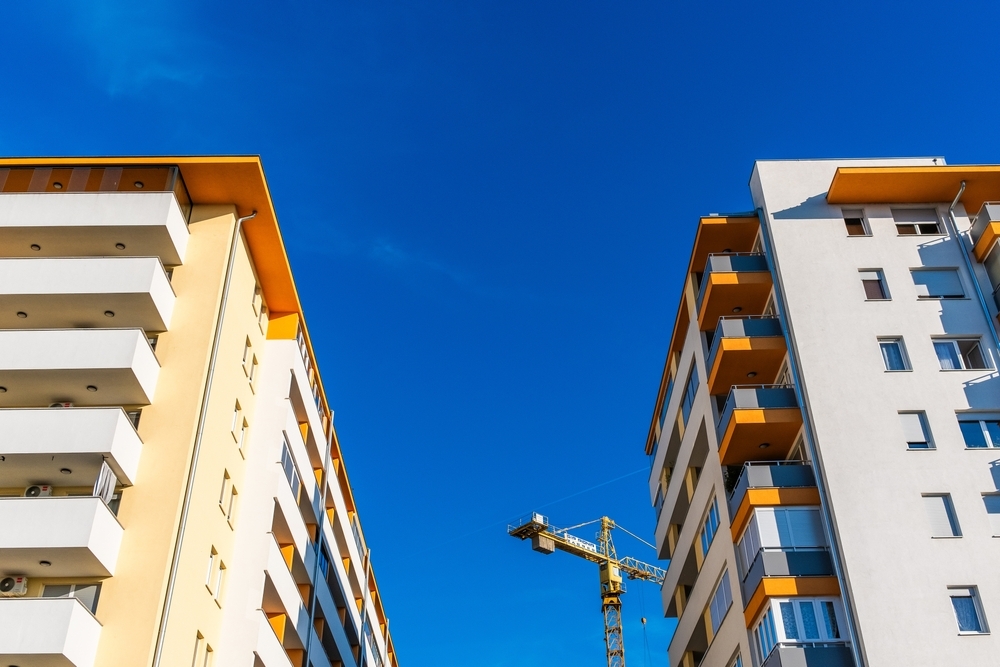
Buildings in Zagreb © Ivan Klindic / Shutterstock
The housing crisis is affecting cities across the European Union and is one of the major causes of social exclusion and urban marginalisation. In recent years, apartment prices and rents in Zagreb have increased significantly. At the same time, tourism has grown steadily, leading to an increase in the number of apartments being withdrawn from the long-term rental market and used for short-term and tourist rentals.
The City of Zagreb, a signatory, along with other European cities, of the European Affordable Housing Plan, is aware of the housing crisis and has made public commitments at the European level. While waiting for the European Commission to approve the establishment of the Affordable Housing Fund, what concrete actions has the city administration taken to address the housing crisis and protect its residents?
The City of Zagreb is primarily responsible for the management of municipally owned real estate. Therefore, during our current term, as in the past, we have taken several decisions to enable more rational and responsible management of public housing.
First, the rental of municipally owned apartments is regulated in a more socially equitable way. We have put an end to the sale of public housing (the previous administration resorted to selling the apartments in certain circumstances) and continued to design and build new properties for rental.
In addition to these decisions, we have attempted to respond to the boom in short-term rentals by increasing the tax per bed from 40 to 200 euros per year. All these measures aim to rebalance the supply and demand for apartments in Zagreb in order to bridge the so-called housing gap of 38,000 apartments (source: Economic Institute).

Luka Korlaet © Grad Zagreb
Does the city administration use official, regularly updated data to monitor rental prices and the real estate market in Zagreb? If so, what are the main trends observed over the past five years?
The Municipal Economic Office, specifically the Strategic Information and Research Department, constantly monitors rental and real estate market trends. Overall, there is a steady upward trend in apartment prices, both for rent and for sale. There are several reasons for this: the supply-demand ratio is highly disproportionate because a large number of apartments have been converted into short-term rental units (currently the ratio between the first and second category is 1:5). The result is a reduction in the supply of apartments for long-term rental, accompanied by an increase in the prices of available apartments on the market.
The construction sector in Zagreb is booming, with new residential buildings popping up on every corner. However, many apartments remain vacant (according to data from various sources, the number varies from 54,000 to 85,000 out of a total of 350,000), suggesting that the apartments are not being built to meet housing needs, but rather as real estate investments. The regeneration of this vacant housing stock is the responsibility of the government, not the municipality.
How much does the average Zagreb resident spend on rent or a mortgage for their first home, compared to the average salary?
Rents, like mortgage payments, vary depending on location, accessibility, year of construction and condition of the building or apartment, etc. The average net salary in Zagreb at the end of 2025 was 1,650 euros, while the average rent was 900 euros (14-15 euros per square meter). Rent for a studio apartment in the city center ranges between 600 and 800 euros.
In general, it is believed that housing expenses (rent or mortgage payments, plus utilities) should not exceed 30% of total family income. The data cited above shows that single-person households are very close to or even exceed this threshold.
Regarding home mortgages, the average payment is roughly equivalent to the average rent. The average price of an apartment is around 2,800 euros per square meter. Rental prices, like apartment prices for sale, have increased at a rate of more than 10% annually, making it very difficult to address the housing crisis.
How many apartments are currently registered for short-term tourist rentals in Zagreb? What trends have been observed in recent years? Is the municipality monitoring the long-term impact of these apartments on the real estate market?
In Zagreb there are currently approximately 3,500 rooms and 2,500 apartments registered for short-term tourist rentals. Both categories are experiencing continued growth. Thanks to changes to the Real Estate Tax Act, which have encouraged owners of vacant apartments to list them on the market, the supply of apartments for long-term rental has also increased, currently numbering approximately 5,000. By putting the aforementioned huge number of vacant apartments mentioned above on the market, it will be possible to largely solve the housing crisis in Zagreb, or rather to bring the supply and demand for apartments into balance.
Is it true that the municipality ownes approximately 6,300 apartments? What percentage of the municipality’s total real estate stock do these apartments represent? How many of these properties are designated for social housing, that is for affordable and subsidised rentals?
Yes, it is true. The municipality of Zagreb ownes approximately 6,300 apartments, slightly less than 2% of the total number of apartments in Zagreb (around 360,000). In accordance with the strong social agenda of the current administration, most of the public housing (60%) is occupied by socially disadvantaged citizens, while the remaining apartments are intended for people with slightly higher incomes.
According to a recently amended municipal resolution on residential rentals, the category of socially disadvantaged people includes our fellow citizens with incomes significantly lower than the average salary in Zagreb. For a single-person household, this threshold is 50%, while for a couple, it is twice 30% of the average salary. The rent in this case is very low, amounting to just 0.36 euros per square meter.
Above this threshold, the scale is progressive, meaning it depends on family income. Simply put, the higher the household’s income, the higher the rent, regardless of the apartment’s square footage. This logic seemed socially fair to us and prevents very wealthy citizens from using public housing (as happened in the past).
How many of these apartments are currently vacant, and why? Is there a strategy to increase the public housing stock over the next five to ten years?
Most of the apartments are occupied, and demand far exceeds supply. Around a hundred apartments are always vacant for various reasons (contract expiration, relocation, tenant death, etc.). Once vacated, an apartment is immediately renovated and prepared for new tenants, following to a priority list.
Given that, as mentioned, demand exceeds supply, we will try to increase the number of apartments by several hundred by the end of our mandate. First, we are expanding the Podbrežje neighborhood, where a building with 288 apartments is currently under construction, and we are planning another one with approximately 170 apartments.
Furthermore, we recently held an international urban planning and architecture competition, “Europan”, for the development of an area called Klara Nova, with 130 apartments (the winner was a young Spanish design firm). We are also developing the Borovje area, where we plan to build approximately six hundred apartments. In addition, we will work on developing specific areas, namely municipally owned land, where residential buildings can be built.
How could the creation of a European affordable housing fund help address the housing crisis in Zagreb? Perhaps by planning new construction, the renovation of existing buildings or the purchase of properties by the municipality?
The European Affordable Housing Plan clearly acknowledges for the first time the extent of the housing crisis in urban areas throughout Europe and paves the way for the creation of a new European financial instrument dedicated to affordable social housing.
As announced in the Plan, the European Commission, in collaboration with the European Investment Bank and the relevant institutions in the Member States, will develop a long-term financing mechanism that will focus on increasing the supply of housing and renovating the existing housing stock.
The new European instrument is conceived as a response to requests from major European cities, including Zagreb, which have been calling for years for a permanent source of funding to ensure ever-increasing resources at the EU level. Short-term programs and one-off grants cannot tackle the structural problems cities face: housing shortages, rising rents and the lack of mechanisms for the systematic renovation and conversionof existing buildings.
The cities united in the Mayors for Housing initiative have stressed the need to create a European fund to address these long-term challenges by mobilising around 300 billion euros to build new homes and renovate the existing housing stock in the European Union.
Therefore, the municipality of Zagreb welcomes the announcement of the fund’s establishment, as it would provide a stable, multi-year source of funding for key municipal projects, from Podbrežje and Borovje to new investments in Sveta Klara. At the same time, the new instrument would pave the way for the conversion of abandoned public buildings into apartments. The European Plan envisions this conversion as one of the fastest and most effective measures to increase the supply of affordable housing in urban areas.
In other words, the Plan lays the foundation for a financing model that cities have long sought, and Zagreb welcomes this step forward because it will allow us to significantly increase the stock of affordable housing in the coming years and to advance projects that would not be financially feasible without a specific European instrument.
How does the City of Zagreb intend to integrate its housing policies with the commitments undertaken with respect to the European Housing Action Plan?
Zagreb is among the cities actively involved in shaping European housing policy. Through the Mayors for Housing initiative, the city is part of an alliance that directly contributed to the development of the European Housing Action Plan, calling for broader involvement of the cities and more direct access to EU funds.
The Action Plan and the European Affordable Housing Plan recognise that the housing crisis is most acute in cities and that local authorities play a key role in addressing the problem of housing affordability.
Zagreb is aligning its policies with European ones through a series of concrete measures. The new criteria for allocating apartments, introduced in early 2025 and based primarily on household income, fully reflect European objectives for a fairer distribution of public housing.
Furthermore, the European Plan warns of the negative effects of short-term tourist rentals on apartment availability, and Zagreb has already responded by increasing taxes [for short-term rentals] in order to encourage the reintroduction of apartments into the long-term rental market.
The recommendations of the European Committee of the Regions also emphasise the importance of strengthening the capacity of local authorities to ensure professional and sustainable long-term planning of housing projects, in line with European planning and management standards.
Finally, how are European cohesion funds currently being used to tackle the housing crisis in Zagreb? Does the municipality think there is room for improvement in this area?
In the current financial period, the use of European Structural and Investment Funds for housing projects in Croatia was initially very limited. The funds were allocated primarily to assisted regions and energy retrofitting, while the construction of affordable housing in large urban areas like Zagreb was not considered an acceptable investment category.
The Urban Development Fund, long-established in Croatia as an instrument of the European Regional Development Fund, was expanded following the mid-term review of cohesion policy midway so that it can also be used by cities involved in Integrated Territorial Investments, including Zagreb, for investments in affordable housing.
This extension represents a positive step forward because it allows us to use the current cohesion instrument for the first time for the construction of rental housing in urban areas. However, despite this positive change, the fund’s overall allocation remains very limited, meaning individual projects can only count on modest amounts (around ten million euros), insufficient for the large investments Zagreb needs.
During its mid-term review, the European Commission called on Member States to double their investment in affordable housing and, in collaboration with cities, to redirect part of the unused Recovery and Resilience Mechanism funds towards housing projects, in order to increase the effectiveness of cohesion instruments. In this context, the Municipality of Zagreb hopes that Croatia will also be able to allocate special funds for affordable housing through the Competitiveness and Cohesion Programme by the end of the 2021-2027 period.
It is particularly important to underline that the European Union’s Social Climate Fund will play a significant role in the coming period, specifically focusing on vulnerable households and investing in energy-efficient and affordable housing, including construction, renovation, improved heating and cooling systems and other infrastructure measures that directly contribute to reducing housing costs.
Found an error in this article? Please contact our editorial team at redazione@balcanicaucaso.org.
This article was produced as part of the EuSEE project, co-funded by the European Union. However, the views and opinions expressed are solely those of the author(s) and do not necessarily reflect those of the granting authority, and the European Union cannot be held responsible for them.
Tag: EuSEE
Featured articles
 the students' voices
 Investigation
 students' protest