
| |
Mashuk 2010 – Giorgio Comai
03/09/2010, Redazione
Last August, the youth forum “Mashuk 2010”, the first summer camp promoted by Moscow’s government and solely devoted to young people from the Russian Caucasus, was held in Pyatigorsk, an old spa town in Russia’s North Caucasian Federal District. The event focused on training for cultural interaction and support to youth entrepreneurship. Read the reportage "Mashuk 2010, a youth camp in the Caucasus"


Pionerlager-Saljut
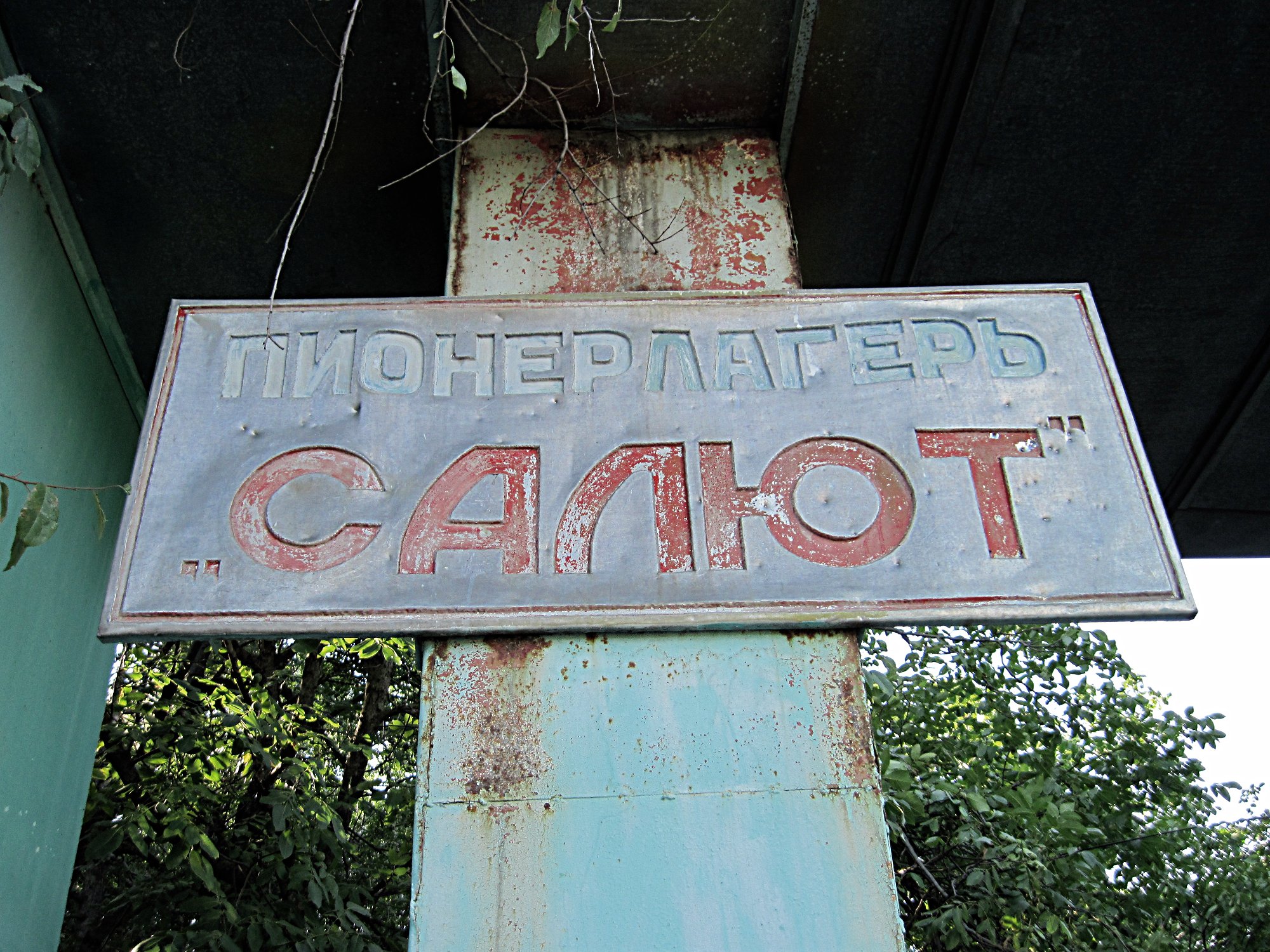
The youth camp “Mashuk 2010” was held in a flat area named after the Komsomol' , the youth organisation of the Communist party. During Soviet times, a summer camp for young “pioneers” was held in this same location and, even now, the icons and images of that time are still on display.
The-stage
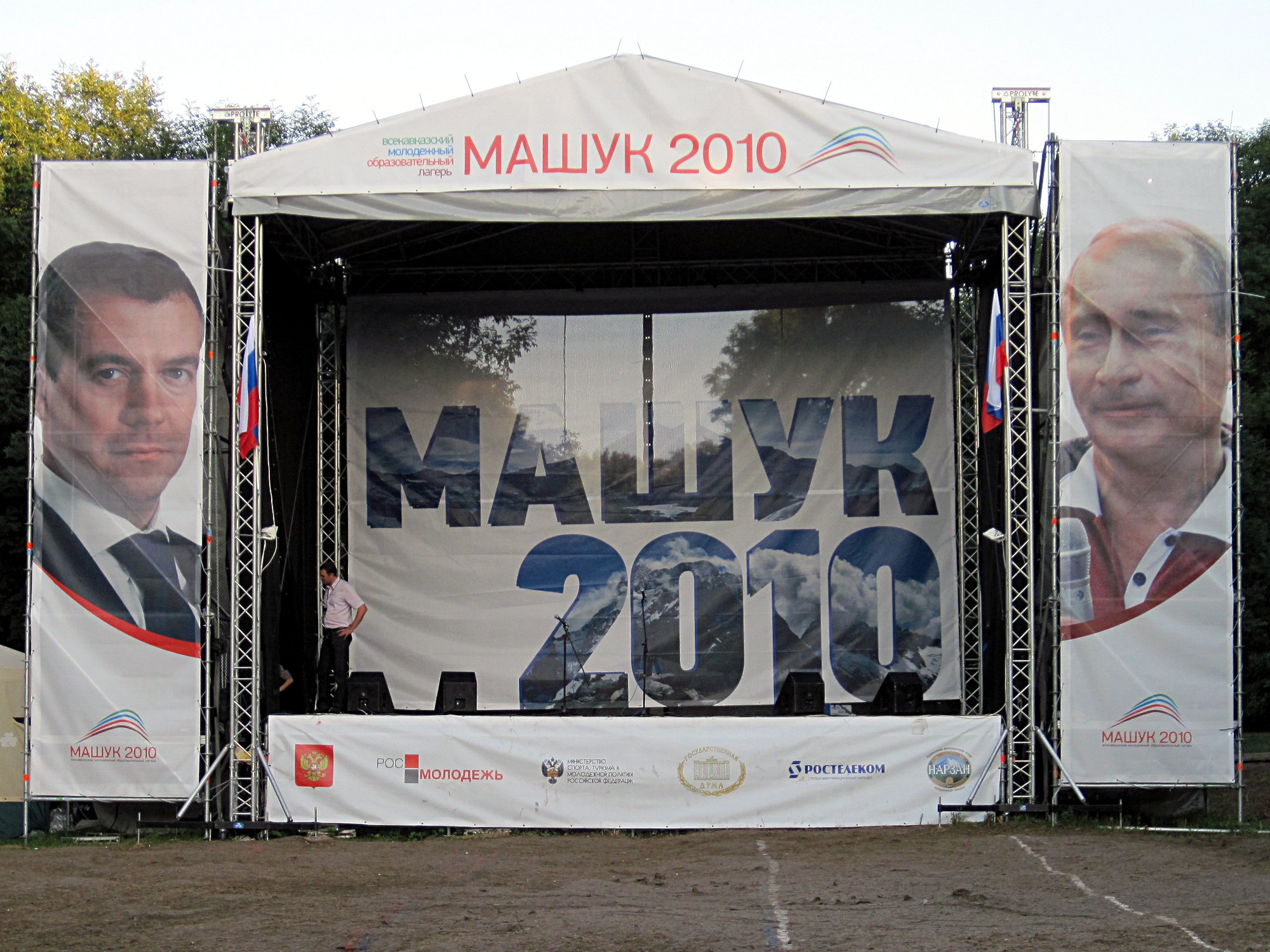
Following the example of Russia's main youth forum, organizers of the Mashuk 2010 camp decided to decorate the central stage of the camp with two huge billboards with the images of Russian President Dmitri Medvedev and Prime Minister Vladimir Putin.
Abkhazia
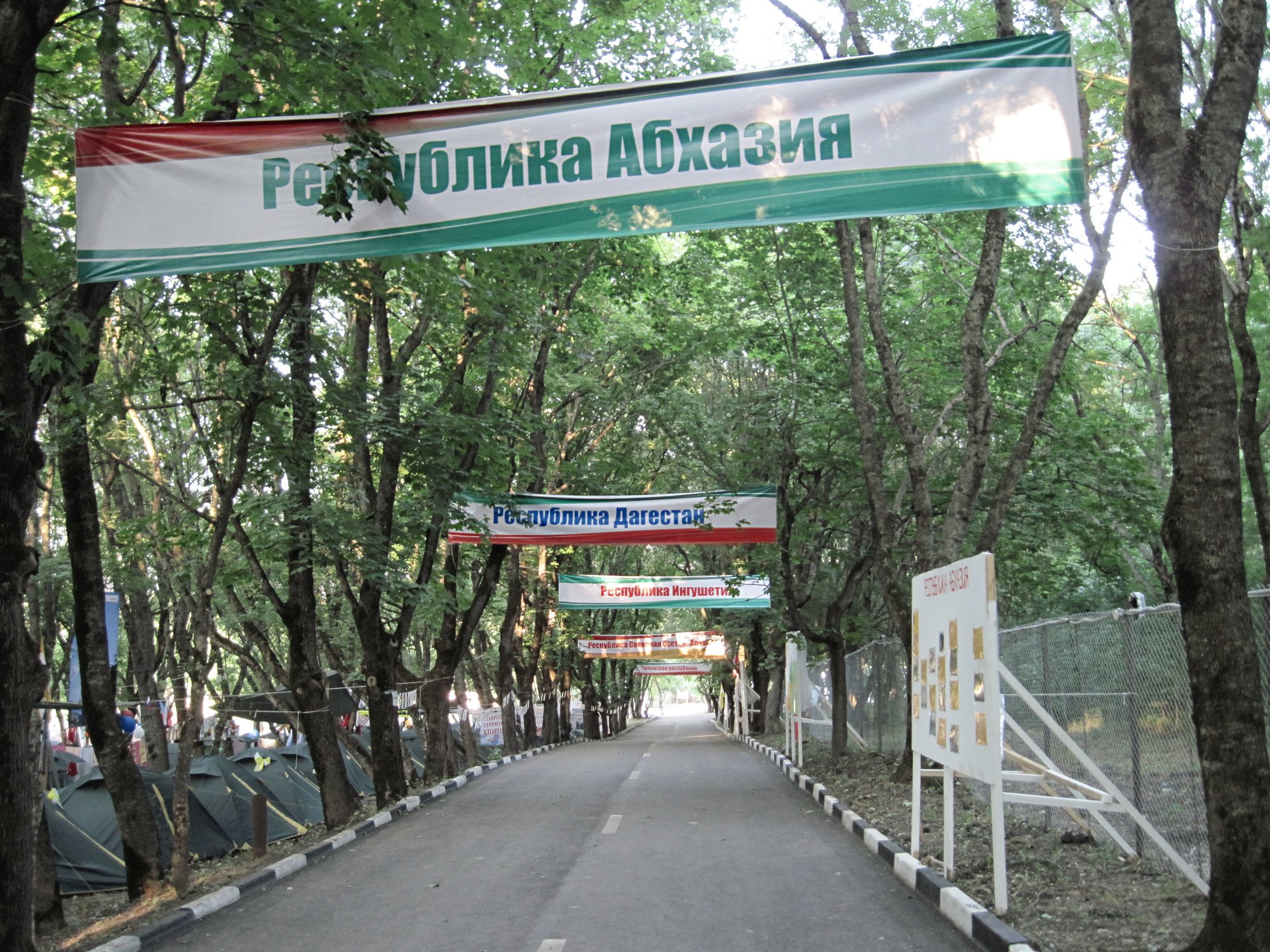
Banners on the main road displayed the names of all delegations, including Abkhazia and South Ossetia. Despite this, Abkhazia did not attend, and South Ossetia only attended the first shift. Abkhazia's Sport and Youth Affairs Committee head cited organizational and financial issues for their absence, suggesting a lack of support from camp organizers.
Gymnastics
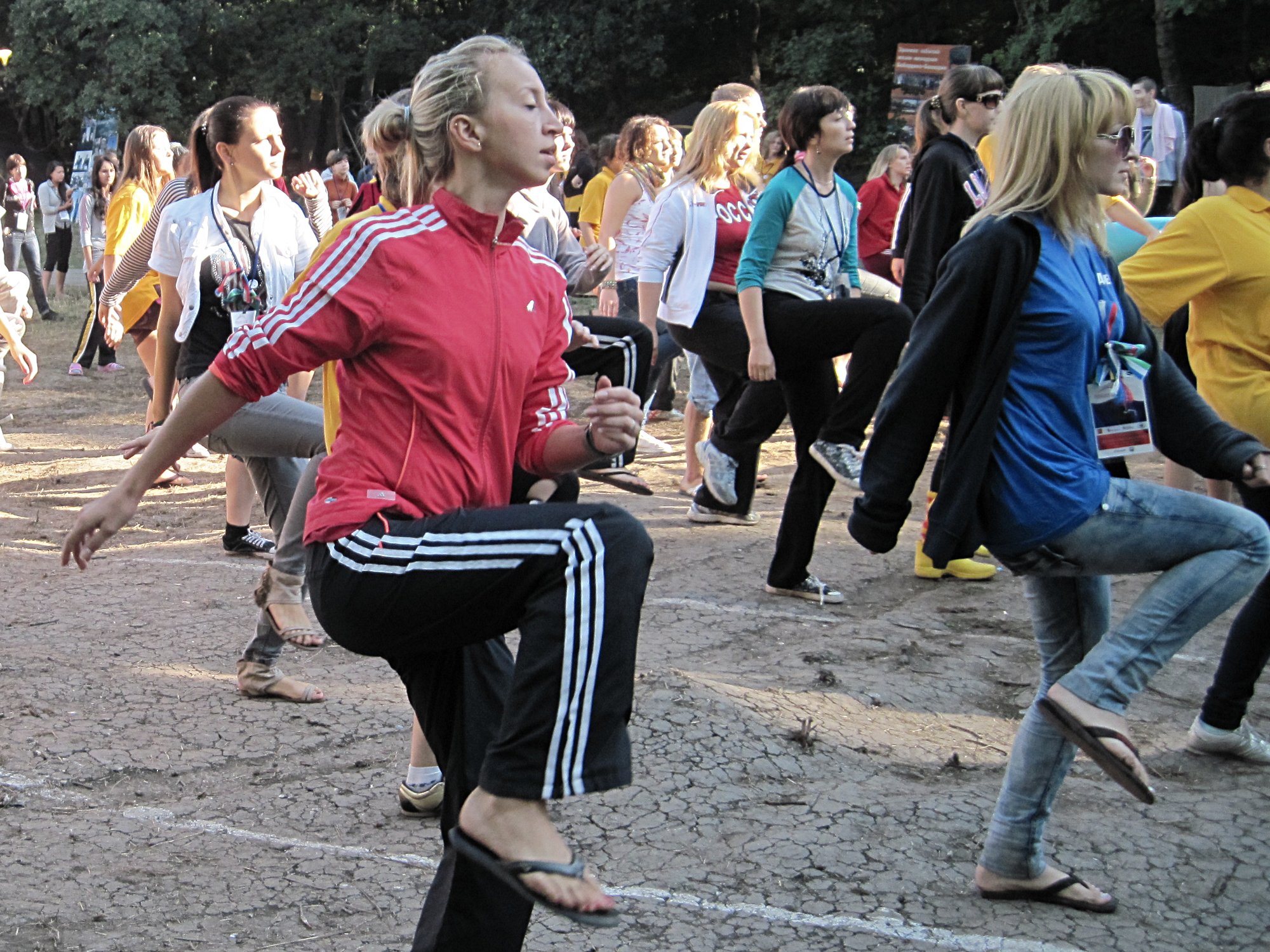
All participants wake up at 8 a.m to the sound of the Russian national anthem. At 8:30, the organisers present the programme of the day from the main stage. Afterwards, girls stay in front of the stage to do gymnastics exercises to loud disco music while boys go for a run of a few kilometres.
The-successful-Caucasus-female
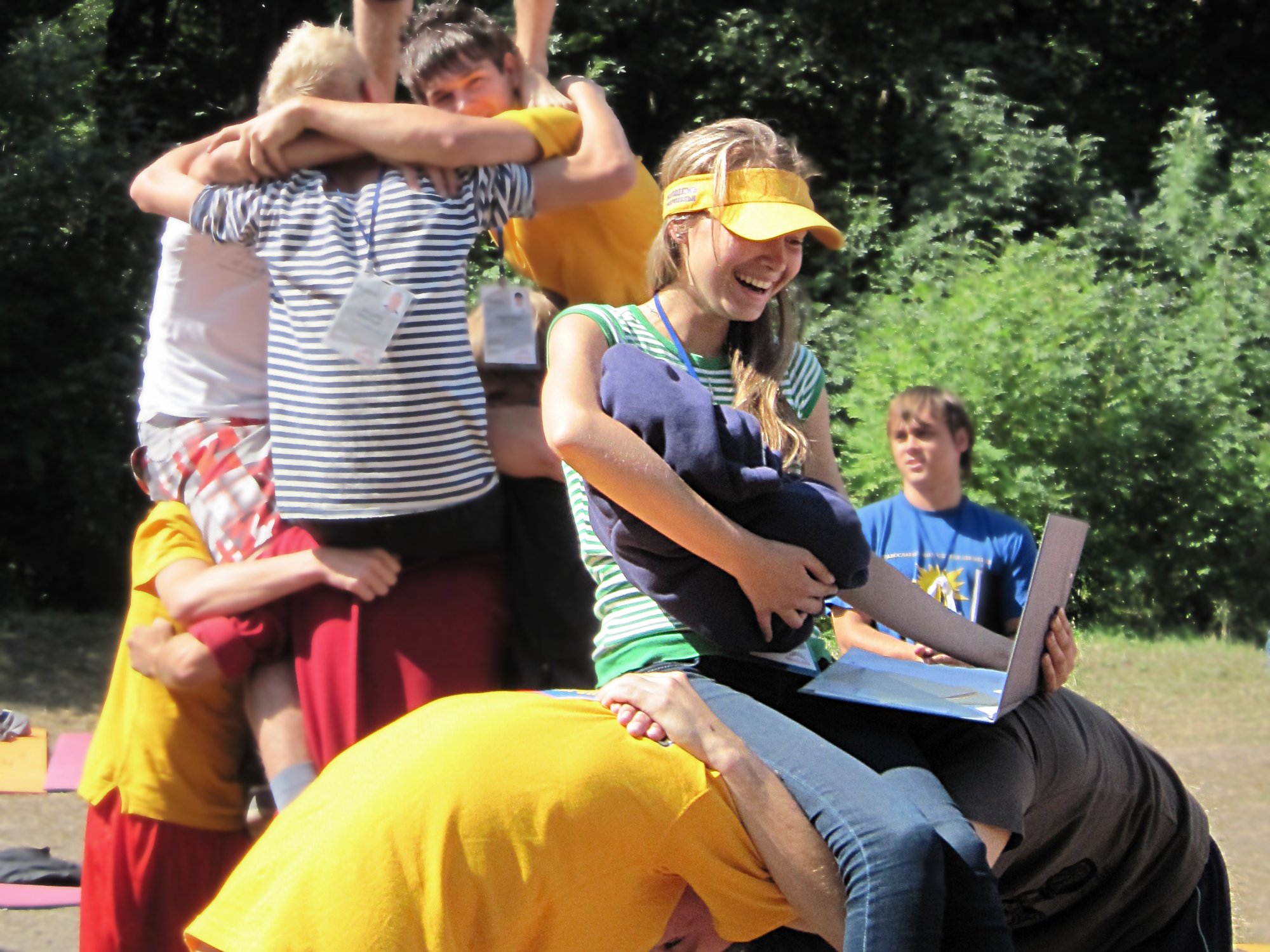
In the morning, participants take part in motivational trainings as well as trainings in inter-cultural integration and project drafting. During one of these trainings, instructors asked participants to “illustrate with a human statue the successful male and female Caucasian”. In the picture, the successful female Caucasian is represented with a child on one hip and a laptop in the other hand. Other teams gave more traditionalist answers, describing a “successful female” as one who is a “good mother and good housewife”.
Boys
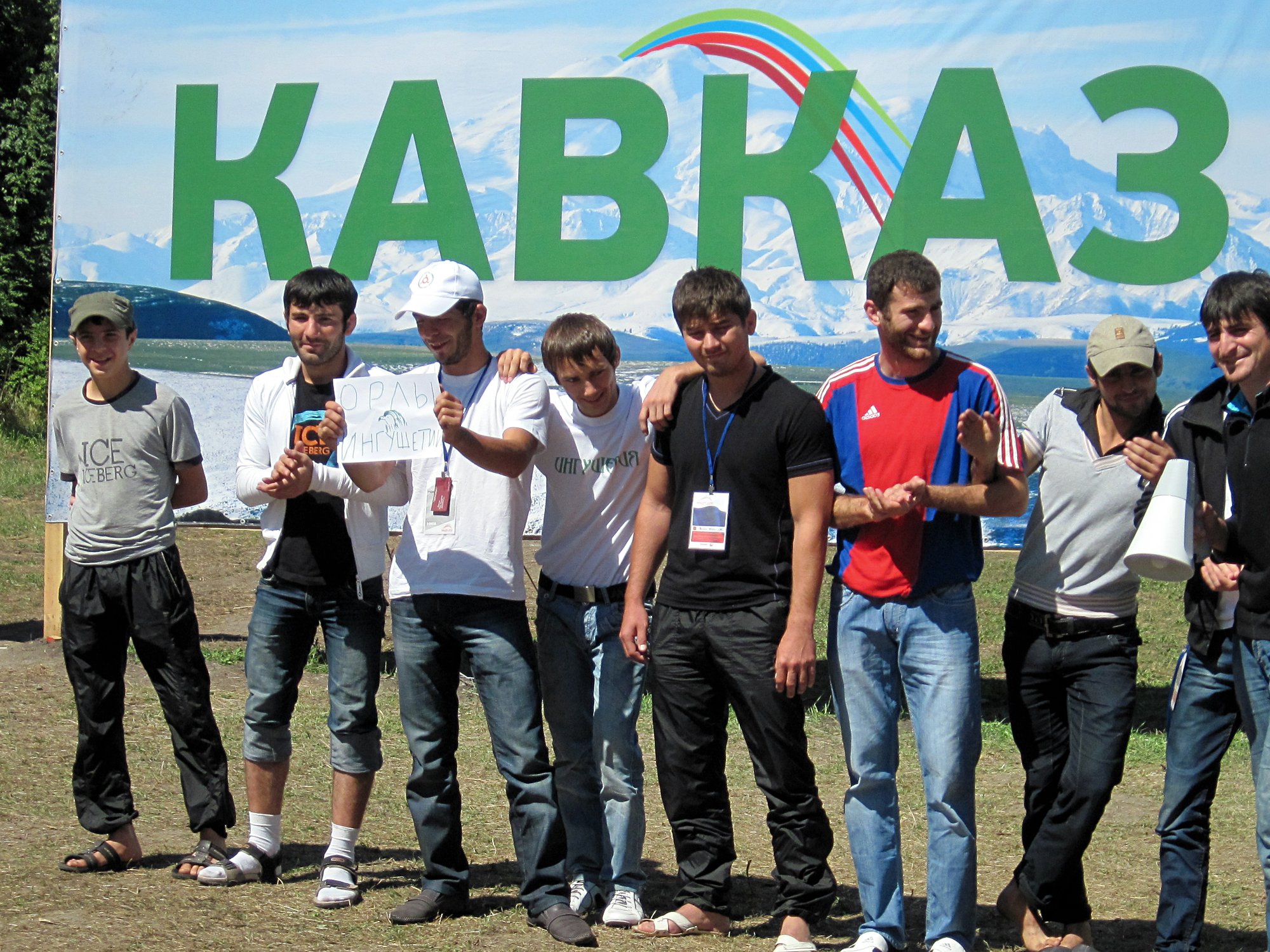
Some delegations had few female representatives. In the picture, a groups of participants from Ingushetia.
Lessons-and-conferences
Russian blogger Anton Korobkov spoke at the Forum and encouraged participants to be more active online to fight negative stereotypes of the Caucasus.
Religions
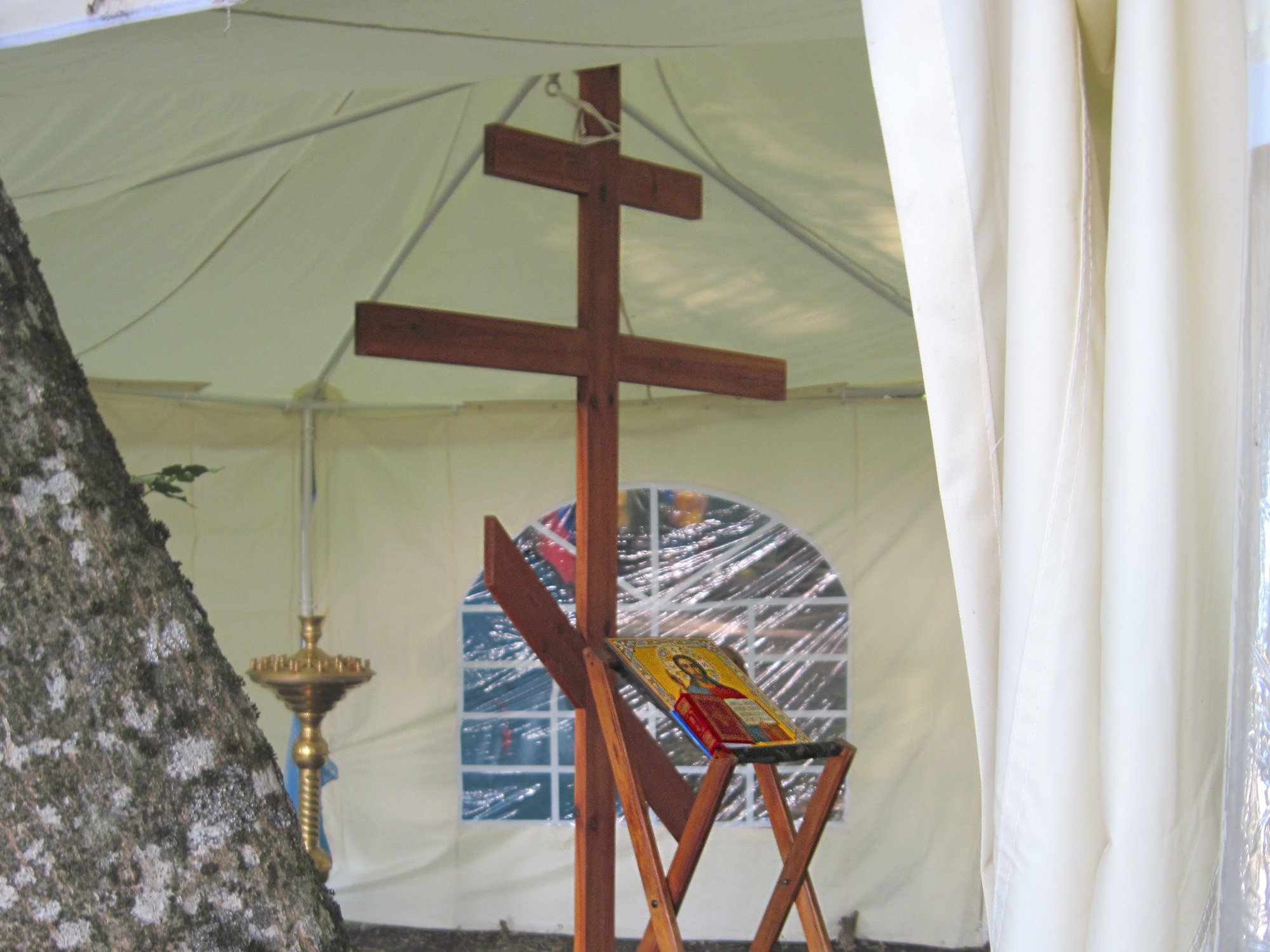
Organisers of Mashuk 2010 prepared prayer tents for both Muslims and Orthodox Christians.
Food
All participants ate together at long tables. Meals presented a challenge because the camp took place during the holy month of Ramadan and the fast period of the “Ascent”, observed by the most orthodox Christians.
Dances-and-shows
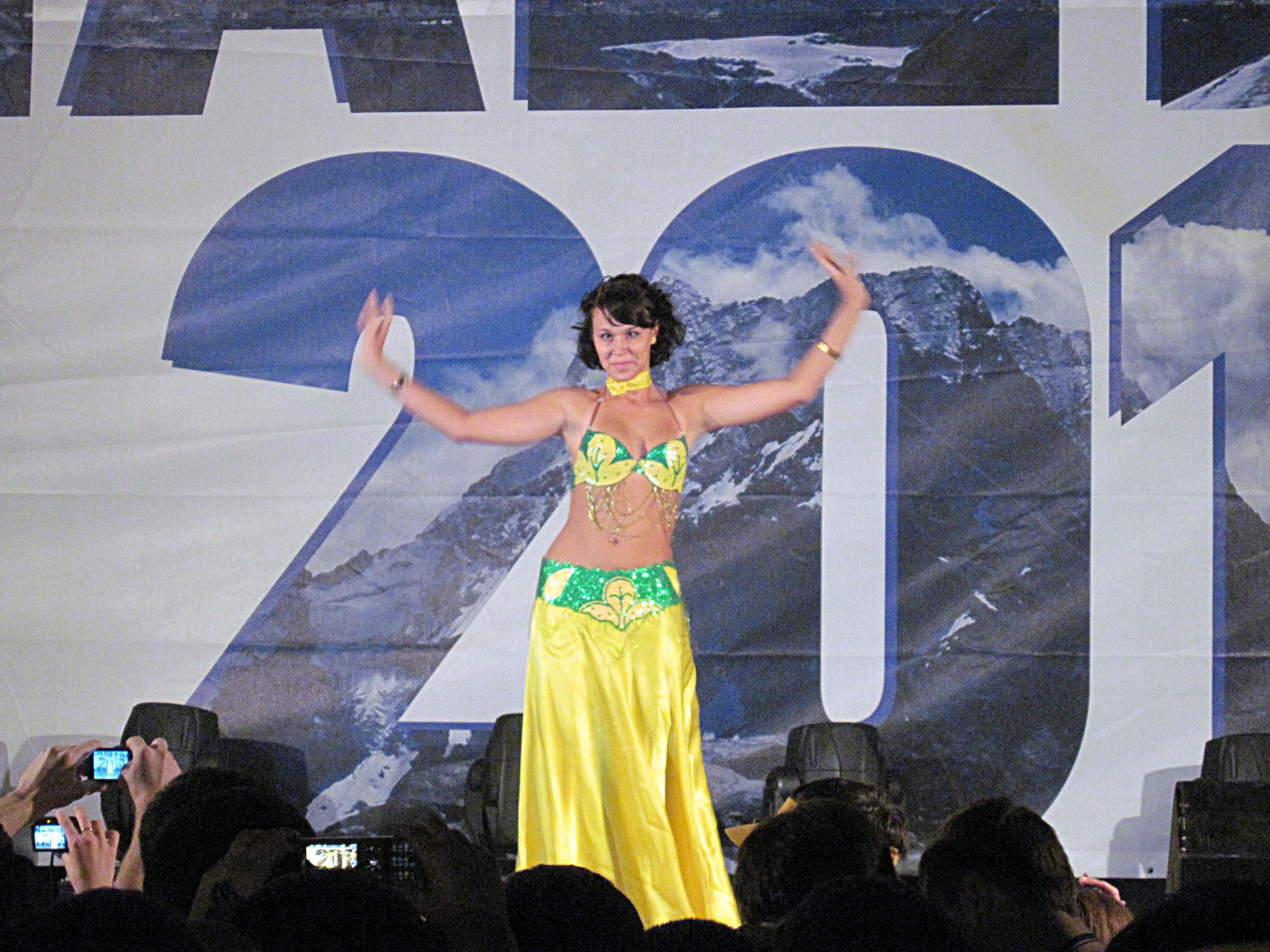
Evenings featured shows, disco dances, film screenings and concerts. In the picture, a participant from Stavropol' does an oriental dance during a show on the last night of the camp. Leisure and entertainment, together with the chance to meet boys and girls out of the view of parents and family, is doubtlessly an important incentive for participation in these kind of events.
We-are-Russia
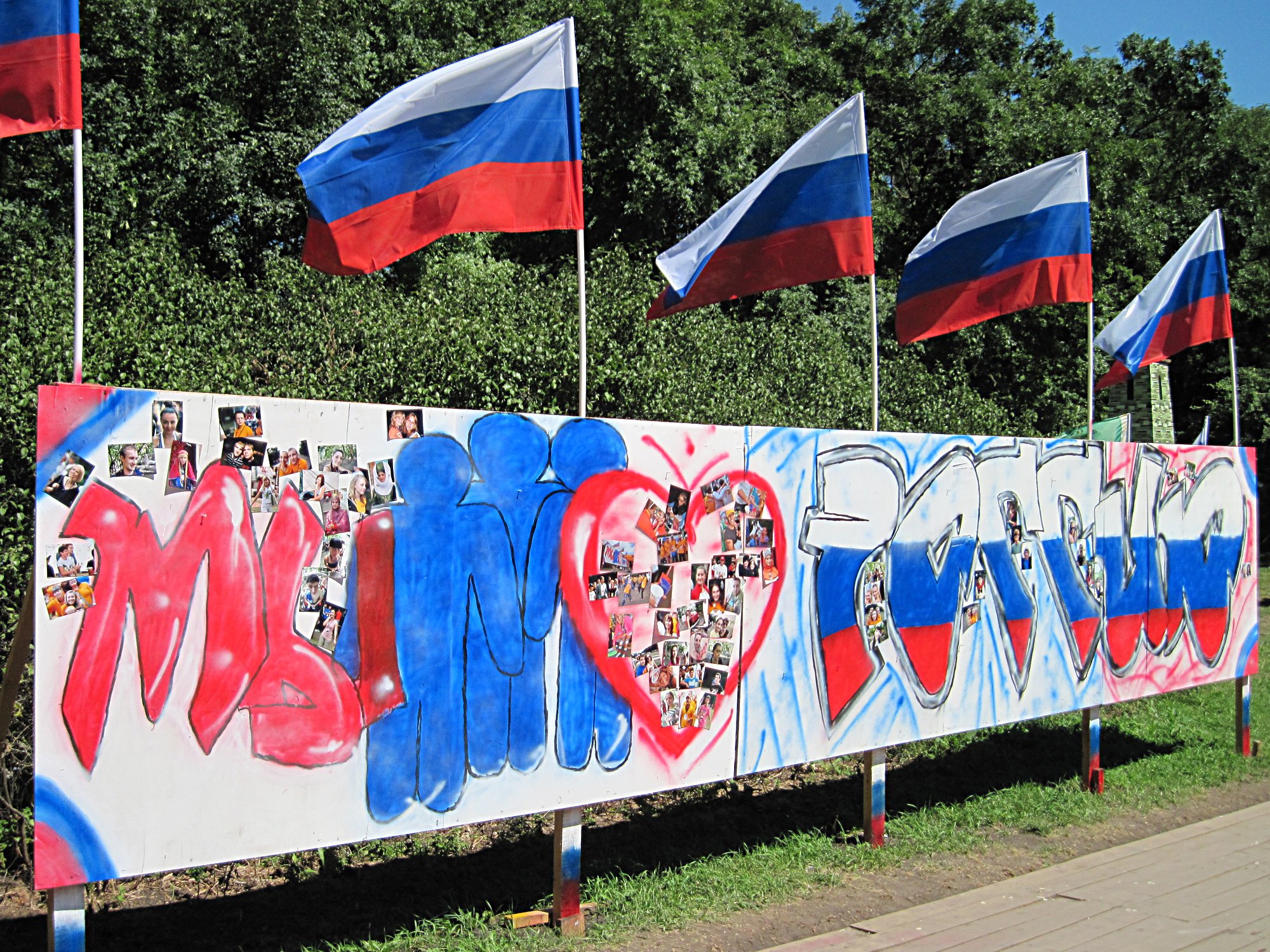
The concept of belonging to Russia and the importance of taking an active role in making Russia a great country were frequently stressed during the camp. On a billboard inside the camp (pictured), participants hung their pictures around the words “We Are Russia”.
An-opportunity-to-meet
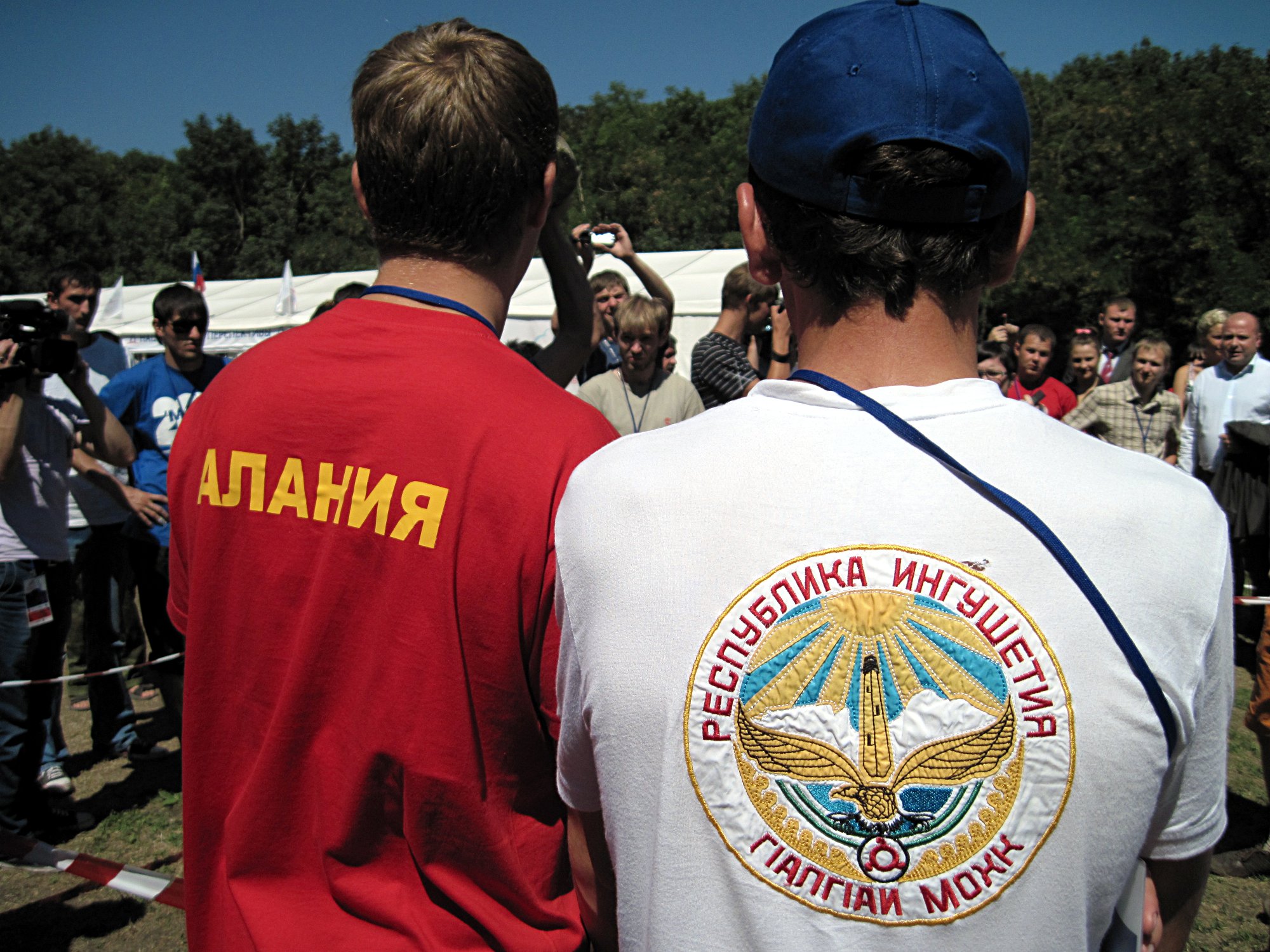
Two participants from North Ossetia and Ingushetia sit next to each other and watch a dance show. The two republics have had tense relations since the Ossetian-Ingush conflict of 1992, a conflict over the Prigorodnyj Rajon.
The-Chechen-village
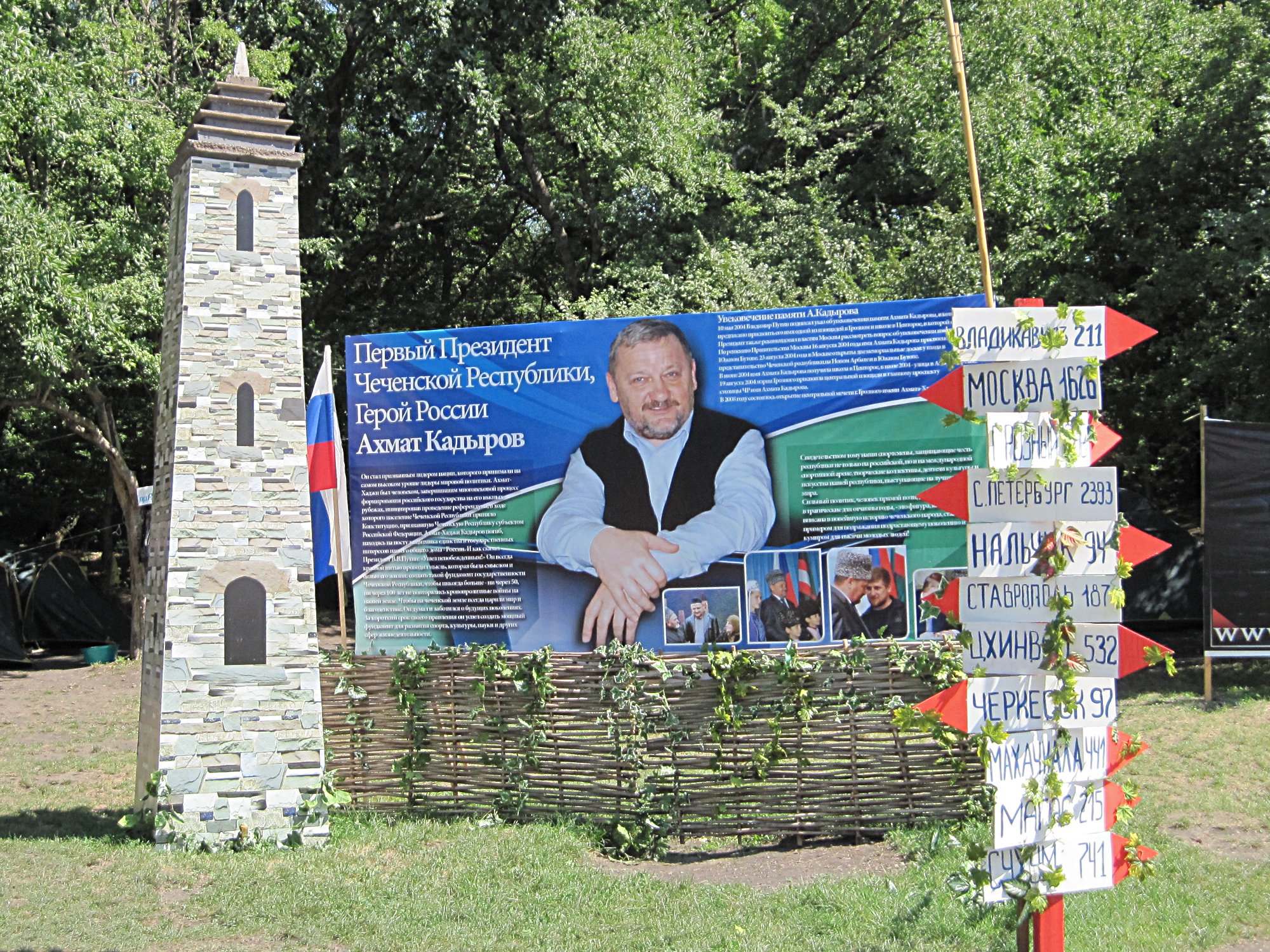
The entrance to the area where Chechnan participant tents were located was decorated with a large poster of Akhmat Kadyrov, father and predecessor of Chechnya's president Ramzan Kadyrov. The text next to the picture stressed the fundamental and heroic role the late Kadyrov played in bringing peace and development to Chechnya.
Security
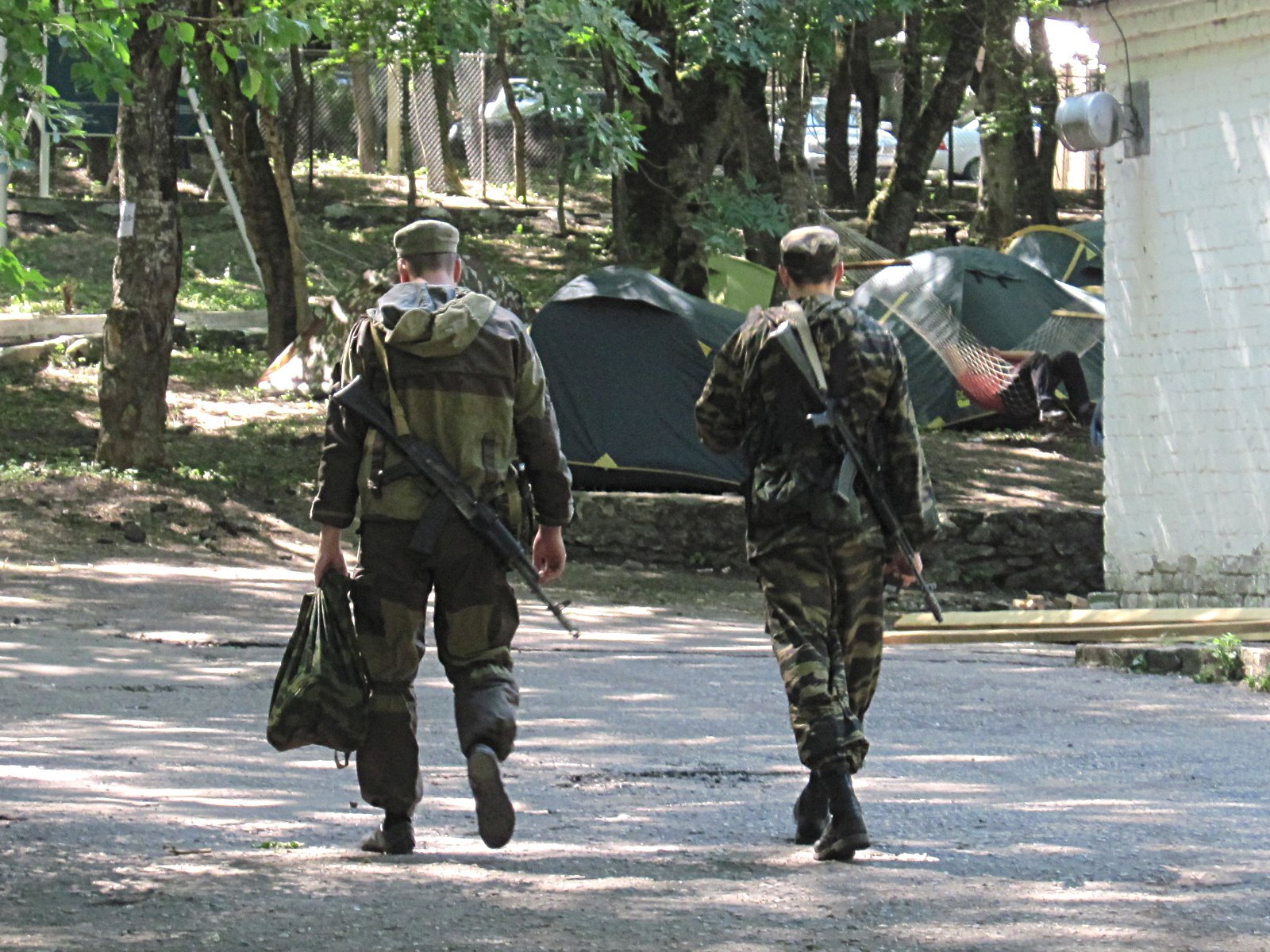
Armed guards constantly patrol the area surrounding the camp. The luggage of all participants was thoroughly examined upon entry.