Souvenirs of war: between war tourism and the processing of grief
Thirty years after the Bosnian conflict, Souvenirs of War by Georg Zeller examines the fragile relationship between those who lived through it and those who now observe from afar, revealing how pain and collective memory can turn into paths of encounter, exchange, or at times even tourism. A conversation with director Georg Zeller on the occasion of the film’s screening in Rovereto.
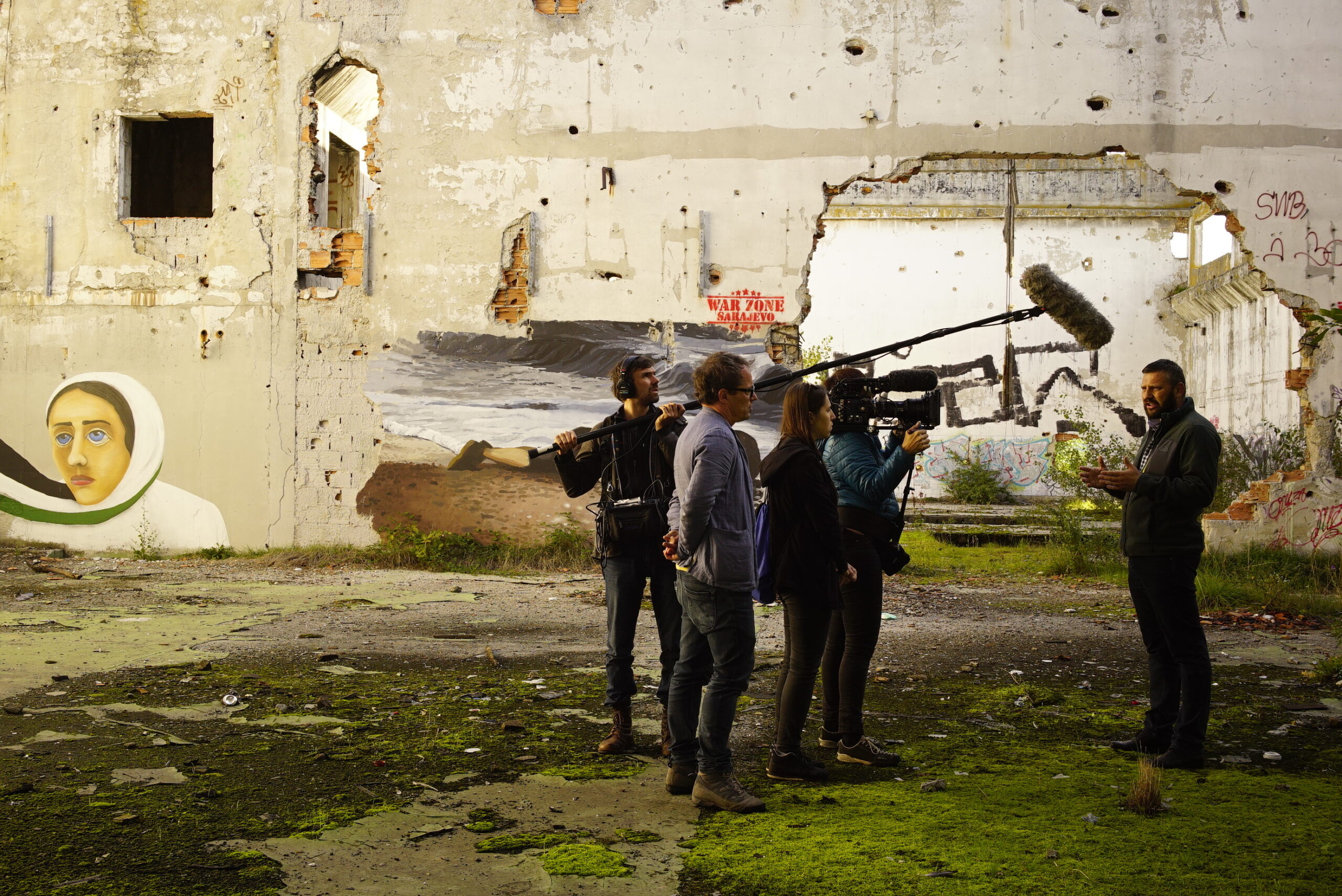
Souvenirs of War_Set
On the set of Souvernirs of War © Helios Sustainable Films
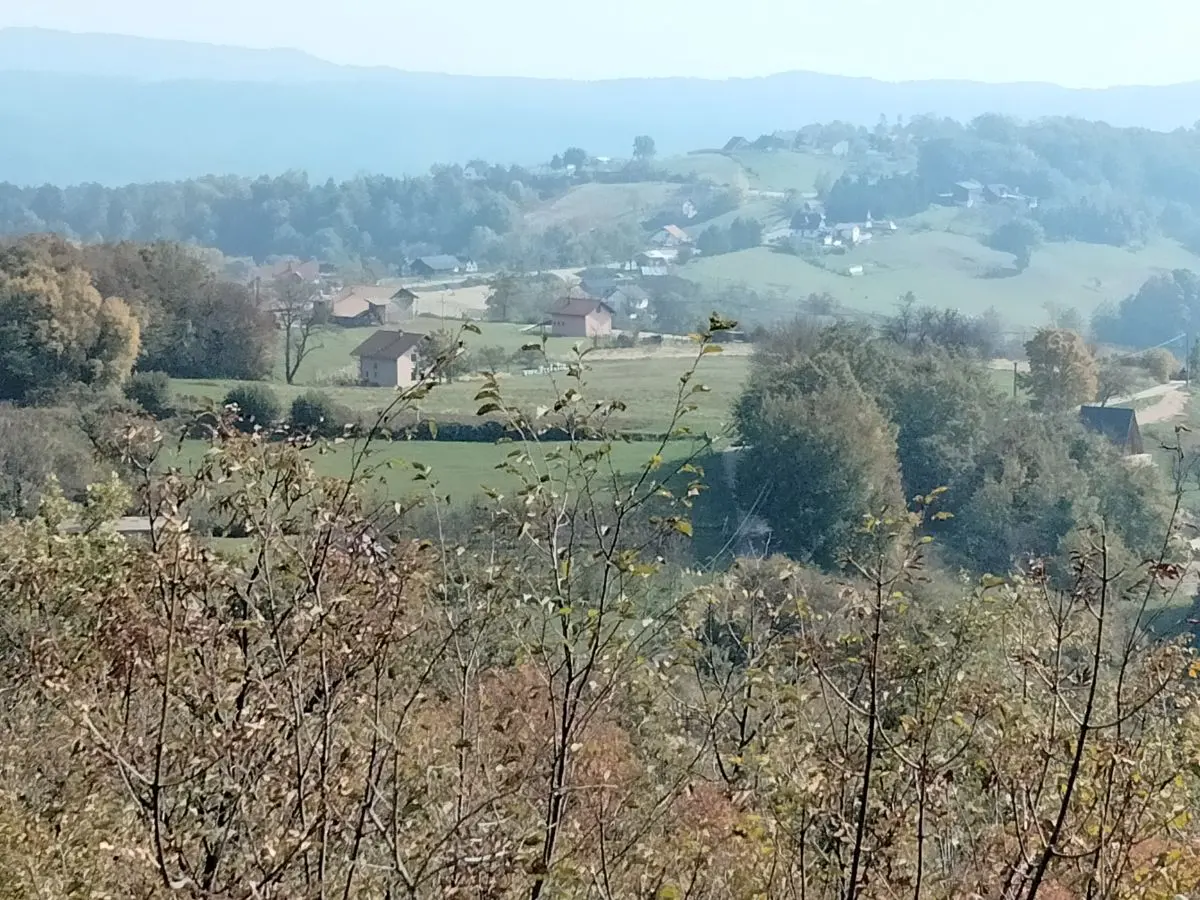
Men in camouflage uniforms race through the hills surrounding Sarajevo, wielding plastic rifles as they reenact assaults and military tactics in places where, thirty years ago, the bullets were real and the targets human. With this opening scene, Souvenirs of War sets the tone for Georg Zeller’s exploration of a Bosnia where sites once marked by violence have become spaces places of reflection, encounter, and, at times, tourism.
Three decades after the conflict, Zeller follows the stories of three men who, drawing on their own experiences, have built initiatives connected to tourism and storytelling, combining livelihood opportunities with a confrontation with the past. From Sarajevo’s “war tours” to airsoft fields located on former battle sites, the film exposes the contradictions of contemporary Bosnia, still haunted by a war that has never been fully processed.
Individual experience and collective memory
How can former war zones become tourist destinations, and what drives us to photograph bullet holes on the walls of Sarajevo or to linger over traces of suffering that are not our own?
Questions that defy easy answers, provoking reflections that invite viewers of Souvenirs of War to engage with moments and images that defy immediate explanation.
“We hold up a mirror to ourselves and to those who love Bosnia, reflecting our relationship with the places we portray. I can understand if some people prefer films that take you by the hand and reassure you that you’re on the right side,” says Georg Zeller, the Stuttgart-born filmmaker who has long made his home in Bolzano. We met him in Rovereto on the occasion of the film’s screening, part of the events marking the centenary of the Bell of Peace.
The idea for the film emerged from a personal encounter with a woman in South Tyrol who, as a child, was forced to flee besieged Sarajevo, and from a more distant thread in Zeller’s own family history. He is a descendant of the Danube Swabians, an ethnic German minority expelled from Tito’s Yugoslavia for being considered German citizens, and therefore Nazis. “Certain traumas are passed down through generations. I carry that with me, even though it was rarely discussed in my family. The same is true for the war of the 1990s, whether people lived through it or not, everyone still bears its scars,” – Zeller reflects.
The Bosnia of “Sarajevo Safari” and the War Hostel
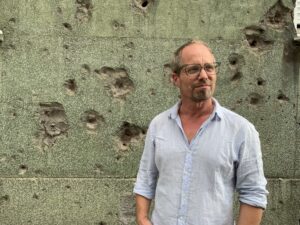
Georg Zeller © Helios sustainable films
The fascination with sites of conflict is nothing new in Bosnia and Herzegovina. Recently, attention has returned to the so-called “Sarajevo Safaris,” in which people of various nationalities reportedly paid substantial sums to join snipers and take part in real-life manhunts during the siege of the city, right from the hills featured in the film.
Today, that attraction has lost that extreme complicity, yet it maintains forms intricate forms. Zeller emphasizes the need to distinguish memory-driven journeys – educational and reflective experiences – from visits that are purely touristic.
“The ‘Tunnel of Hope’ museum in Sarajevo is one of the first examples. It conveys history and what life under siege was like, but it is also a place where people take selfies, measuring their own fortune in not having lived through those circumstances. Like Auschwitz, the Berlin Wall, Pompeii, or World War I fortifications in Trentino, sites shaped by tragic chapters of the past inevitably become part of tourist itineraries,” the director explains. It is a tension inherent to history itself, marked by dramatic moments that, despite study and commemoration, seem destined to repeat themselves.
In his work, Zeller has consistently interrogated the ethical dimension of his gaze and the authenticity of the exchange with the people portrayed in the film, and over the years, his perspective on those who stage collective memory has changed.
“At first, I focused on the most absurd phenomena, such as the Sarajevo War Hostel, where guests slept in a dark basement while the sounds of grenades were broadcast 24/7 through speakers hidden behind water cans that doubled as showers. But upon meeting the manager – who had lived through the siege as a child – I realized that this musealization of his family home was perhaps not driven solely by profit, but by the need to frame his traumatic memories. A frame that carefully defines what one can and wants to remember of one’s own experience,” Zeller recounts.
It is an experience that has repeated itself in many other encounters with people who, in different ways, have been able to transform personal memory into a shared narrative respectful of their own history.
This is true for Adis, the manager of the airsoft fields, a figure who appears cynical at first glance, yet the film also reveals his complexity, humanity, and constructive dimension. “Turning a place marked by disaster into a playful space means having confronted it, even if unconsciously. In this sense, he represents for me a sort of phoenix that has already traversed its own future,” Zeller says.
The processing of personal history runs parallel with an opportunity for income in the case of Adnan as well, who shapes his work around a genuine interest in recounting the experiences that have shaped him, transforming personal memory into a tangible contribution for others.
Among the film’s protagonists are also people who do not derive any economic benefit from memory. This is the case of Muhamed, who, despite having another job, welcomes groups of visitors to share his experience of the Srebrenica genocide, a gesture of testimony made all the more significant in a city whose mayor still denies the events of 1995. “In a situation like this, a genuine exchange can take place between visitor and host. For Muhamed, it is essential to be able to speak with people who do not question his experience and who respond to the stories shared with empathy,” Zeller explains.
From spectacularization of suffering to empathy
Screen narratives have long highlighted the phenomenon of “dark tourism,” revolving around tragedy or conflict. From the success of the Netflix series Dark Tourist, which documents trips to a lake created by a nuclear explosion in Kazakhstan or simulated attempts to cross the border illegally into Mexico, to the surge in visits to locations made famous by series on Jeffrey Dahmer or Chernobyl, the line between curiosity and morbid fascination grows ever thinner.
It is a controversial form of tourism that turns suffering into spectacle and tragedy into commodity, rooted in a type of attraction that, in varying forms and degrees, seems to involve the audience as well, captivated yet complicit in a culture that dramatizes and spectacularizes horror.
Souvenirs of War shifts the focus from mere fascination with sites of suffering to a deeper engagement with the memories and experiences of those who lived through these events. “When we pass by an accident, we slow down to see how serious it is, and to feel fortunate that we weren’t involved,” Zeller reflects. “As humans, we like to feel emotions, to feel alive. Perhaps that’s why we also seek out stories of suffering. But there is a difference between those who observe and those who have lived the pain. We can temper it, then return to our lives. Those who carry trauma cannot. Yet, with the proper openness to the suffering of others, we try to become better people. This, I believe, is the essence of empathy, the quality essential to our coexistence.”
In today’s ongoing process of commodifying tragedies, and amid the increasingly blurred line between reality and imagination, sites of war and conflict often provoke unease, while at the same time helping to keep alive the memory of injustices or dramatic events. Experiential routes and firsthand testimonies can facilitate meaningful encounters between visitors and local communities, stimulate the economy of affected areas, and preserve the historical legacy of the events experienced.
“Traumas experienced by nearly the entire Bosnian population, to varying degrees, have not been sufficiently processed. Today, many houses are being renovated, the holes that remained visible for thirty years are being closed. I hope the same can happen for the other wounds as well,” Georg Zeller concludes.
Tag: Cinema