Romania 2026: year of Brâncuși

Constantin Brâncuși, one of the most important sculptors of the 20th century, was born on 19 February 1876, in Hobița, Romania. This year, in Romania and beyond, numerous initiatives are planned to celebrate the 150th anniversary of the artist’s birth. A review of key events
20/02/2026, Oana Dumbrava
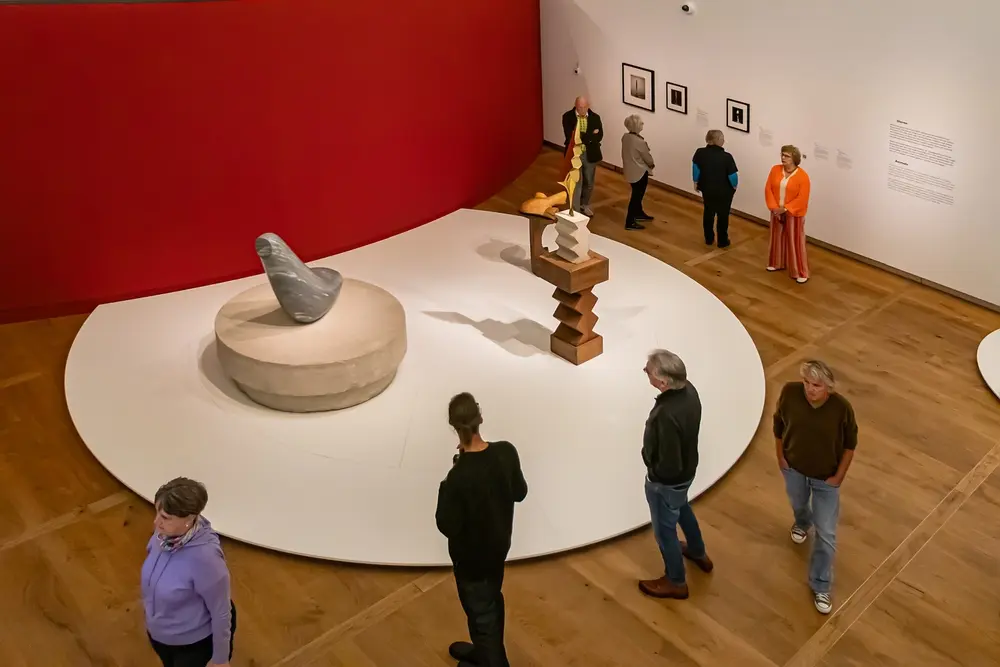
Exhibition dedicated to Brâncuşi in Amsterdam, Holland © Kiev.Victor/Shutterstock

Exhibition dedicated to Brâncuşi in Amsterdam, Holland © Kiev.Victor/Shutterstock

Exhibition dedicated to Brâncuşi in Amsterdam, Holland © Kiev.Victor/Shutterstock

2026 is the year of Brâncuși in Romania: 150 years have passed since the birth of the great sculptor who is considered, among other things, a pioneer of modern sculpture.

Two years ago, some of his important works returned home to Romania. Now the celebration is expanding: for this anniversary, a multitude of cultural events are being held to pay homage to the artist, even if his works remain scattered around the world – from Paris to New York – and continue to travel.

Exhibitions in twenty-one countries

At the heart of the events calendar is the Brâncuşi 150 project, organised by the “Inter-Art” Foundation in Aiud in collaboration with the “Constantin Brâncuși” National Museum in Târgu Jiu, under the patronage of the Romanian Ministry of Culture.

The project brings together works by 29 contemporary Romanian graphic artists and was presented on 19 February as a simultaneous vernissage starting in Romania and extending to twenty-one countries, across six continents, from Cairo and Addis Ababa to Montreal, passing through Minnesota, Shenzhen, New Delhi, Vienna, Stockholm and Christchurch – a global conversation of graphics dedicated to the artist’s life and work.

It is not just an exhibition tour. As Denisa Șuță, director of the National Museum inTârgu Jiu, explained to Mediafax, “it is not a simple succession of international exhibitions, but rather a synchronised cultural act”, capable of bringing Brâncuși’s art and spirit into simultaneous dialogue with audiences around the world.

A digital launch from Hobița, Brâncuși’s hometown

Also on 19 February a website was launched by the “Home to Brâncuşi” destination management organisation at the sculptor’s house-museum in Hobița (Gorj). The platform not only aims to showcase Brâncuşi’s artistic heritage but develops an authentic tourism identity for the Gorj area, intertwining gastronomy, crafts and tourism objectives, and promoting thematic festivals and events throughout the year.

Hobița, the village where Brâncuși was born in 1876, was not actually the place the artist would have liked to return to. Yet, in his confessions, he delicately mentions his need to revisit the mountains of his native land. As a child, he ran away from home several times. Born into a modest family, he refused to go grazing with the animals, instead spending time filling his saddlebag with stones that he then carved.

These simple roots made him the “honest” artist he became. His was not an easy path: like many other great artists, he was not appreciated from the start. However, he always followed his own path, even distancing himself from his mentor, Rodin, to demonstrate that sculpture could take on forms beyond the imaginable.

Exhibitions in Bucharest: photographs, dialogues and contemporary reinterpretations

In February, the symbolic month of celebrations, Bucharest will become a sort of compass: not a single exhibition, but a journey through multiple stages that interact with each other, each offering a different perspective, to approach Brâncuși without reducing him to an icon. Some choose to gaze and contemplate, others engage in dialogue with other sculptors, others bring Brâncuși’s legacy into the present, and others – with a broader project – attempt to reconstruct his history with materials, works and memory.

We begin at the Palace of Parliament in Bucharest, in the room named after the artist, where the photographic exhibition “Contemplations” is open from 9 to 28 February. This visual reading of Brâncuși’s universe approaches his work through a lens, allowing details, shots and historical traces to create an atmosphere of listening, almost of silence.

Then, the story changes pace at the Romanian Cultural Institute where from 10 to 23 February the exhibition “After Brâncuşi” is set up, conceived as a dialogue between the master’s legacy and the works of other important Romanian sculptors who question Brâncuși’s influence and the differences, raising frank questions.

These questions are also at the heart of the exibition “Boîte, Box, Brâncuşi”, inaugurated on 19 February at the National Museum of Contemporary Art (MNAC) in Bucharesrt. The project explores the ways in which the great sculptor’s legacy is transmitted and reinterpreted in contemporary art.
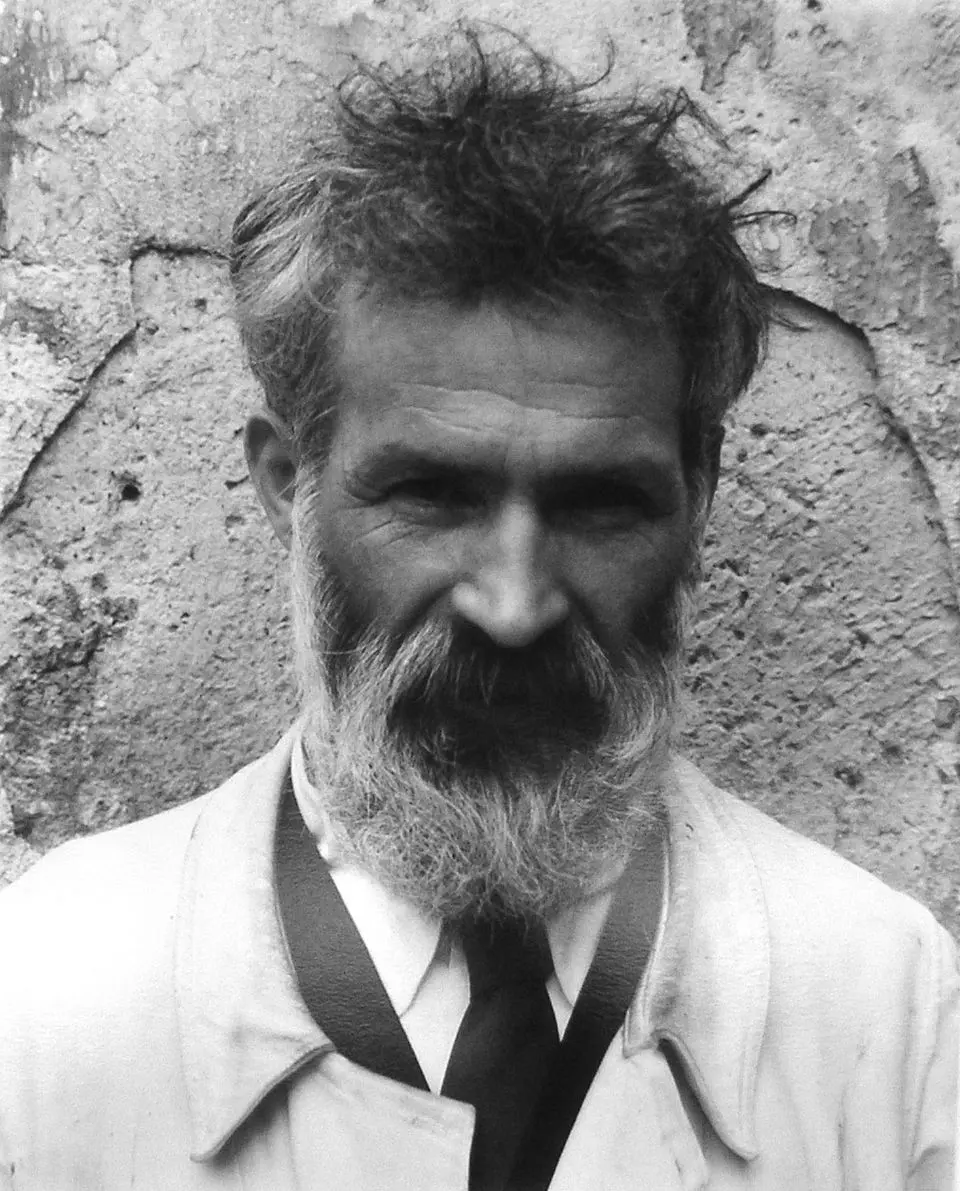
Portrait of Constantin Brâncuși, by Edward Steichen, 1922

Portrait of Constantin Brâncuși, by Edward Steichen, 1922

While these exhibitions provide perspectives and reflections, it is at the National Museum of Art of Romania (MNAR) that a more comprehensive narrative unfolds. The exhibition “Brâncuşi ne priveşte pe toţi” (Brâncuși looks at us/concerns us all), organised in collaboration with the Constantin Brâncuși Research, Documentation and Promotion Center in Târgu Jiu, traces the artist’s journey from childhood to his studies in Romania and then in Paris, through photographs, archival documents and video excerpts. In addition to some of his works – “Cap de copil” (Child’s Head), “Rugăciune” (Prayer – Copy) and “Portret Petre Stănescu” (Portrait of Petre Stănescu) – there is also a room dedicated to posterity, to reflect on how Brâncuși’s image has evolved in recent years: how it has been used, interpreted, discussed, and how it continues to evolve.

The exhibition’s title is not just a publicity stunt: in every photograph, Brâncuși seems to genuinely look at us, seeking direct contact. Hence the Romanian pun, “looks at us” and “concerns us”. His work, in fact, belongs to the world and should be appreciated for its value, beyond some of the legends created around the artist.

Like the one about a journey on foot to Paris, or the one about his alleged intention, towards the end of his life, to donate his works to the Romanian state. These are stories that should not define the value and importance of an artist like Brâncuși, for whom truth was a way of life.

So, yes, 2026 in Romania “speaks” of Brâncuşi in a thousand ways: with engravings and photographs, archives and videos, festivals and digital platforms, synchronised exhibitions around the world and with the discreet pride of a village that remains there, between mountains and memory.

This is perhaps the most beautiful and timely message. Brâncuși is not a static monument, he is an ongoing dialogue. And if he “looks at us” – and “concerns us” today – it is because, ultimately, he is inviting us once again to do the simplest and most difficult thing at the same time: to seek the essence, with lightness, and with a glimmer of hope for the future.

Romania 2026: year of Brâncuși

Constantin Brâncuși, one of the most important sculptors of the 20th century, was born on 19 February 1876, in Hobița, Romania. This year, in Romania and beyond, numerous initiatives are planned to celebrate the 150th anniversary of the artist’s birth. A review of key events

20/02/2026, Oana Dumbrava
Exhibition dedicated to Brâncuşi in Amsterdam, Holland © Kiev.Victor/Shutterstock

Exhibition dedicated to Brâncuşi in Amsterdam, Holland © Kiev.Victor/Shutterstock

Exhibition dedicated to Brâncuşi in Amsterdam, Holland © Kiev.Victor/Shutterstock

2026 is the year of Brâncuși in Romania: 150 years have passed since the birth of the great sculptor who is considered, among other things, a pioneer of modern sculpture.

Two years ago, some of his important works returned home to Romania. Now the celebration is expanding: for this anniversary, a multitude of cultural events are being held to pay homage to the artist, even if his works remain scattered around the world – from Paris to New York – and continue to travel.

Exhibitions in twenty-one countries

At the heart of the events calendar is the Brâncuşi 150 project, organised by the “Inter-Art” Foundation in Aiud in collaboration with the “Constantin Brâncuși” National Museum in Târgu Jiu, under the patronage of the Romanian Ministry of Culture.

The project brings together works by 29 contemporary Romanian graphic artists and was presented on 19 February as a simultaneous vernissage starting in Romania and extending to twenty-one countries, across six continents, from Cairo and Addis Ababa to Montreal, passing through Minnesota, Shenzhen, New Delhi, Vienna, Stockholm and Christchurch – a global conversation of graphics dedicated to the artist’s life and work.

It is not just an exhibition tour. As Denisa Șuță, director of the National Museum inTârgu Jiu, explained to Mediafax, “it is not a simple succession of international exhibitions, but rather a synchronised cultural act”, capable of bringing Brâncuși’s art and spirit into simultaneous dialogue with audiences around the world.

A digital launch from Hobița, Brâncuși’s hometown

Also on 19 February a website was launched by the “Home to Brâncuşi” destination management organisation at the sculptor’s house-museum in Hobița (Gorj). The platform not only aims to showcase Brâncuşi’s artistic heritage but develops an authentic tourism identity for the Gorj area, intertwining gastronomy, crafts and tourism objectives, and promoting thematic festivals and events throughout the year.

Hobița, the village where Brâncuși was born in 1876, was not actually the place the artist would have liked to return to. Yet, in his confessions, he delicately mentions his need to revisit the mountains of his native land. As a child, he ran away from home several times. Born into a modest family, he refused to go grazing with the animals, instead spending time filling his saddlebag with stones that he then carved.

These simple roots made him the “honest” artist he became. His was not an easy path: like many other great artists, he was not appreciated from the start. However, he always followed his own path, even distancing himself from his mentor, Rodin, to demonstrate that sculpture could take on forms beyond the imaginable.

Exhibitions in Bucharest: photographs, dialogues and contemporary reinterpretations

In February, the symbolic month of celebrations, Bucharest will become a sort of compass: not a single exhibition, but a journey through multiple stages that interact with each other, each offering a different perspective, to approach Brâncuși without reducing him to an icon. Some choose to gaze and contemplate, others engage in dialogue with other sculptors, others bring Brâncuși’s legacy into the present, and others – with a broader project – attempt to reconstruct his history with materials, works and memory.

We begin at the Palace of Parliament in Bucharest, in the room named after the artist, where the photographic exhibition “Contemplations” is open from 9 to 28 February. This visual reading of Brâncuși’s universe approaches his work through a lens, allowing details, shots and historical traces to create an atmosphere of listening, almost of silence.

Then, the story changes pace at the Romanian Cultural Institute where from 10 to 23 February the exhibition “After Brâncuşi” is set up, conceived as a dialogue between the master’s legacy and the works of other important Romanian sculptors who question Brâncuși’s influence and the differences, raising frank questions.

These questions are also at the heart of the exibition “Boîte, Box, Brâncuşi”, inaugurated on 19 February at the National Museum of Contemporary Art (MNAC) in Bucharesrt. The project explores the ways in which the great sculptor’s legacy is transmitted and reinterpreted in contemporary art.

Portrait of Constantin Brâncuși, by Edward Steichen, 1922

Portrait of Constantin Brâncuși, by Edward Steichen, 1922

While these exhibitions provide perspectives and reflections, it is at the National Museum of Art of Romania (MNAR) that a more comprehensive narrative unfolds. The exhibition “Brâncuşi ne priveşte pe toţi” (Brâncuși looks at us/concerns us all), organised in collaboration with the Constantin Brâncuși Research, Documentation and Promotion Center in Târgu Jiu, traces the artist’s journey from childhood to his studies in Romania and then in Paris, through photographs, archival documents and video excerpts. In addition to some of his works – “Cap de copil” (Child’s Head), “Rugăciune” (Prayer – Copy) and “Portret Petre Stănescu” (Portrait of Petre Stănescu) – there is also a room dedicated to posterity, to reflect on how Brâncuși’s image has evolved in recent years: how it has been used, interpreted, discussed, and how it continues to evolve.

The exhibition’s title is not just a publicity stunt: in every photograph, Brâncuși seems to genuinely look at us, seeking direct contact. Hence the Romanian pun, “looks at us” and “concerns us”. His work, in fact, belongs to the world and should be appreciated for its value, beyond some of the legends created around the artist.

Like the one about a journey on foot to Paris, or the one about his alleged intention, towards the end of his life, to donate his works to the Romanian state. These are stories that should not define the value and importance of an artist like Brâncuși, for whom truth was a way of life.

So, yes, 2026 in Romania “speaks” of Brâncuşi in a thousand ways: with engravings and photographs, archives and videos, festivals and digital platforms, synchronised exhibitions around the world and with the discreet pride of a village that remains there, between mountains and memory.

This is perhaps the most beautiful and timely message. Brâncuși is not a static monument, he is an ongoing dialogue. And if he “looks at us” – and “concerns us” today – it is because, ultimately, he is inviting us once again to do the simplest and most difficult thing at the same time: to seek the essence, with lightness, and with a glimmer of hope for the future.

Comment and share

OBCT's Newsletter

To your inbox every two weeks