North Macedonia, clash over minimum wage

In North Macedonia, inflation is soaring and eroding families’ purchasing power. For this reason, unions are calling for a substantial increase in the minimum wage. The government, however, appears unwilling to address the issue

05/03/2026, Aleksandar Samardjiev Tetovo
© bunyarit klinsukhon/Shutterstock

shutterstock_2682670331

© bunyarit klinsukhon/Shutterstock

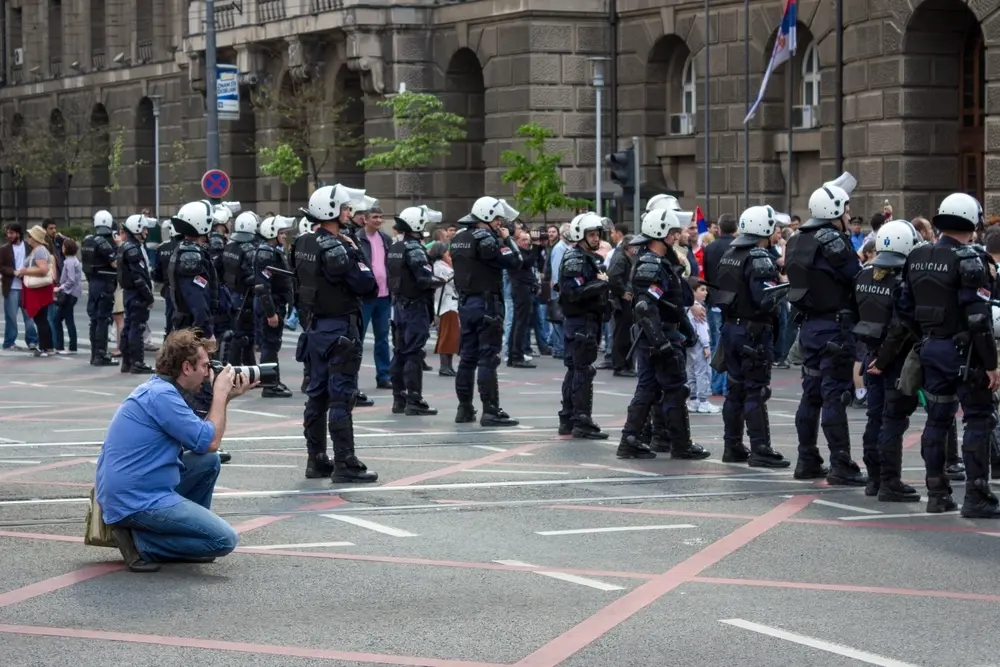
Since the end of 2025, the alliance of Trade Unions of Macedonia is protesting in Skopje to demand an increase in the minimum wage from the current net amount of 380 euros to 600 euros, but also in all remaining salaries by almost 100 euros or 6,000 Macedonian denars.

Prime Minister Hristijan Mickoski and his ruling party – the center-right VMRO-DPMNE – have often alleged that the protests and blocs in the Parliament of February 2026 are aimed at political destabilization rather than the protection of workers’ rights.

The minimum wage is adjusted in March every year according to the increase in the cost of living and in the average wage.

The first Law on Minimum Wage in Macedonia was adopted at the end of 2011 – before then, the minimum wage was determined through collective agreements in different economic sectors. In 2017, the minimum wage was equalized for all sectors and increased to 12,000 denars (less then 200 euros) In 2022, it rose to 18,000 denars (less the 300 euros) and the current methodology for annual adjustment (50% of the increase in the cost of living and 50% of the increase in the average wage) was introduced.

According to calculations by the Ministry of Economy and Labor, in 2026 it should reach 430 euros. On the other hand, at the beginning of February, the government negotiated higher salaries by almost 40% by 2028 for about 11,000 public employees.

Prime Minister Hristijan Mickoski and the government oppose the request of the “The alliance of Trade Unions of Macedonia” for a minimum wage of 600 euros, arguing that the agreement should be reached through the Economic and Social Council in a “bipartisan dialogue” between businesses and unions.

The government also rejected the proposal for the state to subsidize companies so that they can pay a higher minimum wage. The Prime Minister believes that the state already helps business enough through other measures (such as favorable loans from Hungary) and that the budget should not be further burdened with additional direct subsidies.

“The alliance of Trade Unions of Macedonia” accepted the agreement with public workers as a success, but maintained that the government is trying to manipulate the public, as most minimum wage workers are left behind and salary increases in the public administration will cost taxpayers an additional ten million euros per year, while producing additional income for the state in healthcare and pension contributions.

“We are protesting for a minimum wage of 600 euros now, not in 2028. Inflation is eating salaries today. Come back from the future, comrades, come back to reality,” Slobodan Trendafilov, president of the The alliance of Trade Unions of Macedonia, told the media.

The union calculates on a monthly basis the minimum basket for a four-member family, which should include food, housing maintenance, personal hygiene, transportation, healthcare, and so on. As the basket has reached over 1000 euros, the current two minimum wages of 380 euros each (or a total of 760 euros) are simply not enough for a decent life.

In a guest appearance on a debate show on TV Telma, university professor Vancho Uzunov pointed out that the time when low salaries were a competitive advantage for North Macedonia and a way for companies to survive is over. He reminded that economic migration is huge and therefore wages in the private sector should grow.

“The key challenge for our domestic economy is finding and retaining a motivated domestic workforce. Companies must accept that they need to find quality workers, train them, pay them appropriately and retain them with contracts, investments in equipment, knowledge and professional management,” Uzunov stressed, pointing out that family management of companies, as a legacy of privatization, still hinders development.

According to Uzunov, wages should follow labor productivity, but are also an important social and motivational factor.

“Serious studies show that North Macedonia lags behind the European Union average in both productivity and wages, but more in wages than in productivity. This means that there is room for increasing wages, which can further stimulate productivity,” Uzunov said.

North Macedonia, clash over minimum wage

In North Macedonia, inflation is soaring and eroding families’ purchasing power. For this reason, unions are calling for a substantial increase in the minimum wage. The government, however, appears unwilling to address the issue

05/03/2026, Aleksandar Samardjiev Tetovo
© bunyarit klinsukhon/Shutterstock

shutterstock_2682670331

© bunyarit klinsukhon/Shutterstock

Since the end of 2025, the alliance of Trade Unions of Macedonia is protesting in Skopje to demand an increase in the minimum wage from the current net amount of 380 euros to 600 euros, but also in all remaining salaries by almost 100 euros or 6,000 Macedonian denars.

Prime Minister Hristijan Mickoski and his ruling party – the center-right VMRO-DPMNE – have often alleged that the protests and blocs in the Parliament of February 2026 are aimed at political destabilization rather than the protection of workers’ rights.

The minimum wage is adjusted in March every year according to the increase in the cost of living and in the average wage.

The first Law on Minimum Wage in Macedonia was adopted at the end of 2011 – before then, the minimum wage was determined through collective agreements in different economic sectors. In 2017, the minimum wage was equalized for all sectors and increased to 12,000 denars (less then 200 euros) In 2022, it rose to 18,000 denars (less the 300 euros) and the current methodology for annual adjustment (50% of the increase in the cost of living and 50% of the increase in the average wage) was introduced.

According to calculations by the Ministry of Economy and Labor, in 2026 it should reach 430 euros. On the other hand, at the beginning of February, the government negotiated higher salaries by almost 40% by 2028 for about 11,000 public employees.

Prime Minister Hristijan Mickoski and the government oppose the request of the “The alliance of Trade Unions of Macedonia” for a minimum wage of 600 euros, arguing that the agreement should be reached through the Economic and Social Council in a “bipartisan dialogue” between businesses and unions.

The government also rejected the proposal for the state to subsidize companies so that they can pay a higher minimum wage. The Prime Minister believes that the state already helps business enough through other measures (such as favorable loans from Hungary) and that the budget should not be further burdened with additional direct subsidies.

“The alliance of Trade Unions of Macedonia” accepted the agreement with public workers as a success, but maintained that the government is trying to manipulate the public, as most minimum wage workers are left behind and salary increases in the public administration will cost taxpayers an additional ten million euros per year, while producing additional income for the state in healthcare and pension contributions.

“We are protesting for a minimum wage of 600 euros now, not in 2028. Inflation is eating salaries today. Come back from the future, comrades, come back to reality,” Slobodan Trendafilov, president of the The alliance of Trade Unions of Macedonia, told the media.

The union calculates on a monthly basis the minimum basket for a four-member family, which should include food, housing maintenance, personal hygiene, transportation, healthcare, and so on. As the basket has reached over 1000 euros, the current two minimum wages of 380 euros each (or a total of 760 euros) are simply not enough for a decent life.

In a guest appearance on a debate show on TV Telma, university professor Vancho Uzunov pointed out that the time when low salaries were a competitive advantage for North Macedonia and a way for companies to survive is over. He reminded that economic migration is huge and therefore wages in the private sector should grow.

“The key challenge for our domestic economy is finding and retaining a motivated domestic workforce. Companies must accept that they need to find quality workers, train them, pay them appropriately and retain them with contracts, investments in equipment, knowledge and professional management,” Uzunov stressed, pointing out that family management of companies, as a legacy of privatization, still hinders development.

According to Uzunov, wages should follow labor productivity, but are also an important social and motivational factor.

“Serious studies show that North Macedonia lags behind the European Union average in both productivity and wages, but more in wages than in productivity. This means that there is room for increasing wages, which can further stimulate productivity,” Uzunov said.

Comment and share

OBCT's Newsletter

To your inbox every two weeks