Croatia, working with mines
Croatia will be mine-free by the end of the year, thirty years after the end of the war. What will happen to the deminers who will not be able to retire after years of strenuous and dangerous work? We spoke to Mario Iveković, president of Novi Sindikat, a union that has been working to protect deminers since 2008
Croatia-working-with-mines
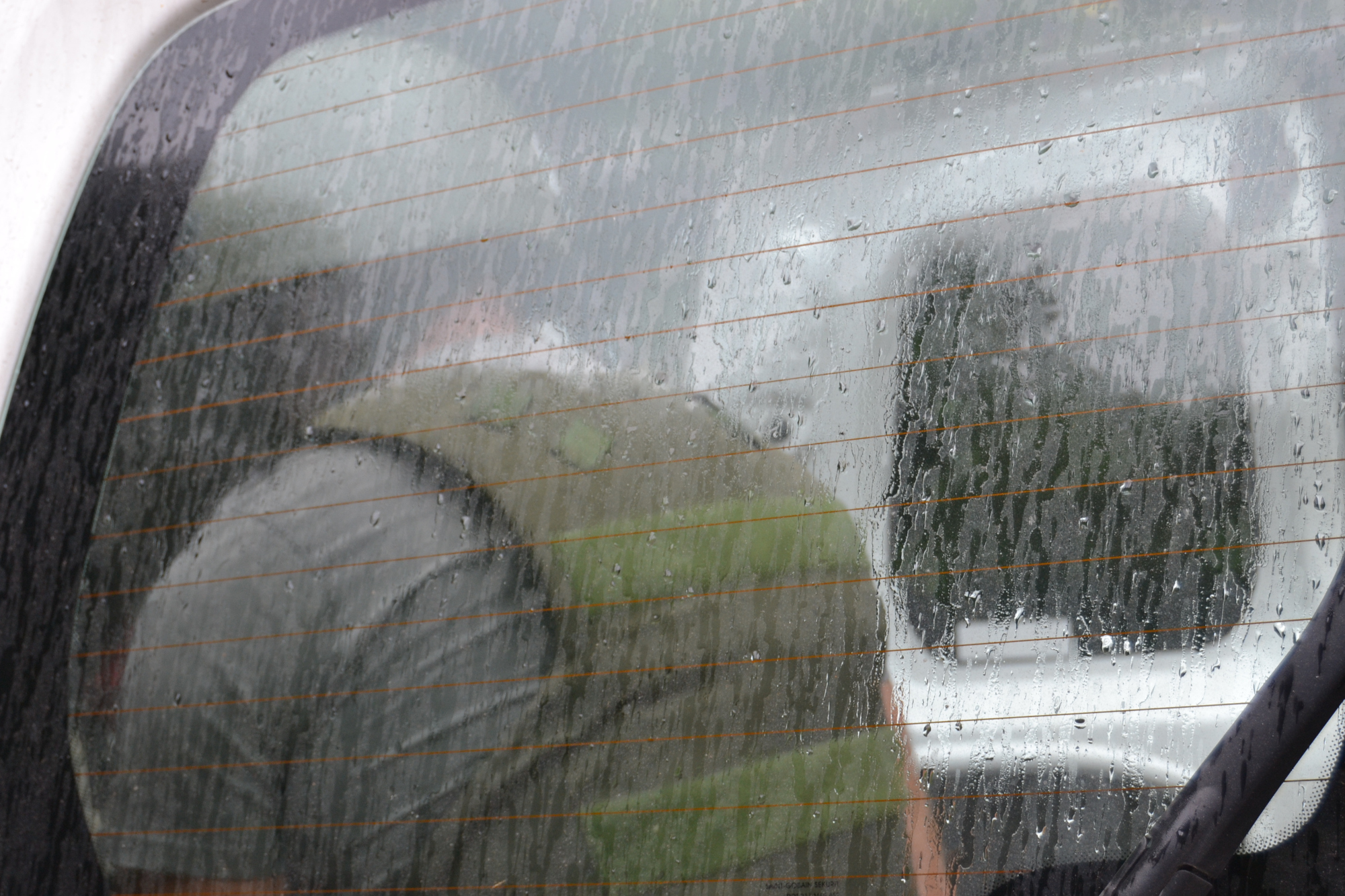
A deminer prepares for work, Otočac, Croatia, September 2025 - photo by Silvia Maraone
Since when has Novi Sindikat supported demining workers, and what does this support entail?
Novi Sindikat has been supporting deminers since 2008. That year, workers at Mungos, the only demining company owned by the Republic of Croatia at the time, staged a strike, and we supported them by providing logistical support.
Appreciating our approach, after the strike — which had also proved successful — the Mungos deminers decided to join Novi Sindikat, soon followed by workers from private companies. At that time, there were about forty private companies specializing in demining in Croatia, and approximately 600 deminers.
At the time, the situation for deminers in Croatia was much more difficult. In some companies, salaries were delayed, and deminers were pressured to complete their work more quickly, thus jeopardizing their safety.
This dynamic was the result of a poor decision made by the Zagreb government in the late 1990s, declaring demining a market activity. This created competition among employers vying to lower the cost of demining.
In some tenders, the estimated prices were so low that even grass cutting often cost more than a demining operation. Under these circumstances, we managed to unite the deminers and organized a strike across the entire sector in 2013. The strike lasted about ten days, leading to the signing of a national collective bargaining agreement with the Croatian Association of Demining Employers.
Since then, deminers’ working conditions have improved, and even the government seems to have realized that it cannot spare human lives. Therefore, the cost of demining has been adjusted to a level that allows for the normal conduct of demining activities while minimizing risks.
According to a report on the ongoing demining effort with the CROSS II project, Croatia will be mine-free by the end of the year. Once the operations are concluded, how many workers will retire? What will happen to the younger deminers?
Today, the sector is seeing a massive number of retired deminers returning to work. The Pension Insurance Act allows retirees, under certain conditions, to partially re-enter the workforce.
The return of retired deminers to work is also due to the fact that in recent years, no new specialized workers have been trained, as it was known that there would be no more jobs within a few years. Thus, the reintegration of retired deminers has mitigated the consequences of the impending closure of numerous companies in the sector.
However, there are a number of younger deminers — at least 150, according to our estimates — who will not yet be eligible for retirement. We believe the government should take care of these workers, who could be employed within the Civil Protection system or in other departments of the Interior and Defense Ministries. This is also our latest initiative in this area. We have already requested meetings several times to discuss this issue and hope our interlocutors will show understanding.
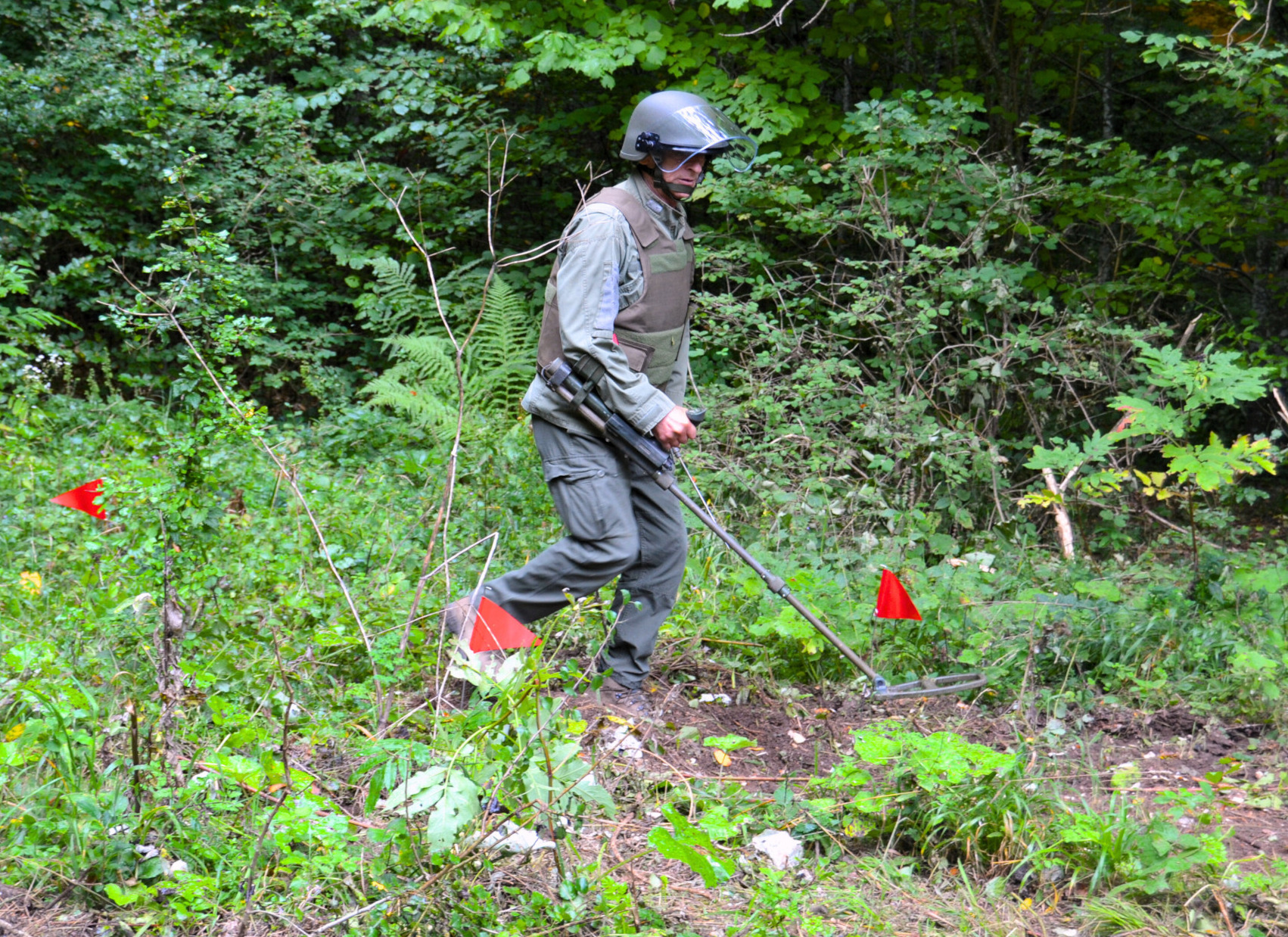
A deminer near Otočac, Croatia, September 2025 – photo by Silvia Maraone
We’re talking about highly strenuous and dangerous work. Can you explain how seniority is calculated and how many years of service are required for a pension?
A special law regulates deminers’ entitlement to a retirement pension. Two conditions must be met: eight years of demining work and 25 years of overall service.
Is there a national collective bargaining agreement for all? How much do deminers earn on average?
We don’t currently have a national collective bargaining agreement for the sector. The employers have split into two associations. We reached an agreement with one of them 7-8 years ago, but the "old" employers’ association has shown no willingness to negotiate.
In any case, thanks to the strengthening of the entire sector — the result of numerous mobilizations we organized — working conditions, including wages and other benefits, have improved, reaching a level that deminers evidently find acceptable, as they have not made any demands on this front in recent years.
One of the key moments was the signing, in 2016, of an excellent collective agreement with Mungos, following yet another strike at that company. That agreement has become a model for regulating workers’ rights, even in private companies.
The salary stipulated in that agreement was approximately 1,700 euros gross. Since then, however, due to inflation and the growing shortage of qualified deminers, salaries have been adjusted, and today they are mostly above 2,000 euros gross. Additionally, field work allowances are paid, thus helping to increase deminers’ net income.
Is financial support provided for family members in the event of a work-related death?
Financial support provided by companies is negligible, but workers are required to insure themselves, and family members generally take out insurance policies. However, lawsuits by family members seeking compensation from their employers are not uncommon.
Although we are now close to completing the demining process, we have not yet achieved a satisfactory level of assistance for injured deminers. Certainly, we have seen some improvements, especially in terms of equalizing the rights of injured deminers with those of veterans of the Homeland War. However, deminers still face numerous bureaucratic challenges.
Do active deminers receive psychological support and other social and healthcare services specifically designed for this purpose?
Unfortunately, there has never been systematic psychological support in Croatia. This is one of the major gaps in our system, a gap that countries that will face a similar situation for a long time to come, such as Bosnia and Herzegovina and Ukraine, should strive to fill.
Per approfondire
According to data from the report "After thirty years, Croatia is free of mines", there are currently 39 companies in Croatia that deal with demining, and 333 active deminers. The mines that were scattered in the country during the 1991-1995 war have caused a total of 612 victims (408 of whom died) since 1996, including 136 deminers (41 of whom died and 95 were injured).
This article is published as part of the Cohesion4Climate project, co-funded by the European Union. The EU is in no way responsible for the information or views expressed within the project; the responsibility lies solely with OBCT.
Tag: Cohesion for Climate | EU Cohesion | Mines