Bulgaria, studying medicine in Pleven
In 2024, the number of international students enrolled in Bulgarian universities reached 15,737, marking a steady growth trend. 64% of students from other EU countries in Bulgaria study medicine. Report from Pleven University

Foreign students at Pleven University, Bulgaria – Photo Pleven Medical University
Foreign students at Pleven University, Bulgaria - Photo Pleven Medical University
“I arrived in Pleven in February 2021, at the height of the Covid pandemic. It was snowing and everything was sadly closed. The beginning wasn’t easy: when classes started, however, I was immediately enthusiastic, and I realized that – despite being away from home – I had made the right choice.”
Emanuele Lepre is in his fifth year of medical school. What drove him from his native Agropoli, in the province of Salerno, to Pleven, a city in northern Bulgaria, halfway between the wooded Balkan Mountains and the lazy waters of the Danube, was a dream he had nurtured since childhood: to become a doctor.
“I made several attempts to enter medical school in Italy, and eventually enrolled as a radiology technician at Sapienza University in Rome. I liked the environment, but I quickly realized it wasn’t what I really wanted,” Emanuele says in one of the classrooms in the imposing rectorate building of the Pleven Medical University. “Then a friend told me about the possibility of coming to study in Bulgaria. I thought about it for a long time with my family, and I decided to give it a try.”
Over the past few years, Emanuele’s choice has become less and less uncommon: according to data reported by the Bulgarian online portal Mediapool, in 2024 the number of foreign students enrolled in Bulgarian universities reached 15,737 and has doubled over the last decade.
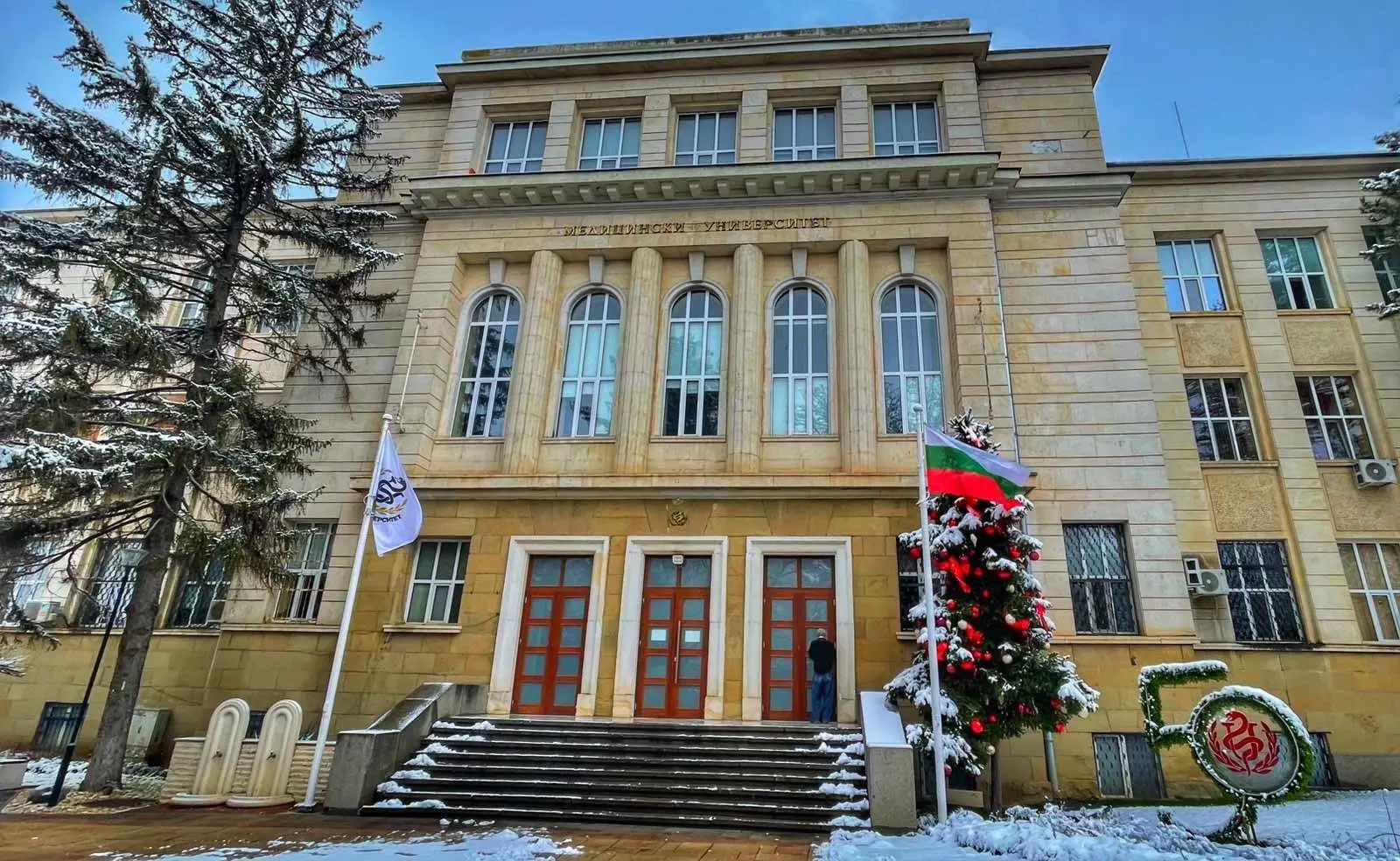
Pleven Medical University, Bulgaria – Photo Pleven Medical University
Why Bulgaria?
Foreign students in Bulgaria, Mediapool reports, come from a variety of countries: the largest share (20%) comes from neighboring Greece, but significant numbers also come from Great Britain (14%), Ukraine (11%), and Germany (9%). Italy (7%) is currently in fifth place, with growing numbers, followed by North Macedonia, Turkey, and India.
“Those who choose Bulgaria to study are looking for quality education and an international diploma recognized in the European Union and other advanced markets. Here they find this combination at a competitive price, both in terms of tuition fees and living costs,” Dimitar Tsikandelov of Inter HECS, a Bulgarian agency that has been offering advice and support to foreign students arriving in the country for over a decade, explained to us over the phone.
“The most popular fields among foreign students are Medicine and Dentistry, followed by technical subjects, Pharmacy, and Veterinary Medicine. This preference has remained stable over time, with Medicine taking the lion’s share,” Tsikandelov adds.
This analysis is confirmed by data collected by the Open Society Institute: 64% of students from other EU countries in Bulgaria are enrolled in Medicine. This is why Bulgaria’s medical universities in Sofia, Plovdiv, Varna, and Pleven play such a key role in attracting a growing number of foreign students to the country.
A Mediapool study revealed the cost of training foreign students in this field in Bulgaria: on average, medical education at the universities most popular with foreign students costs around €9,500 per year, or about €57,000 for six years. Dentistry costs slightly less: around €9,000 per year, or about €54,000 for the entire course.
Openness to foreign students
“Focusing on foreign students was initially a necessity. In 1997, Bulgaria was plunged into the worst economic and financial crisis in its recent history: the university didn’t even have the funds to pay its electricity and water bills,” Professor Dobromir Dimitrov, rector of the Pleven Medical University, tells us in his office.
“During that dramatic moment, it was decided to open a program taught entirely in English, aimed primarily at students from India and Pakistan. Initial enrollment was limited, just eighty students in total. Yet that decision was important in supporting the university during a difficult time, and it paved a path that has proven very fruitful in subsequent years.”
Currently, students from 52 different countries, hailing from all five continents, study at Pleven Medical University. International students now make up a large portion of the institution’s enrollment: 1,300 out of a total of 3,700.
Thanks to the growing number of applications, the university has now effectively reached the limit allowed by ministerial regulations for the number of foreign students admitted: approximately 750 applications have been submitted for 2026, but no more than 280-300 new students will be admitted, less than half.
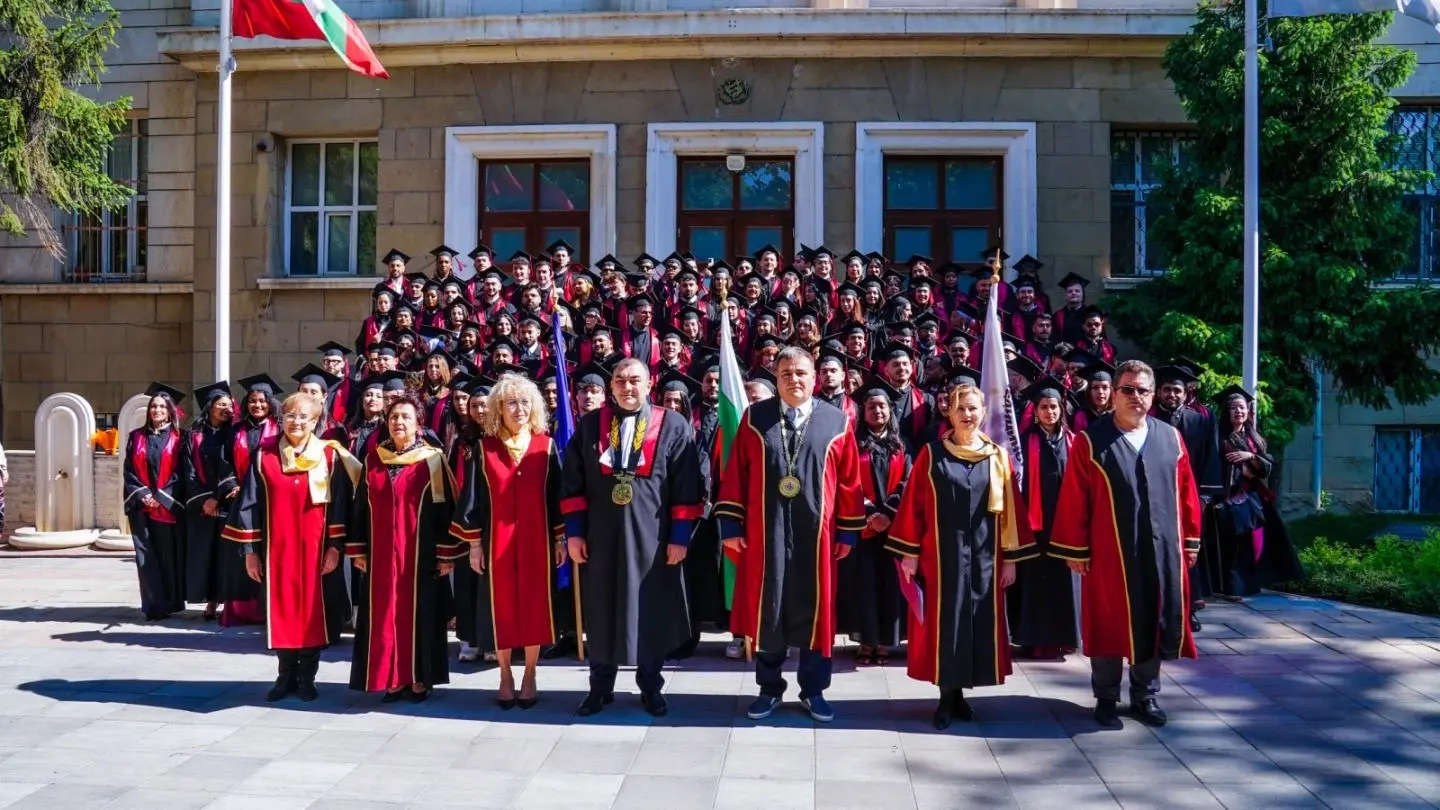
Students and faculty at Pleven Medical University, Bulgaria – Photo Pleven Medical University
Italian students in Bulgaria
Enrollments from Italy began to grow more visibly starting in 2017, with a peak of 250 students in 2022. Most Italian students come from Campania, Puglia, and Basilicata, thanks in part to the collaboration of the Pleven Medical University with active guidance and assistance agencies such as Tutor Medicina in Naples. However, in recent years, the number of students from northern Italy, although still a minority, has also grown visibly.
“Compared to the Italian system, in Bulgaria there is a much more practical and not just theoretical approach. A big advantage here in Pleven is that first-year students are divided into subgroups of about twenty, supervised by a professor who has the time and resources to personally support everyone,” Dafne Riccio, originally from Naples and enrolled in her first year, tells us in the university.
“Another opportunity, extremely difficult to find in Italy, is studying anatomy not only from books, but also on cadavers made available to us: a practice that allows us to realistically experience the complexity of the human body.”
Among the challenges foreign students face upon arrival is adapting to a new, often unexpected reality. The first few weeks are a key moment, and to help newcomers deal with everyday problems, from finding an apartment to rent to signing up for a gym, Pleven University has created a dedicated support center.
Naturally, the language barrier is a key factor: this is why, although all courses for foreign students are taught in English, students take Bulgarian classes for the first three academic years.
“No one expects you to become a native speaker: knowledge of the local language is essential: it’s not only essential for getting by in everyday life, but also, and above all, for interacting with patients and nurses during the hours spent on the wards for clinical internships,” explains Emanuele Lepre.
To make life easier for the many foreign students who intend to enroll, Pleven Medical University has decided to start its academic year in February rather than September. This gives many of them the time and opportunity to complete the bureaucratic procedures required for enrollment, which can sometimes be burdensome, especially for those from non-EU countries.
“Pleven is a welcoming city, and this has greatly helped us make our foreign students feel at home and help the University grow,” rector Dimitrov asserts. “In all these years, we cannot recall a single instance of discrimination against our foreign students, regardless of their origin or religious beliefs.”
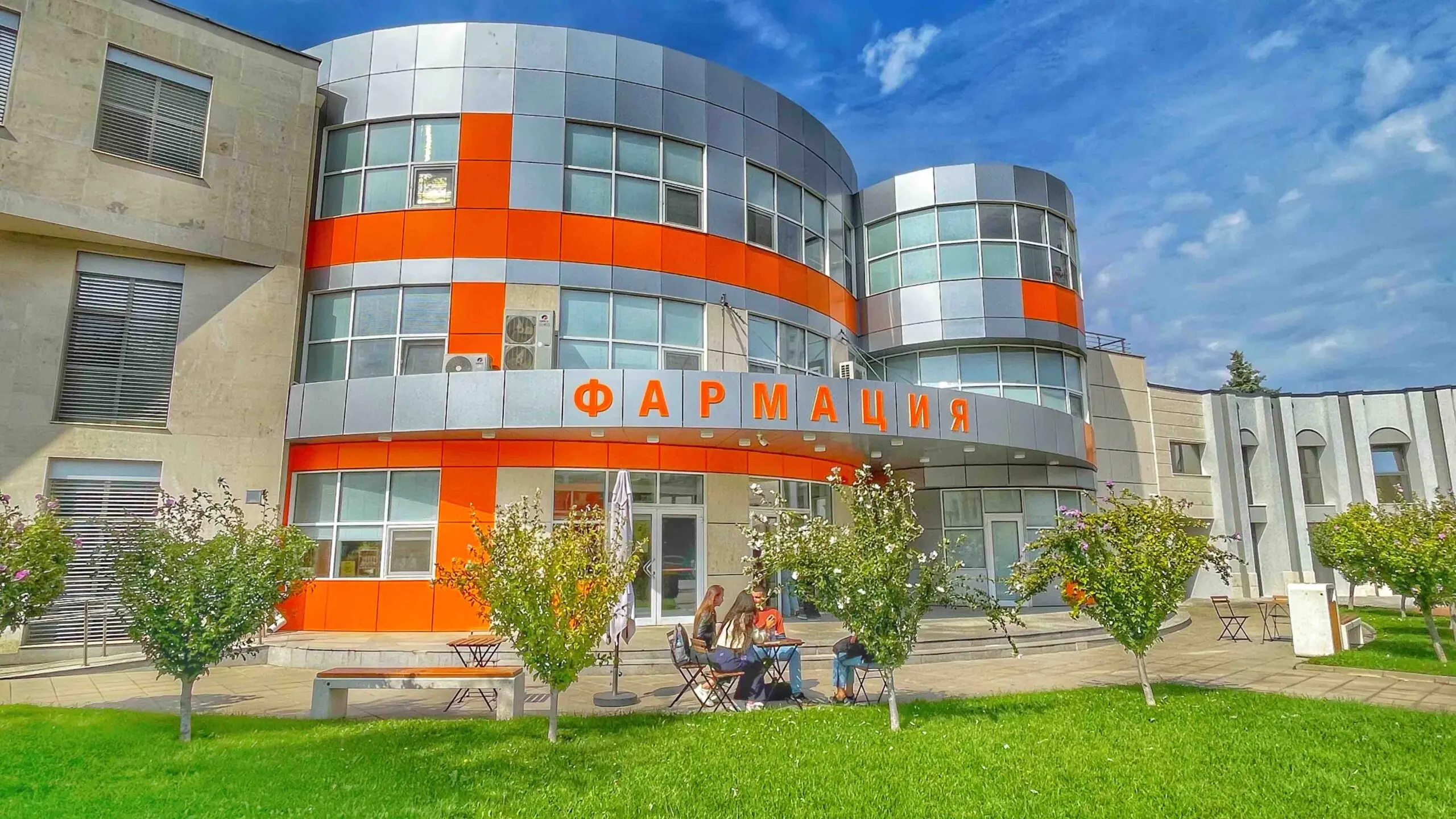
Faculty of Pharmacy, Pleven, Bulgaria – Photo Pleven University
Social, cultural, and economic impact
The growing number of foreign students is slowly transforming the city’s social, cultural, and economic fabric. Northern Bulgaria, of which Pleven is one of the main centers, is one of the areas that emerged worst from the long transition of the 1990s.
For many years, the region experienced a profound crisis that led many to emigrate, so much so that Pleven itself went from 130,000 inhabitants in 1992 to 92,000 in 2021. The positive impact of the presence of hundreds of foreign students is now one of the most important economic factors for the city center, which is adapting to its new role as a university city, with an unexpected openness to the world and a more varied offering of services.
For foreign medical students, the prospects after completing their studies appear to vary, especially depending on their origin. For those coming from third countries, the goal is often to remain in the European Union or head to the United States.
For those coming from EU countries, the idea is much more often to return and practice medicine in their country of origin. There is also a small but significant number of students who, once they graduate, decide to stay in Bulgaria.
“For me, it’s still a distant horizon, but as a first option, I think I’d like to return to Italy,” Dafne Riccio tells us. “I can’t deny that I’m undecided: I’m Italian-Dutch, and perhaps because of my multinational identity, I’m attracted to the possibility of exploring other paths. From this perspective, having a degree taught in English is certainly a huge competitive advantage.”
With a strategic choice, Pleven Medical University currently trains its Italian students with a focus on future integration into the Italian healthcare system. In recent years, agreements have been reached with numerous Italian universities and hospitals, allowing students to undertake summer internships and Erasmus experiences in Italy, giving them the opportunity to experience firsthand what it means to work in the Italian healthcare system while studying in Bulgaria.
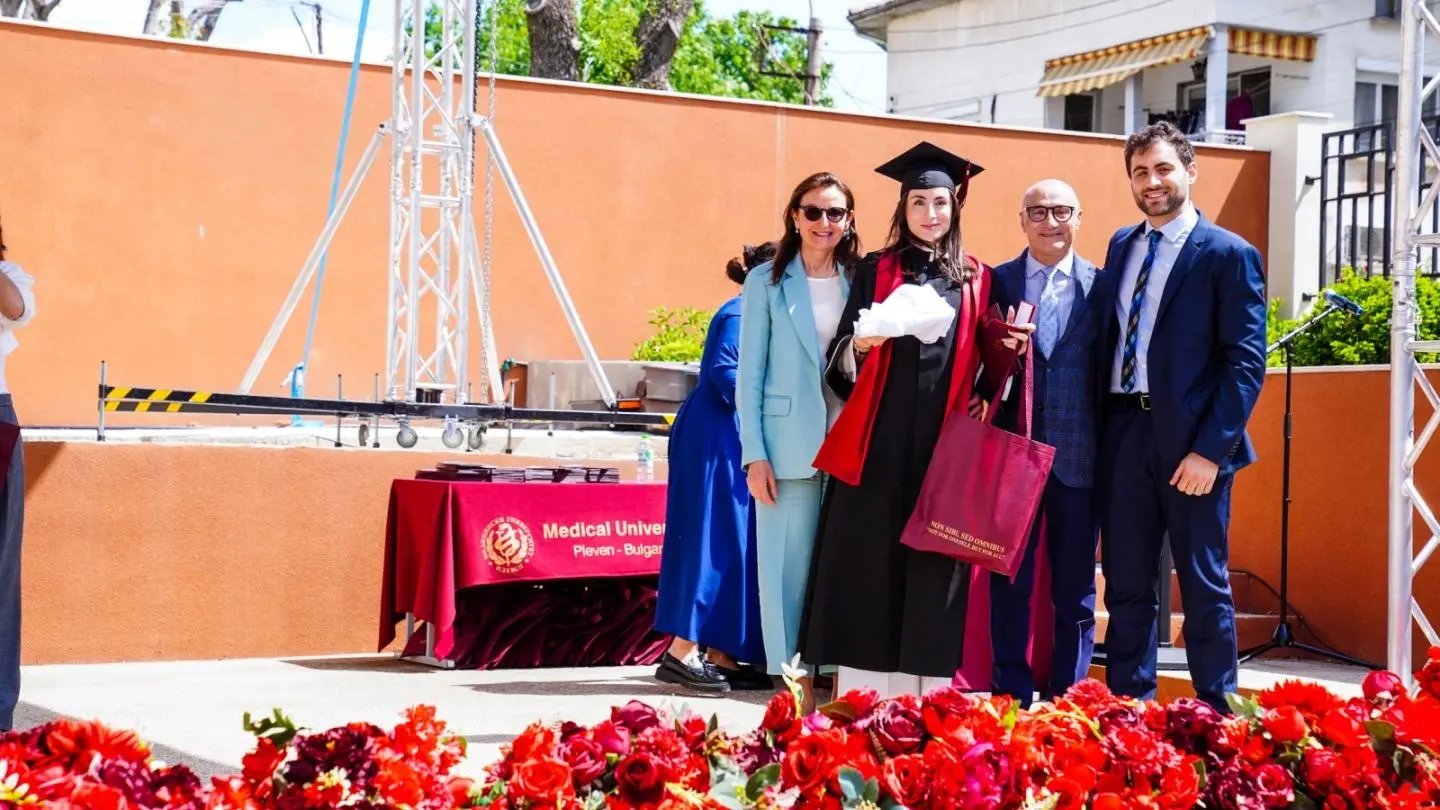
Graduation day at Pleven Medical University, Bulgaria – Photo Pleven University
A look to the future
With the numbers consolidated, it’s time for the Bulgarian academic system to look to the future. “The sector has good development prospects: Bulgarian universities have been significantly improving their offerings in recent years, both in terms of teaching and infrastructure,” says Dimitar Tsikandelov of Inter HECS.
“Certainly, competition from other EU countries, such as Romania, Greece, Croatia, and Hungary, is increasingly fierce, but for now, despite some price increases, we still have the advantage of the lower overall costs of an academic program in Bulgaria compared to many other countries.”
In 2022, for example, Mediapool writes, over 14,000 foreign students chose neighboring Romania for their medical education (Eurostat data). Between 2019 and 2024, more than 55,000 foreigners completed bachelor’s, master’s, and doctoral degrees at Romanian universities, with Medicine leading the way.
If we look at the annual tuition fees, Mediapool adds, for Medicine and Dentistry courses in Bucharest, they are currently the same as those in Sofia: around 10,000 Euros, for a total of around 60,000 Euros over six years.
For Rector Dimitrov, the ability to attract foreign, but also local, students will depend first and foremost on the ability of Bulgarian universities to address the main challenge looming on the horizon: the digitalization of healthcare, which could drastically transform the sector and marginalize those institutions that fail to keep up with the times.
“However, I believe that the work done so far is an excellent foundation for facing future challenges and continuing to grow. We now have a name and a prestige that motivate us to improve even further,” the rector asserts with conviction.
“Today, some call Pleven ‘the little Oxford of the Balkans.’ Without false modesty, I am convinced that this is a well-deserved title. And much of the credit goes to the international reach brought by the many young people who, coming from far away, have chosen to study and grow with us.”

This article was produced in collaboration with the Bulgarian newspaper Mediapool as part of PULSE, a European initiative coordinated by OBCT that supports transnational journalistic collaborations.
Tag: Education | Health Care | In evidenza | PULSE