Siege of Sarajevo: Mario Boccia’s photos arrive in Zagreb
After being presented in Rovereto and Belgrade, th photography exhibition by Mario Boccia on the siege of Sarajevo was inaugurated on 5 May in Zagreb in the presence of a large and moved audience. It will remain in the Croatian capital until 30 June
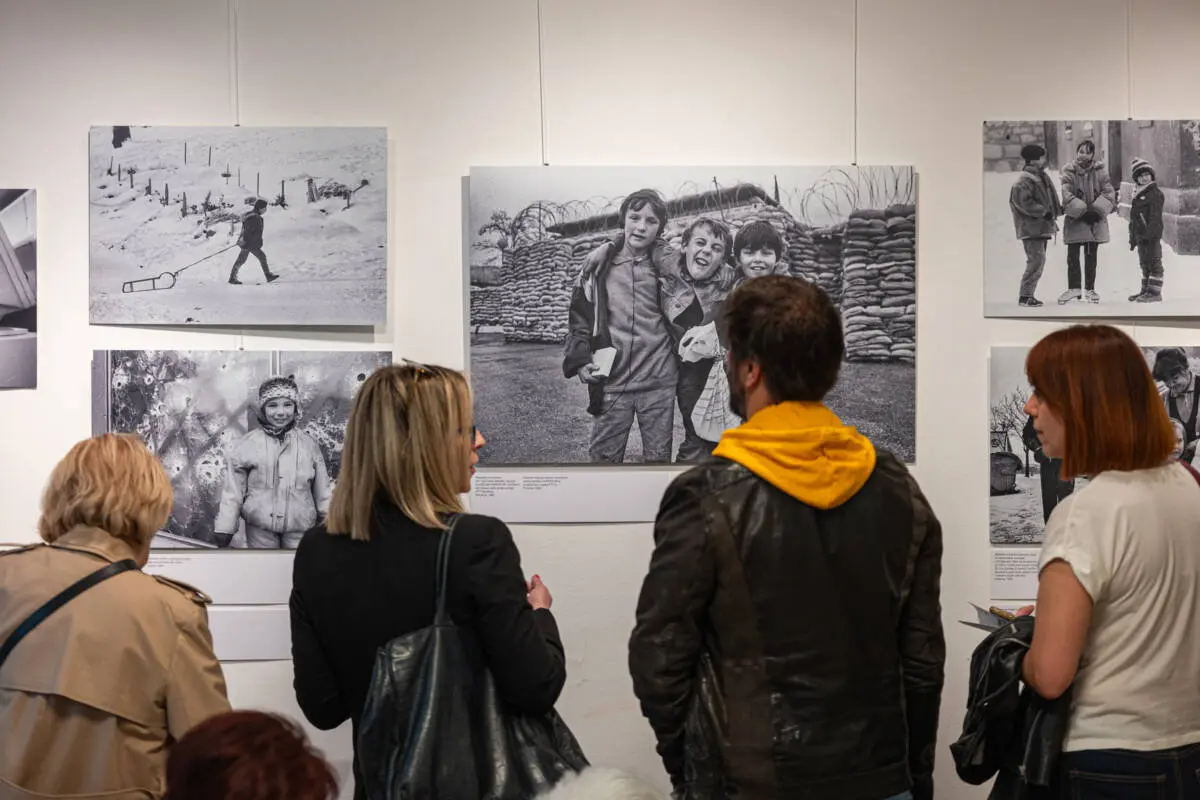
Mario Boccia’s exhibition opening in Zagreb. Photo: Sanjin Kaštelan
Mario Boccia’s exhibition opening in Zagreb. Photo: Sanjin Kaštelan
“Remembering the siege of Sarajevo is important so that similar events never happen again, to anyone, anywhere”, said the Italian photographer Mario Boccia addressing a hundred people who had come to attend the opening of his exhibition “Sarajevo 1992-1996 – The Longest Siege” at the Italian Cultural Institute (IIC) in Zagreb.
“Unfortunately, wars continue to spread amidst widespread indifference, but I cannot help but continue my work of dissemination, for my children and for future generations”, added Mario Boccia.
An Italian journalist and photographer, a correspondent for Il Manifesto during the Yugoslav wars – but also present as a reporter in Africa, Latin America and the Middle East over several decades – Boccia has selected around fifty black-and-white photographs taken during the siege for this exhibition, curated by the Italian War History Museum and Osservatorio Balcani Caucaso Transeuropa.
These are not classic war images, with gunfire, deaths and injuries, but snapshots of the daily lives of the citizens of besieged Sarajevo, testimonies of civil resistance, photos full of dignity even in the darkest moments.
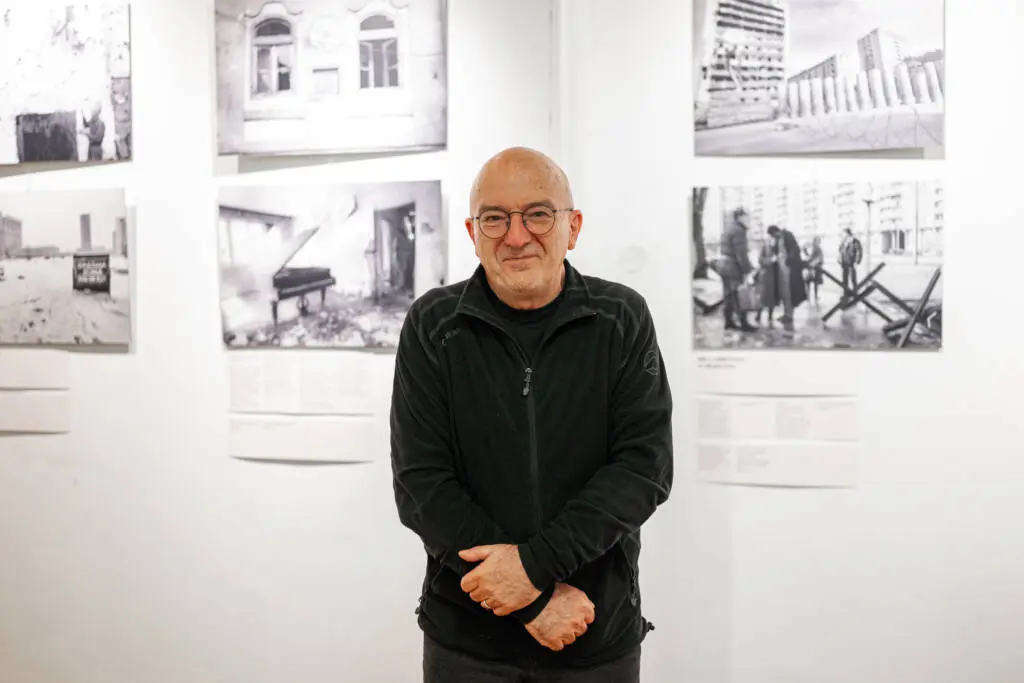
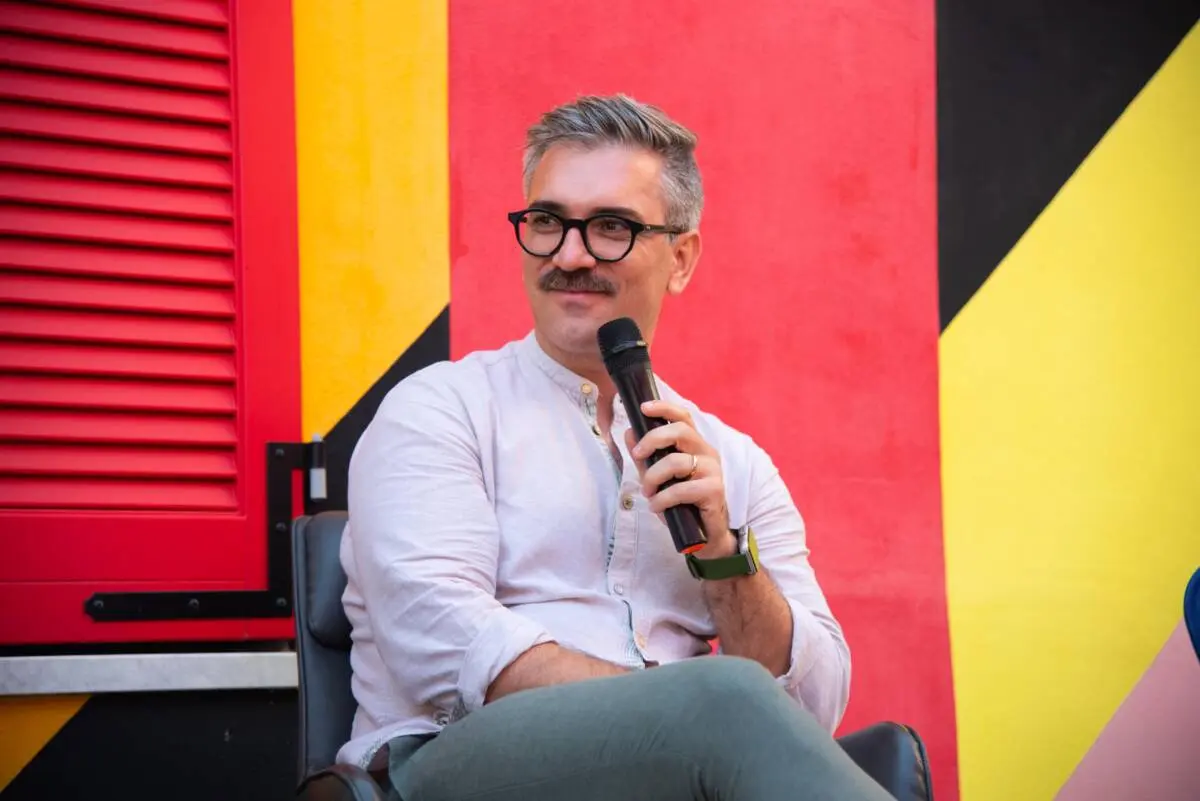
Mario Boccia. Photo: Sanjin Kaštelan
The importance of memory
“Mario Bocciaxs gaze is participatory, never distant. He seeks humanity, not sensationalism”, said Gian Luca Borghese, director of the Italian Cultural Institute, in his introductory remarks. “This exhibition confronts us with a responsibility: that of memory. Remembering is not a passive act, but an active choice”, continued Borghese. For the director of the Institute hosting the exhibition, it is precisely the details of everyday life photographed by Mario Boccia that help us truly understand “what it means to resist”.
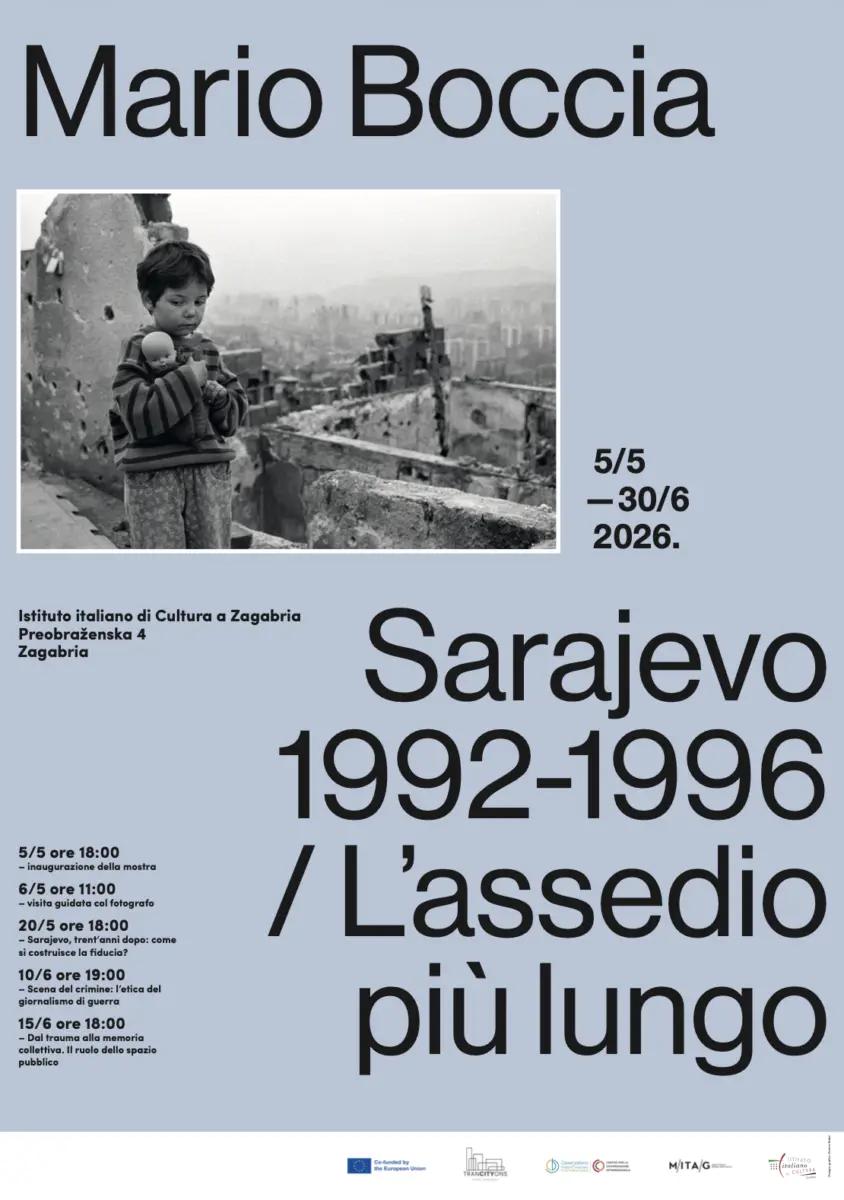
The poster of the exhibition in Zagreb
The inauguration, which took place as part of Kliofest 2026, Zagreb’s 13th annual history festival, was also attended by Bosnia and Herzegovina’s Ambassador to Croatia, Elma Kovačević-Bajtal, who embraced Mario Boccia, thanking him for his photos that “remind us of the experiences we have lived”.
“The culture of remembrance is what we all must cultivate”, pointed out the ambassador, “not to hate or foster hatred, but to learn lessons and not forget the cost of the hostilities that unfortunately still occur today in various parts of the world”.
The exhibition – which was created as part of the European project Trancityons, which explores the relationship between cities and processes of democratisation – has already been presented in Rovereto and Belgrade, and will arrive in Sarajevo by the end of the year.
During the inauguration in Zagreb, former Deputy Mayor of Sarajevo Anja Margetić (2021–2025), the first woman to represent Bosnia and Herzegovina at the Olympics in 1992, emphasised how Mario Boccia’s photographs con
veyed “the desire to live, the dignity and the heroism” of the citizens of Sarajevo at a time when, during the siege, there was a great sense of unity and solidarity among the population.
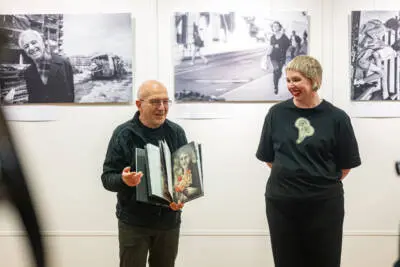 Browse the photo gallery of the inauguration and guided tour of the Italian Cultural Institute in Zagreb.
Talking to young people
“Ifeel the need to talk to young people about what I saw so that such an evil never happens again. I visit schools, and in recent years I have visited several hundred, from northern to southern Italy”,said Mario Boccia, clutching his book “The Flower Girl of Sarajevo”, which tells, through illustrations, a story of civic resistance stemming from the siege of Sarajevo itself.
“This is my contribution, but it is not enough to thank the city and all the people for the welcome they have given me. I have never been welcomed so warmly anywhere else in the world”, added Boccia, addressing a visibly moved audience of people of all ages and backgrounds.
There were young political science students from Zagreb, longtime peace activists, people born in Sarajevo and then emigrated to Croatia during or after the war, scholars, and even a veteran of UNPROFOR (the United Nations Protection Forces deployed in Bosnia and Herzegovina during the war). They were all captivated by Mario Boccia’s words, which, with impressive precision, told the stories behind the photographs, both those of the besieged and those besieging.
“Showing how much resemblance there can be to the executioners is necessary to understand how ideological fanaticism and war can subvert fundamental human values. A normal person can be dehumanised to the point of becoming a sniper capable of shooting a child at play. Reflecting on this helps us develop the necessary antibodies”, explained Mario Boccia, hoping to soon see the squares filled with citizens demonstrating against wars, which unfortunately remain ever-present.
The exhibition will remain open at the Italian Cultural Institute until 30 June 2026 (entry is free). Three events will be organised in conjunction with the exhibition, featuring journalists, academics and local experts: “Sarajevo, Thirty Years Later: How to Build Trust?” (20 May, 6:00 PM), “Crime Scene: The Ethics of War Journalism” (10 June, 7:00) and “From Trauma to Collective Memory. The Role of Public Space” (15 June, 6:00 PM). The events will provide an opportunity to continue the dialogue initiated with Mario Boccia and to allow as many people as possible to visit the exhibition.
Found an error in this article? Please contact our editorial team at redazione@balcanicaucaso.org.