When the EU asks doctors to act as police
From deportation to “intrinsically pathogenic” detention centers prior to expulsion to “betraying the patient” through doctors’ obligation to report undocumented people. An interview with infectious disease specialist Nicola Cocco, a member of the Italian Society of Migration Medicine (SIMM) and the Mai più Lager – No CPR network

A doctor takes the temperature of a migrant in a refugee camp
A doctor takes the temperature of a migrant in a refugee camp © Pressmaster/Shutterstock
As negotiations between European co-legislators on the Return Regulation – the latest piece of EU migration and asylum legislation – proceed rapidly in Brussels, it is increasingly clear that, if the proposed text were to be approved, it would pave the way for violations of EU values on human rights and the rule of law.
“What is being requested at the European level is extremely serious, because it implies a subordinate position of doctors with respect to the police responsible for security. That is, making themselves available to perform functions that have nothing to do with healthcare”, denounces Nicola Cocco, an infectious disease specialist and member of the Italian Society of Migration Medicine (SIMM) and the Mai Più Lager – No CPR Network.
The proposed regulation, in line with Europe’s increasingly right-wing migration policies – which could become law across the entire territory of the twenty-seven EU member states as early as this summer – presents a series of critical issues that Cocco lucidly analyses.
From the possible introduction of a mandatory reporting requirement for doctors to report undocumented persons to the concrete and foreseeable risk of degrading conditions in so-called “return hubs”, centers located outside EU territory where people whose asylum applications have been rejected could be detained prior to repatriation.
In light of the details that have emerged regarding the proposed Return Regulation, are doctors at risk of becoming instruments of migration control?
Whenever doctors are asked to use their role – which implies a very particular way of relating to the body, pain, suffering and the facts of life and death – for purposes that do not have the well-being and care of the patient at their centre, they inevitably risk becoming a cog in a system that is something other than health.
Without going into the details of the issue of detention and deportations, the point is that this approach represents a betrayal of the patient, a person who entrusts his or her body to the doctor.
And it is also a betrayal of the Hippocratic Oath, that is, of the doctor’s ethical duty.
This had already happened in Italy. In 2009, a security decree, proposed by then-Interior Minister Roberto Maroni, mandated that healthcare workers, acting as public officials, report people deemed to be illegal immigrants.
At the time, there was a protest by the National Federation of Medical Associations and scientific societies like the Italian Society of Migration Medicine. Doctors took to the streets with the slogan “I cure, I do not report”.
I hope there will be protests again if the provisions of the Regulation were to actually be implemented.
I believe we should take to the streets, even just for this proposal and its cultural impact, because it undermines migrants’ right to health and doctors’ professional ethics.
Are Italian doctors aware of what is happening at the European level?
So far, there has been a significant response from associations and activists, but not much from medical professionals yet.
No specific position on the health risks has been taken, at least not in Italy. The Italian Society of Migration Medicine will certainly analyse the issue further, and we will be among the first to raise it with the medical associations, which are the guardians of the profession’s ethical principles.
What impact can a system have where undocumented people fear being reported if they go to the hospital?
In this way, hospitals and healthcare facilities are transformed into dangerous and hostile places, rather than spaces for personal care.
The real risk is that people will not seek medical and healthcare care even when they need it, for fear of being reported to the police.
This happened in Italy in 2009, with some very serious cases. I recall, for example, the case of a woman who lost a baby during pregnancy precisely because she had not gone to the emergency room for fear of being reported.
If people have this fear of healthcare facilities, it means that doctors and the healthcare system were made to appear as if they were part of a repressive and expulsive system.
This creates health problems not only for individuals but also for the community. Consider the possibility that people who suspect they have tuberculosis fear being reported, so they avoid seeing a doctor despite coughing up blood. They would certainly pose a risk to themselves – which is the primary concern – but also to public health.
Ultimately, this proposal overrides and eclipses the right to health in the name of a security principle that fails to respect human rights.
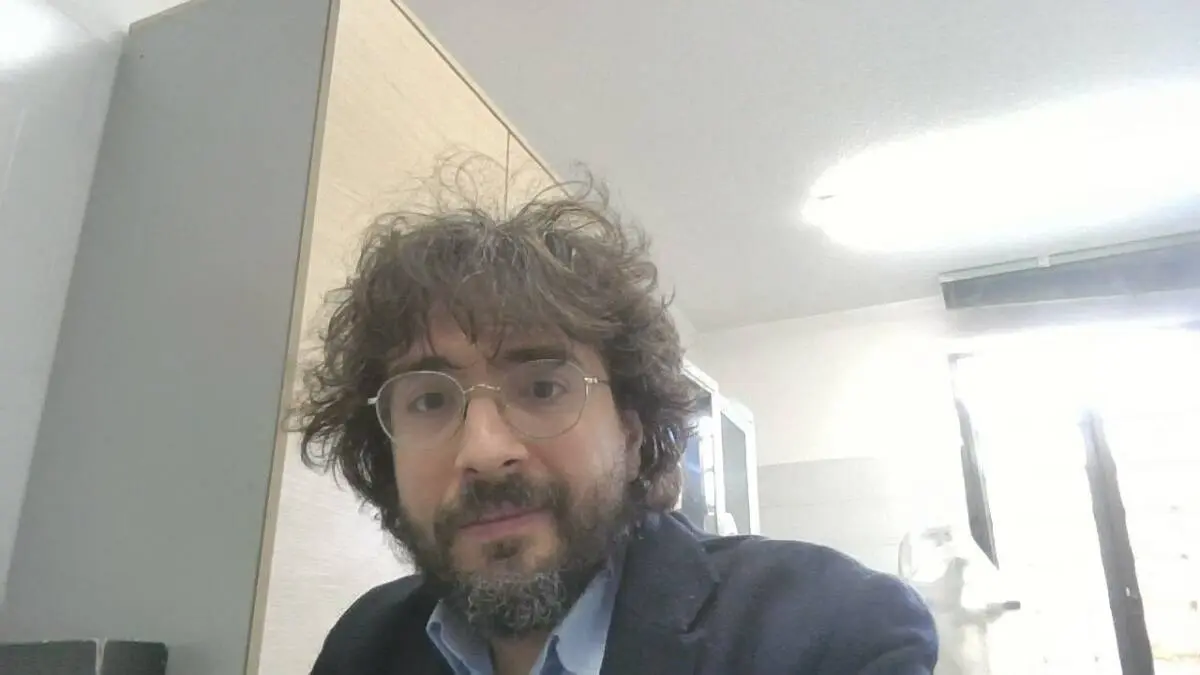
Infectious disease specialist Nicola Cocco, member of the Italian Society of Migration Medicine (SIMM) and the Mai più Lager – No CPR network
What are the main risks to the physical health of people who will be detained in so-called “return hubs” outside the EU?
What is being proposed is essentially a concept of deportation. From this perspective, too, the Regulation becomes difficult to accept. Individuals who have been completely dehumanised are being deported.
Specifically, it is decided, in the name of an obvious intention to make them invisible, that human beings in whom we are not interested from the point of view of their individual specificity, their histories and their paths – their lives, essentially – can be segregated in centers different from those in which we live.
This deportation logic is completely unacceptable from a social and cultural perspective, even before a humanitarian one. Furthermore, it creates places of segregation and detention that pose serious risks to public health.
In Italy, the Repatriation Detention Centers (CPRs) are a significant test case in this regard, especially considering the frequent outbreaks of infectious diseases like scabies. But above all, it is a clear violation of the right to individual health.
The Italian CPRs demonstrate how, in a place where dehumanisation is taking place in the name of a propagandistic principle that ignores respect for individual rights, people find themselves in contexts of degradation, suffering and abandonment, and develop extremely serious pathological and psychopathological conditions.
These contexts can lead to fatal events, including episodes of violence, suicide attempts and drug-related deaths.
These are inevitably places that become pathogenic. The structural characteristics of such a conglomeration of human beings – justified by security-type dynamics – make it self-evident.
I worked for several years with Médecins Sans Frontières. In the humanitarian field, when situations arise where people find themselves segregated – for example, in refugee camps following a war or a natural disaster – it is well known that those contexts are pathogenic.
The fact that Europe intends to create them specifically for deportation purposes means that the right to health of these people is not taken into consideration at all, because those realities are intrinsically pathogenic.
And what are the psychological effects?
We must try to restore subjectivity to people.
It only takes a little effort and empathy to imagine how a human being might feel when labeled as irregular for being ontologically different from others, because society has decided that this is their status.
Not only do they see themselves expelled as a foreign body, but detained in a deportation center, knowing full well that the outcome of all this movement is certainly not the ability to pursue a life goal, such as migrating or attempting integration.
In the worst-case scenario, the outcome could be falling ill in such a context, or being deported again through a possible repatriation that does not equate to a return home.
Repatriation is not a return home, it is deportation. Even when people are deported to the country they left, an element of deportation remains. This has psychopathogenic effects, as demonstrated in the literature.
It is well known that the mental health of migrants, refugees and asylum seekers is severely undermined by the threat of the end of their migration journey.
In this case, they are placed on a deportation path, which inevitably has pathogenic and violent characteristics. Because, where subjectivity cannot express itself, violence arises, which will likely be managed with the extensive use of psychotropic drugs, sedatives and other treatments.
The Italian CPRs teach us all this, and are already demonstrating how this system works.
In particular, the CPR in Gjadër, Albania, due to its characteristics and size, is still somewhat manageable and is seeing the most serious cases. Paradoxically, several people who had been deemed suitable for detention in Italian CPRs have been declared vulnerable and unsuitable for detention in the Gjadër center.
Just imagine the level of care that will be used to assess a person’s health status when the numbers become ten or a hundredfold higher. But it is not in the interest of such policies to assess the health status of these people.
Could these measures change the very nature of healthcare systems, undermining the right to healthcare in Europe in the long term?
These policies have substantially distorted, debased and trampled on the right to asylum as it emerged after the Second World War.
A similar argument can be made for the right to health, that is, the idea of health as a right established during the 1978 Alma Ata conference of the World Health Organization.
This right is being completely erased, because these people are not recognised as having the priority of healthcare as a right, since they find themselves treated like parcels to be moved from one center to another so as not to be seen by society. All of this has a huge impact on the cultural stability of our healthcare systems.
The Italian healthcare system, like the English and German ones, for example, all have the concept of the right to health as a fundamental right at its core.
Article 32 of the Italian Constitution clearly states that everyone has the right to free and need-based healthcare. This article risks being completely undermined by proposals such as the Repatriation Regulation.
Even if, on paper, they were to include assessments of suitability for living in a restricted community, the presence of healthcare personnel and specialist assessments – referring to the CPRs – all this would be nullified by a substantial dehumanisation of people, deprived of the right to be recognised as human beings.
This is not acceptable for a healthcare system.
What can doctors do to counter this trend?
First, report this situation. It must be a strong, cohesive and above all institutional indictment – that is, medical associations and scientific societies must intervene. Activists and individuals alone cannot deal with this.
Associations and individuals must go knocking on institutional doors to take to the streets together, if necessary, as happened in 2009. It is true that Italy was different that time, but the urgency in Europe is the same.
It is then necessary to avoid complicity, that is, not lending one’s professional expertise to places that will inevitably be pathogenic, violent and marked by violations of rights.
I am thinking, for example, of the Red Cross, which could be involved in the management of these centers. I hope an internal debate can be opened on the advisability of making itself available in these places, which, by offending human beings and their rights, also offend the medical profession.
Found an error in this article? Please contact our editorial team at redazione@balcanicaucaso.org.
Tag: