International organisations urge Kosovo government to reverse media freedom decline
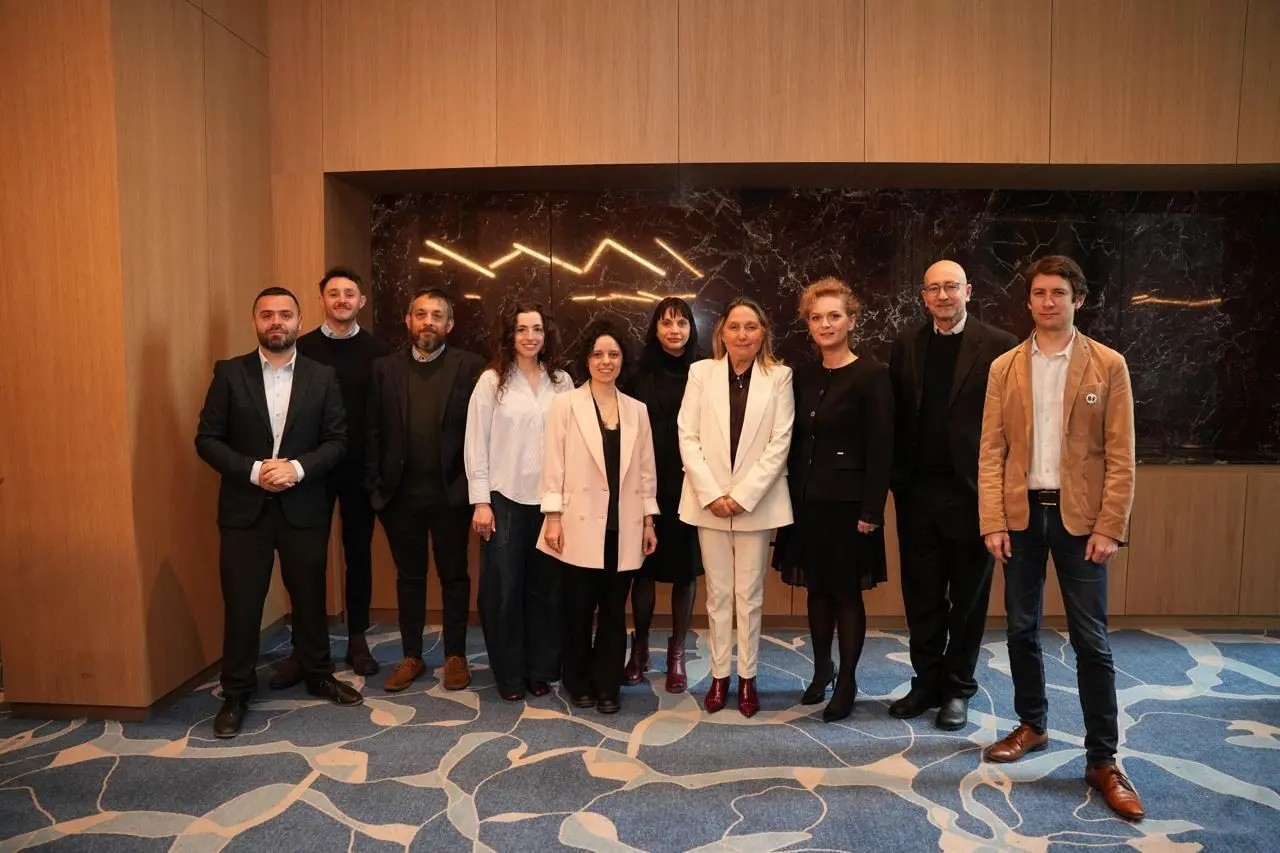
© Kosovo Journalists Association
© Kosovo Journalists Association
Media freedom in Kosovo has experienced a period of decline since 2023 amidst a series of negative developments, which calls for immediate political action by the government, an international media freedom mission concluded today
Following a two-day visit to Pristina by a coalition of media freedom organisations, partners of the Council of Europe’s Platform for the Safety of Journalists, the delegation found that a stable level of media freedom in the aspiring European Union accession country has been replaced by a period of deterioration over the past three years.
While Kosovo has a pluralistic media landscape, low levels of physical violence against journalists, and broad legislative alignment with European and international standards, a number of media freedom standards have been undermined by the ruling Vetëvendosje party.
The passing by parliament of a media law – later rejected as unconstitutional – which would have increased political control over the Independent Media Commission (IMC), the insufficient funding and political pressure on Radio Television of Kosovo (RTK), as well as a sustained increase in verbal targeting and denigration of journalists by ruling party politicians, are the main factors behind this assessment by the delegation.
These developments have undermined Kosovo’s positive trajectory for press freedom and media development since the country’s independence. This has tarnished its status as a clear regional frontrunner on media freedom in the EU accession process.
Regarding the climate for the safety of journalists in Kosovo, media stakeholders broadly expressed confidence in the recent response of prosecutors, while the delegation noted and welcomed the improved treatment of cases by the courts. In particular, the recently adopted Strategy of Kosovo Judicial Council (KCJ) on Improvement of Access to Justice 2026 – 2028 that prioritises cases of safety of journalists, defamation and SLAPPs aimed at journalists was welcomed and appears to already have had an impact, with several cases being swiftly adjudicated by the courts. The KCJ strategy was welcomed by the Coalition Against SLAPPs in Europe. The spike in physical attacks on journalists in 2023 has dropped to previous levels, with recent cases of attacks on media workers having resulted in convictions.
However, the number of overall cases documented by the Association of Journalists in Kosovo (AJK) involving the denigration, discrediting and online harassment against journalists, especially by political figures, has dramatically increased in the last few years, reaching a peak in 2025. A leading source of these attacks are Vetëvendosje politicians. A particularly alarming trend identified by a range of media stakeholders was the utilisation of toxic narratives by Vetëvendosje officials which falsely portrayed journalists who ask legitimate questions as Serbian “mercenaries” and “agents” paid by foreign powers. In the case of the Serbian and other-non majority media, these pressures are aggravated by the threats from foreign governments and lack of access to public information in their languages.
During a meeting with the Prime Minister, the delegation called directly on him, his ministers and party officials to set an example for society by condemning and refraining from using unacceptable smears, particularly divisive language against journalists. The Prime Minister did not commit to publicly condemning such attacks.
While Kosovo has a diverse and vibrant private media sector across the broadcast and online markets, the media landscape faces challenges from the influence of political and business interests and weak barriers between media ownership and editorial policy. Engrained systemic issues, including lack of transparency of public authorities, continue to undermine watchdog and investigative journalism, weakening the climate for independent reporting and lowering public trust in media.
The delegation expressed the importance of the independence and sufficient funding for the public broadcaster, and asked the Prime Minister to ensure adequate resources and amend the legislation in line with Article 5 of European Media Freedom Act (EMFA). We remain concerned that RTK operates in challenging economic conditions without solution to its property, while lack of funding disables them from proper investment. The delegation has concerns about examples of the removal of news presenters, the axing of shows, and ongoing concerns over political pressure. In a meeting, RTK management strongly rejected reports of pressure on journalists and threats to editorial independence.
The Prime Minister and officials argued that the capture of media by vested business, corporate and oligarchic interests was the main challenge facing media freedom in Kosovo. The mission delegation stressed that while improved ownership transparency and protections for editorial independence in newsrooms is vital, this should not distract from the responsibility of the government in regards to the country’s media freedom decline.
To address the issues of media ownership transparency in a democratic and proportionate manner, the delegation called on the Prime Minister and his government to prioritise the alignment of domestic legislation with Article 6 of the EMFA. The delegation also noted the Prime Minister’s commitment to re-engage with international organisations to draft a new media law in line with European standards.
The mission requested that the government amend the legislative agenda to include the Law on Radio Television of Kosovo and Law on Protection of Journalistic Sources, in line with the EMFA and Kosovo’s objective to enter the EU.
The legal landscape for media freedom and journalist safety in Kosovo remains broadly in line with EU standards. No journalists have been arrested in recent years. During the meeting, Prime Minister Kurti provided verbal guarantees that defamation would not be re-criminalised, contradicting recent calls by high-ranking Vetëvendosje officials.
In recent years, the rulings of the Constitutional Court, Supreme Court and lower courts have demonstrated the independence of the justice system and its ability to protect the freedom of the media. However, the fact that the country’s highest court was required to strike down a law threatening the independence of the IMC was an alarming development that symbolises the increasing pressure on the foundations of Kosovo’s media system.
With media freedom a key pillar of Kosovo’s EU accession process, significant work needs to be done by the current government to rebuild trust in its democratic credentials and return to the previous path of media freedom progress that the country has experienced over the past decade-and-a-half.
To support this process, the mission partners will publish a report outlining our findings and providing recommendations to the government, which will also be shared with the Council of Europe, European Union, the United Nations and the Organisation for the Security and Cooperation (OSCE).
The mission to Pristina was held between 24-26 March. The delegation met with Prime Minister Albin Kurti, as well as editors and journalists, judicial authorities, regulatory bodies, and representatives of the public broadcaster RTK.
The mission was joined by the Association of European Journalists (AEJ), European Centre for Press and Media Freedom (ECPMF), European Federation of Journalists (EFJ), Index on Censorship, International Press Institute (IPI), Osservatorio Balcani Caucaso Transeuropa (OBCT) and Reporters Without Borders (RSF). The mission was supported by the Association of Journalists of Kosovo (AJK). A similar fact-finding mission to Kosovo was organised by the Council of Europe Platform partners in 2022.
Tag: ATLIB,Libertà dei media