Europe, once an inmate, always an inmate
In the European Union, there are currently over 700,000 people detained in approximately 2,500 facilities. EU funds for reintegration exist, but stigma and lack of opportunities keep former inmates stuck
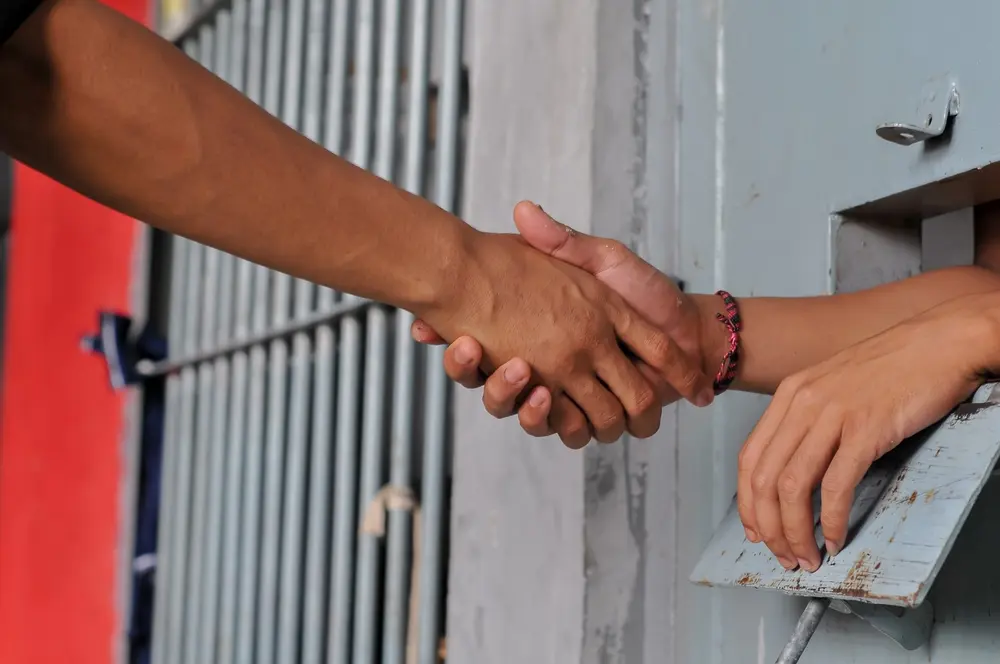
Prisoners’ hands
© Hari Sucahyo/Shutterstock
In Europe, reintegrating former prisoners into society is one of the most costly challenges a state can ignore. Pedro das Neves, an expert on prison systems and author of one of the few systematic studies on the use of European funds in prisons, has no doubts about where the mechanism is jammed: “The European Social Fund Plus (ESF+) is a magnificent tool for those in disadvantaged situations. But unless prison officials come to the table and say ‘look at us,’ nothing will happen.”
The problem, he says, isn’t the fund. It’s who decides how to spend it – and for whom. In the European Union, there are currently over 700,000 people detained in approximately 2,500 facilities (Prison Systems EU). Half need structural interventions to improve their employability. A third have no marketable skills. When they leave, they often find themselves faced with the same problems: no home, no job, no network. And the cycle begins again.
Croatia: Angel and the void the state doesn’t fill
Angel Andonov spent 18 years in a Croatian prison. Sentenced to 21 years for international cocaine trafficking – 300 kilos from Colombia, he used that time to earn a law degree. Today, he teaches as an external associate professor in two faculties: Law and Educational Rehabilitation. He trains future criminologists, social workers, and prison officers. He founded and currently runs the Angelus Custos association, which promotes education in prison, employment for ex-offenders through agreements with construction and transportation companies, and advocacy for the RESCALED model of small detention centers. He survives primarily on donations, without direct EU funding or significant state support.
The context in which he operates is among the most critical in Europe. As of January 31, 2024, Croatia recorded an average prison occupancy rate of 110% (moderate, but an 8.3% increase compared to 2023), with closed facilities often severely overloaded (over 200% in some institutions, such as Zadar). Ombudswoman Tena Šimonović Einwalter, in her 2024 annual report, described “alarming” conditions, with staff shortages, unbearable heat, and potentially humiliating treatment. Staff shortages even prevent organized outdoor walks.
In this context, a project funded by cohesion funds from ESF+ is attempting to build something concrete. It’s called “NiKre TeBra” and works with young inmates aged 16 to 29, offering vocational qualifications – tiling, construction – while they are still in prison. They are supported by social workers and psychologists. Not just a trade: communication, money management, and life skills, too. “I learned the trade, but also how to communicate and manage finances,” said Marko, one of the participants. “I feel this will help me when I find a job.” The Association for Creative Social Work, which leads the project, has trained a pilot group of 16 young people, aiming to extend the program in subsequent years. It’s a virtuous example. But it remains an isolated case. Angel Andonov, who has experienced that system from the inside, knows well how fragile the model remains: “The stigma is permanent. Society is unforgiving.”
Slovenia: when the state actually invests
400 kilometers away, Slovenia faces a similar crisis but with different resources. In the SPACE I 2024 report (July 2025), Slovenia remains Europe’s leading country for severe overcrowding (134 inmates per 100 places as of January 31, 2024, +25.4% since 2023), with a 40% increase in five years. Despite the new prison in Ljubljana (388 places, completed in 2025) and renovations, staff shortages and systemic pressure persist. The European Committee for the Prevention of Torture, in its May 2025 report, confirmed cells in Ljubljana with just 2.7-3.5 m² per person, below minimum standards.
The Slovenian Prison Administration (URSIKS) has openly spoken of “the most severe pressure on detention capacity since the institution’s inception.”
Yet the Slovenian Ministry of Justice has chosen to act beyond the emergency. As part of the 2021-2027 Cohesion Policy Programme, it launched a €2 million project – of which almost €1.5 million is an ESF+ contribution – titled “Educational activities for persons serving a prison sentence.” The program offers formal education at multiple levels: from basic vocational education to higher education, including national professional qualifications, Slovenian and English language courses for foreign prisoners (whose presence has increased significantly), and programs to improve functional literacy.
In 2024, 99 people were involved. The goal is to reach 1,400 by 2028, across all Slovenian prisons. Participation is voluntary, tailored to each individual’s interests and educational level. This is not the first time: a similar project funded by the European Social Fund has been active since 2016, and had reached 1,540 people by 2022.
In parallel, an additional project called “Development of Prisoner Skills” addresses the more hidden dimensions of reintegration: addiction, mental health, parenting skills, horticulture, mindfulness, animal care, and road safety. An in-prison radio station is also planned. URSIKS’ stated objective is clear: “Stable employment is one of the most important factors in preventing recidivism.”
Those who work with numbers know this well. In 2022, 34.4% of inmates in Slovenian prisons had completed only lower or higher vocational education; 26.5% had completed only primary school; 13% had no formal education, including 3% lacking basic reading and numeracy skills.
The European challenge: good funds, often misused
Pedro das Neves is well aware of the gap between the potential of European funds and their actual implementation. “My criticism is not of the program itself,” he explains, “but of the way it is interpreted in different countries.” The issue is political rather than technical: if prison directors don’t have a seat at the table where national priorities for ESF+ funds are decided, prisoners – and former prisoners – simply don’t appear among the beneficiaries. “In some countries, it happened: someone brought the issue to the table and said, ‘This is important, it covers all priority groups.’ In others, it doesn’t.”
The result is a patchy European map. In some countries, the funds have financed structural programs – in Portugal, an EQUAL initiative supported integrated innovative projects, while in Romania, ESF+ funded a cultural shift across the entire penitentiary system, from staff training to space renovations. In others, ESF+ has become a routine maintenance mechanism, providing routine training courses without any capacity for innovation. “We have lost flexibility,” says das Neves. “In some countries, the fund has become so rigid that it is impossible to combine training and psychosocial intervention in the same project. And this is a huge loss.”
There is another issue that das Neves pinpoints: traceability. Finding ESF+ projects dedicated to the prison population is often impossible because they are categorized under generic headings like “disadvantaged people,” “addiction,” “low education”, without any specific filter. “I too am combing through project by project,” confirms someone who works in the field. “There is no database labeled ‘prisoners.’ They are everywhere and nowhere.”
The perspective of Antigone, the Italian association for the protection of prison rights, adds further complexity to this issue. “The majority of prisoners throughout the West are not ‘people like us,’” explains Alessio Scandurra, who works with this organization on a daily basis. “When they leave, their main problem isn’t the stigma. It’s the same problems they had when they entered: health, housing, work.” This premise should be the foundation of any reintegration project, yet it’s often ignored in favor of more visible initiatives – those with “the coolest company or the best story” – that only reach the most resilient segment of the prison population, leaving behind those with addictions, mental disorders, and no family network.
“A prison should offer a very diverse range of services,” Scandurra observes, “to meet very different needs. You have those who can access advanced vocational training. And you have those who need to be educated about the ordinary rhythms of life.” The problem is that the most ambitious projects – those that combine job training with psychological support, guidance, and follow-up – are also the most difficult to finance, because they are expensive, complex, and rarely sustainable beyond the duration of the call for proposals. “On paper, everyone talks about sustainability. Then, when the funding runs out, everything is over.”
The picture emerging from Croatia, Slovenia, and the European debate is not one of an unsolvable problem. It’s one of a poorly managed problem. ESF+ funds exist, they are substantial, and in some cases – as demonstrated by the Slovenian projects or the experience of “NiKre TeBra” – they manage to produce real and measurable results. But their effectiveness depends on upstream political choices: who sits at the table, which categories are recognized as priorities, how willing we are to tolerate complexity instead of chasing the easiest-to-report numbers.
Angel Andonov, who built his second life without European and almost no state aid, says it with the clarity of someone who has seen the system from the inside: “The greatest difficulty in reintegration is the lack of support from society and the constant stigma.” It’s not enough to train a bricklayer or a tile layer. We need to create the conditions so that that training doesn’t fade into the void the day after release from prison. And it’s precisely there, in that void, that the decision is made whether the social life sentence ends or continues.
Found an error in this article? Please contact our editorial team at redazione@balcanicaucaso.org.
This article was produced as part of the EuSEE project, co-funded by the European Union. However, the views and opinions expressed are solely those of the author(s) and do not necessarily reflect those of the granting authority, and the European Union cannot be held responsible for them.