EU, delays in spending cohesion funds
European states and regions are having issues using the 526 billion Euros made available to them by the cohesion policy for 2021-2027. A challenge of a technical nature that however also has a strong political value
EU-delays-in-spending-cohesion-funds
© Anant Kasetsinsombut/Shutterstock
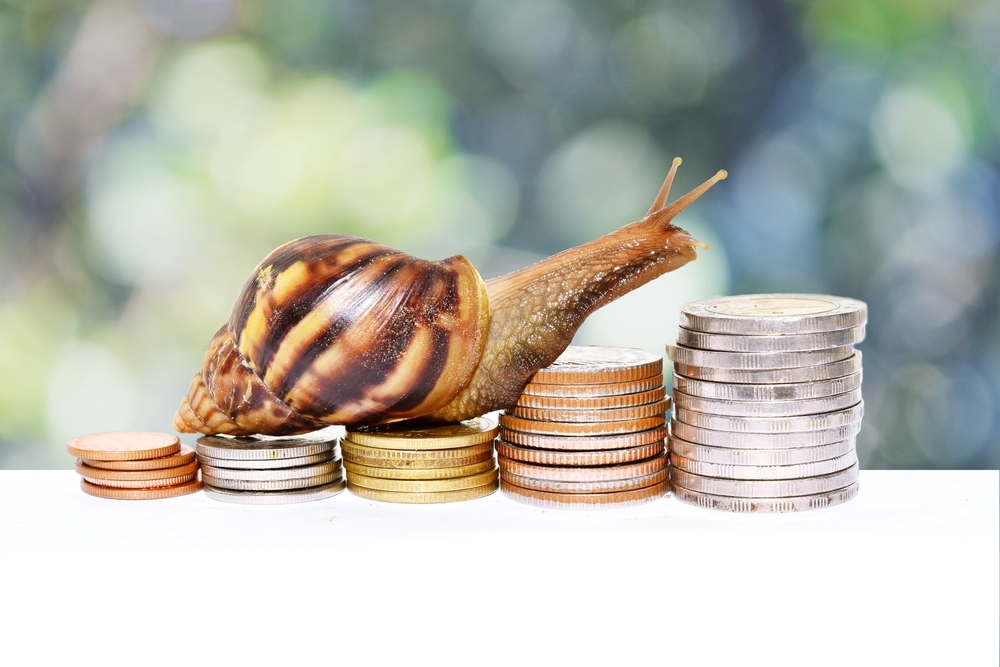
The countries of the European Union are proceeding slowly in allocating and spending the abundant funds made available to them by the EU cohesion policy for the 2021-2027 cycle. Although, as recently recalled by the European Commissioner for Cohesion Raffaele Fitto, "there is usually an acceleration in the second period compared to the initial phase", the comparison with the previous seven-year period is rather merciless.
Now halfway through the current cycle, at the end of 2024 only 5.4% of the 526.6 billion Euros planned had been spent, that is, less than half compared to the same period of the 2014-2020 cycle: at the end of 2017, in fact, 11.6% of the available resources had been spent, and in any case 51% of the funds had been allocated. Today, this last figure stops at 38.5% – in other words, it means 324 billion Euros of calls still to be published and contracts to be signed.
In any case, it will not all end in 2027: according to EU regulations, the implementation and spending of cohesion funds will be able to continue for at least one year within the previously approved programmes.
Spending in South-East Europe
Compared to countries such as Luxembourg and the Netherlands that have already been able to allocate over 70% of the funds at their disposal, at the end of 2024, over half of the Member States were below the EU average of the 2014-2020 programming period. 13 out of 27 countries were below the average of the current cycle, including Italy which was in third-last place.
Among the countries in south-eastern Europe that stand out for their ability to commit cohesion funds are Romania (57.9%) and Greece (55.6%); the latter has also already collected 11.1% of the 25.7 billion at its disposal.
On the other hand, it is worth noting the difficulties of Croatia (33% of resources committed, 3.6% spent) and Bulgaria (33.1% committed, 3.7% spent), but above all Slovenia, which of the 4.5 billion at its disposal has so far committed only 748 million (16.6%) and actually spent 64 million (1.4%).
The cohesion programmes in South-East Europe that are progressing the slowest include , for example, Bulgaria’s "Environment" programme, for which the EU has so far paid around 16 million Euros out of over 510 million planned, Romania’s "Social Inclusion" programme and Slovenia’s programme against material poverty (the EU has paid 300,000 Euros out of almost 15 million planned). On the other hand, the Bulgarian "Food and basic material support" programme and most of the cohesion programmes managed by Cyprus or Greece and its regions stand out positively.
Among the various cohesion funds, the one that is progressing the slowest overall in Italy and South-East Europe is the European Social Fund, for which so far just over half of what has been spent on the Cohesion Fund and the Agricultural Fund for Rural Development has been spent. A good portion of the IPA III funds – the "pre-accession assistance instrument" intended for candidate states to join the EU – and the Just Transition Fund have already been used by the countries in the region.
Still partial data
The data currently available indicate that Italy has managed to spend only 80% of the cohesion funds at its disposal in the 2014-2020 budget period. However, as some European officials who prefer to remain anonymous point out, "what the European Commission does not say is that those are not the final figures, which will only arrive at the end of 2026" after the derogation approved in 2024 that moved the payment closing date for that programming cycle by another two years. According to internal estimates by the EU executive, Italy should be able to spend "almost all of the funds. It could lose a few million, not billions", the same sources specify.
Even halfway through the 2021-2027 period, Italy appears to be in trouble, but not excessively compared to other Member States. Of the approximately 73.9 billion Euros planned, the funds currently committed stand at 18.5 billion (25.1%), while those actually spent were 2.9 billion (4%). 55.3 billion in funds still have to be allocated by the competent national and regional authorities.
The reasons for the slowness
The delays in the use of cohesion funds must be placed in the context of a seven-year period that is anything but ordinary. Both because the Covid-19 pandemic and the resulting socio-economic crisis have reshuffled the cards on the table also in terms of European funds made available to States and regions, and because the approach to cohesion funds is changing in Brussels – driven by a specific political will that comes directly from the President of the European Commission, Ursula von der Leyen.
When analysing the delays in the implementation of the programmes covered by the 2021-2027 cycle of cohesion policy, the impact of the implementation of the National Recovery and Resilience Plans (NRRP) should not be forgotten, which has affected the expenditure of the current budget period, as Commissioner Fitto himself recalled. In fact, the States have tended to give priority to the projects covered by the NRRP, given the closer deadline of this instrument (mid-2026) compared to that of the cohesion funds (end of 2029).
Always with a view to addressing the socio-economic consequences of the Covid-19 pandemic, in 2022 the European Commission also granted Member States the possibility of extending the use of cohesion funds allocated for the 2014-2020 period until the end of 2024. The planning and use of the funds of the current budget cycle have therefore overlapped with the management of the projects born in the previous cycle.
Prospects for the future
Despite the justifications for the current delays in spending cohesion funds, the outlook for the coming years remains at least partly problematic. Commissioner Fitto promised greater flexibility and simpler procedures to encourage the use of funds not yet spent, but specified that "transparency and controls must remain the same to prevent abuse".
However, there is a broader risk that should not be underestimated. For political reasons, the von der Leyen cabinet is making an effort to present cohesion policy – as it is currently structured – as less efficient than the PNRR and the previous cohesion cycles, "giving the impression that it is more difficult to spend the funds, when in fact this is not the case", warn several sources close to the dossier, who prefer to remain anonymous.
The ultimate goal of the President of the Commission would be to push as much as possible for greater centralisation of cohesion policy, so as to give the Commission direct control over the various programmes currently in the hands of individual States or regions.
This would be demonstrated, first of all, by the choice not to clearly state that the data currently available on the 2014-2020 funds that have remained unspent are still partial, favouring inaccurate readings of the partial data. Furthermore, the spokespersons of the Commission did not want to explain the reasons why the final evaluation on the 2014-2020 cycle of the cohesion policy has not yet been published (according to the legal deadlines, it should have been concluded by now), and also the 2021-2027 mid-term evaluation should already be public but instead this is not the case.
"Cohesion policy has several aspects to review, but there is no evidence to suggest that the current one does not work or is particularly slow. Indeed, academic studies show that it reduces territorial inequalities and spends continuously. Political will is also bending the more technical aspects", the sources note. Without forgetting the Commission’s push to divert at least part of some cohesion funds towards defence: "Fitto did not want it, but von der Leyen pushed to increase control over a topic that she directly supervises", they confirm.
This material is published in the context of the project "Cohesion4Climate" co-funded by the European Union. The EU is in no way responsible for the information or views expressed within the framework of the project; the sole responsibility for the content lies with OBCT.
Found an error in this article? Please contact our editorial team at redazione@balcanicaucaso.org.
Tag: Cohesion for Climate