
The 1425 days of Sarajevo
09/12/2020, Redazione
The General Framework Agreement for Peace in Bosnia and Herzegovina, signed at the military base in Dayton, Ohio, on 21 November and then formalised in Paris on 14 December 1995, decreed the end of the war in Bosnia and Herzegovina. The capital, Sarajevo, was held under siege for 1452 days, from 6 April 1992 to 29 February 1996. The story of those years in photographs, courtesy of photographer and journalist Mario Boccia to OBCT
© Mario Boccia









Aeroporto
View of Sarajevo airport, targeted throughout the conflict although under the protection of the UNPROFOR forces since June 1992. The photo was taken from inside the belly of a C 130 carrying humanitarian aid - © Mario Boccia
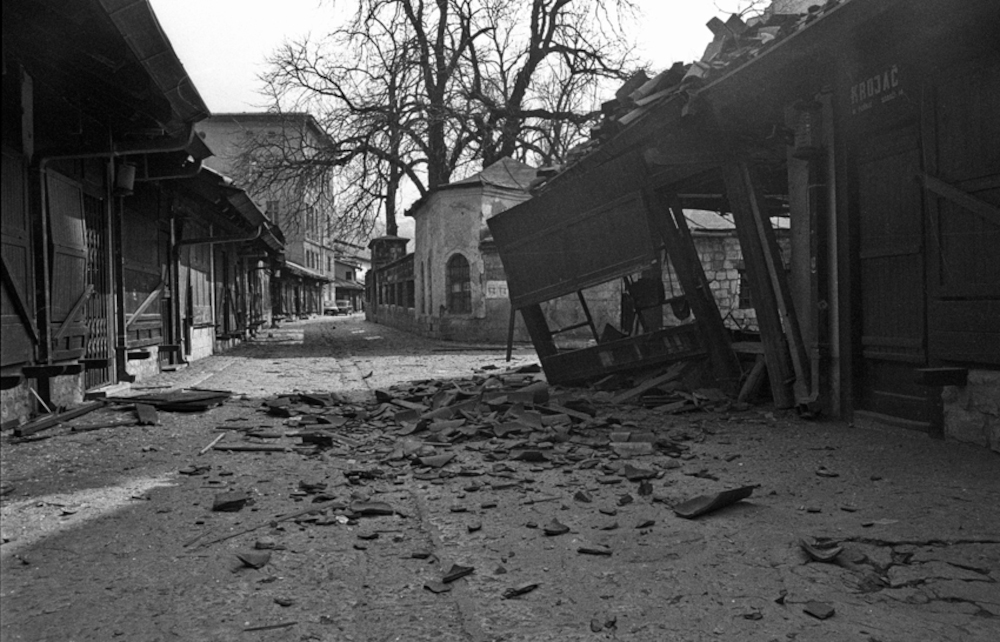
Bascarsija
The district of Baščaršija in July 1995 one month before Operation Deliberate Force, the aerial bombardment conducted by NATO against the Bosnian Serb forces between 30 August and 20 September - © Mario Boccia
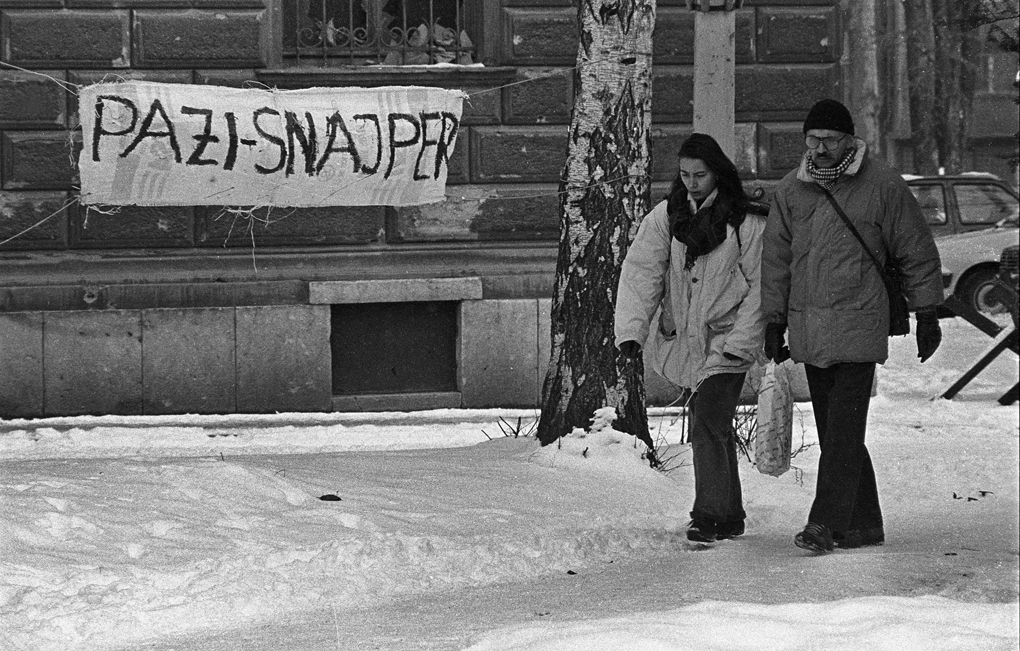
Attenzione
"Beware sniper", a sign warns citizens of danger at that precise point. In almost 4 years of siege, it is estimated that the city was under fire from almost 300 snipers - © Mario Boccia
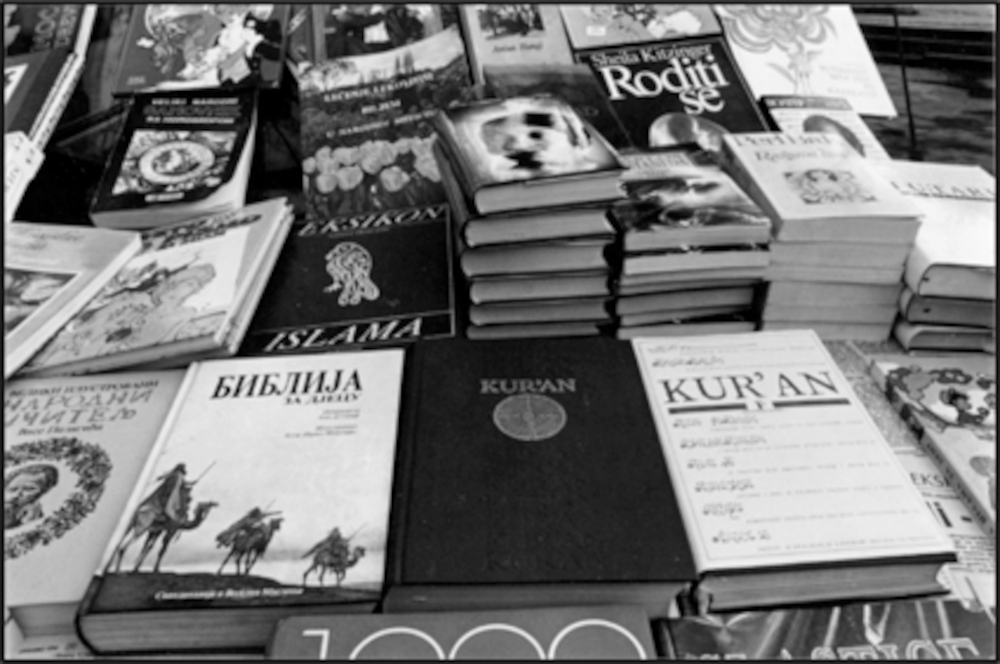
Bibbia-e-Corano
Three weeks before the siege, the Bible and the Koran placed side by side on the hood of a street vendor's car in the centre of Sarajevo, a symbol of coexistence - © Mario Boccia
Trasporto-acqua
Getting clean water was one of the daily chores. A stroller transformed into a vehicle to bring home the water distributed by UN tankers - © Mario Boccia
Bambino
A child in the Alipašino Polje neighbourhood, heavily hit by grenades. During the siege the victims were 11,541, including 1,600 minors - © Mario Boccia
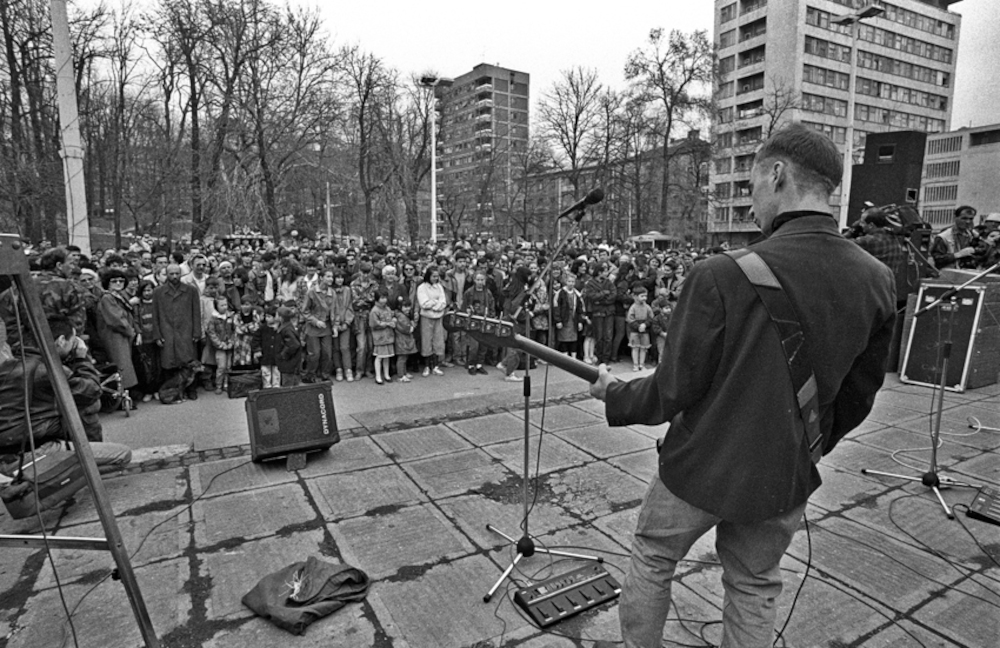
Concerto
1994, rock concert on the street. In December the British group Iron Maiden also arrives in Sarajevo, with a UN convoy, to play in solidarity with the population - © Mario Boccia
Folla-al-mercato
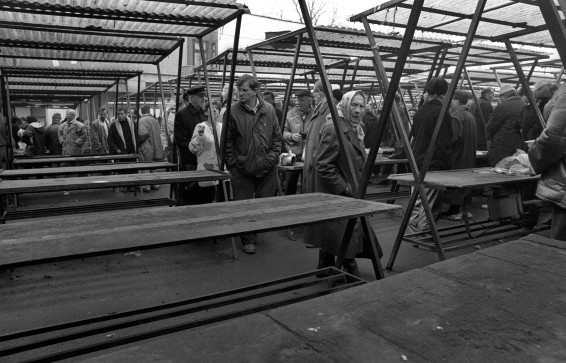
Crowd at the Markale open-air market, looking for the little food for sale in the city under siege, which had begun on 6 April 1992 and would last 1425 days - © Mario Boccia
Dobrinja
In February 1996 the end of the siege of Sarajevo was decreed. In the Dobrinja district, near the airport, only skeletons of houses and mined land remain standing - © Mario Boccia
Eroica
The city also resists with culture, continuing with exhibitions, theatrical performances, and concerts. In the photo, the Sarajevo Philharmonic plays Ludwig van Beethoven's Eroica - © Mario Boccia
Fioraia
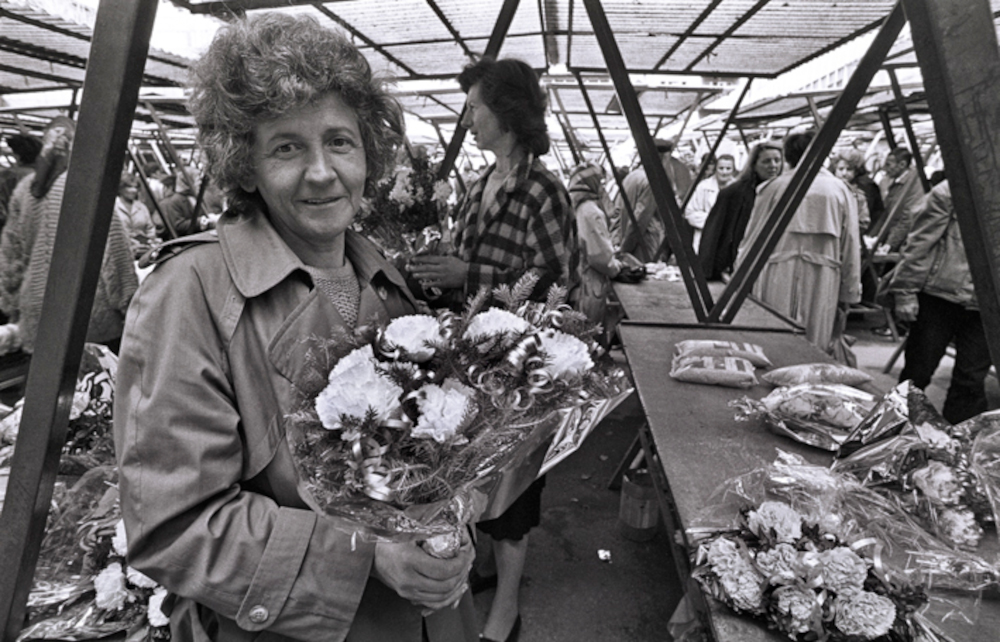
At the Markale market a woman sells paper flowers. Two major massacres took place here, caused by mortar fire, on February 5, 1994 and August 28, 1995 - © Mario Boccia
Holiday-Inn
"Dangerous area. Run or die", on the esplanade overlooking the Holiday Inn, the hotel where foreign journalists stayed during the siege to cover the conflict - © Mario Boccia
Ifor
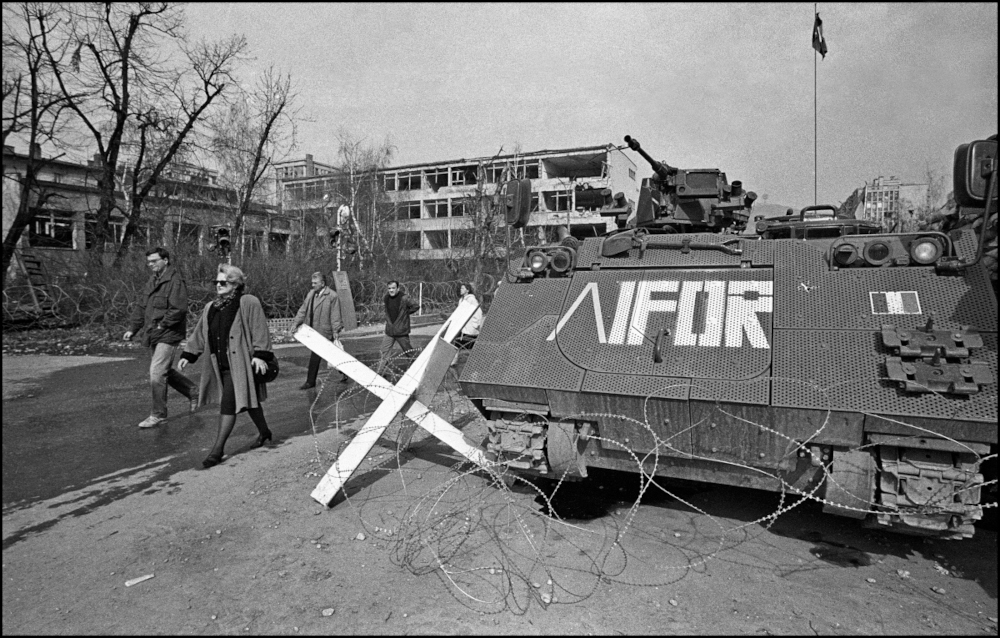
Since December 20, 1995, the multinational force IFOR (Implementation Force) took on the task of ensuring the application of the Peace Agreements which granted, among other things, freedom of movement for civilians - © Mario Boccia
Delegazione-italiana
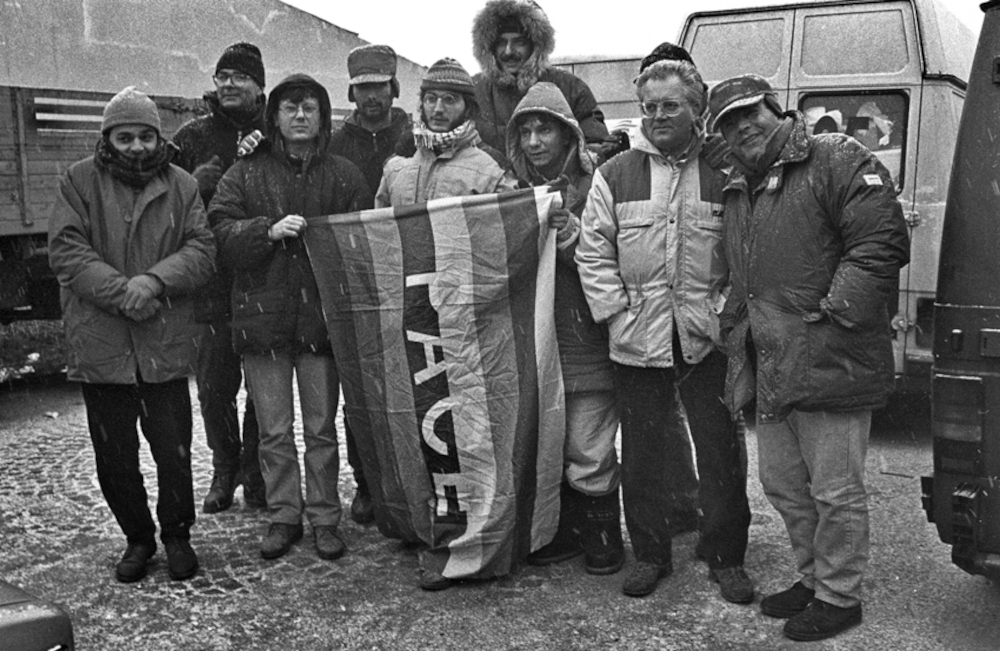
The delegation that on New Year's Day 1992 accompanied the first Italian convoy of humanitarian aid to Sarajevo, collected following the “Time for peace” caravan - © Mario Boccia
Biblioteca-facciata
The facade of the “Vijećnica” library. Destroyed in 1992, it was reconstructed with European funds and was only completed in May 2014 - © Mario Boccia
Lutto-1
"Rest in peace", reads the note left by the father of Igor Rehar, killed in the massacre of 5 February 1994 at the Markale market in which 68 people died and 142 were injured - © Mario Boccia
Biblioteca-nazionale
The interior of the "Vijećnica" national library, destroyed by fire grenades between 24 and 25 August 1992. Thousands of precious incunabula, books, and maps were burnt in the fire - © Mario Boccia
Pianoforte
The war is over, in application of the Dayton Peace Accords signed in December 1995, the city is reunified. In an apartment in the Grbavica district, all is left is a piano - © Mario Boccia
Postazione
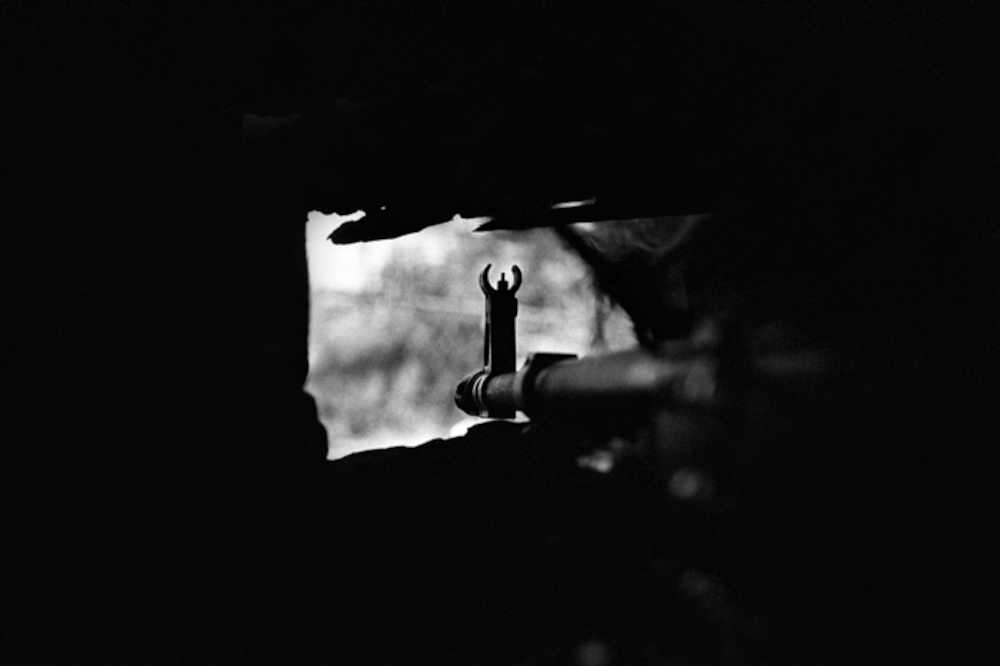
Sniper post on Mount Trebević, southeast of the city centre, where some of the 1984 Winter Olympics premises were built - © Mario Boccia
Prezzi
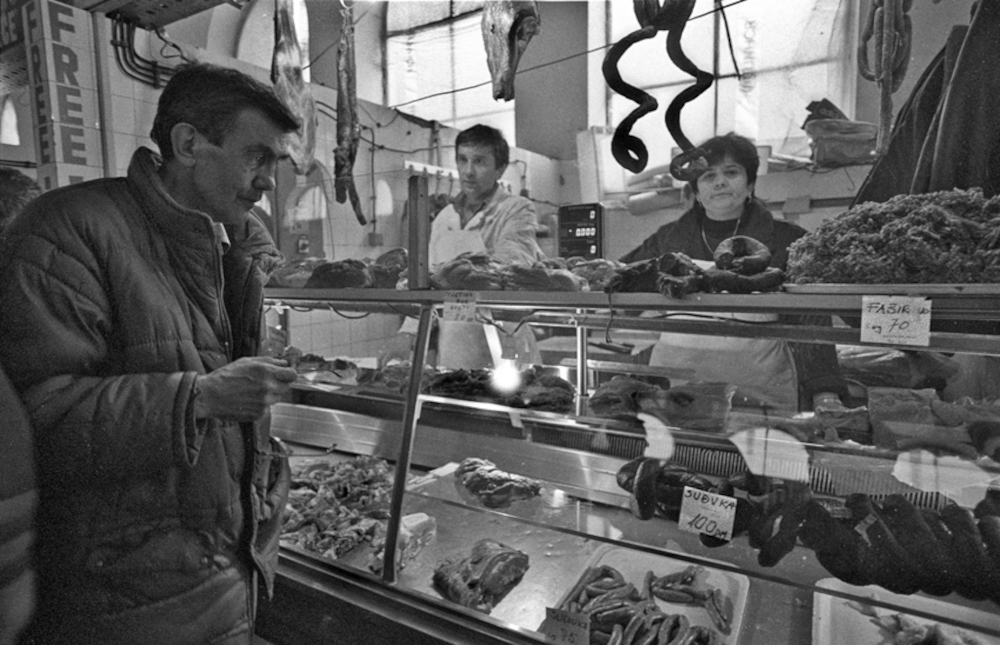
The little food for sale reached sky-high prices during the siege. In the photo: 1 kg of sausage sold for DM 100 (German marks, around 50 Euros), 1 kg of minced meat for 70 DM (35 Euros) - © Mario Boccia
Fila
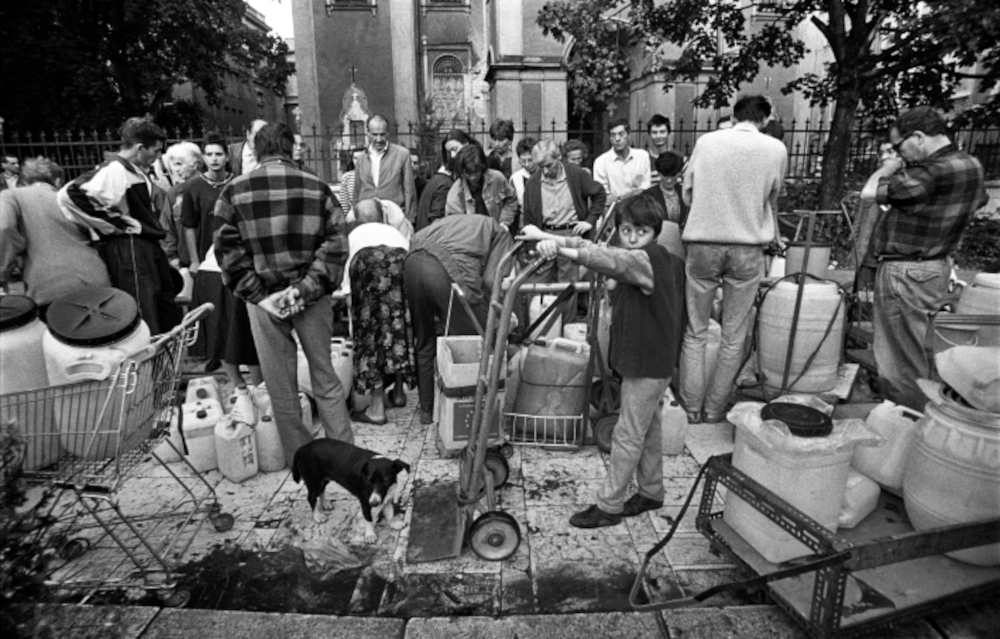
Since the beginning of the siege, all the houses in the city were left without drinking water. People would queue with canisters, near the Orthodox cathedral, next to the University of Economics - © Mario Boccia
Sacchi-di-sabbia
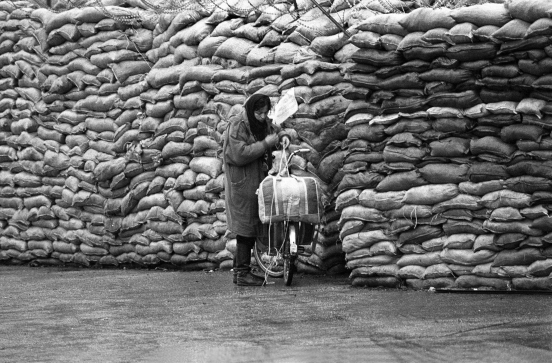
Sandbags to protect the UN headquarters in the PTT post office in the centre of Sarajevo - © Mario Boccia
Sorriso
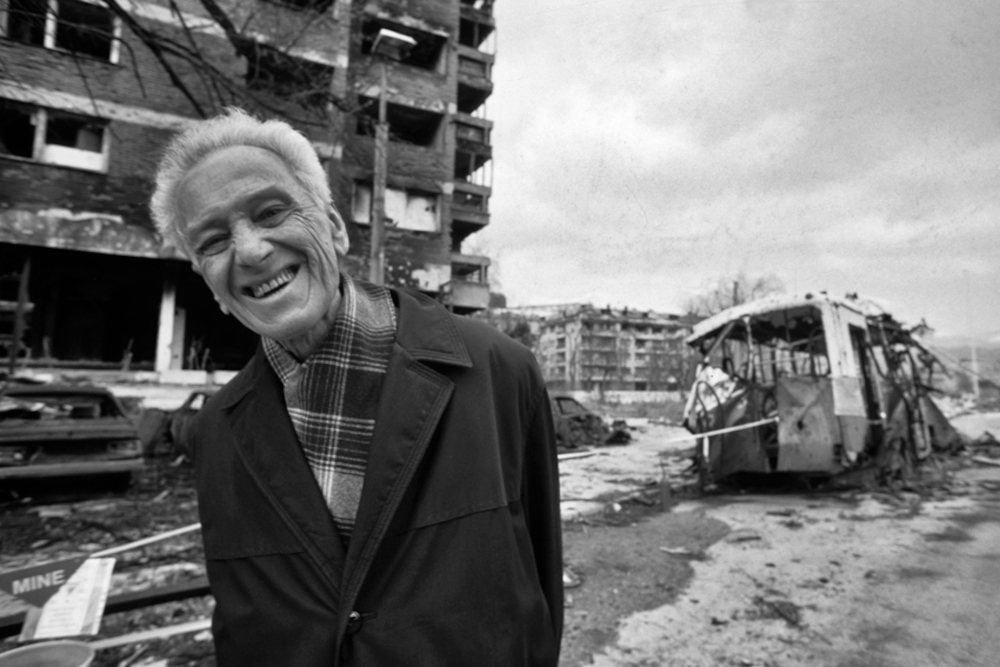
Despite the destruction and the sign indicating the presence of mines, a man smiles in the days of the end of the siege of the city that lasted almost 4 years - © Mario Boccia
Cecchino
A sniper targets passers-by in the streets of the city below, from the district of Grbavica which was under the control of Bosnian Serbs throughout the siege - © Mario Boccia
Grattacieli-UNIS
The two UNIS skyscrapers, built in 1980 in the Marijin Dvor district and nicknamed "Momo i Uzeir", after the names of the two protagonists of a humorous radio show - © Mario Boccia
Ultimatum
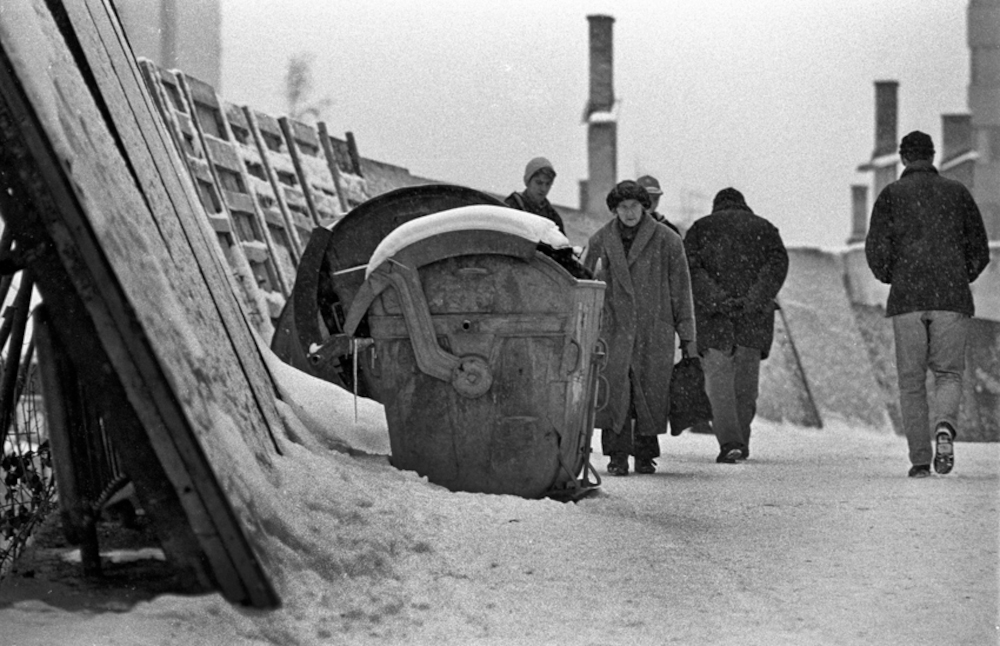
The third winter under siege, with temperatures below -20. The photo was taken in the days of the ultimatum sent by NATO to the besiegers, between 9 and 10 February 1994 - © Mario Boccia
Unprofor
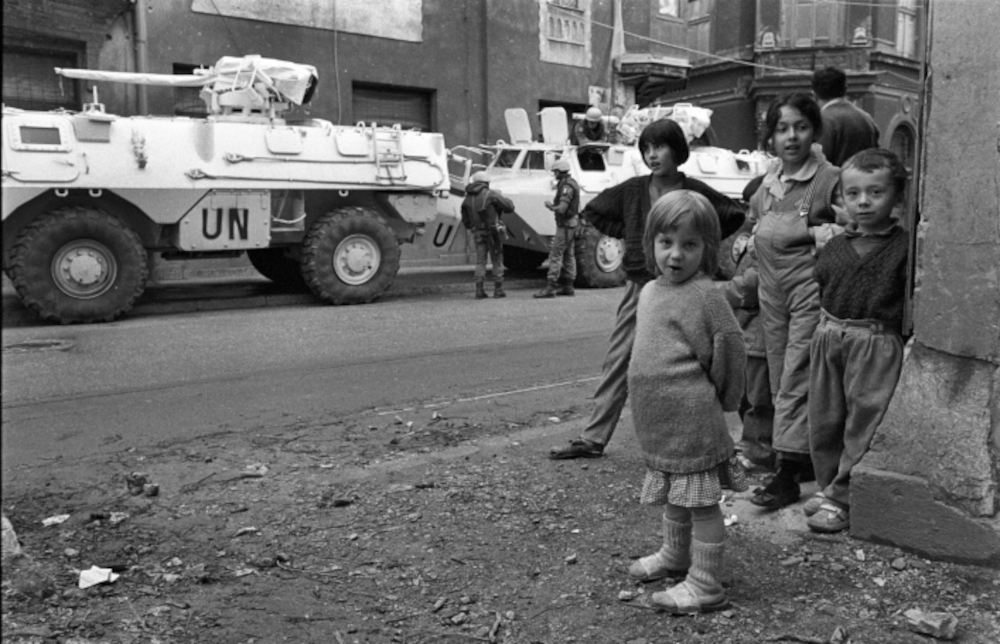
An armored car belonging to the United Nations Protection Force (UNPROFOR) established by the United Nations Security Council resolution of 21 February 1992 - © Mario Boccia
Orti
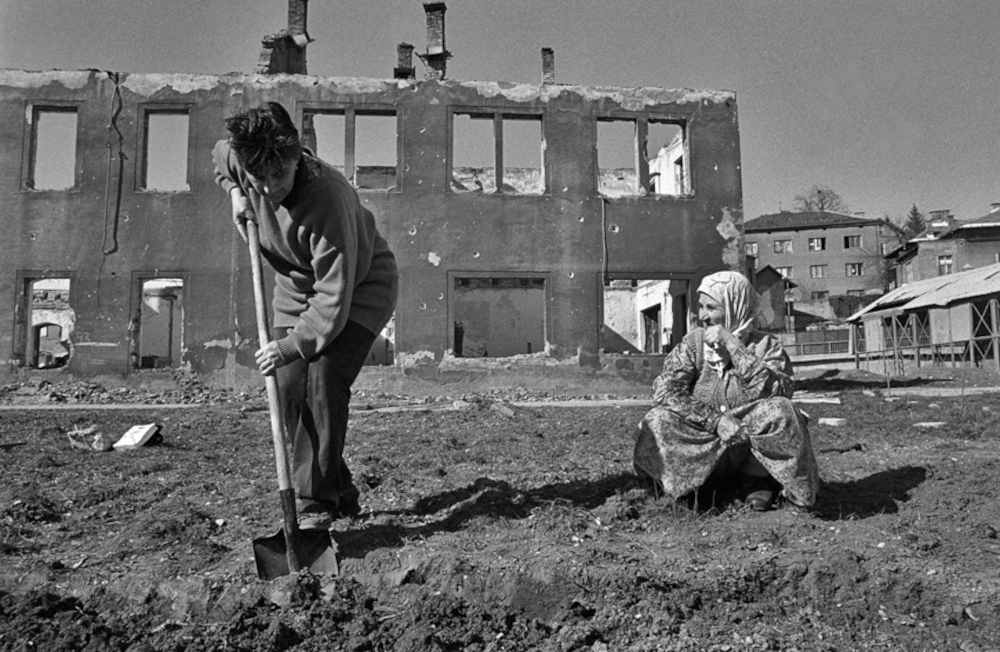
Pieces of land not exposed to snipers were used to create small vegetable gardens and try to grow tubers and vegetables to add to the little humanitarian aid - © Mario Boccia
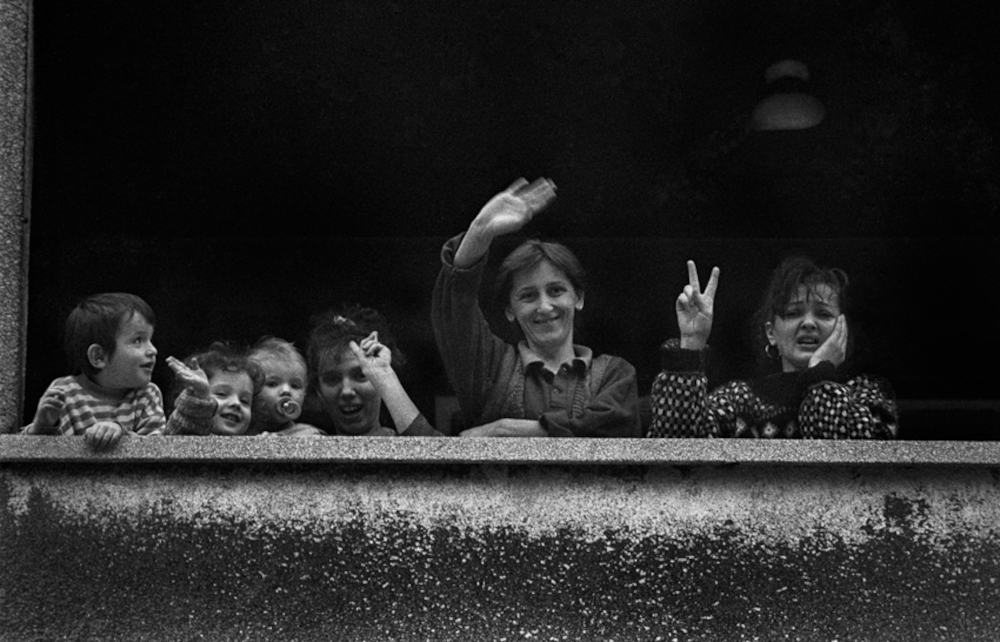
Saluto
Sarajevo citizens greet the 500 pacifists, mostly Italians, of the “Time for Peace” caravan which left from Ancona on 6 December 1992 and then entered the city on the evening of 10 December - © Mario Boccia
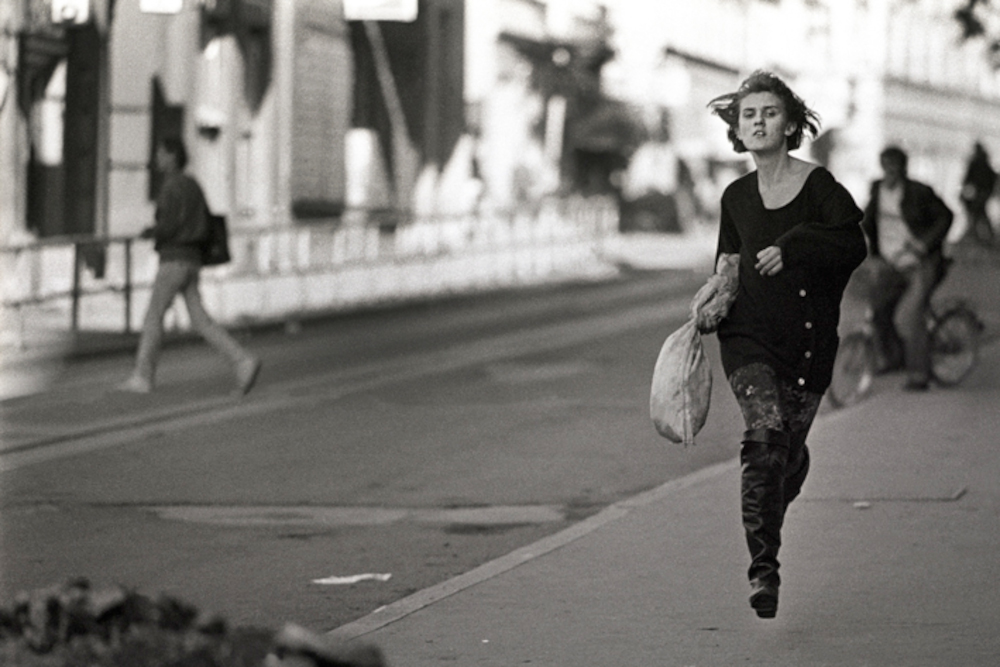
Ragazza
At every intersection or street visible to the snipers you need to run. The photo, taken along Marshal Tito Street, became famous with the title "Young woman running" - © Mario Boccia