Women and work: the challenges of marginal territories in South-East Europe

In Bulgaria, as in much of Southeastern Europe, advancing in the workforce is a hurdle race for women. A report from Radomir, where – also thanks to EU funding – new avenues and innovative approaches to the challenge are being sought
18/12/2025, Francesco Martino Radomir
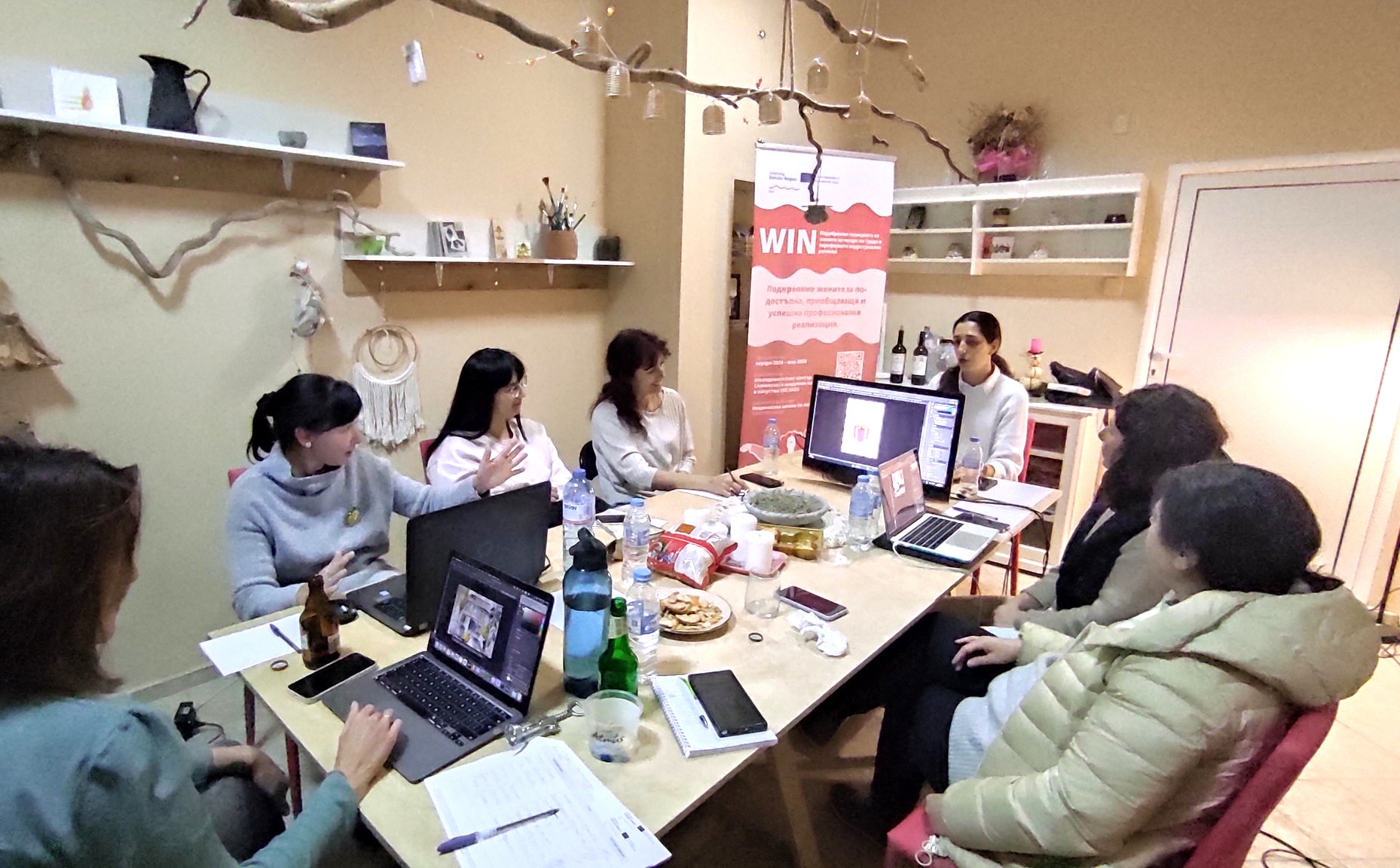
EdnaZaDruga, workshop © EdnaZaDruga

ednazadruga

EdnaZaDruga, workshop © EdnaZaDruga

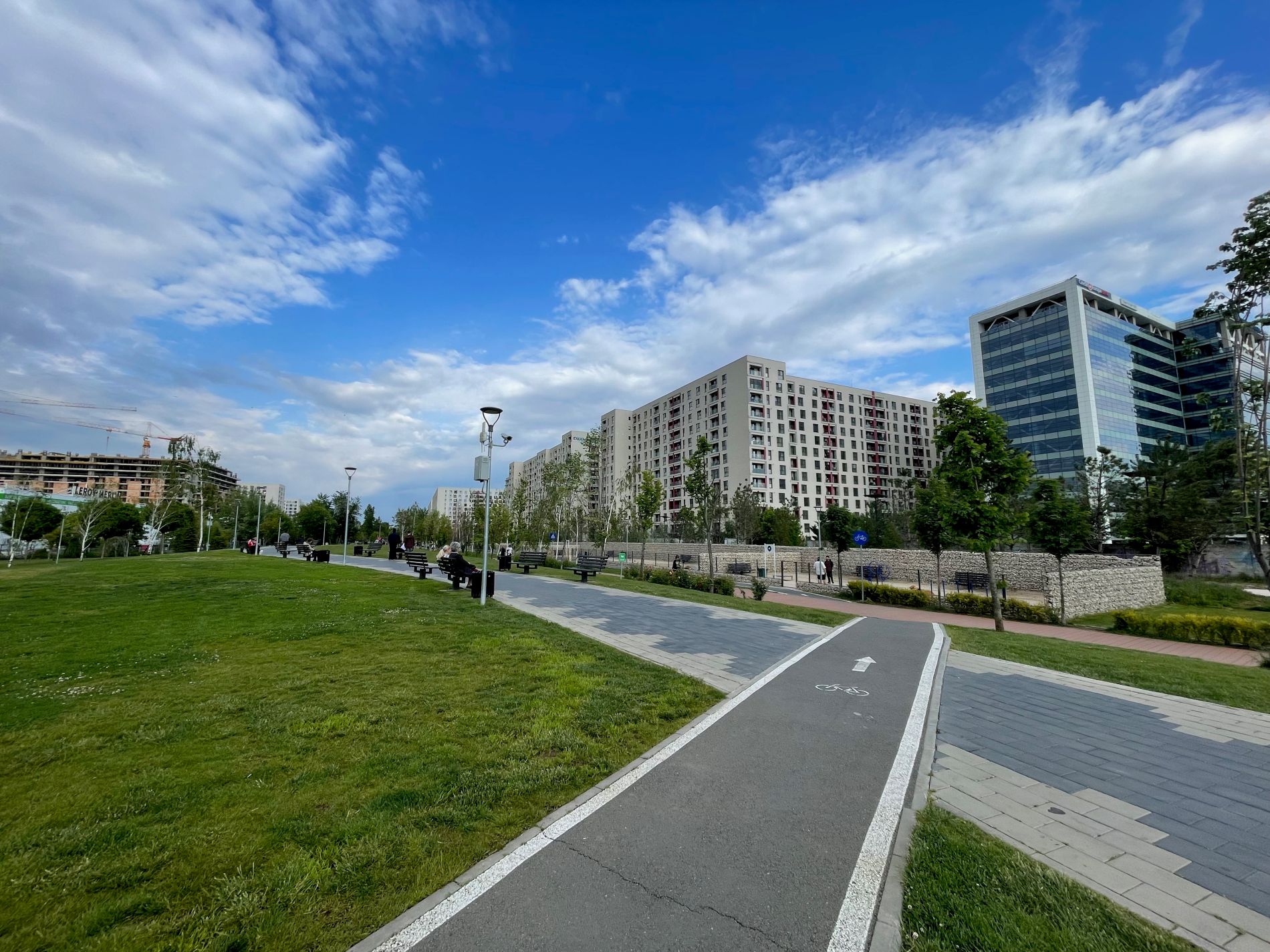
Coming from the capital Sofia, along the highway that passes through the mining and industrial center of Pernik, and then turns southwest toward the border with North Macedonia, Radomir suddenly appears, after a hill dotted with sparse conifers, with long rows of “panelki,” the tall prefabricated buildings typical of socialist architecture.

In Sofia, many “panelki” have been modernized, repainted, and covered with insulation. In Radomir, a town of just over 10,000 inhabitants, with a history tied to mining and heavy industry, most of the tall buildings show signs of aging. A small but important clue that betrays the difficult history of the town, which has only recently experienced a period of slow economic and social recovery.

After passing the reinforced concrete giants, once built for the needs of miners and workers, comes a maze of narrow streets that descend rapidly toward a tributary of the Struma River. Here, in her workshop, on the ground floor of a house overlooking the street, I meet Snezhana Mitseva, one of the driving forces behind the women’s association “EdnaZaDruga”.

“Being a woman, a worker, and a mother in a town like Radomir is not easy,” she tells me, surrounded by the handmade objects she crafts with dedication and passion. “Yes, it may seem like a stereotype, but neither the institutions nor society as a whole are truly ready to support women who want to grow professionally and create new opportunities, especially if they have one or more children to care for.”

Snezhana herself has two children and knows what she’s talking about from personal experience: after the long and lingering shadow of the Covid pandemic, despite having a background in information technology, she decided to turn her passion for craftsmanship into a new challenge, dedicating herself wholeheartedly to the production of various handmade products, from scrapbooking (a creative art that involves creating personalized memory albums by decorating pages with photographs, clippings, drawings, stamps, and stickers) to objects made from fabrics and recycled materials.

“This is the path I try to show the women who have embarked on the ‘EdnaZaDruga’ adventure: the opportunity to develop their talent and inspiration for personal growth and a potential career path,” Snezhana continues. “Perhaps initially as a sideline to one’s main profession, but in any case as a tool to remain open to new things and to challenge oneself.”

“EdnaZaDruga” (meaning both “One for the other” and “A community”) was founded in early 2025 as an “innovative group” within the framework of the European cohesion project WIN (see box), a transnational initiative supported by EU cohesion funds. Its primary objective is to support the professional growth of women in peripheral areas affected by deindustrialization in the Danube macro-region, just like Radomir.

The women of the association meet regularly in a small but carefully furnished room not far from Snezhana’s studio. Here, Snezhana herself and the group’s four other mentors alternate lessons and workshops, ranging from custom jewelry making to graphic design work with Photoshop. It’s difficult to paint a collective portrait of the association’s members: usually, however, they are women over 35, with children, and perhaps with part-time jobs which allow them to care for their families.

Natural soap production © EdnaZaDruga

Natural soap production © EdnaZaDruga

“In cities like Pernik and Radomir, job opportunities are limited. Those who want to grow usually commute to Sofia. For a woman with children, however, this is not an option, and everything becomes more complicated,” Iana Avramova, trainer, therapist, and coordinator between the project team and the women of “EdnaZaDruga,” explains to me in her office/ workshop in the heart of the Bulgarian capital.

For Avramova, one of the main challenges of the project – along with the now chronic institutional instability in Bulgaria, a country that veers from election to election and from political crisis to political crisis – was to identify an approach that could respond to the real needs and potential of the local community.

“It’s always complex to translate a framework project from theory to practice. For Radomir, we quickly realized that the way forward was to create and support group activities that could open the doors to what I call ‘comprehensive small entrepreneurship’,” argues Avramova. “A method capable of creating opportunities that support the independence – financial, but also psychological – of the women involved.”

If we look further, the situation in the workplace for Bulgarian women remains complex, with ups and downs, and some underlying structural problems. The level of female employment in the country is higher than the European average, thanks to a labor market that is now almost at full capacity (the overall unemployment rate was just 3.5% in October 2025). However, the gender gap, the average difference in wages between men and women, is 12%, in line with the rest of the EU.

Women in Bulgaria tend to be employed in services, public sector, education, and social services, but less frequently in management roles. According to a 2023 report, the share of women in management roles in Bulgaria is growing, but remains below the EU average (18.3% versus 33.8%). Beyond the labor market, women in Bulgaria face greater social vulnerability and a significantly higher risk of poverty than men.

These statistics are easily observed on the ground in Radomir and the region. After the collapse of the socialist kombinat “Chervena Mogila” (“Red Hill”), one of the regime’s most ambitious and unsuccessful industrial complexes, and a long period of deindustrialization and depopulation, several international companies producing electrical components and pharmaceutical products have been rapidly expanding in the city. There are also jobs for women in the new factories, but usually in lower-paid positions.

“It’s not easy to predict the concrete and immediate impact of a project like WIN: our efforts and attention, however, are entirely focused on sustainability, ensuring that the resources deployed can bear lasting fruit,” says Avramova with conviction. “That’s why we enthusiastically supported the decision of the women of Radomir to create their own association, which can become a point of reference and dialogue with local institutions, which have proven unexpectedly receptive.”

“We are not only struggling with economic factors and difficulties, but also social and cultural ones,” echoes Mitseva from her studio, as the low December sun descends over the dark peaks of the Osogovo massif in the distance. “In a still traditional reality like ours, with rather rigid social roles and expectations, moments dedicated to ourselves, to grow, can be small revolutions,” she maintains with conviction. “Especially if we can support each other, lend a hand, be there for each other.”

Launched in 2024 with a budget of €1,934,900, 80% supported by Interreg funds, the WIN (Women in the labour markets of peripheral INdustrial regions) project brings together ten partners in seven different countries in the Danube region. The project’s main objective is to improve the socioeconomic position of women in marginal regions by creating opportunities for professional growth in an innovative way. In 2025, WIN has been officially recognised as a “flagship initiative” of the Macro-Strategy for the Danube Region under the priority area “People and Skills” of the EU Strategy for the area.

This publication has been produced within the EuSEE project, co-funded by the European Union. Views and opinions expressed are however those of the author(s) only and do not necessarily reflect those of the granting authority and the European Union cannot be held responsible for them.

Women and work: the challenges of marginal territories in South-East Europe

In Bulgaria, as in much of Southeastern Europe, advancing in the workforce is a hurdle race for women. A report from Radomir, where – also thanks to EU funding – new avenues and innovative approaches to the challenge are being sought

18/12/2025, Francesco Martino Radomir
EdnaZaDruga, workshop © EdnaZaDruga

ednazadruga

EdnaZaDruga, workshop © EdnaZaDruga

Coming from the capital Sofia, along the highway that passes through the mining and industrial center of Pernik, and then turns southwest toward the border with North Macedonia, Radomir suddenly appears, after a hill dotted with sparse conifers, with long rows of “panelki,” the tall prefabricated buildings typical of socialist architecture.

In Sofia, many “panelki” have been modernized, repainted, and covered with insulation. In Radomir, a town of just over 10,000 inhabitants, with a history tied to mining and heavy industry, most of the tall buildings show signs of aging. A small but important clue that betrays the difficult history of the town, which has only recently experienced a period of slow economic and social recovery.

After passing the reinforced concrete giants, once built for the needs of miners and workers, comes a maze of narrow streets that descend rapidly toward a tributary of the Struma River. Here, in her workshop, on the ground floor of a house overlooking the street, I meet Snezhana Mitseva, one of the driving forces behind the women’s association “EdnaZaDruga”.

“Being a woman, a worker, and a mother in a town like Radomir is not easy,” she tells me, surrounded by the handmade objects she crafts with dedication and passion. “Yes, it may seem like a stereotype, but neither the institutions nor society as a whole are truly ready to support women who want to grow professionally and create new opportunities, especially if they have one or more children to care for.”

Snezhana herself has two children and knows what she’s talking about from personal experience: after the long and lingering shadow of the Covid pandemic, despite having a background in information technology, she decided to turn her passion for craftsmanship into a new challenge, dedicating herself wholeheartedly to the production of various handmade products, from scrapbooking (a creative art that involves creating personalized memory albums by decorating pages with photographs, clippings, drawings, stamps, and stickers) to objects made from fabrics and recycled materials.

“This is the path I try to show the women who have embarked on the ‘EdnaZaDruga’ adventure: the opportunity to develop their talent and inspiration for personal growth and a potential career path,” Snezhana continues. “Perhaps initially as a sideline to one’s main profession, but in any case as a tool to remain open to new things and to challenge oneself.”

“EdnaZaDruga” (meaning both “One for the other” and “A community”) was founded in early 2025 as an “innovative group” within the framework of the European cohesion project WIN (see box), a transnational initiative supported by EU cohesion funds. Its primary objective is to support the professional growth of women in peripheral areas affected by deindustrialization in the Danube macro-region, just like Radomir.

The women of the association meet regularly in a small but carefully furnished room not far from Snezhana’s studio. Here, Snezhana herself and the group’s four other mentors alternate lessons and workshops, ranging from custom jewelry making to graphic design work with Photoshop. It’s difficult to paint a collective portrait of the association’s members: usually, however, they are women over 35, with children, and perhaps with part-time jobs which allow them to care for their families.

Natural soap production © EdnaZaDruga

Natural soap production © EdnaZaDruga

“In cities like Pernik and Radomir, job opportunities are limited. Those who want to grow usually commute to Sofia. For a woman with children, however, this is not an option, and everything becomes more complicated,” Iana Avramova, trainer, therapist, and coordinator between the project team and the women of “EdnaZaDruga,” explains to me in her office/ workshop in the heart of the Bulgarian capital.

For Avramova, one of the main challenges of the project – along with the now chronic institutional instability in Bulgaria, a country that veers from election to election and from political crisis to political crisis – was to identify an approach that could respond to the real needs and potential of the local community.

“It’s always complex to translate a framework project from theory to practice. For Radomir, we quickly realized that the way forward was to create and support group activities that could open the doors to what I call ‘comprehensive small entrepreneurship’,” argues Avramova. “A method capable of creating opportunities that support the independence – financial, but also psychological – of the women involved.”

If we look further, the situation in the workplace for Bulgarian women remains complex, with ups and downs, and some underlying structural problems. The level of female employment in the country is higher than the European average, thanks to a labor market that is now almost at full capacity (the overall unemployment rate was just 3.5% in October 2025). However, the gender gap, the average difference in wages between men and women, is 12%, in line with the rest of the EU.

Women in Bulgaria tend to be employed in services, public sector, education, and social services, but less frequently in management roles. According to a 2023 report, the share of women in management roles in Bulgaria is growing, but remains below the EU average (18.3% versus 33.8%). Beyond the labor market, women in Bulgaria face greater social vulnerability and a significantly higher risk of poverty than men.

These statistics are easily observed on the ground in Radomir and the region. After the collapse of the socialist kombinat “Chervena Mogila” (“Red Hill”), one of the regime’s most ambitious and unsuccessful industrial complexes, and a long period of deindustrialization and depopulation, several international companies producing electrical components and pharmaceutical products have been rapidly expanding in the city. There are also jobs for women in the new factories, but usually in lower-paid positions.

“It’s not easy to predict the concrete and immediate impact of a project like WIN: our efforts and attention, however, are entirely focused on sustainability, ensuring that the resources deployed can bear lasting fruit,” says Avramova with conviction. “That’s why we enthusiastically supported the decision of the women of Radomir to create their own association, which can become a point of reference and dialogue with local institutions, which have proven unexpectedly receptive.”

“We are not only struggling with economic factors and difficulties, but also social and cultural ones,” echoes Mitseva from her studio, as the low December sun descends over the dark peaks of the Osogovo massif in the distance. “In a still traditional reality like ours, with rather rigid social roles and expectations, moments dedicated to ourselves, to grow, can be small revolutions,” she maintains with conviction. “Especially if we can support each other, lend a hand, be there for each other.”

Launched in 2024 with a budget of €1,934,900, 80% supported by Interreg funds, the WIN (Women in the labour markets of peripheral INdustrial regions) project brings together ten partners in seven different countries in the Danube region. The project’s main objective is to improve the socioeconomic position of women in marginal regions by creating opportunities for professional growth in an innovative way. In 2025, WIN has been officially recognised as a “flagship initiative” of the Macro-Strategy for the Danube Region under the priority area “People and Skills” of the EU Strategy for the area.

This publication has been produced within the EuSEE project, co-funded by the European Union. Views and opinions expressed are however those of the author(s) only and do not necessarily reflect those of the granting authority and the European Union cannot be held responsible for them.

Comment and share

OBCT's Newsletter

To your inbox every two weeks