Western Balkans, strong institutions needed to fight corruption
The formal alignment with EU public procurement rules is bypassed by Western Balkans’ adoption of special laws, triggering risks of favoritism and corruptive practices. “EPPO’s jurisdiction should be part of the accession treaty”, declares Miloš Pavković, Chief Strategist at European Policy Center (CEP) in Belgrade
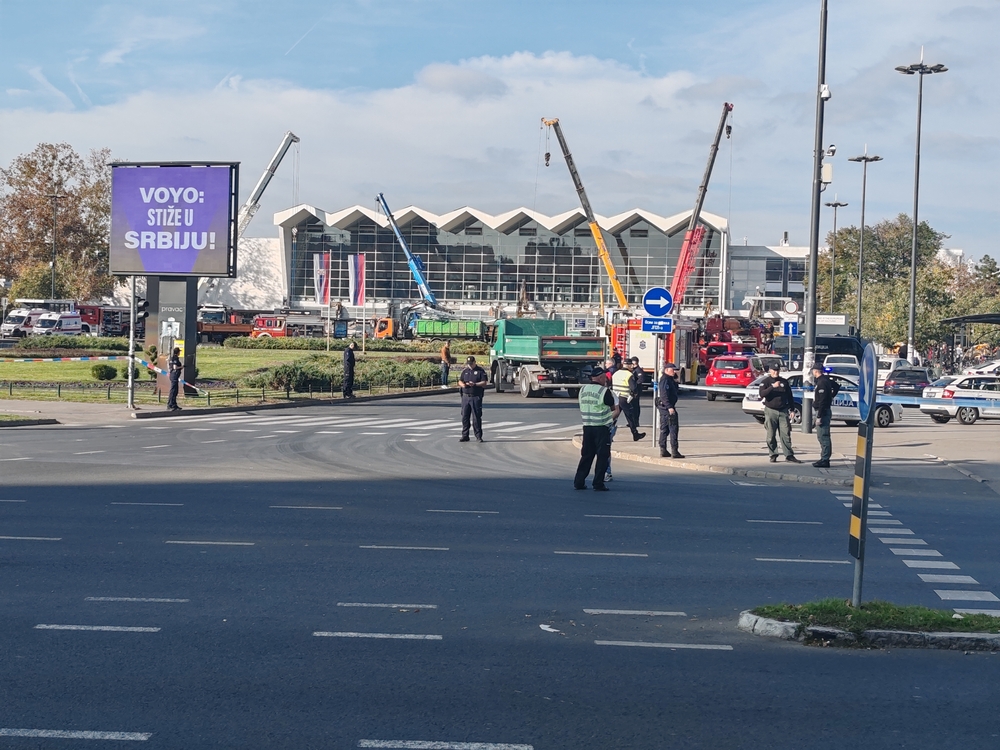
Novi Sad, Serbia, after the collapse of the station shelter
Novi Sad, Serbia, after the collapse of the station shelter © Dusanka Ljubojevic/Shutterstock
The fight against corruption is a cornerstone in the EU accession process of the Western Balkans. You have analysed the public procurement systems of the region. How positive are the results?
The public procurement systems in the region are vulnerable to corruptive practices. The EU Directive 2014/24 on public procurement foresees that all tender procedures should be open to competition. All exceptions must be narrowly defined, in line with the principles of proportionality, transparency,open competition, equal treatment and non-discrimination.
In the case of Serbia, one of the major problems is the bypassing of competitive procedures envisaged by the public procurement law. As shown in our paper, Serbia applies two exceptions to public procurement. The first refers to lex specialis, namely special laws for given projects, bypassing completely the competitive procedures. No public tender, no e-procurement portal, no competition. In almost all cases, the project is assigned through direct negotiations. The second optimal exception is signing international bilateral agreements, for instance with China, but there can also be the US or the United Arab Emirates. The agreement explicitly states that the project will not be subject to public procurement law, and sometimes even the contractors are already mentioned therein. In the case of Serbia, almost all big infrastructure projects are, as a rule, excluded from the public procurement law.
Instead, in Albania, there are in place the public-private partnership concessions and the law on strategic investments that enables the government, upon request of strategic investors, to adopt individual contracts through specialised law.
This is generally a widespread practice also in North Macedonia. Whereas Montenegro, Kosovo and Bosnia Herzegovina roughly follow these narrowly defined exemptions, as is the case in other EU member states.
Can you provide an example of a big infrastructure project?
The most notorious case is the Belgrade Waterfront, a project carried out by the United Arab Emirates and related companies. Another example is the railway project linking Novi Sad to Budapest or the Novi Sad railway station built as part of a deal with the International Limited China.
When you have an international agreement, it is kept secret or key elements are not publicly available. So you don’t know what the value is, and there is enough room to inflate the project value. It’s very hard to monitor by both civil society and public institutions. The Public Procurement Office doesn’t have the mandate to act, and the public prosecution can act only when a tragedy happens, like in the Novi Sad railway station collapse.
Is Montenegro instead more advanced in this regard?
Montenegro actually closed the negotiation of Chapter 5 on public procurement last June as part of the accession negotiations with the EU. This is a strong signal that it has a very good level of preparedness in this area. However, after the closure of the chapter, there emerged a problematic treaty signed with the United Arab Emirates on a coastline project, which was criticised by experts and served as a warning for Montenegro. The negotiations on Chapter 5 can be reopened again, since they are still provisionally closed. Therefore, Montenegro needs to be careful and prove to keep a good track record by the date of accession.
Your organisation has been the proponent of gradual integration of the Western Balkans to the EU. Can you elaborate on this idea…
Our idea of gradual integration, or the so-called “stage accession model”, aims to bring the Western Balkans or generally all candidate countries, to the EU. In socio-economic terms, we argue that the EU needs to secure more funding for the candidate countries in order for them to catch up with the rest of the member states. But in the meantime, the EU came up with the new instrument – the Growth Plan, which mostly covers our idea of increased funding. What we also advocate for is greater institutional participation. We propose that the candidate countries be integrated more closely even ahead of formal EU membership. In that regard, we propose institutional integration – that representatives of candidate countries, based on merit, should participate in the meetings of the EU institutions, without voting rights, but with the right to present their views on certain issues, especially concerning our region. This is important, in view of future membership, our administration needs to familiarise on how the EU functions, and how it can meet its obligations.
You mentioned the Growth Plan. How are the countries performing with their reform agendas?

Miloš Pavković – (Private archive)
The reform agenda is very structured, with concrete policies and a list of reforms and steps that each country should follow. From this perspective, it looks like it has much higher potential than the previous EU conditionality and the instrument for pre-accession, because the disbursement of each tranche of funds by the EU is closely linked to the achievement of these concrete reforms. Basically, no money is given without the implementation of reforms. So that is a good principle to start with.
In comparative terms, the respective countries’ reform agendas are very ambitious and have a strong transformative potential, if effectively implemented in the next two years. They can really change how things are functioning, especially in terms of fundamental areas, like the rule of law, the fight against corruption or public procurement, that really matter to the citizens, but also are instrumental for these countries in order to join the EU. On anticorruption, there are 32 measures across WB6 in all the region’s reform agendas.
Montenegro is a country leading in the accession negotiations and in the overall performance in the reform agenda, while Albania is following. Montenegro has officially fully implemented 12 reform steps and closed 13 chapters in accession negotiations, while Albania has implemented 21 reform steps and opened all 35 chapters across six clusters in accession negotiations in less than two years. This is a concrete and positive example of how the reform agenda can positively influence change in the region.
Which country is lagging instead?
Albania and Montenegro are leading the way, while Serbia and North Macedonia remain behind with respectively 3 and 6 reform measures implemented. Serbia has implemented some commitments, while others have been only partially or not at all. I would say that Kosovo and Bosnia Herzegovina are lagging behind. Kosovo adopted the reform agenda in 2024 and went through a difficult political situation over the past year. There was no progress whatsoever, especially in the anti-corruption area. In Kosovo, I think that there is a disillusionment with the EU since its membership application has been closed in a drawer since 2022.
Regarding Bosnia Herzegovina, there is an incentive to progress ahead. BiH is the last country to adopt its reform agenda, in the final quarter of 2025. In my point of view, when taking a look at the relations between Sarajevo and Brussels, it looks like it’s more important for Brussels to move things forward than it is for Sarajevo unfortunately. Brussels granted the opening of accession negotiations, but then nothing was done on the part of Sarajevo, so no actual clusters were open. Of course, there was political instability in BiH and the issue with the Republica Srpska leadership, but it looks like there are better grounds for 2026, with a new president replacing Milorad Dodik.
You have been working on the EU investigative agencies, particularly the European Public Prosecutor’s Office (EPPO). Does it have a role in the Balkans?
EPPO has extraterritorial jurisdiction, meaning it can have jurisdiction in any country where European money has been disbursed and then misused. Coming back to the case of the railway station collapse in Novi Sad, an EPPO investigation is going on in Serbia, since it looks like there were some European funds spent there as well. This was confirmed by the European public prosecutor Laura Kovesi. Even in the case that EPPO doesn’t have jurisdiction, it can ask the local public prosecution to cooperate. In case this cooperation request is refused, and now I’m going back to gradual integration, what we are advocating for is, of course, to increase national judicial cooperation with EPPO. To date, some countries like Montenegro have already signed cooperation agreements with EPPO, but Serbia is not among them. We propose that all future enlargement countries need to accept EPPO’s jurisdiction as part of the accession treaty, so let’s say it falls under some kind of gradual integration. As of now, EPPO has jurisdiction in 24 member states out of 27, for instance, Denmark and Ireland have opt-out clauses in force.
There have been a lot of arrests of famous political figures in the region. How do you assess it?
When you read reform agendas, every single country in the Western Balkans is committed to tackling corruption. It includes a proven track record in investigations, indictments, prosecution and final court decisions in the cases of corruption, including high-level. Not in all, but in several countries of the region, something has happened in this direction. In Montenegro, the former minister of defence was arrested on charges of corruption. In Serbia, in this past year, we have had a wave of anti-corruption arrests, but maybe Serbia is not the best example because it came directly after President Vucic, in a press conference, stated that the country will start fighting corruption. Suddenly, after his statement, public prosecutors’ offices around the country started indicting people. The most famous political figures are the former minister of transport and infrastructure of the previous government, arrested due to the Novi Sad railway station collapse, but also the former mayor of Nish, one of the biggest cities in southern Serbia. Some arrests have also taken place in Albania, for instance, the mayor of Tirana. There are no final court decisions yet, but something is happening. In Kosovo, I haven’t seen any notable examples of arrests, while North Macedonia looks like it is not interested in fighting corruption at least at this moment, although they also have this commitment to tackle corruption as part of their reform agenda.
I’m always afraid of these politically driven moves…
That’s a fair concern, especially in Serbia, where the trust in public institutions is really low and when the signal comes from the president, then you start to doubt. In other countries, of course, it can also be some kind of political fight between political opponents. We have to be careful and that’s why we need strong institutions that do their job with integrity. If there are no fair processes and strong independent institutions, then fighting against corruption is a mockery, only a showcase for the EU.
This article has been written within the project “InteGraLe - Western Balkans vi-à-vis the Trio: single market, cohesion and regional policy for gradual integration into the EU ”. This project is realized with the support of the Unit for Analysis, Policy Planning, Statistics and Historical Documentation - Directorate General for Political Affairs and International Security of the Italian Ministry of Foreign Affairs and International Cooperation, in accordance with Article 23 ‒ bis of the Decree of the President of the Italian Republic 18/1967. The views expressed in this article are solely those of the authors and do not necessarily reflect the views of the Ministry of Foreign Affairs and International Cooperation.