Ukraine in Orbán’s crosshairs
A few days before the Hungarian elections on April 12, Budapest and Kyiv find themselves at the center of a diplomatic crisis involving the EU. To understand this, we need to take a few steps back: the Hungarian minority in the Ukrainian region of Transcarpathia and the evolution of relations between the two countries
shutterstock_2390269749
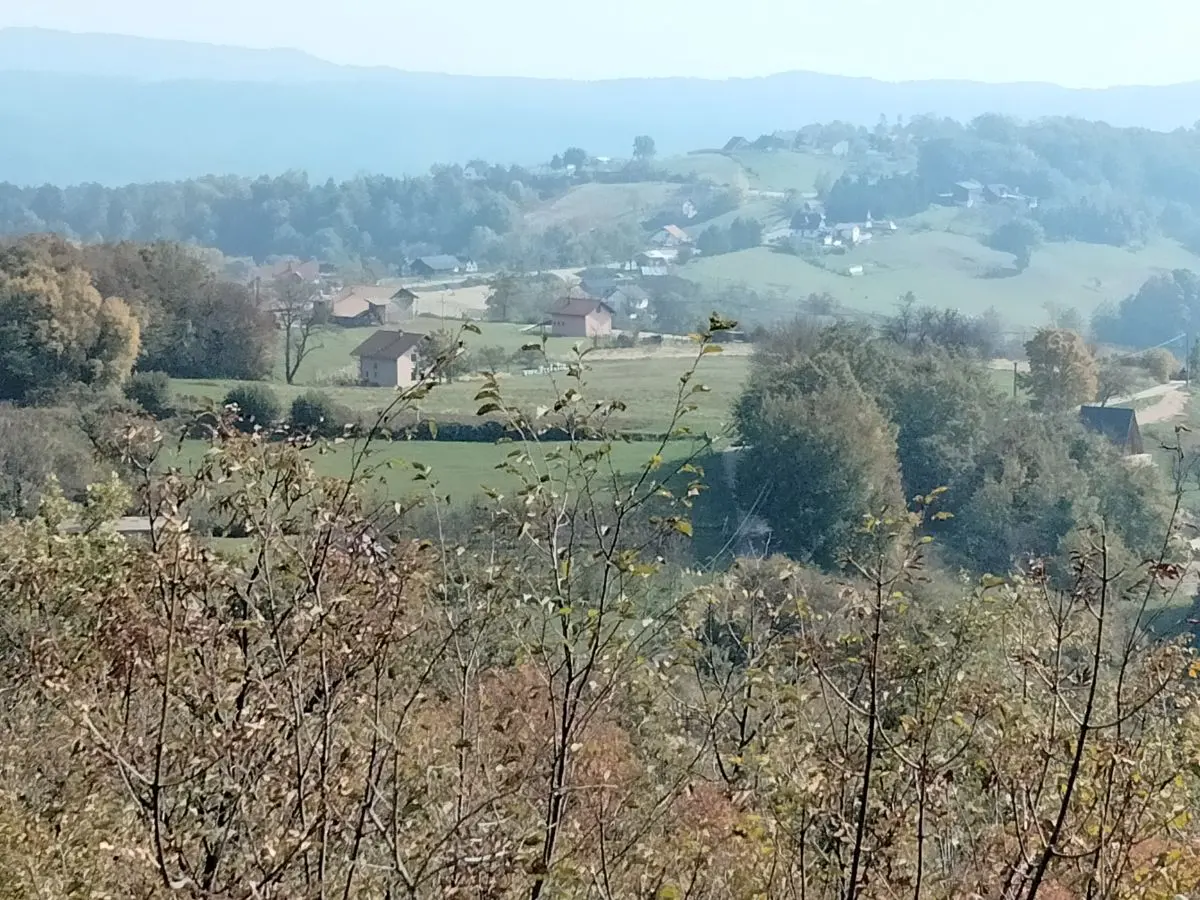
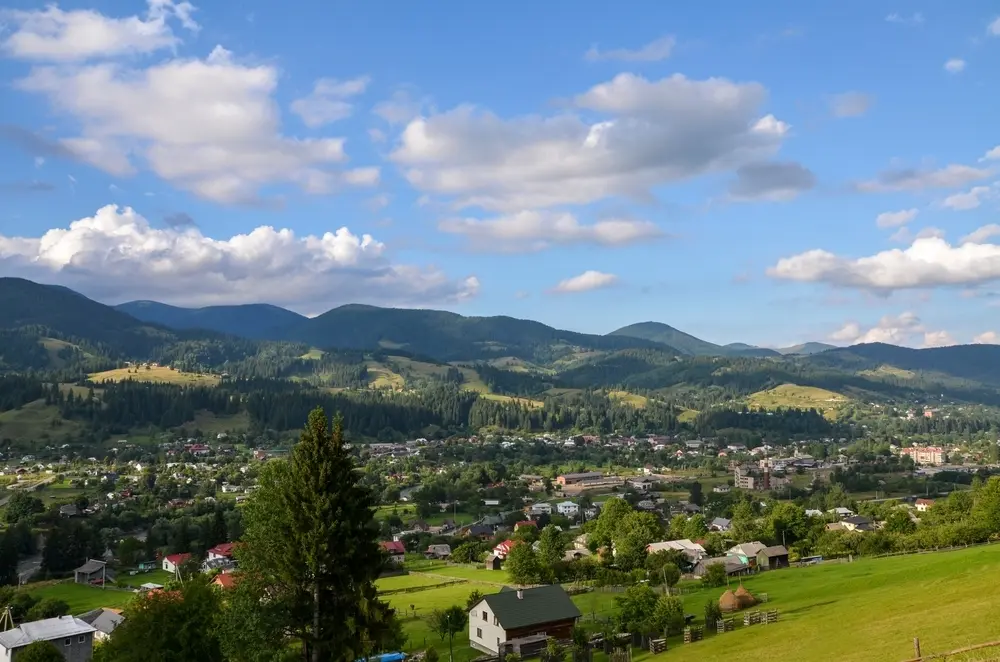
Transcarpathia © Dmytro Stoliarenko/Shutterstock
For Ukraine, the Hungarian parliamentary elections on April 12 are not a neighboring country’s domestic issue. The stakes involve billions of euros in European aid, the future of a sanctions package against Moscow, and the stability of the so-called Western front. Hungarian Prime Minister Viktor Orbán faces the vote with the numbers against him and the crisis with Kyiv as his main tool for political survival.
However, the roots of the hostility between Budapest and Kyiv do not begin with this election campaign, nor will they end there. The tensions date back to the 2017 law introducing Ukrainian as a mandatory language of instruction, perceived by Budapest as an attack on the Hungarian minority in Transcarpathia.
Since then, Hungary has systematically hindered Ukraine’s path to European and Atlantic integration. Not with weapons, but with vetoes. At the European Council on March 19, Orbán confirmed his veto on the loan supported by Slovak Prime Minister Robert Fico, declaring that he would only be ready to support Ukraine once Hungary receives its oil, a direct reference to the Ukrainian authorities’ blockade of the Družba pipeline — which transported Russian crude to Hungary.
Today, with the war still raging and funds frozen, Kyiv therefore regards Budapest as a veritable saboteur at the alliance table.
A disputed land, a forgotten minority
Transcarpathia is a region bordering Hungary, Slovakia, and Romania, which has belonged to western Ukraine since 1991. It is still home to one of the largest Hungarian minorities outside of Ukraine (approximately 150,000 people).
In Berehove, the “most Hungarian” town in the region, members of the Magyar community live on Budapest time, not Kyiv time. And from Budapest, they consider Transcarpathia almost an offshoot of the motherland.
Hungary was the first country to recognize independent Ukraine. For the next thirty years, relations between the two neighbors, who share approximately 140 kilometers of border with nine active crossings (including the main rail and road hub of Záhony-Čop), were characterized by mutual respect, albeit with latent tensions over the minority issue.
The breaking point came in 2017, with a law passed by the Ukrainian parliament introducing Ukrainian as a mandatory language of instruction. The law, primarily designed to limit the use of Russian in public education after the annexation of Crimea and the outbreak of the war in Donbas, inevitably affected all minorities: Hungarians, Poles, Romanians, and Slovaks.
Budapest viewed it as a direct attack, and Foreign Minister Péter Szijjártó then announced that Hungary would henceforth block any Kyiv advancement toward NATO and the European Union.
Passports, spies, and forced conscription
In the following years, the dispute expanded on multiple fronts. Since 2011, Budapest has been distributing Hungarian passports to members of the minority in Transcarpathia, despite Ukrainian legislation prohibiting dual citizenship.
The move — symbolically powerful but politically ambiguous — strengthened the bond between Orbán’s party, Fidesz, and Ukraine’s Magyar community: the Transcarpathian vote is estimated to gain Fidesz one or two additional seats in parliament.
With the Russian invasion of Ukraine in 2022 and the introduction of mandatory mobilization, a new point of contention emerged: the conscription of ethnic Hungarians into the Ukrainian army.
Budapest accuses Ukrainian military authorities of conducting coercive recruitment operations in Transcarpathia, while Kyiv responds that this is an instrumental narrative, fueled — at least in part — by Russian destabilization operations.
The rift deepened in May 2025, when the Ukrainian Security Service (SBU) dismantled what they describe as a military espionage network linked to Hungarian intelligence operating in Transcarpathia.
In the days immediately following, Hungary suspended negotiations on minority rights scheduled for May 12 in Uzhhorod, despite the Ukrainian delegation having already arrived there.
Between friendship pipelines and “state banditry”
Tensions between the two countries continue to rise in early 2026. The dispute over the Druzhba pipeline — which transports Russian crude oil through Ukraine to Hungary and Slovakia — provides the pretext for direct retaliation.
On January 27, 2026, supplies stopped abruptly. Ukrainian authorities attributed the disruption to a Russian drone attack, while Orbán accused Ukrainian President Zelensky of deliberately blocking transit to reduce Moscow’s revenue, without providing evidence to support this claim.
Hungarian Foreign Minister Szijjártó announced that Hungary will continue to block the 20th package of sanctions against Russia and the €90 billion loan to Ukraine until Kyiv resumes oil transit. Orbán summarized his position in a blunt formula : “No oil, no money.”
Against this backdrop, on March 5, 2026, the crisis reached a new level of escalation. Hungarian special forces raided two cash-in-transit vans en route to Ukraine, detaining the seven officials of the Ukrainian state-owned bank Oschadbank aboard the vehicle for over a day.
According to the bank, the vehicles were carrying approximately $40 million, €35 million, and nine kilograms of gold, as part of a routine transfer between Austria and Ukraine, registered according to standard European customs procedures.
Budapest raised suspicions of money laundering and blamed the “Ukrainian war mafia.” Hungarian authorities discovered that the seven included a former general of the Ukrainian security services and a former major in the Air Force, and thus proceeded to expel the entire group from the country.
The money and gold bars, however, remained seized: a decree signed by Orbán on March 9 effectively legalized the seizure, arguing that it was impossible to clarify the ownership of the assets and that it was in the interests of Hungarian national security to investigate the origin of the funds.
Ukrainian Foreign Minister Andrij Sybiha accused the Hungarian government of “state terrorism and extortion” and advised Ukrainian citizens against traveling to Hungary, claiming he could not guarantee their safety.
Transport Minister János Lázár later candidly admitted that the seizure was retaliation for the failure to reopen the Družba pipeline. A revealing detail emerged: until recently, the Ukrainians had been using a Hungarian company, Criterion Készpénzlogisztikai Kft, owned by oligarch István Garancsi, a prominent figure in Fidesz’s orbit. It was the first time they had renounced its services. In other words, Budapest struck a flow that had ceased to pass through its hands.
The situation was only partially resolved in the run-up to the European Council of March 19-20: Zelensky wrote to Ursula von der Leyen and António Costa that the pumping station would be restored within a month and a half, accepting European technical and financial support.
Yet, at the press conference, the Ukrainian president made no secret of the fact that he considered this European pressure a form of blackmail. Meanwhile, at the summit, Orbán remained adamant.
Kyiv as an electoral weapon
It is against this backdrop — minorities, spies, conscriptions, oil, seized gold — that the Hungarian elections on April 12th open. For Orbán, every episode of tension with Kyiv is also an electoral opportunity.
Fidesz has transformed the Ukrainian issue into an identity issue: the prime minister accuses Zelensky of interfering in the Hungarian elections by supporting Magyar and Tisza to remove him from government, while posters depicting the Ukrainian president plastered cities with the slogan “We will not become a Ukrainian colony” on March 15th, during the march commemorating the 178th anniversary of the Hungarian Revolution of 1848-49.
In the background, the evidence is growing of a third actor: Moscow. According to an investigation by Direkt36, reported by VSquare, at least three Russian military intelligence officers (GRU) are in Budapest under diplomatic cover to conduct disinformation campaigns in favor of Orbán.
The day after the European Council, the Washington Post revealed that a foreign service unit even proposed staging a fake attack against the prime minister to mobilize his electorate. The plan was codenamed “The Gamechanger.” Orbán dismissed the whole thing as “fairy tales,” while the Kremlin called it “disinformation.”
Péter Magyar, Orbán’s opponent, is undoubtedly more pro-European, but his party has spoken out against arms shipments to Ukraine and warned about Kyiv’s accelerated accession to the EU, citing the impact on Hungarian agriculture.
With peace still a long way off, whoever wins will have to find a way to coexist with Kyiv – and Kyiv with him.
Tag: In evidenza