Tirana: the city of empty towers
The landscape of Tirana is increasingly characterised by skyscrapers of all shapes and heights, designed by the most renowned European architects. But these new homes are unaffordable for residents and remain largely empty. Reportage
tirana_1_apertura
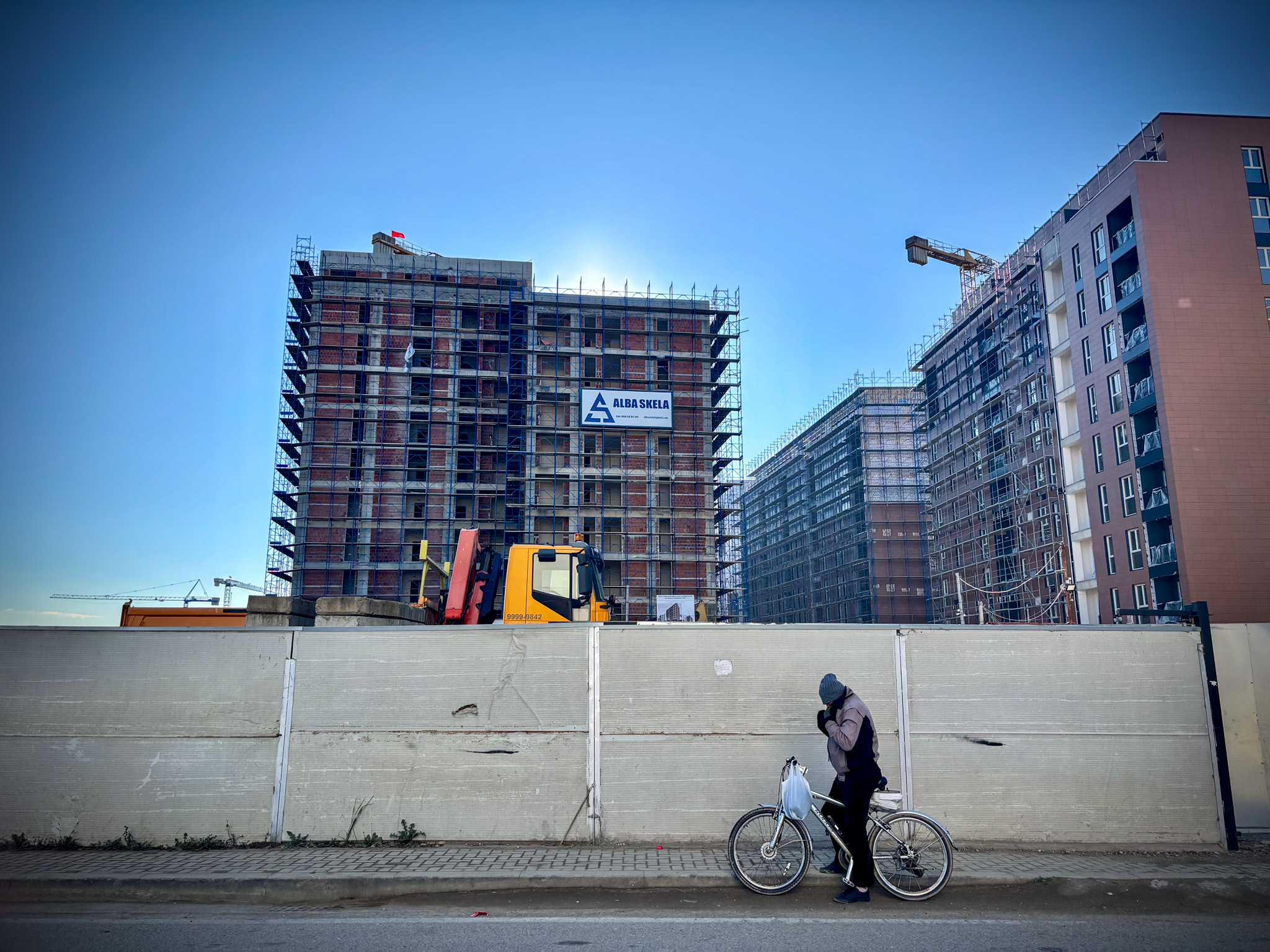
One of Tiriana's countless construction sites | Photo: Francesca Barca
The centre of Tirana is densely packed, with people, cars, bicycles, scooters, and a wide array of architectural forms.
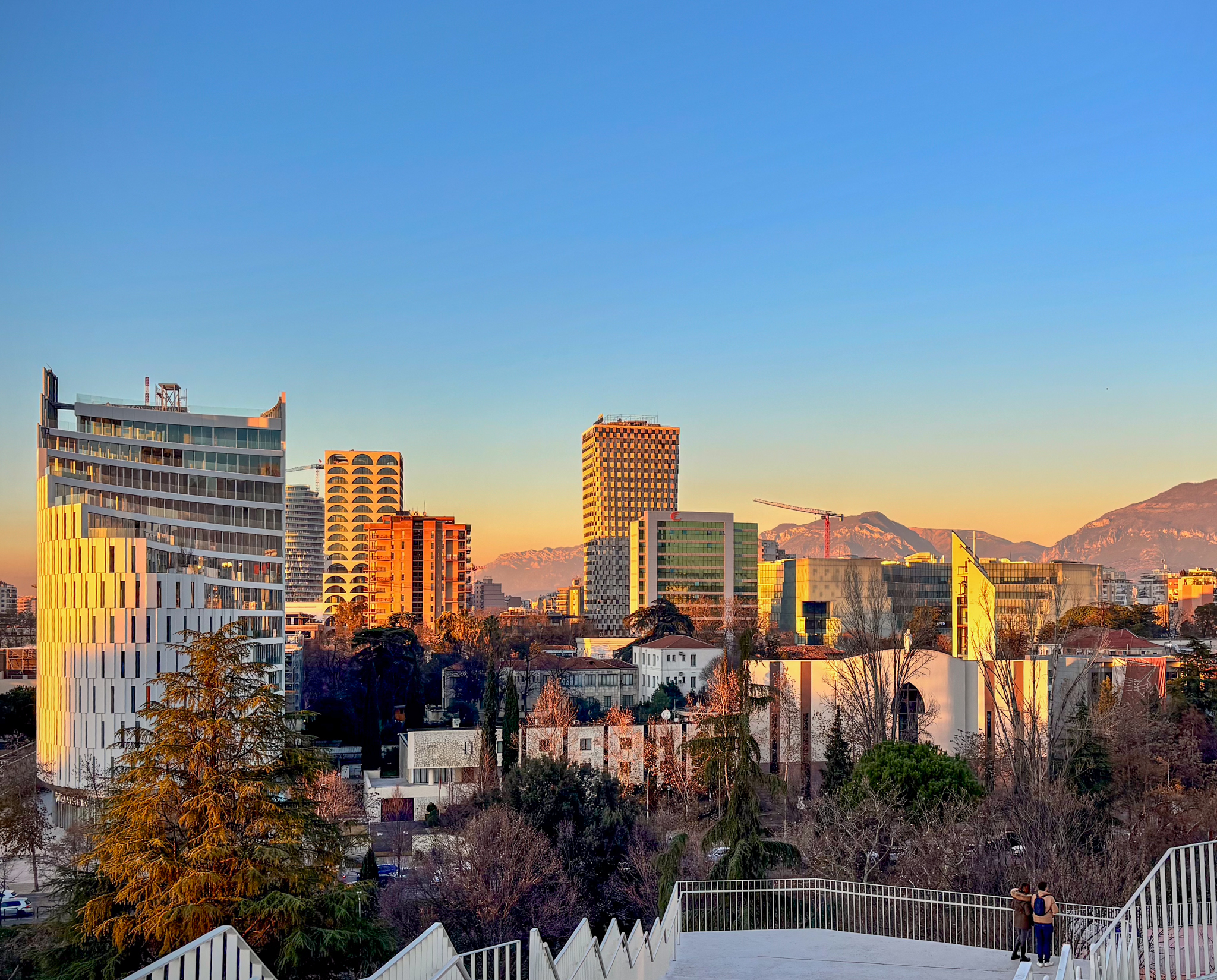
At rush hour, the area is so overflowing with movement that it’s hard to gauge the breadth of the bulevard. Architectural styles from various historical periods rub shoulders, but it is the numerous skyscrapers that stand out – all recent, all imposing, all more or less fascinating.
tirana_2
View from the Pyramid of Tirana | Photo: Francesca Barca
These are the projects of the so-called “archistars”: names such as Stefano Boeri (best known in Italy for the Vertical Forest in Milan), Marco Casamonti, the Dutch studio MVRDV, and the Belgian studio 51N4E. These are big, prestigious names, building innovative and environmentally conscious projects, or so they say.
tirana_3
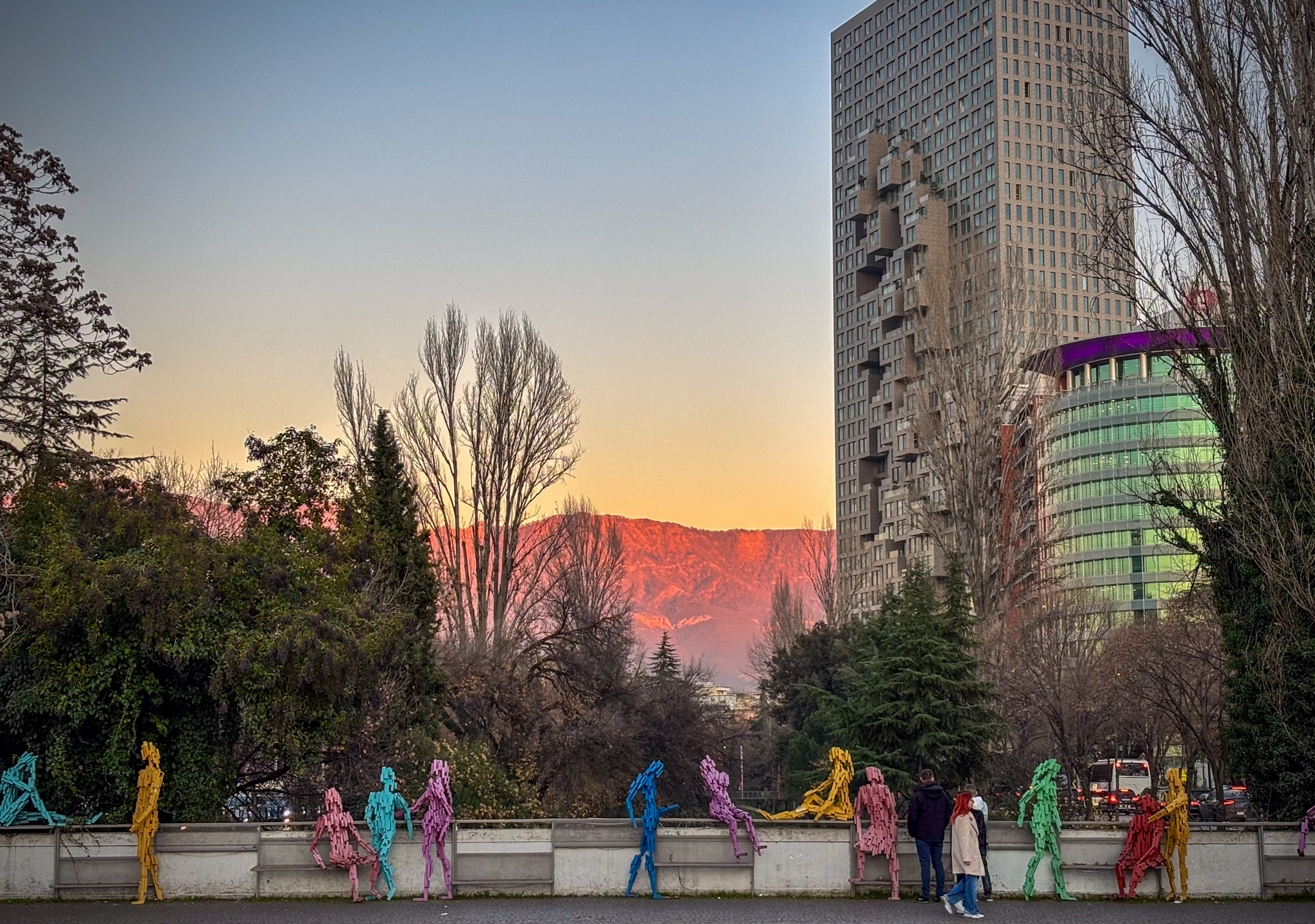
Metal sculptures in downtown Tirana. | Photo: Francesca Barca
These names are being used by Prime Minister Edi Rama to add an air of legitimacy to the latest wave of developments, says Erblin Vukaj, a journalist for the independent newspaper Citizens, as we stand at an intersection that is emblematic of this perspective. We are in the central district of Blloku, where our walk begins in the company of Vukaj and his colleague, journalist Elira Kadriu, between Rruga Brigada e VIII and Rruga Vaso Pasha.
The same area includes small villas that likely belonged to party leaders during the socialist regime (1944–1991), buildings constructed after the regime had fallen, and more imposing structures such as Stefano Boeri’s Blloku Cube, the Credins Bank headquarters designed by the Albanian studio Atelier 4, and two other skyscrapers under construction, designed by the studio of Marco Casamonti. A large banner attacking the government’s construction policies hangs from one of the older buildings. A little further on, Vukaj points out a building that is set to be demolished to make way for another tower. There is no sign of parks or cycle paths in the surrounding area.
Behind this imposing architectural facade, however, there’s a void. According to data from the Albanian Institute of Statistics (INSTAT, cited here), in 2023 one in three apartments in Albania was unoccupied. In 2024, journalist Ola Xama reported that there were over 85,000 empty homes in the province of Tirana, 52,000 of which were in the capital. At the current rate of population growth, “it would take 45 years” to fill these flats, explains Xama.
This figure is far higher than in the previous census (2011), when one in five (21.6 percent) apartments was unoccupied. Underlying these figures is a country that is emptying out: between 2011 and 2023, Albania lost almost 500,000 people.
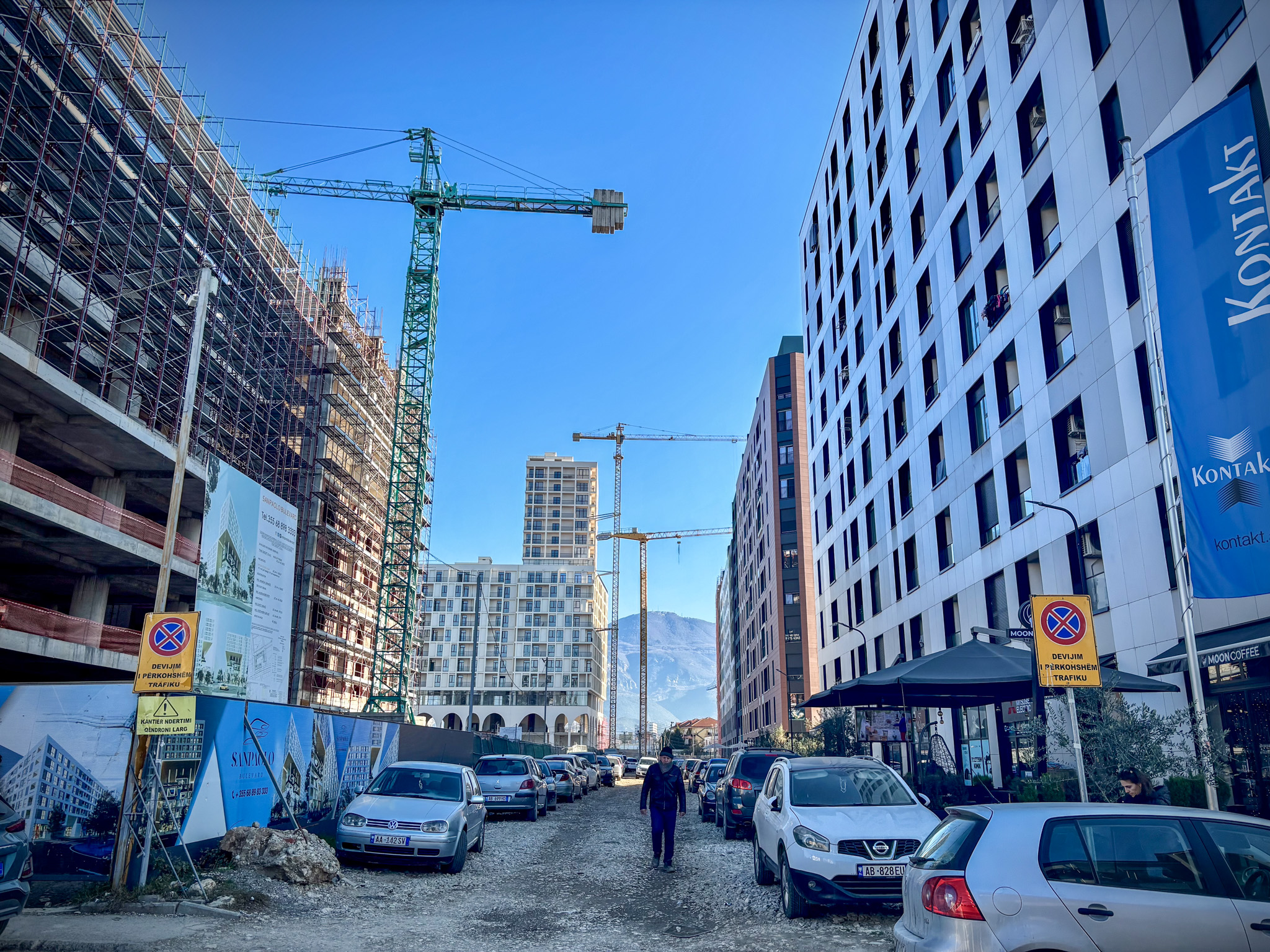
Nevertheless, construction continues unabated. In 2015, permits were granted for the construction of new residential buildings covering an area of 50 square kilometres; in 2022 this number increased, more than 40 times over, to 2,071 square kilometres, and this trend has only continued in the years that followed.
Increased supply accompanied by a drop in demand would be expected to cause a drop in prices. Instead, house prices have continued to rise, while the same cannot be said of wages.
tirana_4
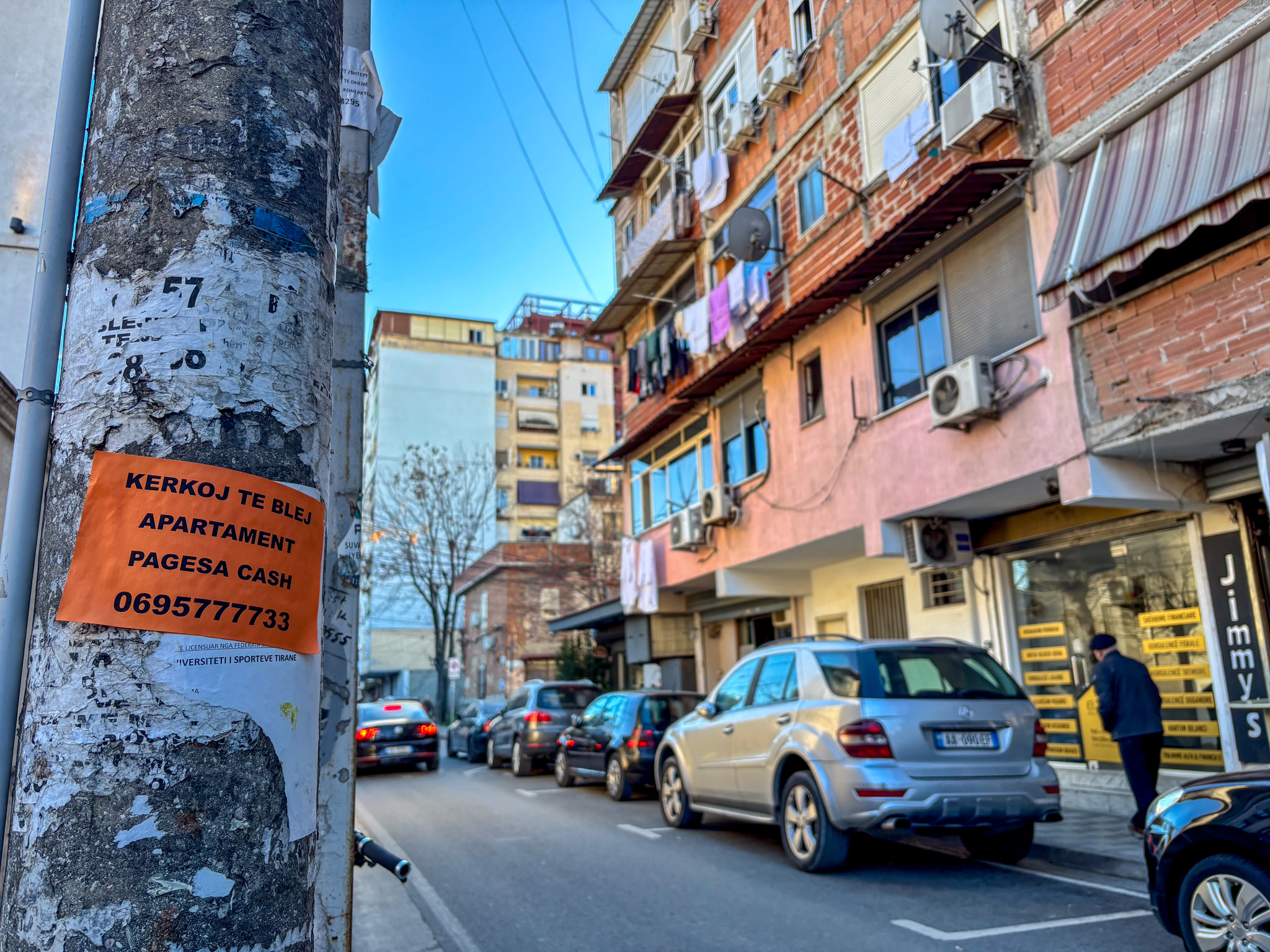
'I'm looking for an apartment to buy, payment in cash' – An ad in central Tirana. | Photo: Francesca Barca
In Tirana, according to data from the Bank of Albania, house prices rose by 5.1 percent in the first six months of 2025, and by 32.6 percent on an annual basis.
In 2011, an apartment in the most central districts of the city could cost between 700 and 2,500 euro per square metre; today, the range has shifted to 2,500–4,500 euro per square metre.
tirana_5
A construction site just outside Tirana's centre. | Photo: Francesca Barca
The average monthly gross income in Albania is around 82,000 lek (850 euro). In January 2026 the minimum monthly wage rose from 40,000 to 50,000 lek (518 euro), making it the country with the lowest minimum wage in Europe after Moldova and Ukraine.
In Tirana, it is now very difficult, if not impossible, to find a two-room apartment to rent for less than 600 euro.
tirana_6
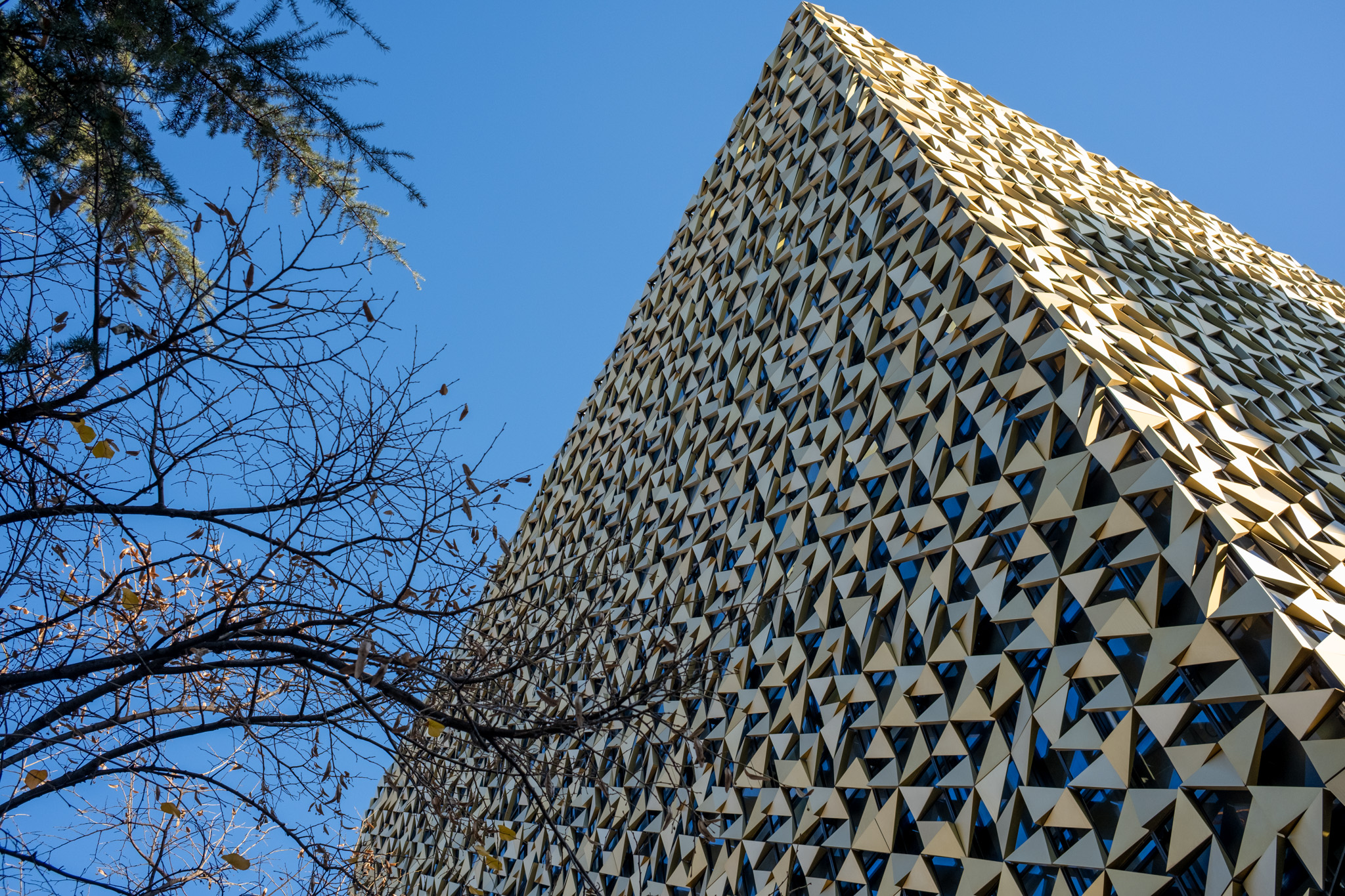
Detail of Stefano Boeri's Blloku Cube in central Tirana.| Photo: Federico Caruso
The construction frenzy was triggered by a policy initiated during the 2000–2011 mayoral term of Edi Rama – who became prime minister in 2013 – of the Socialist Party, and then continued by his successor and party colleague Erion Veliaj (now in prison on charges of corruption and money laundering).
In 2017, the urban plan Tirana 2030 was approved – 2030 being the year in which Albania aims to become an EU member state. Designed by Stefano Boeri Architetti, the plan introduces the idea of vertical development to free up space for squares and green areas, and to ease traffic congestion through the development of public transport and cycle paths.
Unfortunately, the reality is very different from the architectural renderings.
Italian urban plans for Tirana
“The Tirana 2030 plan has opened the city up to construction and densification,” explains architect and researcher Dorina Pllumbi, who has reflected on the issue at length. “Before, buildings could be up to seven floors, nine maximum.” Today, the tallest completed building is the 40-storey high Downtown One, but this is set to be dwarfed by approved projects exceeding 70 storeys.
“There was no attention to historic buildings,” continues Pllumbi, “there were beautiful villas that were demolished without scruples. The city, changing at a very fast pace, and people have problems recognizing their own neighbourhood, and neighbours.”
While gentrification is a now familiar phenomenon in many European cities, in Tirana it has a different flavour. We are used to seeing cities lose part of their population to make room for another – a different social class or perhaps even tourists – but the case of Tirana is different. Who is the city being built for?
tirana_7alt
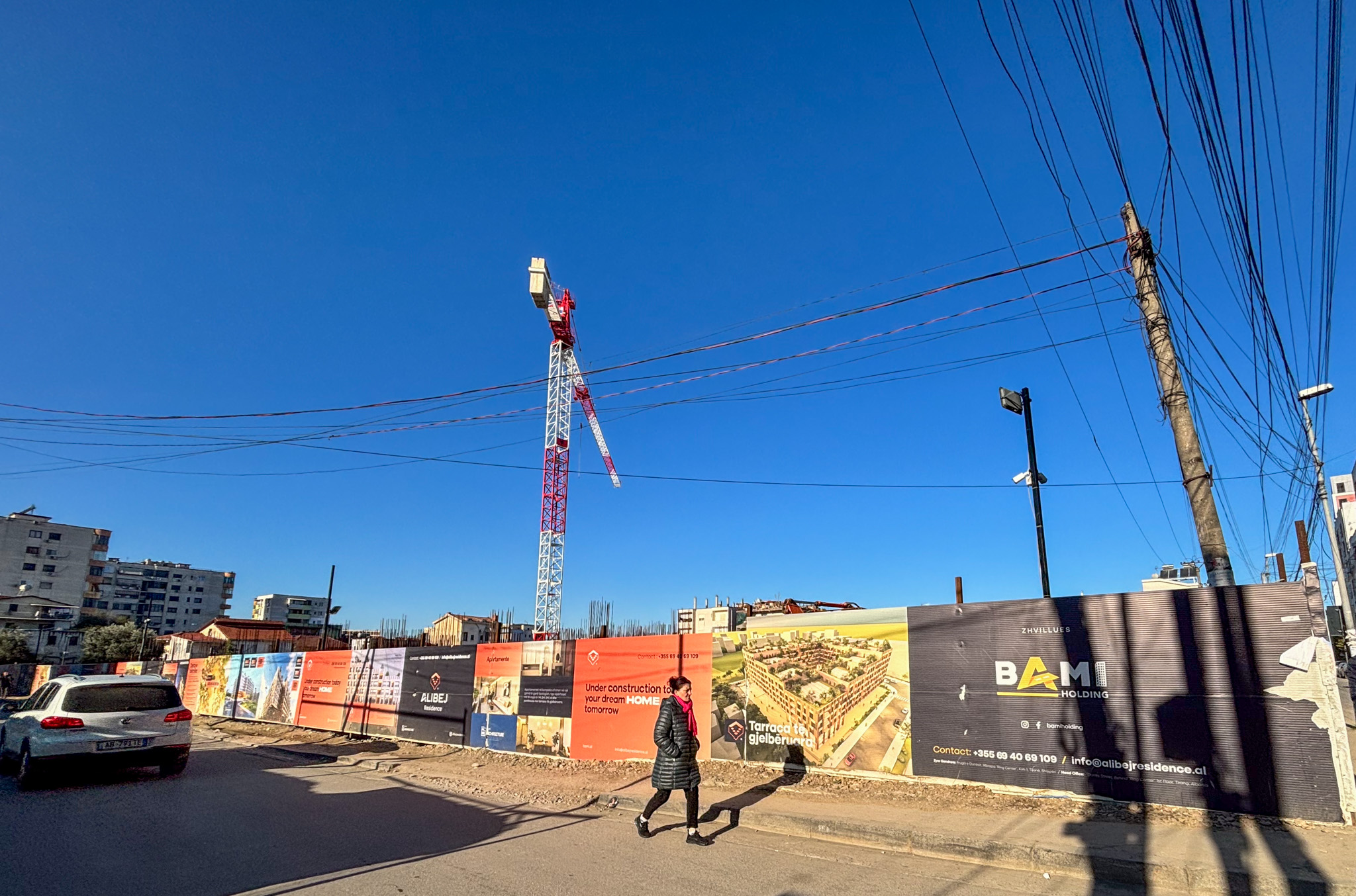
Tirana is plastered with renderings and construction sites. | Photo: Francesca Barca
“My impression is that Rama wants to change the face of this city, to ‘leave his mark,’” Vukaj told us as he showed us around the city centre. “It’s an ego problem – no genuine urban plan, no regard for aesthetic balance, destroying our collective memory. All this while facilitating money laundering.”
Allegations of money laundering emerged from all the conversations we had in Tirana, but no one provided concrete evidence.
Last September, a report by the Friedrich Ebert Foundation was published with the emblematic title “Money laundering in the real estate sector : its impact on socio-economic life in Albania.” The report, based on data that cannot always be verified, estimates that corruption and tax evasion in Albania generated “at least 8.168 billion euros in revenues for the period 2015–2024”, mainly in the construction sector. “In recent years, Albania’s real estate market has produced a situation that cannot be explained by the normal mechanisms of a free and competitive market,” the report states.
“Real estate prices have increased at a faster rate over the past 10 years, particularly between 2021 and 2024. Theoretically and logically, such a price increase, while the supply in the market increases, occurs while the market is influenced by factors so powerful that they distort the typical relationships between demand, supply and price.”
tirana_8
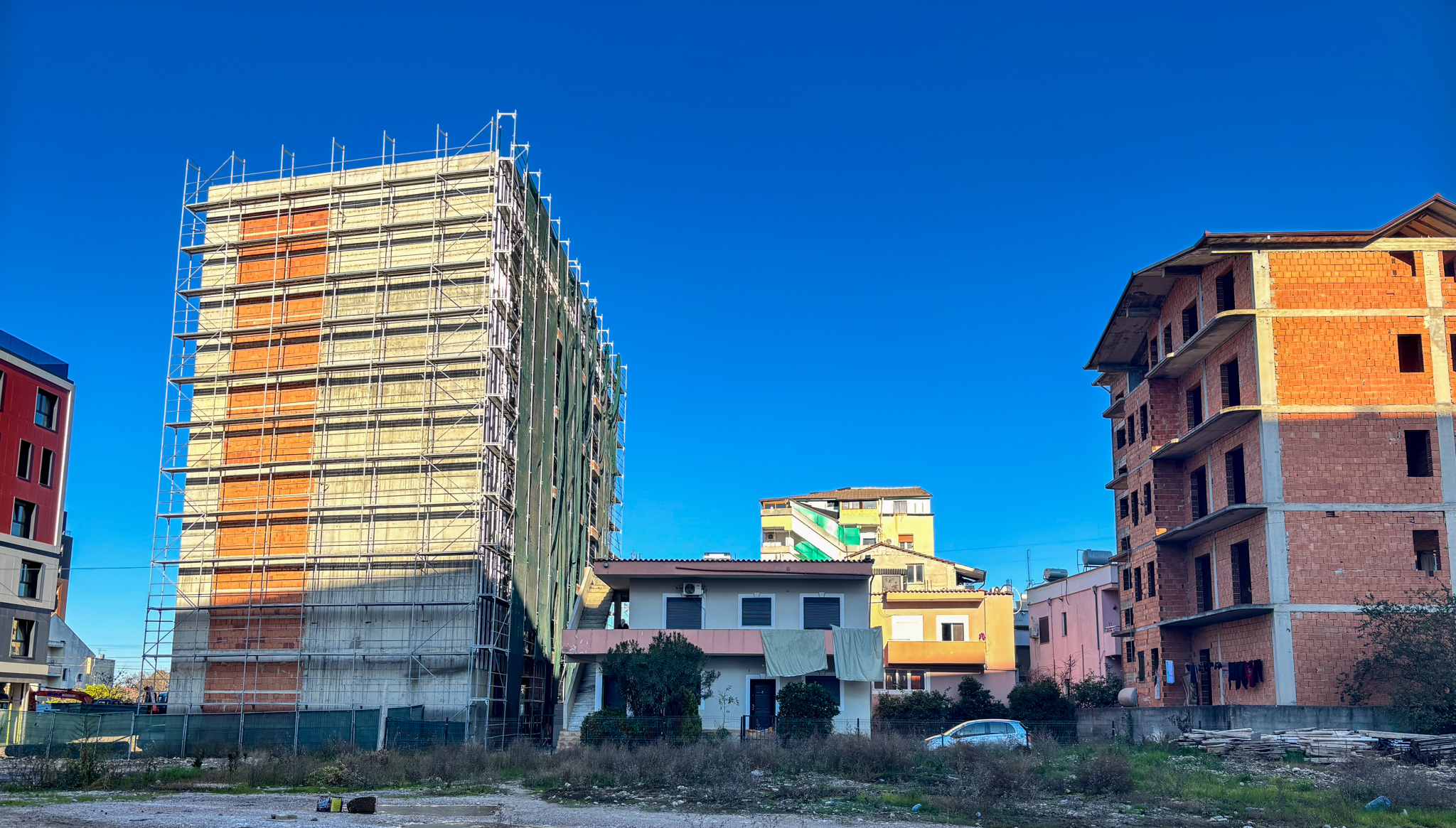
In many cases, old houses are surrounded by new buildings. | Photo: Francesca Barca
Almost exactly a century ago, in 1925, a development plan for Tirana city centre was launched, involving Italian architects and urban planners sent by the fascist regime. The names of Armando Brasini and Gherardo Bosio are well known in this city. Walking the streets, it is no challenge to recognise the architectural style of that period, in the Prime Minister’s office, Mother Teresa Square (formerly Vittorio Emanuele III Square) or the Polytechnic University (formerly Casa del Fascio). All were designed by Bosio, and are located just a few steps from each other.
Today, history is repeating itself, and not without a certain irony, as Vukaj points out. For Dorina Pllumbi, this is a form of “sort of colonialism, […] not in the classical sense, of course, but a softer ‘coloniality of power’, that is operating nowadays between countries.” During our conversation, Pllumbi refers to an “internalised inferiority” that Albania has developed towards foreigners, especially “Westerners.”
An example of this phenomenon is the pavilion at the 2025 Venice Biennale. Dedicated to Albanian architecture, it was curated by Swiss researcher Anneke Abhelakh and featured everything except contributions from Albanian architects. The pavilion was titled “Building Architecture Culture”, “As if there is no architecture in Albania, as if there is nothing there, as if it’s all tabula rasa”.
tirana_9
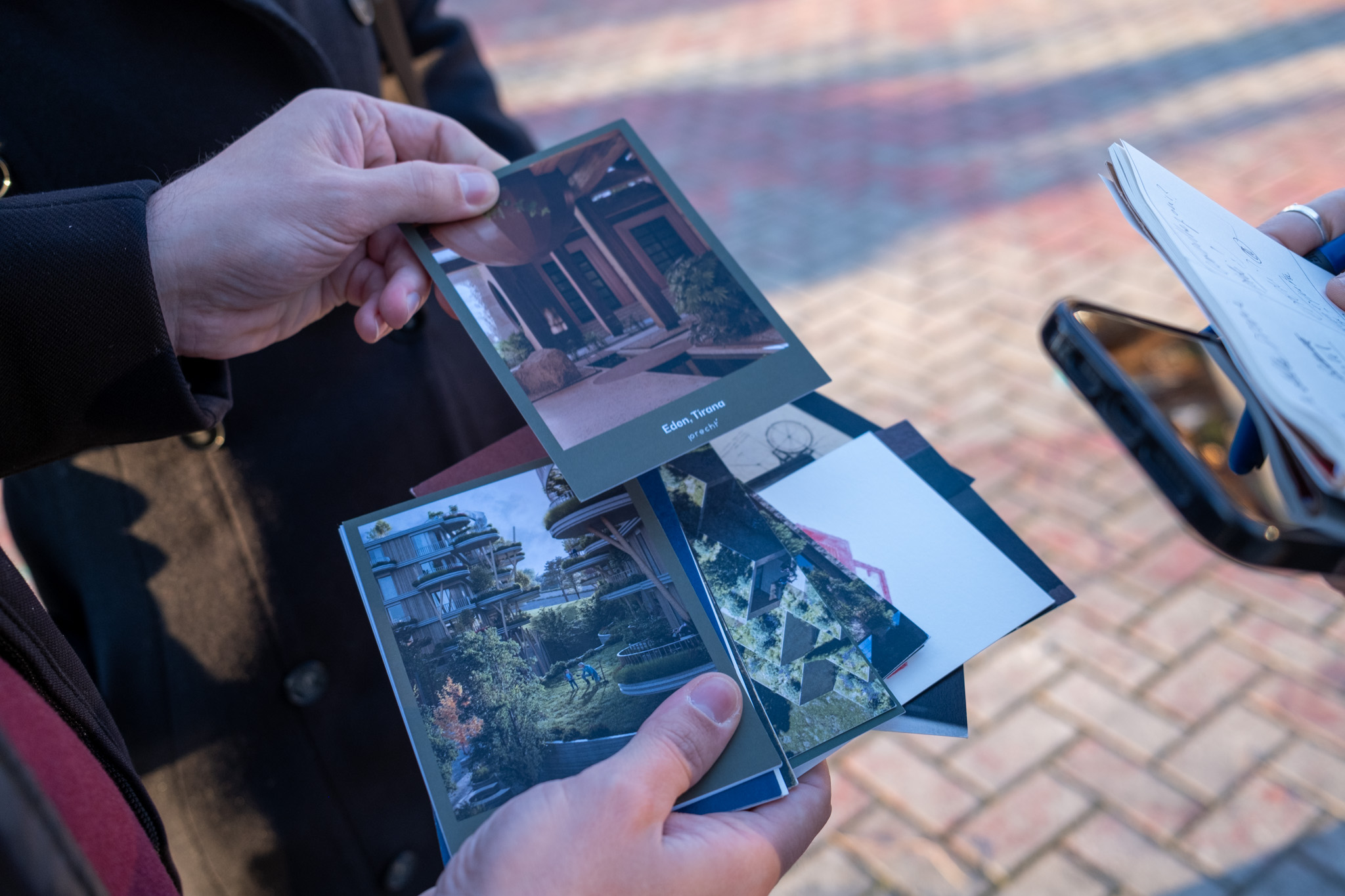
Postcards from the Bukë dhe Zemër architecture festival. | Foto: Federico Caruso
At the end of our walk, Vukaj shows us some renderings from the Bukë dhe Zemër (Bread and Heart) architecture festival to give us an idea of just how unrealistic these real estate projects are. The impression is that the city as well as the country itself have become a playground for the creativity (and wallets) of architects and builders.
Prime Minister Edi Rama has stated that the latest wave of architectural development, with the opening up of the market and the entry of foreign investors and designers, is about “reclaiming individualism” for Albanians. This is rhetoric that Pllumbi firmly rejects: “In Albania, there is resistance to talking about collectivity and collectivism because it’s like, ‘oh, we tried that. It was a disaster. We failed’. And now there’s no other way but just going toward individualism. What I try to do with my work – and other scholars and activists, including the ATA group, for example – is to challenge this dominant narrative. What our parents experienced was actually state collectivism. The state used the ideology of collectivism to impose its power on the population, on the country, and on every aspect of everyday life. But then the communal and more genuine ways of collective self-organisation also suffered as they were absorbed and captured within this big ideological umbrella of state collectivism. That is why we need to practice these more genuine ways of claiming the city, not as a totalizing force that comes from the top, but as collective acts of the everyday.”
The “muscular” approach to urban development imposed by the Socialist Party is changing the face of the city, but it is not solving its deep-rooted problems.
Pllumbi offers the example of the water collection tanks that are visible on the facades of all the houses, indicating the city’s frequent water shortages. For Pllumbi, this is a “permanent protest.” “If a planner really wants to see what the problems are in the city, it’s so obvious. If you don’t address traffic, if you don’t address amenities, and whatever people need to live in a normal city, then you haven’t done much.”
tirana_10
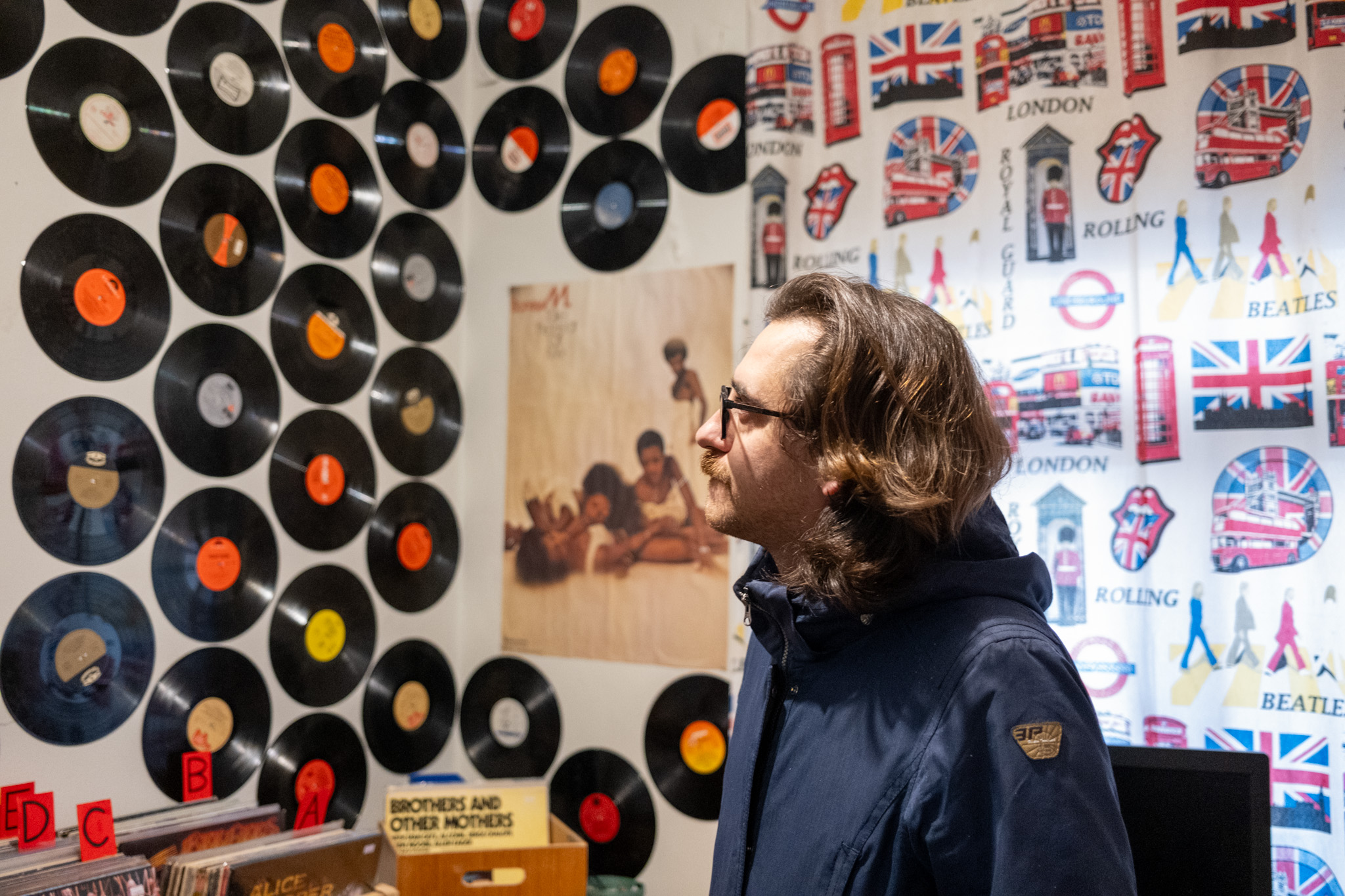
Arnen Sula | Photo: Federico Caruso
The resources to resist this process are lacking: “Protests have been very rare here. Because this is how we’re taught: don’t go to protests. That’s why we deal with the past.” Armen Sula is an activist with the Tek Bunkeri association, which runs a space in the centre of Tirana where screenings, debates, concerts, and theatre workshops are held, all focused on processing the country’s shared past and reflecting on the history of the dictatorship.
It should also be noted that protest movements occurred in Albanian universities in 2018–19, and that a significant mobilisation took place in an attempt to save the National Theatre in Tirana, which was demolished in 2020.
tirana_11
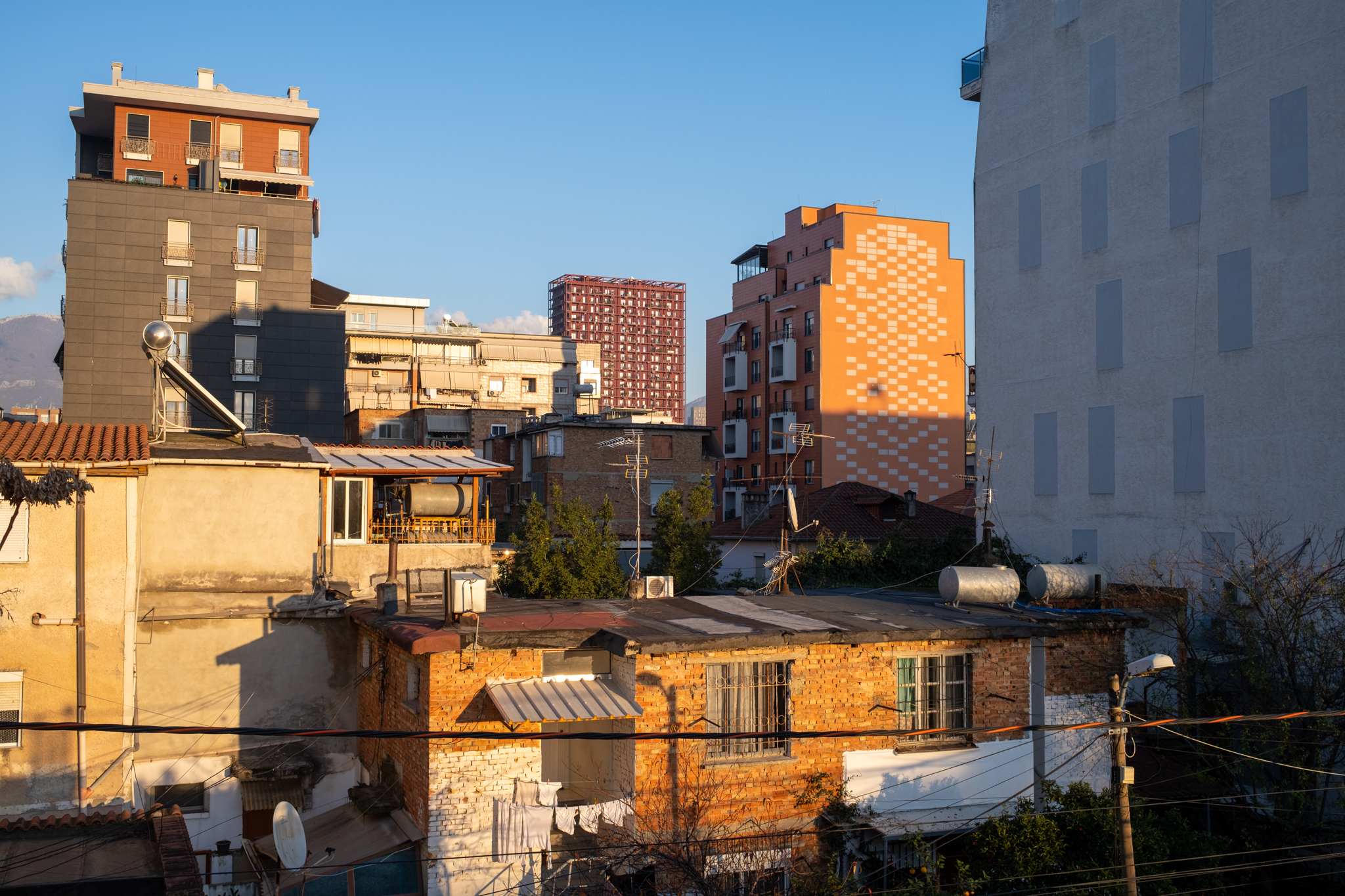
The view from the terrace of Tek Bunkeri. | Photo: Federico Caruso
The association currently has a lease on a villa surrounded by taller buildings. The activists don’t know how long they will be able to stay. “Our lease expires in two years,” says Sula, “and we don’t know if it will be renewed, because the owner wants to build something taller. We invested a lot in this place, it was all mud when we arrived.” The only hope, he tells us with bitter irony, is “that the prime minister goes to prison for at least five years, so that construction stops and we can survive here.”
Europe in 2030
Against this backdrop, joining the European Union is, for many Albanians, “the only way”, according to Nebi Bardhoshi, anthropologist, whom we met in Kamza, a town seven kilometres from the capital. Of course, Albanians are under no illusion that EU membership is the solution to every problem. “We know the weaknesses of the European Union, we are not naïve,” Bardhoshi continues. “People on the margins never are: they have a perspective that allows them to observe society differently. At first glance, they are considered inferior, but their perspective is much more realistic.”
“We want to join the European Union,” echoes Sula. “We’ve been promised that we’ll do it in 2030. But I don’t think it’s possible for us as a society – we’re not ready. Even at the institutional level.” Sula sees two main obstacles: the unresolved issue of transitional justice, concerning how the socialist regime is remembered and addressed; and corruption, which is “utterly massive.”
Dorina Pllumbi shares this view: “EU might be another imposition of power, but it could also be the other way around. It could be an opportunity for, let’s say, another level of political engagement. However, in practice, we see that the EU often seems to have lost its compass with its own principles, so I don’t know if you can put so much hope in the European Union. If Albania ends up being a colony of these major powers, which quite often seems to be the case, as with the construction of the detention centers for immigrants in Gjader, then we’re doomed. But if we, beyond the politicians, pay serious attention to democracy, and our voice and positionality are taken seriously, then I would say it’s an opportunity for Albania.”
This article is part of a series of reportages from Albania:
 This article was produced in the framework of PULSE, a European initiative coordinated by OBCT which promotes cross-border journalistic collaborations, and is part of a series on “peripheral” areas of European cities in collaboration with Il Sole 24 Ore, Voxeurop, and El Confidencial. We would like to thank Elira Kadriu of Citizens for her support in producing this report.
Tag: Architecture | Architettura | Cities | PULSE | Tirana | Urbanism