TikTok in Albania, ban ends

In November 2024, following the death of a fourteen-year-old boy, the Albanian government decided to ban the use of TikTok. This controversial decision, later withdrawn, leaves important questions unanswered in the debate on democracy, freedom of information, and digital media
03/03/2026, Erisa Kryeziu Tirana
© DANIEL CONSTANTE/Shutterstock

TikTok

© DANIEL CONSTANTE/Shutterstock

The Albanian government decided to ban TikTok for one year following the stabbing of a 14-year-old boy after a series of online debates, promising that it would use this period to work with the platform to strengthen child protection measures.

While the TikTok ban officially expired due to a recent Council of Ministers decision, the app remained unaffected. The issue now stands in front of the Constitutional Court, and the government’s intervention has sparked intense debates over freedom of expression, media pluralism, and how the state can intervene in the digital space.

TikTok shutdown in Albania

In November 2024, near the “Fan Noli” 9-year school in Tirana, an attack between two minors resulted in the death of 14-year-old Martin Cani.

In the capital, protests were organized by citizens and parents demanding greater school safety. In his first statement after the tragic incident, Prime Minister Rama announced the closure of the online platform TikTok, citing it as a cause of the event.

For Prime Minister Rama, although there was no evidence that the incident occurred due to disagreements on this platform, platforms like TikTok challenge families’ efforts to educate their children. He stated at the time that implementing filters on such platforms had not worked in European Union countries, so in this situation, the only solution was the complete shutdown of the platform.

This triggered public reactions, with critics labeling it authoritarian and populist.

On 6 March 2025, then Minister of Education Ogerta Manastirliu announced that the platform would be closed for one year.

“We have analyzed the effects coming from these platforms, especially regarding children’s health and cases of physical violence,” Manastirliu said.

She further stated that from 25 November 2024 to 22 December 2024 the government conducted over 1,300 consultations with parents, and according to the ministry, 90% of them supported the TikTok shutdown.

Communication experts argued that this decision affects a larger population with access to the platform, so relying solely on parents’ perceptions was incorrect.

“No consultation reports were published, the methodology used is unknown, as well as the representation of participants or how comments were reflected in decision-making. These are essential elements for a proper public consultation process,” said to OBCT Megi Reçi, a digital rights researcher.

According to Reçi, issues affecting freedom of expression and access to information require the involvement of human rights experts, scholars, media representatives, and civil society organizations.

“The lack of pluralism and public documentation weakens the democratic legitimacy of the decision,” Reçi stated.

In March 2025, a group of civil society and media organizations opposed the TikTok shutdown, describing it as an extreme restriction on freedom of expression and access to information.

Concerns were also raised about the timing of the decision, approximately two months before the parliamentary elections on 11 May 2025.

“The government risks suppressing emerging voices, weakening political pluralism, and creating a chilling effect that could extend beyond TikTok users, affecting journalists, digital creators, civil society activists, and organizations monitoring the democratic process,” civil society and media organizations stated at the time.

Constitutional Court case against the TikTok shutdown

While TikTok was shut down in Albania, in March 2025 the Association of Albanian Journalists and the Balkan Investigative Reporting Network (BIRN) filed a complaint to the Constitutional Court, challenging the constitutionality of the Council of Ministers’ decision banning the platform.

Lawyer Franc Terihati from the Center for Legal Empowerment said in a statement to the court that legal arguments showed the government’s decision violated economic freedom, freedom of expression, press freedom, and the right to information.

On 4 June 2025, the Constitutional Court decided to review the government’s decision to close TikTok, even scheduling a public plenary session due to its significance.

Isa Myzyraj, a journalist and head of the Association of Albanian Journalists (AGSH), told OBCT that the TikTok shutdown was a disproportionate and dangerous decision for democratic society.

“Instead of treating this as an issue requiring targeted regulation such as the protection of minors, the government chose a drastic intervention that sets a precedent for digital censorship. As a journalist and AGSH director, I see this as an act that risks normalizing the administrative shutdown of public communication platforms,” Myzyraj said.

Myzyraj emphasized that the court should establish clear standards for any future state interventions in the digital space.

“The process is ongoing, and for us, the significance lies not only in the concrete result but also in the precedent that will be set for the future of digital rights in Albania. At its core, this is not just a battle over TikTok, but for democratic standards in the digital era,” Myzyraj added.

On 3 February 2026, the Albanian government adopted Decision no. 62, repealing the one-year ban that blocked access to TikTok.

At the next Constitutional Court session on 5 February 2026, government representatives stated that review was unnecessary since the TikTok ban had already been repealed.

“The decision loses its effect over the 12-month period,” said Herold Jonuzaj, a government representative, adding that “it will be automatically repealed by 6 March 2026.”

According to Jonuzaj, the repeal was part of a negotiation process with the platform to implement the requested filters, though no written agreement had yet been finalized.

Isa Myzyraj told OBCT that the government’s withdrawal indicated that the initial decision was legally rushed and indefensible.

“This withdrawal confirms the concerns we publicly raised from the start: there was no thorough proportionality analysis or strong constitutional basis for such an extreme measure. The repeal two days before the Constitutional Court hearing clearly shows that the government did not want the decision to undergo judicial scrutiny,” Myzyraj said.

The plaintiff’s lawyer, Franc Terihati, insisted during the 5 February session that the case should be examined regardless of the government’s repeal. He stressed that the regulatory act banning TikTok violated several constitutional rights, including freedom of expression, press freedom, the right to information, and economic freedom.

Terihati described it as “a matter of significant public interest,” and therefore, the court must determine whether the decision was constitutional while in effect.

The Constitutional Court decided not to issue a final ruling on the TikTok ban, granting additional time for the parties involved, citing unresolved questions.

On 23 February, the next hearing was held at the Constitutional Court. The judicial panel withdrew to deliberate and reach a decision.

“The date and time of the announcement of the decision will be communicated to you in accordance with the legal provisions”, the judge stated. According to the law, the decision is clarified and published within 30 days from the date of its announcement.

Consequences of the TikTok Ban in Albania

Even though TikTok was banned in Albania, its use did not stop.

Albanian users accessed the platform using VPNs.

On 13 March 2025, Proton VPN reported that usage had increased by 1,200% above baseline, and the number continued to rise as Albanians sought open and free internet access.

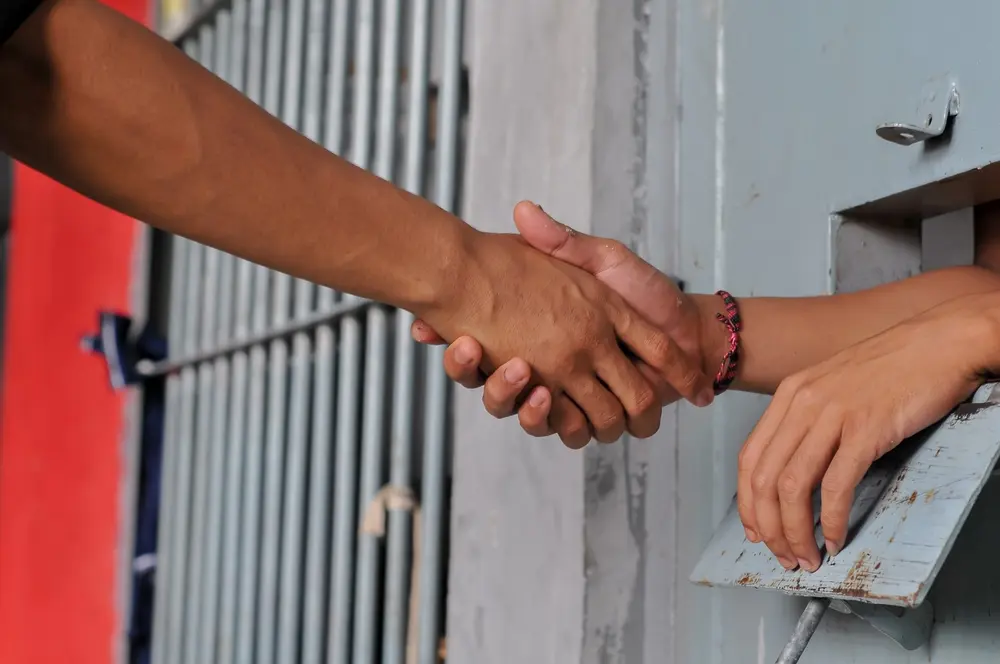
TikTok was even used by the Mayor of Tirana, Erion Veliaj, who is currently in prison following corruption charges.

Megi Reçi, digital rights researcher, told OBCT that the one-year TikTok ban was not accompanied by a public report on its effectiveness.

“This lack of transparency makes it difficult to objectively assess the real impact of the intervention. The government had set several conditions for unblocking the platform, including age verification, mandatory parental control, concrete measures to prevent harmful content, and moderation in Albanian. There is no public data showing whether these measures were actually implemented and to what extent,” Reçi explained.

According to Reçi, even during the ban, TikTok was widely used via VPNs, and the lack of evidence of improvement makes it debatable whether the shutdown achieved its goals.

“TikTok was also used during the election period, including by ruling party candidates, which calls into question the coherence and enforceability of the decision. The issues cited as justification for the ban, such as incitement of violence or risks to minors, were not eliminated and are not exclusive to a single platform,” Reçi told OBCT.

Isa Myzyraj noted that the consequences of the TikTok shutdown were immediate on multiple levels.

“First, freedom of expression was affected for thousands of citizens using TikTok as a public communication platform. Second, the alternative media ecosystem, where many journalists, activists, and media outlets share information via social media, was harmed. Third, it created a chilling effect, where any other platform could be subject to a similar shutdown in the future without clear legal, parliamentary, or judicial procedures,” Myzyraj told OBCT.

Digital security and data protection

Megi Reçi emphasized that the decision to shut down the platform provided no objective indicators of effectiveness. She added that the lack of transparency in public consultation and the non-publication of risk analysis reports weakened the democratic legitimacy of the intervention.

“Any restriction on freedom of expression must pass the proportionality test. A full shutdown of a platform for the entire population constitutes a broad intervention in freedom of expression and access to information,” she said.

According to Reçi, in the case law of the European Court of Human Rights, “general and undifferentiated platform shutdowns are considered a violation of freedom of expression, especially when it is not proven that the measure was necessary and that no less restrictive alternatives existed.”

Thus, in the absence of evidence that the ban was the last and only effective tool, it is difficult to argue that the measure was proportional, she argued.

Albania has committed to harmonizing its legislation with the EU Digital Services Act (DSA), as part of the European integration process, by 2026.

According to the EU DSA, a framework is established for the responsibility of online platforms, aiming to increase transparency, accountability, and protection of users’ rights.

“Under the DSA logic, platform blocking is considered an exceptional and temporary measure, to be taken only after all other regulatory mechanisms have been exhausted. To date, there is no EU precedent for a general platform ban under this act,” Reçi argued.

In this context, according to Reçi, such ad hoc general interventions deviate from the EU model, which focuses on regulating platform responsibility.

For this reason, Reçi emphasizes that balancing digital security and freedom of expression is achieved not through platform bans, but through regulation.

“A more sustainable approach would include clear obligations for transparency and moderation, strengthening regulatory authorities, their capacities and independence, creating effective complaint mechanisms for users, and investing in digital education,” concluded Megi Reçi.
TikTok in Albania, ban ends

In November 2024, following the death of a fourteen-year-old boy, the Albanian government decided to ban the use of TikTok. This controversial decision, later withdrawn, leaves important questions unanswered in the debate on democracy, freedom of information, and digital media

03/03/2026, Erisa Kryeziu Tirana
© DANIEL CONSTANTE/Shutterstock

TikTok

© DANIEL CONSTANTE/Shutterstock

The Albanian government decided to ban TikTok for one year following the stabbing of a 14-year-old boy after a series of online debates, promising that it would use this period to work with the platform to strengthen child protection measures.

While the TikTok ban officially expired due to a recent Council of Ministers decision, the app remained unaffected. The issue now stands in front of the Constitutional Court, and the government’s intervention has sparked intense debates over freedom of expression, media pluralism, and how the state can intervene in the digital space.

TikTok shutdown in Albania

In November 2024, near the “Fan Noli” 9-year school in Tirana, an attack between two minors resulted in the death of 14-year-old Martin Cani.

In the capital, protests were organized by citizens and parents demanding greater school safety. In his first statement after the tragic incident, Prime Minister Rama announced the closure of the online platform TikTok, citing it as a cause of the event.

For Prime Minister Rama, although there was no evidence that the incident occurred due to disagreements on this platform, platforms like TikTok challenge families’ efforts to educate their children. He stated at the time that implementing filters on such platforms had not worked in European Union countries, so in this situation, the only solution was the complete shutdown of the platform.

This triggered public reactions, with critics labeling it authoritarian and populist.

On 6 March 2025, then Minister of Education Ogerta Manastirliu announced that the platform would be closed for one year.

“We have analyzed the effects coming from these platforms, especially regarding children’s health and cases of physical violence,” Manastirliu said.

She further stated that from 25 November 2024 to 22 December 2024 the government conducted over 1,300 consultations with parents, and according to the ministry, 90% of them supported the TikTok shutdown.

Communication experts argued that this decision affects a larger population with access to the platform, so relying solely on parents’ perceptions was incorrect.

“No consultation reports were published, the methodology used is unknown, as well as the representation of participants or how comments were reflected in decision-making. These are essential elements for a proper public consultation process,” said to OBCT Megi Reçi, a digital rights researcher.

According to Reçi, issues affecting freedom of expression and access to information require the involvement of human rights experts, scholars, media representatives, and civil society organizations.

“The lack of pluralism and public documentation weakens the democratic legitimacy of the decision,” Reçi stated.

In March 2025, a group of civil society and media organizations opposed the TikTok shutdown, describing it as an extreme restriction on freedom of expression and access to information.

Concerns were also raised about the timing of the decision, approximately two months before the parliamentary elections on 11 May 2025.

“The government risks suppressing emerging voices, weakening political pluralism, and creating a chilling effect that could extend beyond TikTok users, affecting journalists, digital creators, civil society activists, and organizations monitoring the democratic process,” civil society and media organizations stated at the time.

Constitutional Court case against the TikTok shutdown

While TikTok was shut down in Albania, in March 2025 the Association of Albanian Journalists and the Balkan Investigative Reporting Network (BIRN) filed a complaint to the Constitutional Court, challenging the constitutionality of the Council of Ministers’ decision banning the platform.

Lawyer Franc Terihati from the Center for Legal Empowerment said in a statement to the court that legal arguments showed the government’s decision violated economic freedom, freedom of expression, press freedom, and the right to information.

On 4 June 2025, the Constitutional Court decided to review the government’s decision to close TikTok, even scheduling a public plenary session due to its significance.

Isa Myzyraj, a journalist and head of the Association of Albanian Journalists (AGSH), told OBCT that the TikTok shutdown was a disproportionate and dangerous decision for democratic society.

“Instead of treating this as an issue requiring targeted regulation such as the protection of minors, the government chose a drastic intervention that sets a precedent for digital censorship. As a journalist and AGSH director, I see this as an act that risks normalizing the administrative shutdown of public communication platforms,” Myzyraj said.

Myzyraj emphasized that the court should establish clear standards for any future state interventions in the digital space.

“The process is ongoing, and for us, the significance lies not only in the concrete result but also in the precedent that will be set for the future of digital rights in Albania. At its core, this is not just a battle over TikTok, but for democratic standards in the digital era,” Myzyraj added.

On 3 February 2026, the Albanian government adopted Decision no. 62, repealing the one-year ban that blocked access to TikTok.

At the next Constitutional Court session on 5 February 2026, government representatives stated that review was unnecessary since the TikTok ban had already been repealed.

“The decision loses its effect over the 12-month period,” said Herold Jonuzaj, a government representative, adding that “it will be automatically repealed by 6 March 2026.”

According to Jonuzaj, the repeal was part of a negotiation process with the platform to implement the requested filters, though no written agreement had yet been finalized.

Isa Myzyraj told OBCT that the government’s withdrawal indicated that the initial decision was legally rushed and indefensible.

“This withdrawal confirms the concerns we publicly raised from the start: there was no thorough proportionality analysis or strong constitutional basis for such an extreme measure. The repeal two days before the Constitutional Court hearing clearly shows that the government did not want the decision to undergo judicial scrutiny,” Myzyraj said.

The plaintiff’s lawyer, Franc Terihati, insisted during the 5 February session that the case should be examined regardless of the government’s repeal. He stressed that the regulatory act banning TikTok violated several constitutional rights, including freedom of expression, press freedom, the right to information, and economic freedom.

Terihati described it as “a matter of significant public interest,” and therefore, the court must determine whether the decision was constitutional while in effect.

The Constitutional Court decided not to issue a final ruling on the TikTok ban, granting additional time for the parties involved, citing unresolved questions.

On 23 February, the next hearing was held at the Constitutional Court. The judicial panel withdrew to deliberate and reach a decision.

“The date and time of the announcement of the decision will be communicated to you in accordance with the legal provisions”, the judge stated. According to the law, the decision is clarified and published within 30 days from the date of its announcement.

Consequences of the TikTok Ban in Albania

Even though TikTok was banned in Albania, its use did not stop.

Albanian users accessed the platform using VPNs.

On 13 March 2025, Proton VPN reported that usage had increased by 1,200% above baseline, and the number continued to rise as Albanians sought open and free internet access.

TikTok was even used by the Mayor of Tirana, Erion Veliaj, who is currently in prison following corruption charges.

Megi Reçi, digital rights researcher, told OBCT that the one-year TikTok ban was not accompanied by a public report on its effectiveness.

“This lack of transparency makes it difficult to objectively assess the real impact of the intervention. The government had set several conditions for unblocking the platform, including age verification, mandatory parental control, concrete measures to prevent harmful content, and moderation in Albanian. There is no public data showing whether these measures were actually implemented and to what extent,” Reçi explained.

According to Reçi, even during the ban, TikTok was widely used via VPNs, and the lack of evidence of improvement makes it debatable whether the shutdown achieved its goals.

“TikTok was also used during the election period, including by ruling party candidates, which calls into question the coherence and enforceability of the decision. The issues cited as justification for the ban, such as incitement of violence or risks to minors, were not eliminated and are not exclusive to a single platform,” Reçi told OBCT.

Isa Myzyraj noted that the consequences of the TikTok shutdown were immediate on multiple levels.

“First, freedom of expression was affected for thousands of citizens using TikTok as a public communication platform. Second, the alternative media ecosystem, where many journalists, activists, and media outlets share information via social media, was harmed. Third, it created a chilling effect, where any other platform could be subject to a similar shutdown in the future without clear legal, parliamentary, or judicial procedures,” Myzyraj told OBCT.

Digital security and data protection

Megi Reçi emphasized that the decision to shut down the platform provided no objective indicators of effectiveness. She added that the lack of transparency in public consultation and the non-publication of risk analysis reports weakened the democratic legitimacy of the intervention.

“Any restriction on freedom of expression must pass the proportionality test. A full shutdown of a platform for the entire population constitutes a broad intervention in freedom of expression and access to information,” she said.

According to Reçi, in the case law of the European Court of Human Rights, “general and undifferentiated platform shutdowns are considered a violation of freedom of expression, especially when it is not proven that the measure was necessary and that no less restrictive alternatives existed.”

Thus, in the absence of evidence that the ban was the last and only effective tool, it is difficult to argue that the measure was proportional, she argued.

Albania has committed to harmonizing its legislation with the EU Digital Services Act (DSA), as part of the European integration process, by 2026.

According to the EU DSA, a framework is established for the responsibility of online platforms, aiming to increase transparency, accountability, and protection of users’ rights.

“Under the DSA logic, platform blocking is considered an exceptional and temporary measure, to be taken only after all other regulatory mechanisms have been exhausted. To date, there is no EU precedent for a general platform ban under this act,” Reçi argued.

In this context, according to Reçi, such ad hoc general interventions deviate from the EU model, which focuses on regulating platform responsibility.

For this reason, Reçi emphasizes that balancing digital security and freedom of expression is achieved not through platform bans, but through regulation.

“A more sustainable approach would include clear obligations for transparency and moderation, strengthening regulatory authorities, their capacities and independence, creating effective complaint mechanisms for users, and investing in digital education,” concluded Megi Reçi.

Comment and share

OBCT's Newsletter

To your inbox every two weeks