SLAPP Lawsuit in Albania: Activists Sued for Protesting Environmental Damage

Building hydroelectric power plants in Albania’s Zall-Gjoçaj National Park is what local activists have been trying to prevent for six years, but they’ve been faced with defamation lawsuits filed by the company “Seka Hydropower,” which are effectively SLAPPs
15/12/2025, Erisa Kryeziu Tirana
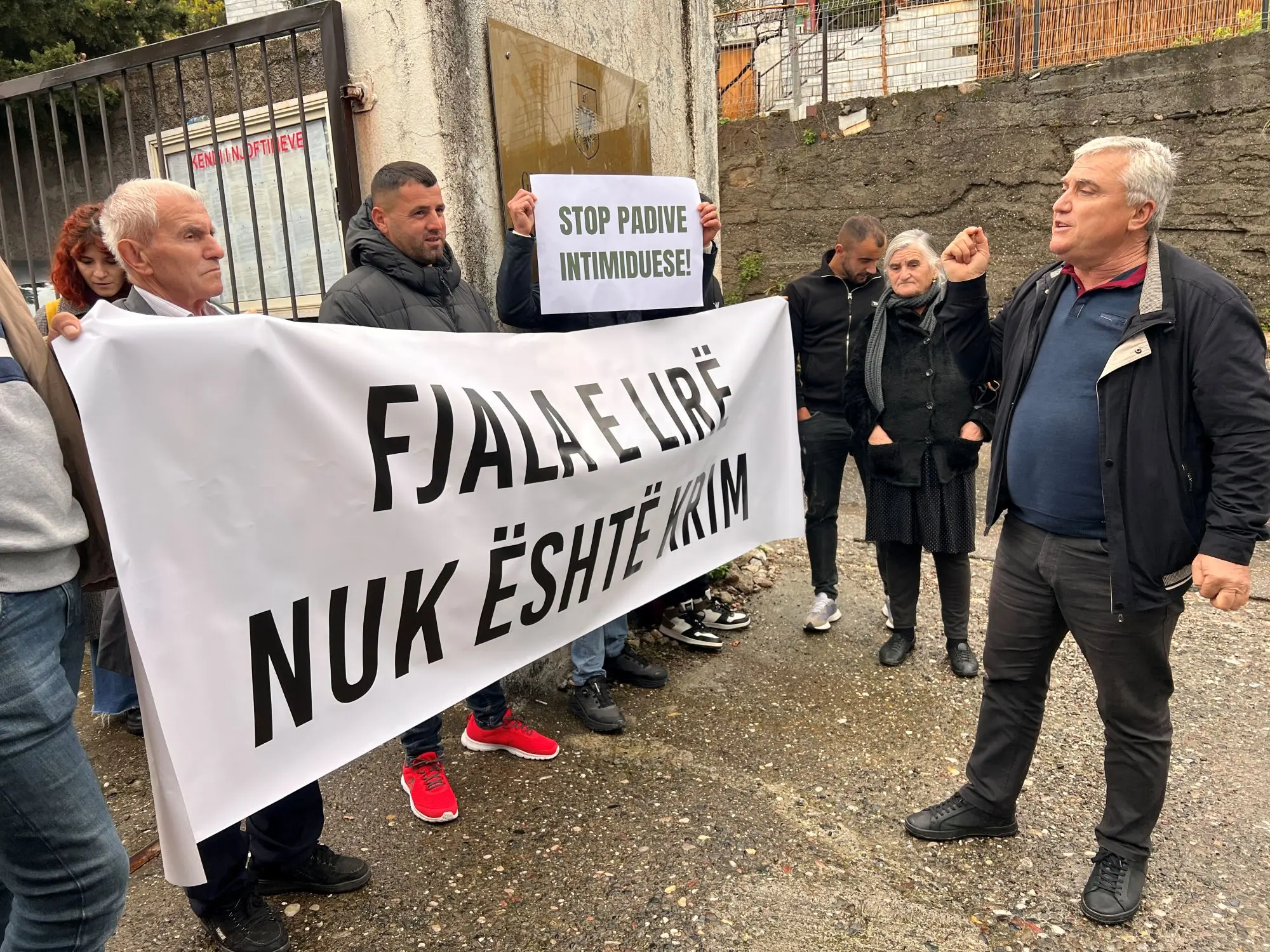
During the protests in Albania - Foto E. Kryeziu

During the protests in Albania – Foto E. Kryeziu

During the protests in Albania - Foto E. Kryeziu

In a six-year-long battle to protect the Zall-Gjoçaj National Park, local activists now face another challenge: a lawsuit filed by the company “Seka Hydropower”, which accuses them of “insult” and “defamation.” The activists argue that the lawsuit is a form of pressure and intimidation, insisting that everything they have stated reflects the truth of a devastated community.

From plaintiffs to defendants

Adem Xhokola, Dhimitër Koleci and Jorgji Locaj stood before the First Instance Court of General Jurisdiction in Lezha during the last week of November, holding a banner that read: “Free speech is not a crime!”

A lawsuit for defamation and insult filed against them by “Seka Hydropower”, the company that built hydropower plants on the rivers running through the two villages, the Flim and Urakë rivers, brought them to the Lezha courthouse.

The concessionary company presented media materials as evidence, where residents of Lufaj (Mirdita) and Gjoçaj (Mat) denounced the drying of the area due to the diversion of water for the construction of the HPPs.

When the summons from the Lezha Court arrived, I thought our lawsuit, the one we filed with the Lezha Prosecutor’s Office, was finally moving forward. I didn’t even look at it. After 10 days I saw it was actually to answer to the company,” said Dhimitër Koleci, one of the residents accused by the company.

He explained that he had expected the summons to be related to the complaint the residents had filed against “Seka Hydropower” regarding the construction of the hydropower plants.

Only later did he realize that he was the one being sued.

The company has sued three activists for damaging its image, for insults, for falsehoods. But the company forgets that it has itself been sued for five years. Everything we have raised in protests and everything we have spoken about has been the truth, and we have taken it to court. For five years nothing has been done. We have never been called to clarify the situation. Irreversible damage has been done to the area,” Koleci said.

Similarly, Adem Xhokola, who since 2018 has protested on roads, squares and mountains against the construction of these hydropower plants, believes the lawsuit is nothing more than open pressure intended to silence them.

We have not defamed or insulted anyone. We have demanded our rights because they have violated all the laws. They have ignored every rule. This is a protected area, a national park. We have fought for years to protect it, and we protected it because we are the residents who were born, raised and live there,” Xhokola said.

The hydropower plants have already been built, but the legal battle continues.

I have fought to protect this place and will continue fighting until the end for my land, for the truth and justice,” he added.

According to the lawsuit, the basis for it were the residents’ statements during a July 2025 protest in the village of Lufaj (Mirdita municipality) where villagers gathered near the hydropower plant to denounce the lack of water and the devastation of the area.

During the July 24 protest, Jorgji Locaj, another accused resident, filled the back of his vehicle with bottled water and distributed it to protesters standing in the summer heat.

Neither the court nor anything else scares us. We are always on the side of truth. No one can take away our right to speak. Only God could do that,” Locaj said outside the Lezha courthouse.

He added that everything said during the protest was factual: dried trees, empty taps, all verifiable.

We ask justice institutions to act and take measures. We are not defaming anyone. They are defaming us. We only ask for justice,” Locaj said.

Other residents and activists also joined in support.

Përparim Ukaj from Lufaj stated that what happened in his village is a “massacre.”

No road, no water, nothing. The trees are dried out, everything is gone, it’s a desert. There’s not a single house left,” Ukaj said.

Seka Hydropower” was established in 2013 as a joint venture between “Gener 2” and “Hydro-Project.” According to the lawsuit, after “Gener 2” withdrew, “Hydro-Project” became the sole owner of the concession with 100% of the shares. Hydro-Project is owned 90% by the Italian company IDROP and 10% by Bardhyl Muçeku, professor in the field of geology.

Zall-Gjoçaj merged with Lura in 2018 to create Albania’s largest national park, “Lurë-Mali i Dejës.” That same year, the private company received permission to build two hydropower plants, one of them in the heart of the national park.

According to Law no. 81/2017, in National Park (Category II) areas, the construction of energy production facilities such as hydropower plants is prohibited.

In January 2022, after a revision of protected areas, the territory where the Zall-Gjoçaj dam is built was removed from the “Lurë-Mali i Dejës” National Park and is no longer protected.

According to Dhimitër Koleci, the company is playing the victim and trying to intimidate activists to stop speaking, protesting, or filing new complaints.

But he emphasized that protests are not crimes, they are a legitimate right.

To build in a national park, to pour concrete when it is still a national park, that is a crime. To divert two rivers, isn’t that a crime? To destroy irrigation channels, the village mill, to damage the cemetery with explosives, isn’t that a crime?” Koleci asked.

The court session on November 26 in Lezha was intended as a mediation hearing but failed to reconcile the parties. The case will now proceed to trial, with the first hearing set for December 15, 2025.

The company argues that the residents’ statements during the protest damaged its image. If found guilty, the residents face fines ranging from 50,000 to 3,000,000 lek.

SLAPP lawsuits used to silence residents

Such lawsuits are classified as SLAPP, strategic lawsuits against public participation, intended to silence critics through intimidation and financial pressure. The European Union has approved a new regulation against SLAPPs, labeling them abusive.

According to Diana Malaj, lawyer and founder of the group ATA, well-known for environmental activism and for supporting Zall-Gjoçaj residents in legal proceedings, these are entirely SLAPP cases.

The arguments are not well-founded. The plaintiffs seek criminal sanctions for activists whose ‘harshest words’ were terms like ‘environmental massacre,’ or pointing out the fact that they have no water and that the area has dried up,” Malaj said.

She added that the penalties sought are disproportionate and that the fines would be a heavy burden on residents who primarily live from farming and livestock.

The aim of the lawsuit is to drag activists into long, exhausting, expensive legal processes. It targets individuals, not the organizations supporting them, striking the three most vocal and active activists of the Zall-Gjoçaj and Lufaj issue,” Malaj noted.

Such lawsuits, she explained, aim to demoralize activists and burden them psychologically by involving them in criminal processes.

In other cases, for example, from environmental activism in southern Italy, legal processes have been experienced as attempts to ‘teach activists a lesson,’ used as punitive measures and intimidation through legal channels,” she said.

Albania’s legislation does not yet explicitly address SLAPP lawsuits.

This case may create a precedent that pushes for legal changes,” Malaj argued.

According to her, studies indicate that Albania has planned several steps regarding SLAPPs up until 2027.

Analysis of the legal framework and institutional practices related to SLAPPs; adopting anti-SLAPP legal changes by summer 2027; full transposition of the EU Anti-SLAPP Directive and Recommendation into Albanian law”.

Nevertheless, Albanian legislation offers constitutional guarantees for freedom of speech and the right to protest.

Ongoing court cases

The Zall-Gjoçaj community has opposed the hydropower projects since 2018. They are still involved in legal processes, most recently at the Administrative Court of Appeal in Tirana, which on October 28, 2025, upheld the lower court’s decision permitting the construction of the “Sekë” and “Zajz” hydropower plants, rejecting the residents’ requests to annul the contract.

The appeal process began in September 2024, while the complaint had been filed four years earlier.

Residents saw the reopening of the case as a hope for justice, but the final decision left them disappointed. They say they now plan to take it to the Supreme Court.

Tag: SLAPP
SLAPP Lawsuit in Albania: Activists Sued for Protesting Environmental Damage

Building hydroelectric power plants in Albania’s Zall-Gjoçaj National Park is what local activists have been trying to prevent for six years, but they’ve been faced with defamation lawsuits filed by the company “Seka Hydropower,” which are effectively SLAPPs

15/12/2025, Erisa Kryeziu Tirana
During the protests in Albania - Foto E. Kryeziu

During the protests in Albania – Foto E. Kryeziu

During the protests in Albania - Foto E. Kryeziu

In a six-year-long battle to protect the Zall-Gjoçaj National Park, local activists now face another challenge: a lawsuit filed by the company “Seka Hydropower”, which accuses them of “insult” and “defamation.” The activists argue that the lawsuit is a form of pressure and intimidation, insisting that everything they have stated reflects the truth of a devastated community.

From plaintiffs to defendants

Adem Xhokola, Dhimitër Koleci and Jorgji Locaj stood before the First Instance Court of General Jurisdiction in Lezha during the last week of November, holding a banner that read: “Free speech is not a crime!”

A lawsuit for defamation and insult filed against them by “Seka Hydropower”, the company that built hydropower plants on the rivers running through the two villages, the Flim and Urakë rivers, brought them to the Lezha courthouse.

The concessionary company presented media materials as evidence, where residents of Lufaj (Mirdita) and Gjoçaj (Mat) denounced the drying of the area due to the diversion of water for the construction of the HPPs.

When the summons from the Lezha Court arrived, I thought our lawsuit, the one we filed with the Lezha Prosecutor’s Office, was finally moving forward. I didn’t even look at it. After 10 days I saw it was actually to answer to the company,” said Dhimitër Koleci, one of the residents accused by the company.

He explained that he had expected the summons to be related to the complaint the residents had filed against “Seka Hydropower” regarding the construction of the hydropower plants.

Only later did he realize that he was the one being sued.

The company has sued three activists for damaging its image, for insults, for falsehoods. But the company forgets that it has itself been sued for five years. Everything we have raised in protests and everything we have spoken about has been the truth, and we have taken it to court. For five years nothing has been done. We have never been called to clarify the situation. Irreversible damage has been done to the area,” Koleci said.

Similarly, Adem Xhokola, who since 2018 has protested on roads, squares and mountains against the construction of these hydropower plants, believes the lawsuit is nothing more than open pressure intended to silence them.

We have not defamed or insulted anyone. We have demanded our rights because they have violated all the laws. They have ignored every rule. This is a protected area, a national park. We have fought for years to protect it, and we protected it because we are the residents who were born, raised and live there,” Xhokola said.

The hydropower plants have already been built, but the legal battle continues.

I have fought to protect this place and will continue fighting until the end for my land, for the truth and justice,” he added.

According to the lawsuit, the basis for it were the residents’ statements during a July 2025 protest in the village of Lufaj (Mirdita municipality) where villagers gathered near the hydropower plant to denounce the lack of water and the devastation of the area.

During the July 24 protest, Jorgji Locaj, another accused resident, filled the back of his vehicle with bottled water and distributed it to protesters standing in the summer heat.

Neither the court nor anything else scares us. We are always on the side of truth. No one can take away our right to speak. Only God could do that,” Locaj said outside the Lezha courthouse.

He added that everything said during the protest was factual: dried trees, empty taps, all verifiable.

We ask justice institutions to act and take measures. We are not defaming anyone. They are defaming us. We only ask for justice,” Locaj said.

Other residents and activists also joined in support.

Përparim Ukaj from Lufaj stated that what happened in his village is a “massacre.”

No road, no water, nothing. The trees are dried out, everything is gone, it’s a desert. There’s not a single house left,” Ukaj said.

Seka Hydropower” was established in 2013 as a joint venture between “Gener 2” and “Hydro-Project.” According to the lawsuit, after “Gener 2” withdrew, “Hydro-Project” became the sole owner of the concession with 100% of the shares. Hydro-Project is owned 90% by the Italian company IDROP and 10% by Bardhyl Muçeku, professor in the field of geology.

Zall-Gjoçaj merged with Lura in 2018 to create Albania’s largest national park, “Lurë-Mali i Dejës.” That same year, the private company received permission to build two hydropower plants, one of them in the heart of the national park.

According to Law no. 81/2017, in National Park (Category II) areas, the construction of energy production facilities such as hydropower plants is prohibited.

In January 2022, after a revision of protected areas, the territory where the Zall-Gjoçaj dam is built was removed from the “Lurë-Mali i Dejës” National Park and is no longer protected.

According to Dhimitër Koleci, the company is playing the victim and trying to intimidate activists to stop speaking, protesting, or filing new complaints.

But he emphasized that protests are not crimes, they are a legitimate right.

To build in a national park, to pour concrete when it is still a national park, that is a crime. To divert two rivers, isn’t that a crime? To destroy irrigation channels, the village mill, to damage the cemetery with explosives, isn’t that a crime?” Koleci asked.

The court session on November 26 in Lezha was intended as a mediation hearing but failed to reconcile the parties. The case will now proceed to trial, with the first hearing set for December 15, 2025.

The company argues that the residents’ statements during the protest damaged its image. If found guilty, the residents face fines ranging from 50,000 to 3,000,000 lek.

SLAPP lawsuits used to silence residents

Such lawsuits are classified as SLAPP, strategic lawsuits against public participation, intended to silence critics through intimidation and financial pressure. The European Union has approved a new regulation against SLAPPs, labeling them abusive.

According to Diana Malaj, lawyer and founder of the group ATA, well-known for environmental activism and for supporting Zall-Gjoçaj residents in legal proceedings, these are entirely SLAPP cases.

The arguments are not well-founded. The plaintiffs seek criminal sanctions for activists whose ‘harshest words’ were terms like ‘environmental massacre,’ or pointing out the fact that they have no water and that the area has dried up,” Malaj said.

She added that the penalties sought are disproportionate and that the fines would be a heavy burden on residents who primarily live from farming and livestock.

The aim of the lawsuit is to drag activists into long, exhausting, expensive legal processes. It targets individuals, not the organizations supporting them, striking the three most vocal and active activists of the Zall-Gjoçaj and Lufaj issue,” Malaj noted.

Such lawsuits, she explained, aim to demoralize activists and burden them psychologically by involving them in criminal processes.

In other cases, for example, from environmental activism in southern Italy, legal processes have been experienced as attempts to ‘teach activists a lesson,’ used as punitive measures and intimidation through legal channels,” she said.

Albania’s legislation does not yet explicitly address SLAPP lawsuits.

This case may create a precedent that pushes for legal changes,” Malaj argued.

According to her, studies indicate that Albania has planned several steps regarding SLAPPs up until 2027.

Analysis of the legal framework and institutional practices related to SLAPPs; adopting anti-SLAPP legal changes by summer 2027; full transposition of the EU Anti-SLAPP Directive and Recommendation into Albanian law”.

Nevertheless, Albanian legislation offers constitutional guarantees for freedom of speech and the right to protest.

Ongoing court cases

The Zall-Gjoçaj community has opposed the hydropower projects since 2018. They are still involved in legal processes, most recently at the Administrative Court of Appeal in Tirana, which on October 28, 2025, upheld the lower court’s decision permitting the construction of the “Sekë” and “Zajz” hydropower plants, rejecting the residents’ requests to annul the contract.

The appeal process began in September 2024, while the complaint had been filed four years earlier.

Residents saw the reopening of the case as a hope for justice, but the final decision left them disappointed. They say they now plan to take it to the Supreme Court.

Tag: SLAPP

Comment and share

OBCT's Newsletter

To your inbox every two weeks