Kosovo: Srpska Lista to participate in early elections
The Srpska Lista – the main party of Kosovo Serbs – will participate in the early elections on December 28th, despite yet another attempt to block its participation in the Electoral Commission by the Vetëvendosje movement, a move that has been heavily criticized internationally
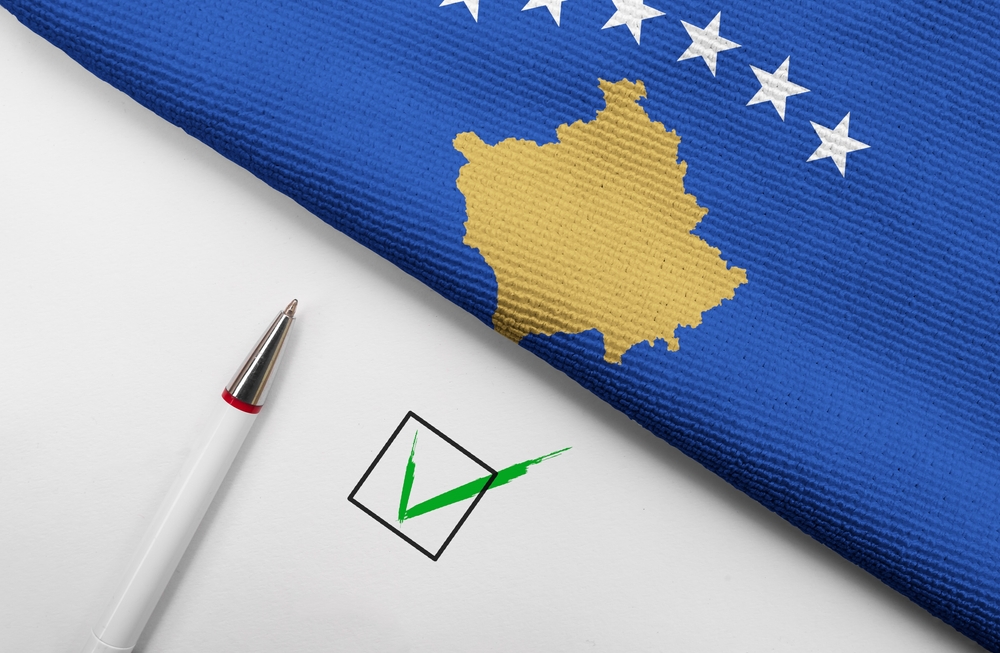
Pencil,,Flag,Of,Kosovo,And,Check,Mark,On,Paper,Sheet
© GagoDesign/Shutterstock
Kosovo has initiated procedures for organizing the early parliamentary elections set for 28 December, after Pristina’s parliament failed to form a government since the elections of 9 February 2025.
The Central Election Commission (CEC) is organizing the process with shortened deadlines, because from the day the elections were announced at the end of November until voting day, only 37 days are available.
So far, the CEC has certified the participating political entities, which have also submitted their lists of candidates for MPs.
The CEC, in cooperation with various state institutions, will verify the eligibility of the candidates to be certified for participation in the elections.
How are the parties entering this race?
The Vetëvendosje Movement (LVV), led by caretaker Prime Minister Albin Kurti and which won the most votes in the last elections, has chosen the same partners for this process.
However, this time the form of cooperation has changed. Parties such as “Guxo” and “Alternativa,” which in previous elections were merged into the LVV list, have this time signed an agreement that has been registered in the CEC officially as a coalition. They were also joined by the Albanian Christian Democratic Party (PSHDK).
Meanwhile, other parties are entering these elections without official coalitions, but with several cooperation agreements with smaller parties.
The Democratic Party of Kosovo (PDK) has included in its electoral list Eman Rrahmani, who in the previous elections led the “Family List.”
PDK chairman Bedri Hamza, who is also the party’s candidate for prime minister, has also joined forces with individual figures—public personalities from various sectors.
Similarly, the chairman of the Democratic League of Kosovo (LDK), Lumir Abdixhiku, who also aims to win power, has taken the same approach.
Abdixhiku’s party has included in its electoral list candidates from “New Kosovo Alliance,” formerly led by the well-known businessman Behgjet Pacolli, as well as candidates from the Justice Party.
The party of former prime minister Ramush Haradinaj, the Alliance for the Future of Kosovo (AAK), has decided to run alone this time, despite analysts’ assessments that it risks remaining outside Parliament.
In February, AAK had entered a pre-election coalition with the Social Democratic Initiative (NISMA), led by Fatmir Limaj, but after the elections, Limaj and his two MPs decided to part ways with AAK.
For these elections, Limaj initially sought cooperation with LDK, but no agreement was reached.
Later, Limaj held discussions with PDK, a party he once belonged to as one of its founders.
But the plan for reunification failed, and NISMA is running alone in these elections, also risking—like other small parties—remaining outside Parliament.
Srpska Lista, a repeated scenario
On 2 December, the CEC did not certify Srpska Lista—the largest party of Kosovo Serbs, backed by Belgrade—for participation in the elections.
Two LVV members voted against certification, the CEC chair and the Srpska Lista member voted in favor, while seven members from other parties abstained.
Certification was refused despite the fact that the Office for Registration, Certification and Financial Oversight at the CEC had issued a positive recommendation, determining that Srpska Lista had fulfilled all legal requirements to participate in the elections.
However, Srpska Lista secured participation after appealing to the Election Complaints and Appeals Panel (ECAP), an independent authority competent to decide on complaints related to the electoral process.
ECAP deemed the CEC decision unlawful, overturned it, and certified Srpska Lista for the 28 December elections.
Furthermore, ECAP argued that when a political entity meets the required legal criteria and deadlines, decision-making must be based on facts and professional recommendations of the internal CEC mechanisms.
Why does LVV oppose Srpska Lista’s participation?
This is the third time the CEC initially refuses to certify this party, having acted similarly for the 9 February parliamentary elections and for the 12 October local elections. In both previous cases, ECAP overturned the CEC decision.
LVV characterizes Srpska Lista as a threat to constitutional order and as Serbia’s instrument for undermining democracy in Kosovo.
Currently, Srpska Lista is led by Zlatan Elek, but according to LVV, the “de facto” leader remains Milan Radoičić — who has taken responsibility for the 2023 terrorist attack in Banjska, Zveçan, in which Kosovo Police Sergeant Afrim Bunjaku was killed and several other officers were injured.
At the time of the attack, Radoičić was deputy chairman of Srpska Lista. He is now on the run, while Kosovo has issued an international arrest warrant for him.
International criticism
The CEC decision was condemned by the international community, including the U.S., the EU, and other QUINT countries.
The U.S. Embassy in Kosovo said that the Vetëvendosje Movement’s efforts to block the certification of Srpska Lista are “short-sighted and divisive.”
“Such actions undermine Kosovo’s stability and U.S. interests, including restarting our strategic dialogue to advance opportunities for U.S. and Kosovo businesses,” the Embassy’s statement said.
In September, the U.S. suspended the planned strategic dialogue with Kosovo for an indefinite period, arguing that actions by the Government led by caretaker Prime Minister Albin Kurti had “increased tensions and instability.”
As a reason for this decision, political analysts cited government officials’ criticism of the work of the Constitutional Court, as well as LVV’s unsuccessful attempts to block Srpska Lista’s participation in both the February parliamentary elections and the 12 October local elections.
Shortly before the CEC vote, the U.S. Embassy had expressed concern about any attempt to restrict Serb parties’ participation in the local elections.