Kosovo fails to form a government and heads towards early elections

After months of political stalemate, Vetëvendosje leader Albin Kurti has failed to win the confidence of the Pristina parliament. The only way out is to call voters back to the polls
28/10/2025, Mehmet Krasniqi Pristina
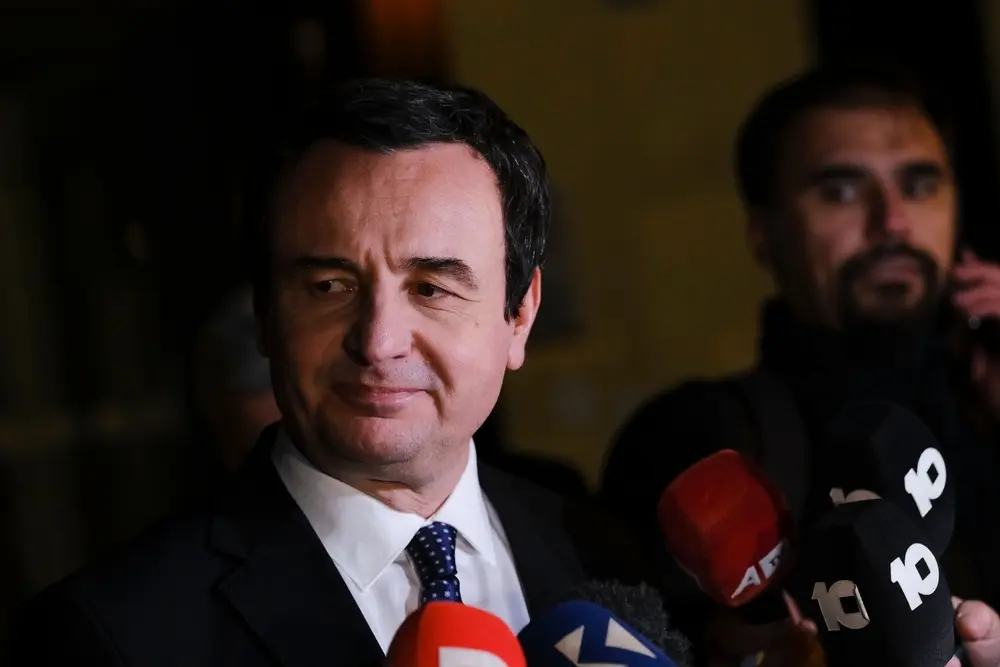
Albin Kurti - © Alexandros Michailidis/Shutterstock

shutterstock_2268428917

Albin Kurti - © Alexandros Michailidis/Shutterstock

The Kosovo Assembly did not succeed in electing a new government during Sunday’s extraordinary session, held nearly nine months after the parliamentary elections of February 9. The prime minister-designate, Albin Kurti, failed to secure the required 61 votes. Kurti’s proposed cabinet of 19 ministers received 56 votes in favor and 52 against, while 4 members of parliament were absent.

This is the first time since 2001 that a nominee for prime minister has failed to be approved by the Assembly.

“In these six months, the efforts to build a governing majority have not produced results, despite our repeated and exhaustive attempts. None of the parliamentary parties we invited has agreed to join a coalition government, even though this time citizens’ votes clearly indicated that a coalition was necessary,” Kurti told lawmakers.

In turn, opposition representatives accused Kurti.

“Albin Kurti will no longer be prime minister, not now, nor after the upcoming elections. His time in power has come to an end,” said the head of the Democratic Party of Kosovo (PDK), Memli Krasniqi.

Meanwhile, the leader of the Democratic League of Kosovo (LDK), Lumir Abdixhiku, accused Kurti of violating the Constitution.

“You have blocked an entire state for eight months. Go ahead, test yourself with democratic numbers. Any other justification is simply a step toward new early elections, which is clearly where we are headed,” Abdixhiku said at the start of the session.

The leader of the Alliance for the Future of Kosovo (AAK), Ramush Haradinaj, described Kurti’s speech in the session as an attempt to justify the country’s problems.

“In my opinion, you are a product of the hybrid war waged by our enemies. You have systematically worked to discredit every value of this country,” Haradinaj declared.

What happens next?

According to Kosovo’s Constitution, if a new government fails to receive majority support from MPs, the President must appoint, within ten days, a second nominee for prime minister – the one who has the best chance of forming a government, from any party.

However, all opposition parties have said they will ask President Vjosa Osmani to call for new elections immediately.

If no political party expresses willingness to take the mandate, President Vjosa Osmani is constitutionally required to dissolve Parliament and announce new elections to be held by 40 days.

According to the Kosovo Democratic Institute (KDI), this scenario remains the most optimal solution for the country. KDI emphasizes that Kosovo is clearly facing a deep political deadlock and polarization, which is reflected in the functioning of institutions and threatens to undermine both fiscal stability and the country’s international credibility.

“Under these circumstances, early parliamentary elections represent the most stable and trustworthy option to end this crisis and return to citizens the opportunity to determine the political direction of the country,” KDI stated.

Kosovo now risks heading into new elections without an approved budget for the coming year and with millions of euros in foreign funds at stake due to the Assembly’s failure to ratify international agreements.

If early elections are announced, it will be the third round within a single year, after the parliamentary elections on February 9 and the municipal elections on October 12.

Kosovo fails to form a government and heads towards early elections

After months of political stalemate, Vetëvendosje leader Albin Kurti has failed to win the confidence of the Pristina parliament. The only way out is to call voters back to the polls

28/10/2025, Mehmet Krasniqi Pristina
Albin Kurti - © Alexandros Michailidis/Shutterstock

shutterstock_2268428917

Albin Kurti - © Alexandros Michailidis/Shutterstock

The Kosovo Assembly did not succeed in electing a new government during Sunday’s extraordinary session, held nearly nine months after the parliamentary elections of February 9. The prime minister-designate, Albin Kurti, failed to secure the required 61 votes. Kurti’s proposed cabinet of 19 ministers received 56 votes in favor and 52 against, while 4 members of parliament were absent.

This is the first time since 2001 that a nominee for prime minister has failed to be approved by the Assembly.

“In these six months, the efforts to build a governing majority have not produced results, despite our repeated and exhaustive attempts. None of the parliamentary parties we invited has agreed to join a coalition government, even though this time citizens’ votes clearly indicated that a coalition was necessary,” Kurti told lawmakers.

In turn, opposition representatives accused Kurti.

“Albin Kurti will no longer be prime minister, not now, nor after the upcoming elections. His time in power has come to an end,” said the head of the Democratic Party of Kosovo (PDK), Memli Krasniqi.

Meanwhile, the leader of the Democratic League of Kosovo (LDK), Lumir Abdixhiku, accused Kurti of violating the Constitution.

“You have blocked an entire state for eight months. Go ahead, test yourself with democratic numbers. Any other justification is simply a step toward new early elections, which is clearly where we are headed,” Abdixhiku said at the start of the session.

The leader of the Alliance for the Future of Kosovo (AAK), Ramush Haradinaj, described Kurti’s speech in the session as an attempt to justify the country’s problems.

“In my opinion, you are a product of the hybrid war waged by our enemies. You have systematically worked to discredit every value of this country,” Haradinaj declared.

What happens next?

According to Kosovo’s Constitution, if a new government fails to receive majority support from MPs, the President must appoint, within ten days, a second nominee for prime minister – the one who has the best chance of forming a government, from any party.

However, all opposition parties have said they will ask President Vjosa Osmani to call for new elections immediately.

If no political party expresses willingness to take the mandate, President Vjosa Osmani is constitutionally required to dissolve Parliament and announce new elections to be held by 40 days.

According to the Kosovo Democratic Institute (KDI), this scenario remains the most optimal solution for the country. KDI emphasizes that Kosovo is clearly facing a deep political deadlock and polarization, which is reflected in the functioning of institutions and threatens to undermine both fiscal stability and the country’s international credibility.

“Under these circumstances, early parliamentary elections represent the most stable and trustworthy option to end this crisis and return to citizens the opportunity to determine the political direction of the country,” KDI stated.

Kosovo now risks heading into new elections without an approved budget for the coming year and with millions of euros in foreign funds at stake due to the Assembly’s failure to ratify international agreements.

If early elections are announced, it will be the third round within a single year, after the parliamentary elections on February 9 and the municipal elections on October 12.

Comment and share

OBCT's Newsletter

To your inbox every two weeks