How Dodik can remain a vital factor in BiH

Those celebrating the demise of Milorad Dodik, who has spearheaded secessionist politics in Republika Srpska (RS), one of Bosnia and Herzegovina’s (BiH) two entities, would be well advised to exercise caution. One of the great survivors of Bosnian politics, Dodik still has some valuable cards up his considerable sleeve
17/11/2025, Alex Young
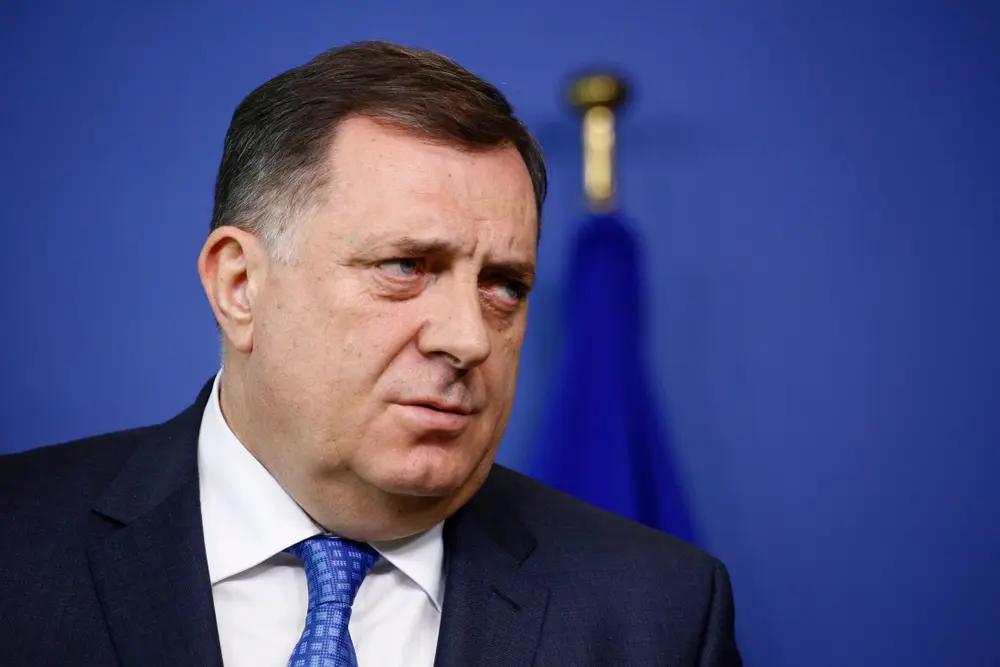
Milorad Dodik © Alexandros Michailidis/Shutterstock

Milorad Dodik © Alexandros Michailidis/Shutterstock

Milorad Dodik © Alexandros Michailidis/Shutterstock

While Dodik may have been ousted from the presidency of RS and banned from holding elected office for six years, he still wields considerable power through his leadership of the Alliance of Independent Social Democrats (SNSD). It is a position he will seek to reinforce by rousing nationalist sentiment, particularly towards the international community.

The nature of BiH’s labyrinthine politics – grounded in the nationalistic blocs of the three constituent peoples (Bosniaks, Serbs, and Croats) – is such that politicians can continue to serve as de facto veto points, hindering reforms and extracting concessions. Even if from the shadows, Dodik can remain a pivotal figure.

The case of Dodik’s Bosnian Croat counterpart, Dragan Čović, is a case in point. Over the past twenty years or so, there have been junctures where Čović either operated outside elected office or served in positions of no great prominence (i.e., as a member of the state-level House of Peoples).

In 2006, then High Representative, the late Lord Ashdown, removed Čović from the Presidency for abuse of office. In 2018, Čović failed in his bid for re-election as the Croat member of the presidency, losing to Željko Komšić, whom he accused of garnering support from Bosniaks, not Croats.

It is Čović’s long-standing presidency of the Croatian Democratic Union (HDZ) that has allowed him to retain control over the Croat political sphere in BiH. The HDZ has been the dominant Croat party, forming governments at various levels (state, entity, cantonal, and municipal). The HDZ is an essential component of ruling coalitions at the state level, including with Dodik’s SNSD.

Any major decision involving Croat interests in, or areas of, BiH inevitably demands Čović’s assent. The HDZ’s ability to veto legislation and government formation makes it an indispensable player, a position reinforced by networks of patronage and clientalism. The Croatian National Assembly, meanwhile, which Čović heads, ensures a largely uniform Croat position throughout BiH.

A prime example of the power Čović and the HDZ wield is the ‘Southern Interconnection,’ a gas pipeline designed to connect BiH to Croatia’s gas network. It is intended to facilitate the import of liquefied natural gas (LNG) from the Krk terminal, thereby reducing dependence on Russian gas. Despite extensive US and EU pressure, Bosnian Croats have conditioned the project on the creation of a new gas transmission company to manage the pipeline, which they would operate. BiH’s energy diversification has been hamstrung by Čović.

The Čović example provides Dodik ideas and inspiration as he vows to retain control of RS politics. His continued leadership of the SNSD, which has been the most popular party in the entity for over twenty years, is essential to this plan. By controlling how Bosnian Serbs act vis-à-vis the state-level, Dodik can continue to hamper and destabilise this fragmented country, blocking and obstructing until his heart’s content. Serb opposition to the Reform Agenda necessary to unlock funds from the EU’s Growth Plan for the Western Balkans is a case in point.

Dodik faces several challenges in this regard. First, to stave off potential leadership challenges, notably from vice-president Željka Cvijanović, the current Serb member of the BiH Presidency (Radovan Višković, another prominent SNSD member, recently resigned as RS prime minister). Dodik strengthened his hand by reshuffling the RS government, appointing the current prime minister, Savo Minić; a move some argue was illegal as Dodik’s mandate had already been officially revoked.

Second, he must ensure the SNSD remains the dominant player. To this end, they have pragmatically nominated a candidate for the Republika Srpska presidential elections on 23rd November, having originally called for a boycott of the poll. Siniša Karan, the entity’s Minister for Scientific and Technological Development and Higher Education, is widely acknowledged to be one of Dodik’s closest allies.

A master of portraying threats against the RS, including its potential abolition, while avoiding questions about the feasibility of his successionist project – a card he has played over and over again – Dodik is on familiar if not always firm ground. He has become the personification of his oft-repeated claims of injustice against the RS by Sarajevo and the international community. The sudden lifting of US sanctions targeting Dodik and various individuals and companies connected to him will only further reinforce his position.

As Čović enjoys the diplomatic support of Zagreb, so Dodik remains the darling of Belgrade. Though Vucic may appear distracted by the wave of protests in Serbia, the prospect of a deteriorated security situation in BiH raises profound concerns in European capitals. Belgrade has been offered an ace that it may well be tempted to play. Dodik retains support in Hungary, which continues to refer to him as president, whilst his recent meeting with Russian foreign minister, Sergey Lavrov, show that Moscow is ready to capitalise on the situation.

The structure of BiH politics, with consensus required among the constituent peoples, allows the likes of Dodik and Čović to retain a pivotal bargaining position, regardless of whether they are in elected office or not. If their demands are not met, compromises will not be found. They can not simply be sidelined. While institutions bestow legitimacy, power ultimately lies elsewhere. Those hoping for Dodik’s speedy demise should be prepared to be disappointed.

How Dodik can remain a vital factor in BiH

Those celebrating the demise of Milorad Dodik, who has spearheaded secessionist politics in Republika Srpska (RS), one of Bosnia and Herzegovina’s (BiH) two entities, would be well advised to exercise caution. One of the great survivors of Bosnian politics, Dodik still has some valuable cards up his considerable sleeve

17/11/2025, Alex Young
Milorad Dodik © Alexandros Michailidis/Shutterstock

Milorad Dodik © Alexandros Michailidis/Shutterstock

Milorad Dodik © Alexandros Michailidis/Shutterstock

While Dodik may have been ousted from the presidency of RS and banned from holding elected office for six years, he still wields considerable power through his leadership of the Alliance of Independent Social Democrats (SNSD). It is a position he will seek to reinforce by rousing nationalist sentiment, particularly towards the international community.

The nature of BiH’s labyrinthine politics – grounded in the nationalistic blocs of the three constituent peoples (Bosniaks, Serbs, and Croats) – is such that politicians can continue to serve as de facto veto points, hindering reforms and extracting concessions. Even if from the shadows, Dodik can remain a pivotal figure.

The case of Dodik’s Bosnian Croat counterpart, Dragan Čović, is a case in point. Over the past twenty years or so, there have been junctures where Čović either operated outside elected office or served in positions of no great prominence (i.e., as a member of the state-level House of Peoples).

In 2006, then High Representative, the late Lord Ashdown, removed Čović from the Presidency for abuse of office. In 2018, Čović failed in his bid for re-election as the Croat member of the presidency, losing to Željko Komšić, whom he accused of garnering support from Bosniaks, not Croats.

It is Čović’s long-standing presidency of the Croatian Democratic Union (HDZ) that has allowed him to retain control over the Croat political sphere in BiH. The HDZ has been the dominant Croat party, forming governments at various levels (state, entity, cantonal, and municipal). The HDZ is an essential component of ruling coalitions at the state level, including with Dodik’s SNSD.

Any major decision involving Croat interests in, or areas of, BiH inevitably demands Čović’s assent. The HDZ’s ability to veto legislation and government formation makes it an indispensable player, a position reinforced by networks of patronage and clientalism. The Croatian National Assembly, meanwhile, which Čović heads, ensures a largely uniform Croat position throughout BiH.

A prime example of the power Čović and the HDZ wield is the ‘Southern Interconnection,’ a gas pipeline designed to connect BiH to Croatia’s gas network. It is intended to facilitate the import of liquefied natural gas (LNG) from the Krk terminal, thereby reducing dependence on Russian gas. Despite extensive US and EU pressure, Bosnian Croats have conditioned the project on the creation of a new gas transmission company to manage the pipeline, which they would operate. BiH’s energy diversification has been hamstrung by Čović.

The Čović example provides Dodik ideas and inspiration as he vows to retain control of RS politics. His continued leadership of the SNSD, which has been the most popular party in the entity for over twenty years, is essential to this plan. By controlling how Bosnian Serbs act vis-à-vis the state-level, Dodik can continue to hamper and destabilise this fragmented country, blocking and obstructing until his heart’s content. Serb opposition to the Reform Agenda necessary to unlock funds from the EU’s Growth Plan for the Western Balkans is a case in point.

Dodik faces several challenges in this regard. First, to stave off potential leadership challenges, notably from vice-president Željka Cvijanović, the current Serb member of the BiH Presidency (Radovan Višković, another prominent SNSD member, recently resigned as RS prime minister). Dodik strengthened his hand by reshuffling the RS government, appointing the current prime minister, Savo Minić; a move some argue was illegal as Dodik’s mandate had already been officially revoked.

Second, he must ensure the SNSD remains the dominant player. To this end, they have pragmatically nominated a candidate for the Republika Srpska presidential elections on 23rd November, having originally called for a boycott of the poll. Siniša Karan, the entity’s Minister for Scientific and Technological Development and Higher Education, is widely acknowledged to be one of Dodik’s closest allies.

A master of portraying threats against the RS, including its potential abolition, while avoiding questions about the feasibility of his successionist project – a card he has played over and over again – Dodik is on familiar if not always firm ground. He has become the personification of his oft-repeated claims of injustice against the RS by Sarajevo and the international community. The sudden lifting of US sanctions targeting Dodik and various individuals and companies connected to him will only further reinforce his position.

As Čović enjoys the diplomatic support of Zagreb, so Dodik remains the darling of Belgrade. Though Vucic may appear distracted by the wave of protests in Serbia, the prospect of a deteriorated security situation in BiH raises profound concerns in European capitals. Belgrade has been offered an ace that it may well be tempted to play. Dodik retains support in Hungary, which continues to refer to him as president, whilst his recent meeting with Russian foreign minister, Sergey Lavrov, show that Moscow is ready to capitalise on the situation.

The structure of BiH politics, with consensus required among the constituent peoples, allows the likes of Dodik and Čović to retain a pivotal bargaining position, regardless of whether they are in elected office or not. If their demands are not met, compromises will not be found. They can not simply be sidelined. While institutions bestow legitimacy, power ultimately lies elsewhere. Those hoping for Dodik’s speedy demise should be prepared to be disappointed.

Comment and share

OBCT's Newsletter

To your inbox every two weeks