Greece: DeepSeek and Technological Sovereignty
In Greece, the Chinese chatbot DeepSeek is under investigation for possible violations of user privacy. A move that puts the country at the forefront of the global challenge between personal data, energy dominance and technological sovereignty
Greece-DeepSeek-and-Technological-Sovereignty
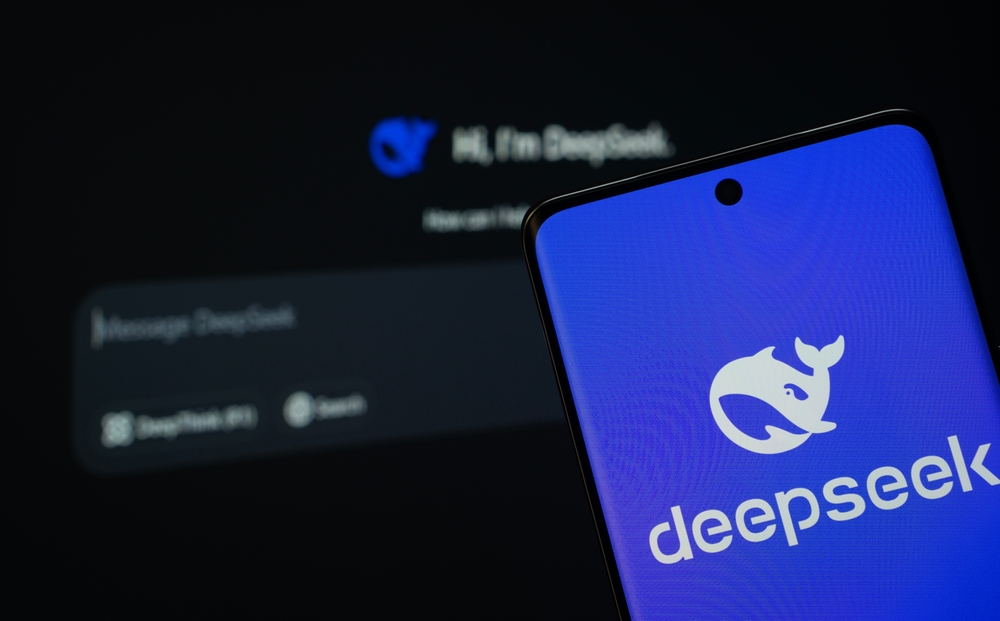
DeepSeek - © Bangla press/Shutterstock
The Hellenic Data Protection Authority’s (HDPA) swift February 6 decision to launch an ex officio probe into DeepSeek was not made in isolation.
It came just one week after Italy banned the chatbot, citing failure to comply with privacy inquiries—a move followed by scrutiny in South Korea and the Netherlands, and Australia’s ban on government devices.
At the heart of these actions lies a fundamental tension: can European countries harness AI’s potential while protecting citizens from opaque data practices?
DeepSeek’s rapid rise—2.6 million downloads globally by February 2025 —reflects its technical prowess as a polyglot ChatGPT rival. Yet its architecture, built on Chinese servers under Beijing’s jurisdiction, triggers alarm bells.
Unlike models such as ChatGPT, which are developed by OpenAI and hosted predominantly on U.S.-based infrastructure under strict compliance with Western data protection norms (such as GDPR and CCPA), DeepSeek’s servers and data governance are rooted in Chinese regulatory frameworks.
This has raised concerns among European regulators over data sovereignty and cross-border data flows. Critics argue that DeepSeek’s privacy policy lacks transparency, failing to specify the nature of data collected and the entities with which it is shared.
The PRC National Intelligence Law (as amended in 2018) , which compels Chinese companies to cooperate with state security agencies, casts a long shadow over user data.
Italy’s cautionary tale: when oversight fails
The parallels with Italy’s AI Decree (DDL 1146) debate are striking. There, civil society groups like Privacy Network and The Good Lobby fought—and lost—key battles for transparency.
Amendments demanding disclosure of police biometric data usage, an independent AI regulatory body and an annual parliamentary report on surveillance tech were rejected in March 2025’s rushed legislative process.
"The balance between security and liberty is being rewritten by AI—and not in citizens’ favour," observes for OBCT Daniele Sabato, policy officer at OBESSU and member of the experts’ team supporting -as per January 2025- the drafting of the Council of Europe’s Roadmap on AI, securing the inclusion of young people’s voices in the process through a bottom-up approach.
Greece now faces a similar crossroads. While Prime Minister Mitsotakis champions Pharos —the €30 million EU-backed AI Factory—as a beacon of innovation, critics ask: where are the safeguards?
The project’s focus on healthcare, wildfire prevention, and Greek language AI promises societal benefits, but without Italy’s hard-won (if imperfect) public debates, risks abound.
The energy game-changer: China’s surprising edge
Beneath the privacy wars, a quieter revolution is unfolding: the energy efficiency of AI. When DeepSeek’s R1 model claimed 1/50th the power consumption of U.S. competitors in January 2025, it was not just Nvidia’s stock that trembled—the entire Western AI paradigm faced disruption.
Independent analyses, including a Cleanthinking.de 2025 report, validated a 70% reduction in energy use versus conventional models.
This matters profoundly for Greece. The country’s Daedalus supercomputer — a €35 million marvel investment in Lavrio announced by the Greek PM in December 2024—is designed to be both powerful and green, running on renewables with cutting-edge cooling.
If China, too, sustains the edge that AI’s future belongs to those who master energy efficiency as much as algorithms, then Europe’s dream of "technological sovereignty" could hinge on energy policy as much as regulation.
Youth and the AI boom: Greece’s silent laboratory
While regulators wrestle with geopolitics, Greek society is voting with its keyboards. Independent reports throughout 2024-25 show a steadily growing AI adoption among young Greeks, particularly for education and creative tools.
Yet this grassroots revolution remains shockingly understudied—no official data exists on DeepSeek’s local user base, leaving policymakers to act in an information vacuum.
Sovereignty at what cost?
In conclusion, one could say that Greece’s AI moment is fraught with contradictions. EU-supported Pharos and Daedalus investments could offer the country a chance to leapfrog into the first rank of European innovators.
In this momentum, the Greek civil society could and should play a leading role in ensuring democratic checks are not abandoned. As Italy’s experience proves, without vigorous public debate and transparent governance, even well-intentioned AI strategies can erode rights.
The stakes extend beyond borders. In choosing between Chinese efficiency, American scale, and European values, Greece is not just adopting technology—it is shaping the future of its national digital strategy. One thing is certain: in the global AI race, energy and ethics will be just as decisive as processing power.