EU rule of law erodes further as Commission struggles to respond
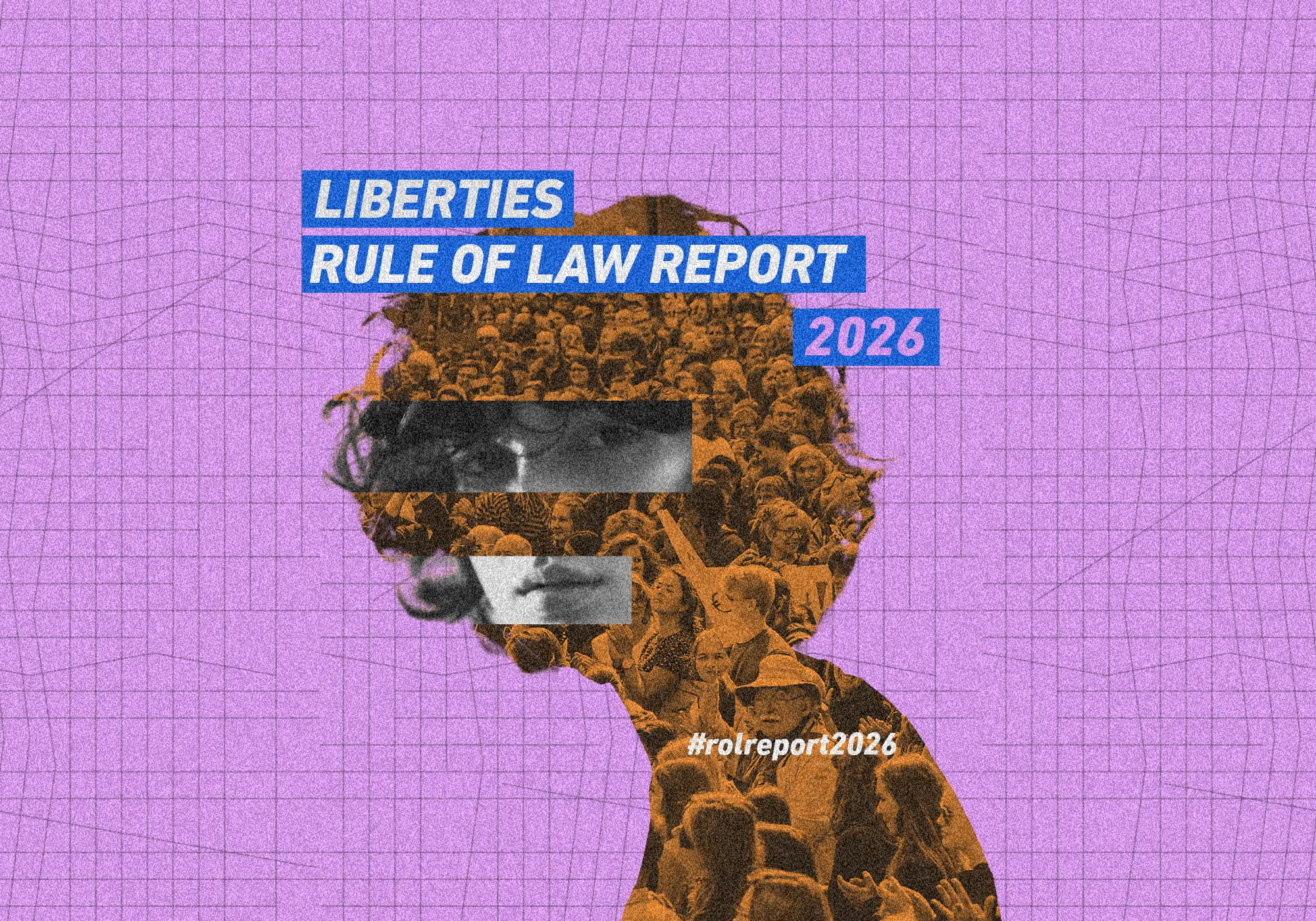
Examining the most significant infringements of justice, corruption, media freedom, and checks and balances across the European Union (EU) in 2025, the Liberties Rule of Law Report 2026 has found stagnation as the dominant trend in the rule of law, with very limited progress among Member States
© Liberties
© Liberties
Source: Civil Liberties Union for Europe
The report finds that the EU’s mechanisms for addressing the decline in the rule of law are largely ineffective, as, despite four years of recommendations from the European Commission, most Member States have failed to turn guidance into tangible action.
Now in its seventh edition since 2020, the report, coordinated by the Civil Liberties Union for Europe (Liberties), represents the most in-depth independent civil liberties assessment of the rule of law in the EU to date. Its findings contribute directly to the European Commission’s rule of law monitoring cycle, with collaborating organisations providing local insights during annual country visits.
Drawing on evidence from a collaboration of 40 human rights organisations across 22 EU countries, the over 800-page report highlights a serious, deliberate erosion of the rule of law in five countries — Bulgaria, Croatia, Hungary, Italy, and Slovakia — and shows that even historically strong democracies, including Belgium, Denmark, France, Germany, and Sweden, are experiencing regression.
“When the European Commission’s Rule of Law Report was introduced in 2020, it was intended as a preventive tool, prompting concrete action before problems became entrenched. Seven years on, our findings highlight not only backsliding but also ongoing, deliberate efforts to undermine the rule of law. Repeating recommendations without meaningful follow-up will not reverse this trend.” – said Ilina Neshikj, Executive Director, Civil Liberties Union for Europe. The Liberties report has found that in 2025, 93% of all recommendations by the Commission were repeated from previous years, often without any changes in wording, while the number of new recommendations was cut in half compared to 2024. Out of 100 recommendations assessed by Liberties, 61 show no progress and a further 13 are backsliding.
Key insights on themes
- Checks and balances: This pillar yielded the most regression in 2025, as well as the least overall progress. Most stark is the lack of recommendations on the right to peaceful protest, despite concerns in nearly every Member State, including regressive legislation and strong penalties for attending banned protests (Pride in Hungary, Security Decree in Italy).
- Justice: This dimension shows a general lack of progress. An emerging trend of increasingly critical or hostile political discourse towards the judiciary and human rights institutions risks undermining public confidence in judicial institutions and weakening the normative foundations of the rule of law across the EU.
- Anti-corruption: Stagnation is widespread, structural weaknesses persist across EU Member States. Most outstanding recommendations originate from 2022, indicating that long-standing issues – including critical areas such as lobbying regulation and the enforcement of rules against high-level corruption – remain unresolved.
- Media environment and media freedom: Only a small number of Member States have made measurable improvements, while most demonstrate stagnation or regression. Bulgaria, Croatia, Italy, Slovakia and the Netherlands reported increased levels in harassment and physical attacks against journalists. In Slovakia, politicians and affiliates authored more than 500 hateful or defamatory political ads on social media, frequently targeting specific journalists.
Key insights on country categories follow
- ‘Dismantlers’ are governments that consistently and intentionally weaken the rule of law across most areas. In 2025, this group includes the governments of Bulgaria, Croatia, Hungary, Italy, and Slovakia. Slovakia and Bulgaria have shown a decline in all dimensions. Hungary, in many ways, remains in a category of its own, continuing to pursue ever more regressive laws and policies without any sign of change.
- ‘Sliders’ are countries where democratic standards decline in certain areas without being part of a clear political strategy. Countries in this group include Belgium, Denmark, France, Germany, Malta, formerly a ‘Stagnator’, and Sweden.
- ‘Stagnators’ are countries where rule-of-law conditions do not improve or worsen significantly. Estonia, Greece, Ireland, Lithuania, the Netherlands, Romania, and Spain largely fit into this category. This year, the Czech Republic was added to this group, moving down from its previous status as a ‘hard worker’. In Poland, the government has tried to restore key elements of the rule of law, however, the limited progress so far shows how challenging and fragile it can be to restore compromised institutional independence.
- ‘Hard Workers’ are governments that actively seek meaningful improvements in rule-of-law standards. Overall, fewer countries indicate positive change compared to previous years. Latvia was the only country assessed to fit into this category.
“Alarmingly, during 2025, the EU institutions themselves mirrored many of the issues seen in Member States: they normalised the use of exceptional, fast-track lawmaking, rolled back key fundamental rights protections, and led a concerted campaign against watchdog organisations. When the institutions fail to consistently apply and defend fundamental rights, they undermine the credibility of the EU and its Rule of Law reports.” – said Kersty McCourt, Senior Advocacy Advisor, Civil Liberties Union for Europe.
Italy is a dismantler
The 2026 Report confirms the declining trajectory that began in 2022, highlighting a systematic erosion of the rule of law and civic space in Italy, which has earned the country the label of a “dismantler.”
While the Report records no progress within the justice system or the anti-corruption framework, it points to a regression in media freedom and democratic checks and balances. Threats against dissenting voices, the repression of demonstrations, the criminalization of activists, pressure on the independence of the judiciary, and persistent threats against journalists emerge as the most concerning issues.
The bomb attack against Report journalist Sigfrido Ranucci in October 2025 is the tip of the iceberg regarding the current state of media freedom in the country. Throughout 2025, journalists were targeted with legal and physical attacks, alongside smear campaigns by political figures aimed at silencing criticism.
The use of spyware has emerged as a new concern, posing serious risks to press freedom and journalists’ safety. Continuous political interference in the Italian public service media (RAI) keeps the broadcaster in a critically weak position in terms of governance, as well as editorial and financial independence.
Finally, no substantive steps have been taken to transpose or enforce EU legislation. This has resulted in non-compliance with the EMFA and a failure to initiate any transposition of the Anti-SLAPP Directive, potentially exposing the country to infringement procedures.
The Italian chapter of the Report was coordinated by the Italian Coalition for Civil Liberties and Rights (CILD), with contributions from OBCT, Antigone, and STRALI.
The Report is available at this link: Liberties Rule of Law Report 2026
Tag: Rule of law