EU, how much would the accession of new members really cost?
If the Western Balkans, Ukraine, Moldova, and Georgia were to join the Union, current member states would face a redistribution of EU funds, but they could also seize new opportunities. We discussed this with Zsolt Darvas of the Bruegel think tank
Screenshot-2026-03-07-alle-15-4
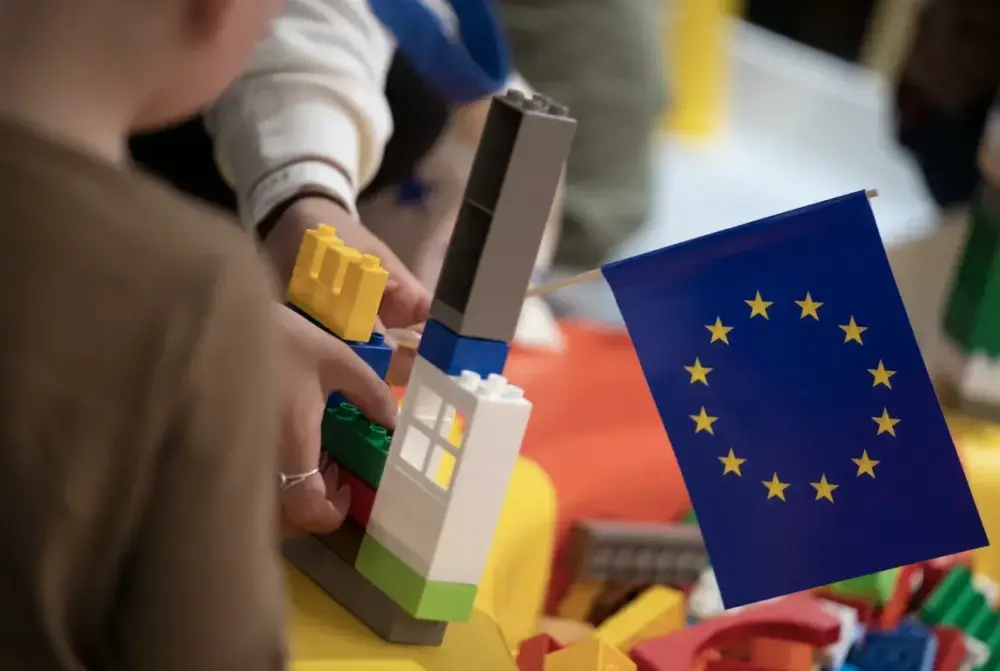
Photo © EU
How much would the accession of Ukraine, the Western Balkan countries, and other candidate states cost the European Union? The most immediate answer to this question — based on perceptions and fears not always justified by objective data — would likely be “a lot.”
Yet, several studies show the opposite: focusing solely on costs is a strategic mistake; instead, it’s worth including factors that could benefit current member states into the equation.
“Looking at previous enlargements, it took about ten years for new members to benefit from full EU funding. In the event of new accessions, the scenario would likely be similar,” Zsolt Darvas, senior fellow at the influential Brussels-based economic think tank Bruegel, told OBCT. Darvas is co-author of an analysis of the potential impact of enlargement on the EU budget.
Expanding the single market to new member states would indeed have positive effects on the national economies of the current 27 EU states. Their companies could increase production, create more jobs, and consequently pay higher taxes to the state. “These returns would offset the direct costs of enlargement, which would have to be covered by the EU budget,” Darvas points out.
Redistribution of EU Resources
In assessing the potential economic impact of enlargement, Bruegel’s analysis distinguishes between a scenario that includes only the Western Balkans and one that also includes Ukraine, Moldova, and Georgia. Turkey is excluded due to the negotiations being frozen in 2018.
As Darvas explains, the six Western Balkan countries would benefit only to a limited extent from EU funds, given their relatively small size in terms of population and GDP. In the long term, the current member states would not find themselves giving up a significant amount of resources.
This is also confirmed by an analysis conducted by the European Policy Centre in Belgrade. The fiscal impact of Western Balkan enlargement would be comparable, on average, to the price of a cup of coffee for each current EU citizen.
Ukraine is a different case, due to its size, its population — almost double that of all Western Balkan countries combined — and its large agricultural sector.
If EU budget rules remained unchanged, the admission of all nine currently candidate countries would cost current member states €170 billion over seven years, equivalent to 0.17% of EU GDP. “This is not an insignificant figure, but it’s nothing unmanageable,” notes the Brugel analyst.
According to his study, this cost — which would be shared among the current 27 member states — would have a “modest” impact on most of them.
Countries such as Bulgaria, Greece, Romania, and Slovenia are net beneficiaries of the EU budget: that is, they contribute less to the common budget than they receive in the form of EU funds. In their case, enlargement would result in a smaller reduction in revenue than the cuts they have already suffered in recent years. Countries that are net contributors, such as Italy, would instead have to increase their contributions to the common budget by an average of approximately 0.13% of GDP.
If the EU budget were to continue to be constructed according to the current criteria and rules, after enlargement it would amount to approximately €1.35 trillion over seven years (the EU uses seven-year budget cycles).
The overall funding allocated to cohesion policy would increase: the new member states would receive €61 billion and the current member states €361 billion (down from the €393 billion available for the 2021-2027 period). Overall spending on the Common Agricultural Policy would also increase by approximately €110 billion, but the resources allocated to current member states would remain essentially unchanged.
At the same time, spending on the EU’s Neighborhood Policy would be reduced by approximately €15 billion, as the nine countries in question would cease to benefit from this form of financial support.
The impact on cohesion policy
The economic consequences of enlargement on EU cohesion funds are a major concern. This concern is linked to the key indicator on which the distribution of cohesion policy funds is currently based: the level of GDP per capita of each region compared to the EU average.
The accession of new countries would significantly lower the average, leading to a reclassification of numerous European regions: many of those currently classified as “less developed” — i.e., their GDP per capita is less than 75% of the EU average, and therefore receive generous funding — would move to the “transition” category (GDP per capita between 75% and 100% of the average), while some “transition” regions would be considered “more developed” (above the EU average), and would therefore see their available funds reduced.
Competition for cohesion funds would intensify particularly if Ukraine were to join. According to Bruegel’s analysis, the greatest losses would be suffered by Italian and Spanish regions, with reductions of almost €9 billion overall for each country, followed by Portuguese, Hungarian, and Romanian regions.
However, “it is very likely that the cohesion rules will change” in the EU budget for 2028-2034, Darvas notes, referring to the European Commission proposal currently under negotiation.
Under the new approach, ad hoc EU funding would now go only to “less developed” regions, while resources for all other territories would be distributed in more flexible ways decided by the member states themselves based on their respective national and regional partnership plans.
The economic benefits of enlargement
A new wave of enlargement would offer significant investment opportunities for European companies, Darvas argues. Enlargements over the past decades show that the new member states have received significant funding from Brussels, but at the same time have triggered significant volumes of trade and private investment.
The candidate countries should be no exception. Industry, manufacturing, and the banking sectors of the current member states are expected to benefit the most.
Ukraine, in particular, is attracting particular attention: given the country’s post-war reconstruction needs, investment opportunities for other EU member states would be considerable. “Companies from Germany, Poland, Italy, and elsewhere would generate significant profits,” notes the Bruegel analyst.
These profits would be taxed, at least in part, in the companies’ countries of origin, thus boosting national tax revenues. “National budgets would greatly benefit from Ukraine’s accession,” argues Darvas.
Added to this is Ukraine’s vast territory and wide range of natural resources — providing steel, aluminum, and hydroelectricity, among others — which could benefit the Union as a whole. In particular, according to Darvas, Western European companies could play “a significant role in the Ukrainian energy market,” and the full integration of energy networks would improve the stability and security of supply of the European energy system.
Agriculture, however, remains a particularly sensitive issue: “If Ukraine were to join, internal competition would likely intensify, and it’s easy to imagine farmers taking to the streets,” the analyst warns.
However, given that European agriculture is “generally profitable and highly competitive,” Darvas believes it’s unlikely that Ukraine’s accession would have a significant negative impact on the sector in the long term. Any Ukrainian accession treaty will likely include transitional provisions that will determine how and when Ukrainian agricultural products will be granted full access to the EU’s single agricultural market.
This article was written as part of the project "InteGraLe - Western Balkans vi-à-vis the Trio: single market, cohesion and regional policy for gradual integration into the EU." The project is supported by the Analysis, Programming, Statistics, and Historical Documentation Unit – Directorate General for Political Affairs and International Security of the Ministry of Foreign Affairs and International Cooperation, pursuant to Article 23-bis of Presidential Decree 18/1967. The opinions expressed in this publication are those of the authors and do not necessarily represent the views of the Ministry of Foreign Affairs and International Cooperation.