Croatia: the right has been playing with the fire of nationalism for too long
In recent weeks, Croatia has plunged into a nationalist drift, with increasingly frequent attacks on the Serbian minority. Historian Ivo Goldstein believes the blame lies with the ruling party, which has fueled far-right rhetoric
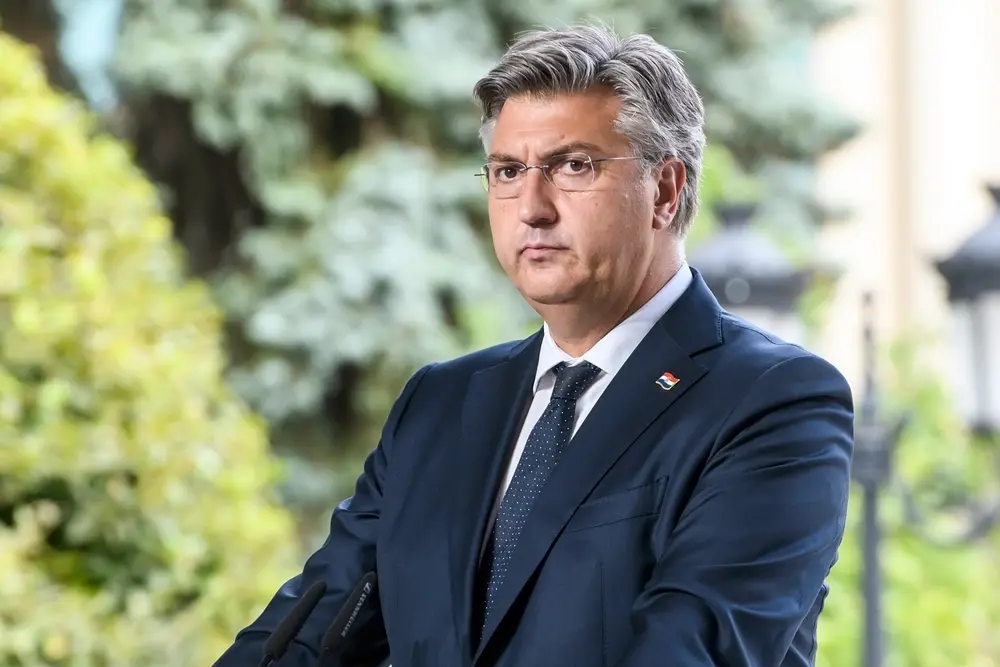
Croatian Prime Minister Andrej Plenković © paparazza / shutterstock
The latest attack took place on Friday, 7 November. About a hundred people dressed in black, with their faces covered, gathered in front of the Serbian Cultural Center in Zagreb, where an exhibition dedicated to Serbian art historian Dejan Medaković, originally from Zagreb, was being held. The police managed to disperse them.
A few days earlier, on Monday, 3 November, about fifty people dressed in the same way managed to prevent a performance by a youth folklore group from Novi Sad at the Serbian Cultural Center in Split. The incident sparked heated debate in the country, leading to nine arrests.
In an attempt to free their arrested “brothers”, the ultras of the Hajduk Split football club, better known as Torcida, organised a protest on the Split waterfront on Saturday, 8 November, attended by several thousand people.
These are just the latest examples of the nationalist drift that has been sweeping Croatia for months now. Last summer, groups of war veterans prevented several cultural events in Benkovac, Zadar and Velika Gorica, and tried to disrupt a festival in Šibenik. A free, pluralistic and democratic cultural space is under siege.
We talked about these issues with Ivo Goldstein, a Croatian historian and former ambassador to France.
How do you comment on these attacks on the Croatian cultural scene? Are we witnessing a reawakening of Croatian nationalism?
Nationalism never really disappeared from Croatia, it remained latent for a long time, and now it is spreading again. After the death of Franjo Tuđman in 1999, it took HDZ several years to reorganise and return to power. The presidential mandates of Mesić and Josipović, as well as the governments of Račan and Milanović – I would add those of Sanader and Kosor, although we are talking about HDZ members at the time – marked a period without nationalist excesses.
When did this trend change?
The conservative revolution began in 2013, when the Constitution of the Republic of Croatia was amended in a referendum to include a restrictive definition of marriage, as an exclusive union between a man and a woman (a measure balanced by the law on civil unions, open to same-sex couples, and promoted by the Milanović government at the time).
Then, in 2014, war veterans protested in tents in front of the Ministry of Veterans Affairs. The following year, Kolinda Grabar Kitarović (HDZ) defeated Josipović in the presidential election, and the same year, the HDZ returned to power. From that moment on, nationalism began to grow.
However, in 2015 the HDZ was not led by the current Prime Minister Andrej Plenković, but by Tomislav Karamako, at that time the representative of the hardline wing of the party. Plenković, elected Prime Minister in 2016, was considered a moderate. Right?
I would not say so. Plenković himself, after the parliamentary elections in 2024, in which he won a third mandate, sought an alliance with the extreme right-wing Homeland Movement, which in exchange for its support demanded that the party representing Serbs be excluded from the ruling coalition.
Last summer, Plenković attended a concert by nationalist singer Thompson, posing for a photo with him. Several of his ministers, who were also there, did not hold back when Thompson invited the audience to shout “Za dom spremni” [Ready for the homeland], the infamous Ustasha salute. In short, they are the ones who let the nationalist genie out of the bottle.
We are talking about a concert that was held in Zagreb on 5 July and, according to the organizers, was attended by 500,000 people. What did this event represent?
First of all, I think a more credible estimate is 300,000 people, but even that is a lot for Zagreb. Of course, not everyone present was nationalist. Those who listen to this kind of music usually go to other popular concerts in the region. I am thinking of Serbian singer Aleksandra Prijović, who filled the Zagreb Arena for five nights in a row, but also Croatian singer Jakov Jozinović, who will hold five concerts in Belgrade this year. In short, there is a demand for this kind of music that truly transcends political messages.
The fact is that this concert gave the Croatian right a boost. To what extent is the revival of nationalism in Croatia – or rather, its widespread resurgence – a consequence of the political decisions of the HDZ, and to what extent does it originate directly from society?
These two issues are undoubtedly connected. The atmosphere in society changes slowly, over a long period of time. If the government and political parties promoted anti-fascism, things would not be moving in this direction. But there are HDZ members who more or less openly say that the Ustasha were patriots and that Croatia lost, not won, the Second World War. They forget that some Partisan brigades were formed only eighteen kilometers from here and that the state police archives of the NDH indicate the existence of signs of resistance and intolerance towards the Ustasha as early as 1942 in Zagreb.
The problem is that Tuđman chose the path of reconciliation of all Croats in the 1990s, effectively putting the Partisans and the Ustasha on the same level. However, the historical truth tells us that thanks to the Partisan movement and the birth of federal Yugoslavia, Croatia managed to gain its independence in 1991, and this is written in our Constitution.
How to get out of this situation? How is it possible to put the genie of nationalism back in the bottle?
I have always been an optimist. I believed in the democratic movements of the seventies, in a good peace after the war… But today I have to admit that the dream I believed in, the one of a united Europe living in peace, no longer exists.
Croatia’s problems are part of a wider context, characterised by nationalism, Russian destabilisation and the European Union, which is not moving in the direction of stronger integration, barely managing to remain united.
If we are looking for some good news from Croatia, I recall that just two weeks ago, on 26 October, the 81st anniversary of the liberation of Split was celebrated, and the mayor and the county president, both HDZ members, were present at the ceremony. Plenković probably realised that things had gone too far and is now trying to put out the fire. I just hope it is not too late, because the violence is already on the streets.
Featured articles
- Take part in the survey
Croatia: the right has been playing with the fire of nationalism for too long
In recent weeks, Croatia has plunged into a nationalist drift, with increasingly frequent attacks on the Serbian minority. Historian Ivo Goldstein believes the blame lies with the ruling party, which has fueled far-right rhetoric

Croatian Prime Minister Andrej Plenković © paparazza / shutterstock
The latest attack took place on Friday, 7 November. About a hundred people dressed in black, with their faces covered, gathered in front of the Serbian Cultural Center in Zagreb, where an exhibition dedicated to Serbian art historian Dejan Medaković, originally from Zagreb, was being held. The police managed to disperse them.
A few days earlier, on Monday, 3 November, about fifty people dressed in the same way managed to prevent a performance by a youth folklore group from Novi Sad at the Serbian Cultural Center in Split. The incident sparked heated debate in the country, leading to nine arrests.
In an attempt to free their arrested “brothers”, the ultras of the Hajduk Split football club, better known as Torcida, organised a protest on the Split waterfront on Saturday, 8 November, attended by several thousand people.
These are just the latest examples of the nationalist drift that has been sweeping Croatia for months now. Last summer, groups of war veterans prevented several cultural events in Benkovac, Zadar and Velika Gorica, and tried to disrupt a festival in Šibenik. A free, pluralistic and democratic cultural space is under siege.
We talked about these issues with Ivo Goldstein, a Croatian historian and former ambassador to France.
How do you comment on these attacks on the Croatian cultural scene? Are we witnessing a reawakening of Croatian nationalism?
Nationalism never really disappeared from Croatia, it remained latent for a long time, and now it is spreading again. After the death of Franjo Tuđman in 1999, it took HDZ several years to reorganise and return to power. The presidential mandates of Mesić and Josipović, as well as the governments of Račan and Milanović – I would add those of Sanader and Kosor, although we are talking about HDZ members at the time – marked a period without nationalist excesses.
When did this trend change?
The conservative revolution began in 2013, when the Constitution of the Republic of Croatia was amended in a referendum to include a restrictive definition of marriage, as an exclusive union between a man and a woman (a measure balanced by the law on civil unions, open to same-sex couples, and promoted by the Milanović government at the time).
Then, in 2014, war veterans protested in tents in front of the Ministry of Veterans Affairs. The following year, Kolinda Grabar Kitarović (HDZ) defeated Josipović in the presidential election, and the same year, the HDZ returned to power. From that moment on, nationalism began to grow.
However, in 2015 the HDZ was not led by the current Prime Minister Andrej Plenković, but by Tomislav Karamako, at that time the representative of the hardline wing of the party. Plenković, elected Prime Minister in 2016, was considered a moderate. Right?
I would not say so. Plenković himself, after the parliamentary elections in 2024, in which he won a third mandate, sought an alliance with the extreme right-wing Homeland Movement, which in exchange for its support demanded that the party representing Serbs be excluded from the ruling coalition.
Last summer, Plenković attended a concert by nationalist singer Thompson, posing for a photo with him. Several of his ministers, who were also there, did not hold back when Thompson invited the audience to shout “Za dom spremni” [Ready for the homeland], the infamous Ustasha salute. In short, they are the ones who let the nationalist genie out of the bottle.
We are talking about a concert that was held in Zagreb on 5 July and, according to the organizers, was attended by 500,000 people. What did this event represent?
First of all, I think a more credible estimate is 300,000 people, but even that is a lot for Zagreb. Of course, not everyone present was nationalist. Those who listen to this kind of music usually go to other popular concerts in the region. I am thinking of Serbian singer Aleksandra Prijović, who filled the Zagreb Arena for five nights in a row, but also Croatian singer Jakov Jozinović, who will hold five concerts in Belgrade this year. In short, there is a demand for this kind of music that truly transcends political messages.
The fact is that this concert gave the Croatian right a boost. To what extent is the revival of nationalism in Croatia – or rather, its widespread resurgence – a consequence of the political decisions of the HDZ, and to what extent does it originate directly from society?
These two issues are undoubtedly connected. The atmosphere in society changes slowly, over a long period of time. If the government and political parties promoted anti-fascism, things would not be moving in this direction. But there are HDZ members who more or less openly say that the Ustasha were patriots and that Croatia lost, not won, the Second World War. They forget that some Partisan brigades were formed only eighteen kilometers from here and that the state police archives of the NDH indicate the existence of signs of resistance and intolerance towards the Ustasha as early as 1942 in Zagreb.
The problem is that Tuđman chose the path of reconciliation of all Croats in the 1990s, effectively putting the Partisans and the Ustasha on the same level. However, the historical truth tells us that thanks to the Partisan movement and the birth of federal Yugoslavia, Croatia managed to gain its independence in 1991, and this is written in our Constitution.
How to get out of this situation? How is it possible to put the genie of nationalism back in the bottle?
I have always been an optimist. I believed in the democratic movements of the seventies, in a good peace after the war… But today I have to admit that the dream I believed in, the one of a united Europe living in peace, no longer exists.
Croatia’s problems are part of a wider context, characterised by nationalism, Russian destabilisation and the European Union, which is not moving in the direction of stronger integration, barely managing to remain united.
If we are looking for some good news from Croatia, I recall that just two weeks ago, on 26 October, the 81st anniversary of the liberation of Split was celebrated, and the mayor and the county president, both HDZ members, were present at the ceremony. Plenković probably realised that things had gone too far and is now trying to put out the fire. I just hope it is not too late, because the violence is already on the streets.