Chasing Down Holocaust History in the Balkans
Among archives, former concentration camps, and unexpected discoveries, a descendant of a Jewish family exterminated during the Second World War and a journalist searching for the missing pieces to complete a family story and preserve the memory of the Holocaust

Cukovic family
Cukovic Family. Private archive Ružica Ćuković
(Originally published by Haaretz, on January 25th 2026)
Sometimes there are stories where you end up moving heavens and earth for a relative stranger just to uncover the truth. Family histories shattered by the Holocaust certainly qualify for me.
Ruzica Cukovic is the descendant of the only survivor of a Sephardic Jewish family from pre-World War II Sarajevo and lived in Israel as a child during the Yugoslav wars. Today the 27-year-old lives in Pancevo, a city in the metropolitan Belgrade region in Serbia.
“I identify as Serbian, but I am also proud of the small Jewish part of me,” Ruzica told me. “ My family always reminded us of the history of our family and since we lived in Israel it was much easier to stay in touch with that side of our family and to keep the memories alive.”
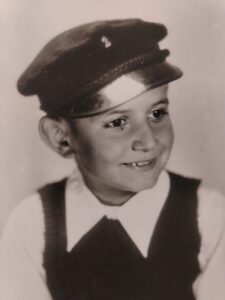
Dragutin Cukovic (around 1943). Private archive Ružica Ćuković
She told me that she was actually named for her great-grandmother Ruzica Cukovic, nee Rosa Kabiljo, who had died in the Bergen-Belsen concentration camp in 1945, several months before liberation. Her grandfather, Dragutin, had survived the war by staying with a Orthodox Christian Serb family in Loznica, Serbia for a significant stretch of the war, until he was brought to his paternal grandmother’s home in Pancevo. Both Rosa and Dragutin had lost touch with Zarko, their husband and father, respectively, when fleeing Sarajevo and crossing the Drina River, which was the border between the Ustasha-controlled Independent State of Croatia and Nazi-occupied Serbia.
Regarding the fate of the rest of Rosa’s Sarajevo family, Ruzica had heard bits and pieces from relatives with the vaguest of detail and was uncertain of their accuracy. Her grandfather passed away in 2003 and even her father, his son, is no longer alive and able to relate the family history.
“Unfortunately, I would describe the knowledge of what happened to the family during the Holocaust as incomplete and uncertain,” Ruzica said regarding her predicament. “I deeply regret that my grandfather didn’t collect all the information while he was still alive and healthy.”
Ruzica often assisted me in my occasional side gig of reporting stories from the ex-Yugoslavia in the Israeli press. She would translate material from Serbian to English for me whenever she wasn’t busy with her day job as personal assistant to the ambassador of Portugal in Serbia.
After roughly a year, I decided to repay her for the free translation work with an answer to the family riddle. I would do whatever it took to find out what happened to her family.
The hunt begins
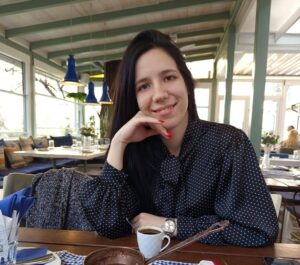
Ruzica Cukovic. Archive Ružica Ćuković
Our first lead came through the Jewish federation and cultural association in Sarajevo, La Benevolencia. The people at La Benevolencia had access to the Jewish community of Sarajevo’s communal records going back to the prewar period. They established that Rosa Kabiljo had two sisters and one brother and provided all of their birth dates and the death dates for two of them.
It turned out that Rosa’s brother, Elias, and one of her sisters, Flora, had both died before World War II had even reached Sarajevo. Moreover, Ruzica’s family had apparently garbled the memory of Elias and transformed him into a sister named Elie. The name of the sister who survived until the Holocaust, Djentila, was also butchered by the effects of time.
Using the accurate names and biographical data we now possessed, Ruzica went to the Yugoslavia Archives in Belgrade to find information on her great-grandmother Rosa and great-grand aunt Djentila. It turns out there was a census file in the archives that established that Djentila was killed in 1942 at a Ustasha-run concentration camp in Croatia called Djakovo.
While Ruzica went through the various Serbian-language archives in Belgrade to find out more, I contacted the Arolsen Archives in Germany. The Arolsen Archives are the home of records from the postwar International Tracing Service, a post-World War II British initiative that documents the fate of Holocaust survivors and other victims of Nazi persecution. I inquired about both Rosa and Djentila Kabiljo, but in the end we didn’t receive any information we didn’t already have.
In particular, we did not know if Rosa Kabiljo’s brother, Elias, and sister, Djentila, had any children.
“I would love to believe that there’s someone still around that is my ‘family’ and we have something in common and I wondered if there’s anyone in the world trying to find us like we are trying to find them,” Ruzica told me. “[Elias and Djentila] were certainly at the age that we could assume that they were married and had kids but what if those kids were killed as well that would be a horrible thing to find out…I wouldn’t like to find more graves and more lost family members.”
Two things that Ruzica apparently did know from other family members, is the name of the person who betrayed her great-grandmother to the police, a man named Matija Drobnic, and the family that sheltered her great-grandmother and grandfather for months during the war, a couple named Zika and Danica Tomic. She tried looking up both in the Yugoslavia Archives, but found nothing.
Nearly 10 months after the search began, I flew to Belgrade in July to ferret out more details.
In Belgrade, I connected with local journalists and was eventually referred to Ivana Nikolic, a reporter who had previously covered Holocaust stories in Serbia.
Searching for a missing tomb
A few days later in my Balkans trip, I traveled to Djakovo in Croatia to visit the place where Djentila was killed. Djakovo is unusual in that it is the only place in Europe where concentration camp victims are buried under their names. However, I had no luck finding Djentila’s tombstone anywhere in the Jewish cemetery.
The lack of a grave marker puzzled me until I visited Damir Lajos, the president of the nearest surviving Jewish community of Osijek. Lajos explained to me that only a fraction of the people who died at Djakovo were buried in the Jewish graveyard. Many of the camp’s inmates actually died on the way to the larger Jasenovac death camp after Djakovo was shut down and must have been buried anonymously in random locations.
I contacted an archivist from the Serbian news outlet Telegraf, who had access to all sorts of document repositories, to try and find Rosa’s betrayer, Matija Drobnic, but nothing turned up. Ivana Nikolic, who was recommended by Sasa, had already written quite a number of stories about the Holocaust in the Balkans and was quite familiar with the territory and the issues surrounding the topic.
Thanks to a stroke of luck, Ivana’s childhood friend’s wife Maja was from Loznica. Ivana immediately called her and asked if Maja could check whether someone in her family or neighborhood knew the Tomic family or the bar they owned and where Rosa had worked while in hiding.
Three days later, Ivana received a reply: Maja’s brother-in-law was able to confirm that the bar was located on the Miodraga Borisavljevica Street in downtown Loznica. The building no longer existed, however, having been demolished decades ago.
Ivana then pursued a local Loznica historian named Stefan Vilic. She explained to him the entire story and begged for help. A few days later, Stefan called Ivana to say he had the name and phone number of a descendant of the Tomic family.
It turned out that Stefan’s wife is related to the wife of Janko Jovanovic, the Tomics’ great-grandson. A few days later, Ivana and Jovanovic met via Zoom.
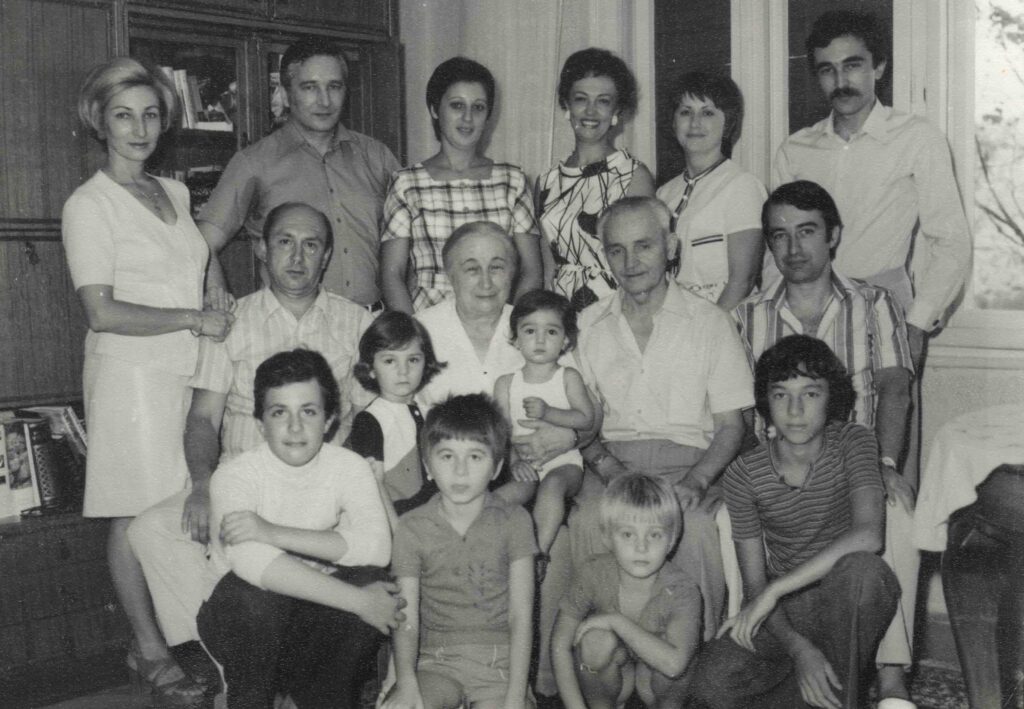
Darinka and Milutin Janković with children and grand-children. Private archive Janko Jovanović
Discovering your ancestors were heroes
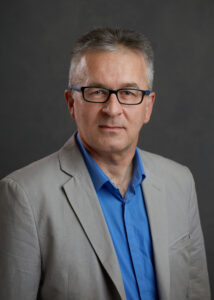
Janko Jovanovic. Private archive Janko Jovanović
Jovanovic – a university professor based in Podgorica, Montenegro’s capital city – was completely unaware of his great grandparents’ brave act taking in a Jewish family in Nazi-occupied Serbia in the 1940s.
Danica and Žika were his great-grandparents, and their only daughter, Darinka, was the mother of Janko’s father.
Jovanovic said the entire family was surprised and overjoyed to hear the story of how the Tomics’ saved a man’s life.
“It was a surprise for all of us,” he said. “I assume that neither Zivko nor Danica, my great-grandfather and great-grandmother, saw it as anything special, but rather as an ordinary act. They did not consider it important to speak about it as a form of self-praise; instead, they saw it as something completely natural – to help a person in need – which has been passed down in our family through upbringing from one generation to the next.”
Some 141 Serbians have received the title Righteous Among the Nations, as of January 2024 according to the Yad Vashem website. Following Ivana’s discovery, Ruzica filed an application with Yad Vashem to add the Tomics to this distinguished list. The process is long and difficult, taking as much as a year or more to receive a final response and things are still in the preliminary phases. She hopes to meet with Jovanovic in the near future and complete the story by telling him what his great-grandparents did for her grandfather and great-grandmother all those years ago.
“To find a descendant of the people who saved my grandfather and helped him and his mother during the hardest period of their lives means a lot,” said Ruzica, who is still living in Serbia. “I feel thankful on behalf of my grandfather, and I think he would love to know if he were alive.”
When asked what having his ancestors’ recognized as Righteous Among the Nations would mean to him and his family, Janko said:
“In our family, the upbringing has generally been about being a decent human being. In that sense, I couldn’t have expected my great-grandmother and great-grandfather to act in any other way.
“It is also always pleasant and fulfilling to hear someone speak well of your ancestors – your father, mother, grandmother, grandfather – and in that sense it truly gives me a sense of satisfaction, and it would be nice to receive some form of recognition. Not because of the family, but because of Živko and Danica, who were the ones involved. We have no credit in what they did. It would mean a lot to us and would be an honor if their actions were acknowledged in some way.”
Ivana Nikolic contributed to this story.
Tag: Giorno della Memoria | Jews | Minorities