Bulgaria: too many people still without sewerage
A quarter of Bulgarians are not connected to the pubblic sewerage network. Many communities across Bulgaria, including some neighborhoods in Sofia, are still waiting for an adequate wastewater management system. It is not a lack of money, but good planning and punctuality in project delivery
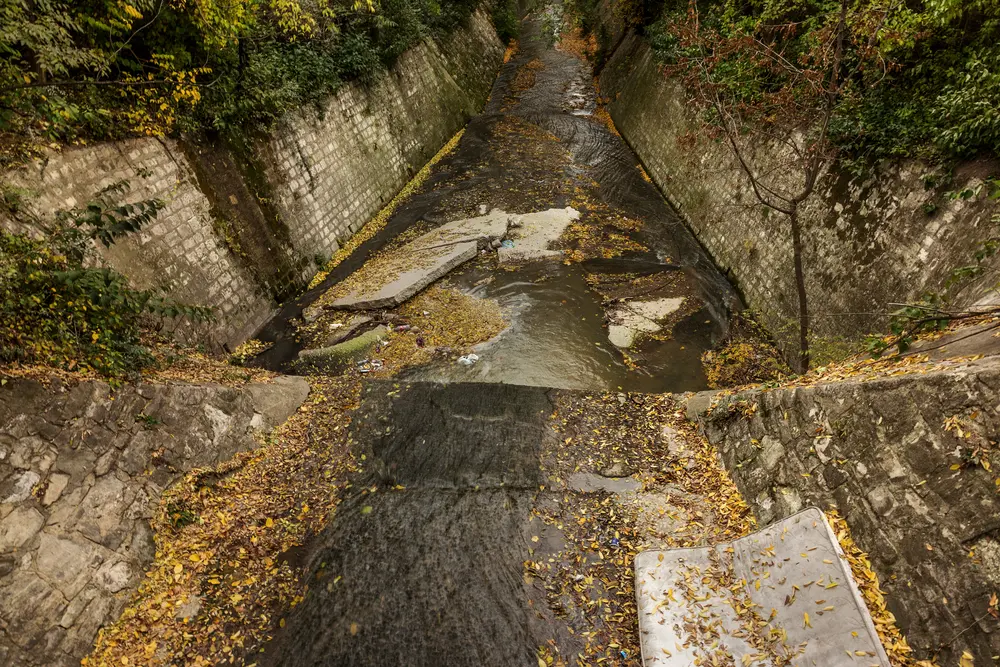
Varna,Bulgaria,-,2015:,Dirty,Waste,Water,And,Household,Waste
Varna, Bulgaria © A_Lesik/Shutterstock
(Originally published by our project partner EuSEE Mediapool)
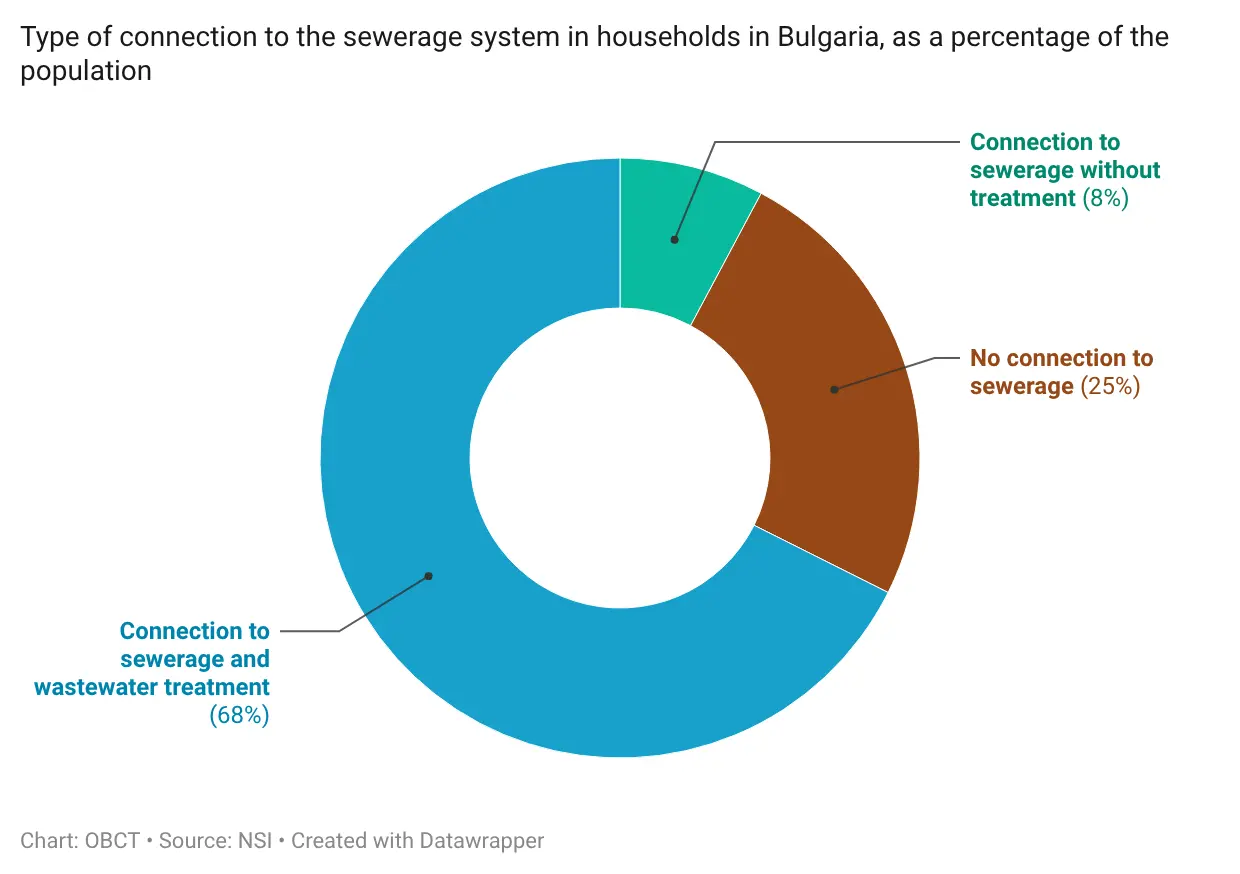
In the age of artificial intelligence and smartphones, 25% of Bulgarians still dump wastewater into their backyard drains. When one drain fills up, another is dug.
The remaining 75% of the population is connected to a sewerage network mostly built before 1980. At that time, the network was 12,322 km long. By 2024, it increased by only 1,040 km largely thanks to European funding, which Bulgaria has been accessing since 2007, the year it joined the European Union.
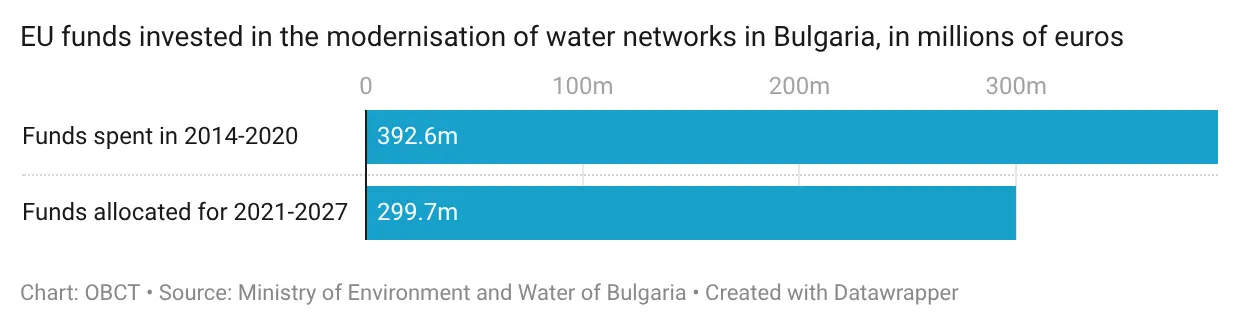
For the first EU funding period (2007-2014), there is no specific data on funds spent on wastewater treatment and purification plants. The resources allocated for municipal water supply and sewerage projects amounted to 973,522,815 euros. Most of the water supply and sewerage projects completed during that period involved the reconstruction of existing facilities. The primary objective was to overcome the critical issues of an aging water network.
During the 2014-2021 programming period, the Bulgarian Ministry of the Environment began compiling specific statistics. According to data provided to Mediapool by the ministry, expenditure on waste collection, disposal and treatment during that period amounted to 461,906,268 euros.
The result: in 2024, Bulgaria had a public sewerage network of 13,362 km and 192 operating wastewater treatment plants. This data was published by the National Statistical Institute.
Infrastructure still inadequate
Interestingly, in Bulgaria, only 67.6% of wastewater is treated before being discharged into rivers. Considering that 75.4% of the population is connected to the public sewerage system, nearly 8% of the population pollutes the environment because, after disposal, wastewater is discharged directly into streams and ravines.
Bulgaria was supposed to have installed wastewater treatment plants as early as 2014, capable of serving small towns with a population between two thousand and ten thousand people.
“We have wastewater treatment plants, not yet completed, in cities with over 10,000 inhabitants. We are only now starting projects for municipalities with a population of between 2,000 and 10,000. Furthermore, the new European directive requires that such plants also serves cities with more than 10,000 inhabitants and that they include quaternary wastewater treatment [additional treatment to remove micropollutants]”, explains Ivan Ivanov, president of the Bulgarian Water Association. Ivanov previously held management positions at the Bulgarian Water and Sewerage Holding, a company that groups together state-owned water and sewerage operators.
The European Commission – as Ivanov underlines – has denounced Bulgaria for failing to fulfill its commitments regarding treatment plants.
Slowness, project fragmentation, loss of EU funds
Ivanov explains that water and sewerage projects are progressing slowly. Some projects involve entire water cycles and encompass a multitude of different activities. Delays in supplies are often encountered, and deadlines for completing the activities are not respected. This is when “fragmentation” is used, which involves dividing the activities planned, but not yet completed, within a project funded by an expiring program. This results in some activities being postponed to the next period in order to receive additional funding.
“However, splitting up activities does not bring benefits, it is a waste of money”, comments Ivanov, underlining that Bulgaria is among the EU’s worst performers in wastewater treatment and is one of the EU countries with the highest losses of water fed into distribution networks.
Paradoxically, as highlighted in a 2024 report by the Energy and Water Regulatory Commission (EIRC), despite 163 million euros of EU funds having been invested in Bulgaria’s water supply in 2024 alone, leaks have increased, reaching over 60%. The document also highlights a deterioration in the quality of sewerage services. Seventeen percent of users complain of sewer blockages, flooding, pollution, unpleasant odors and the presence of rodents.
The association led by Ivanov does not have estimates on the funding needed to expand the sewerage and wastewater treatment network. The 2021 National Investment Plan for Water Supply and Sewerage estimates the investment required for a new sewerage system capable of serving 243 cities at 2.576 billion euros. This figure has likely increased further in recent years.
The cost of unfinished works
Currently, available funds are lower than estimated. Under the “Environment 2021-2027” program, 352,559,193 euros have been allocated for wastewater collection and treatment. The program includes the construction of 485 km of new sewerage networks.
Almost the entire amounthas already been agreed upon and data from the Ministry of Environment and Water confirm Ivanov’s claims regarding the splitting of the projects: as many as eight projects dating back to the previous financial period are now nearing completion.
Fifteen municipal projects are currently being developed and funded, which also include activities beyond those related to water and sewerage networks.
Thirty-one thousand inhabitants of Sofia without sewerage
If you think septic tanks are only found in small, remote villages, you are wrong. In Bulgaria’s capital, eight neighborhoods with approximately thirty-one thousand inhabitants still lack a sewer system. These include the “affluent” neighborhood of Dragalevci, the rapidly expanding neighborhoods of Manastirski Livadi and Krastova Vada, as well as some older neighborhoods such as Obelya, Suhodol and Benkovski, and municipalities of Bankya and Iskar.
In Dragalevci, a project worth over 20 million euros to build a sewer system was completed last year. However, the homes have not yet been connected to the system. Meanwhile, it emerged that residents had been illegally digging pipes to discharge wastewater outside their properties into nearby ravines, causing a serious environmental problem.
Currently, work in that area, as well as in the neighborhoods of Krastova Vada – Istok, Suhodol, Obelya, and Benkovski, and in the municipalities of Bankya and Novi Iskar, is continuing as part of a project of the Sofia Municipality, financed by EU funds.
The capital’s sewerage network is also being expanded through other projects, specifically as part of an investment program by the municipality of Sofia, which owns the network, and through the activities of the concessionaire company “Sofia Water” and, in individual cases, private investors.
From 2007 to the end of 2025, “Sofia Water” invested 44.2 million euros in the construction of a total of 65 km of sewerage network. Thanks to this investment, infrastructure in Gorublyane, Moderno Predgradie, Simeonovo, Ilijanci, Benkovski, Nadežda-Triagalnika, Krastova Vada, Manastirski Livadi, Suhodol, and the village of Vojnegovci has been expanded and modernised.
In 2025, the city of Sofia built an additional 21 km of sewerage network under the “Environment” Operational Program and handed it over to the concessionaire for management. Construction of a new network is also continuing in Novi Iskar, the Malinova Dolina neighborhood, and the Ovča Kupel-Stara Čast neighborhood. In these areas, 8.8 km of sewerage network will be built for a total cost of 8.2 million euros.
The concessionaire is evaluating the possibility of using drones to monitor sewers and recover heat from wastewater.
The remaining European projects are being implemented by the water and sewerage companies of Šumen, Vidin, Dobrič, Gabrovo, Haskovo, Pleven, Kneža, Sofia, Targovište and Jovkovci, covering the areas of Veliko Tarnovo, Gorna Orahovica and; by the water companies of Burgas, Sliven, Varna, and Pernik (which also covers Radomir); and in Plovdiv, serving not only that city but also Hisarija and Karlovo.
According to the Ministry of Environment and Water, since the beginning of the current programming period, a total of 150 million euros were distributed among the above-mentioned companies for wastewater collection and treatment. Of this sum, 40,788,711 euros came from EU funds and 7,198,008 euros from the state budget.
Half of the construction sites are late
According to data provided by the Ministry of Energy, out of a total of fifteen approved projects, eight are behind schedule, while seven new projects are in the process of signing contracts with contractors for design and construction, and in some cases tenders have yet to be organised to select the companies.
Thanks to European environmental funds, thirteen wastewater treatment plants will be built or renovated: three in Dobrič and three more in Burgas, two in Targovište and two in Jovkovci, and the remaining three in Sofia, Pernik, and Haskovo.
“The new programming period will begin in the old way, slowly, without having learned the lessons of the previous period”, comments Ivan Ivanov.
The money is there, but the projects are missing
For Ivanov, the main problem is not a lack of money. EU funding could be supplemented by the funds of the Agency for the Management of Environmental Protection Activities, particularly by revenue from taxes paid by importing companies that produce waste.
For years, the Environmental Protection Agency used these resources primarily to finance urban beautification projects, playgrounds and school programs related to the environment. In the past, the agency also supported water and sewerage projects. It later emerged that funds for sewerage networks were being distributed arbitrarily and without clear criteria to municipalities close to Ahmed Dogan’s Movement for Rights and Freedoms (DPS).
Last year, during the water shortage that affected entire regions of Bulgaria, the government invited municipalities to submit applications for water supply and sanitation projects in order to receive priority funding from a special fund for municipal projects. However, despite the government’s repeated appeals, local administrations prefer to apply for non-repayable EU grants rather than develop specific projects that could be financed from the state budget.
According to Ivan Ivanov, it is necessary to develop a clear strategy to overcome critical issues in wastewater management, rather than hoping that the European Union will grant Bulgaria a derogation regarding wastewater collection and treatment standards.
So the question is not whether there is enough water, but why in the 21st century Bulgaria does not have an adequate sewerage system, so much so that a quarter of the population still uses septic tanks or discharges wastewater into ravines and rivers.
This article was produced as part of the EuSEE project, co-funded by the European Union. However, the views and opinions expressed are solely those of the author(s) and do not necessarily reflect those of the granting authority, and the European Union cannot be held responsible for them.
Tag: Alloggi | Coesione UE | EU Cohesion | Housing